Tag: Culture of India

  • Red Shiva Ganesha Hanuman Vishnu Marks Australia Aborigines

    I published articles on Australia being Home of Weapons, Astra Aalaya, Shiva with Third Eye dance in Australian Tribe.

    That ancient Indian Culture spread throughout the world is now an indisputable fact.

    This is arrived at based on Archeology,Astronomy, Archeoastronomy and linguistics.

    Taking into consideration the pattern of migration in Europe, Africa,Latin America and the Scandinavian Countries, it is clear that these waves of migration in Europe happened when the was a Natural  Disaster in Asia and this is acknowledged in all the cultures mentioned here.

    The natural calamity we speak here is tsunami.

    These Tsunamis have been recorded in almost all Religious texts though under Legends.

    Tamil Literature speaks of three such Tsunamis and during on such tsunami Lord Ramas’ Ancestor  Satyavrata Manu , also called as Vaivasvatha Manu migrated to Ayodhya to found Ikshvaku Dynasty.

    Shiva and His son Ganesha left through Middle east, covering the Africa,Europe and finally settled in Arctic where the Rig Veda was composed before returning through Russia and Iran to India.

    The Super Continents of Gondwana, Laurasia made it easier  for the people of India to travel to Australia.

    This was  during the Triassic period .

    Ganesha Statue,Queensland Gympie.jpg
    At Dogun, schoolboy Cliff Brown, 13, found an elephant about 100mm high carved from beige granite. It is thought to be the Hindu God Ganesha.
    Hanuman Or Gympie Ape.jpg
    Hanuman Or Gympie Ape?ueensland ,Australia

    Later this area shrunk during the Mesozoic and Cenozoic  periods.

    The early Indians took to sea and land routes.

    Australian Aborigines and Indian People.

    Australian Aborigines with Vishnu Maks.jpg
    Australian Aborigines with Vishnu Marks.


    1. there is an underlying unity of female lineages in India, indicating that the initial number of female settlers may have been small;
    2. the tribal and the caste populations are highly differentiated;
    3. the Austro-Asiatic tribals are the earliest settlers in India, providing support to one anthropological hypothesis while refuting some others;( Typical Western approach to Hinduism, that of attributing the source as the offshoot!)
    4. a major wave of humans entered India through the northeast;
    5. the Tibeto-Burman tribals share considerable genetic commonalities with the Austro-Asiatic tribals, supporting the hypothesis that they may have shared a common habitat in southern China, but the two groups of tribals can be differentiated on the basis of Y-chromosomal haplotypes;
    6. the Dravidian tribals were possibly widespread throughout India before the arrival of the Indo-European-speaking nomads, but retreated to southern India to avoid dominance;
    7. formation of populations by fission that resulted in founder and drift effects have left their imprints on the genetic structures of contemporary populations;
    8. the upper castes show closer genetic affinities with Central Asian populations, although those of southern India are more distant than those of northern India;
    9. historical gene flow into India has contributed to a considerable obliteration of genetic histories of contemporary populations so that there is at present no clear congruence of genetic and geographical or sociocultural affinities.”

    Hinduism spread through Philippines and south-east Asia.

    This Ancient Bronze Hindu/Buddhist Deity (Vishnu?) was Found at the Gympie 'Pyramid' Site.jpg
    This Ancient Bronze Hindu/Buddhist Deity (Vishnu?) was Found at the Gympie ‘Pyramid’ Site.


    From that time, the increasing wealth, population and thus prestige of Sanskrit-brahmin guided Hindu kingdoms motivated the usage of gold for coins, sculptures and decoration of temples and palaces. Sumatra, in modern Indonesia, was known as an “island of gold” and an 11th century hoard of royal Javanese gold bullion is preserved in Indonesia, and was exhibited in Brisbane 10 years ago. In the 14th century, Hindu Javanese gold-miners sailed to Philippines to prospect and mine, and a gold sculpture from that era is now in the USA. The nagara “royal city” of Angkor Wat consumed artworks of many types, and logically this would include gold in great quantities. The evidence shows that the Hindu Kingdoms’ search for gold led them to the shores of Eastern Australia. There they found the motherlode.


    Gympie was “Meru’ndai” according to the Australian “ng’tja guru” elders. In Indonesia, “Meru’ndai” means “beautiful Meru”, and Bali language “ngajahin guru” means “training. teacher”. In the 1860s a hill at Meru’ndai had a circle of pillars with a wheel shaped stone in the centre, and 7 levels with stone-lined terraces. Indra sends floods to the world which is shaped as a wheel. Early Tamil temples had a wheel shape and the work that was involved in building this one indicates the size of the population at the gold-mine. Aboriginals were fearful of the temple spirits, which shows that they were not the builders. It is near the river at Gympie and the bay south of Fraser Island. In 1867 gold was found by Europeans and the cut stones of the temple were removed by European gold-miners , to build houses. They collected 4 tons of gold by hand in the 1800s as well as from the deep mine, and today Gympie near Brisbane is the 8th biggest gold-mine in Australia and gold is still collected in the creeks.The temple pillars today are in the river to protect the river-bank, and a bulldozer was used to dig holes searching for gold in the hill. Only some terrace stone-walls remain, and a few photos of carved animals

    The country of Meru’ndai at Gympie also included Fraser Island, where the Batjala people called the island Gurree. In that legend,Gurree was a beautiful white sky-spirit princess who created mountains in south Queensland and the island named Gurree, where she looks at the sky reflected in the pure lakes of rain-water in white sand.(2).The legend reminds me of Gauri, the shining white spirit wife of Shiva who washed her in Himalayan snow. She was a creator to balance the destructive power of Shiva, who is also named Indra.

    Gambaingirr teach that “miira” the moon gives the balance in nature and gives energy to people.Sanskrit “mihira” is the moon, a form of Surya the sun, and means to lift up waters for rain. Bali language omits the /h/ in words so that the Aboriginal reflects the Bali pronunciation.Vaharamihira, or Mihira, was a famed astronomer 1500 years ago and is honoured by a wall-mural in India’s parliament. Gidgeon Miiral is the island in Coff’s Harbour of Gambaingirr, and the moon causes rip-tides and floods against those who ignore the laws. (3).Boats can enter the river there only at hightides. The astronomy of Kumbhaja and Mihira would be vital for ships navigating past the Queensland Barrier Reef and locating rivermouths for landing. Possibly the ships were exploring for gold and sailed south from Meru’ndai in Queensland. “Meru daksina” means the South Pole.

    In Wenaruah country near Newcastle, is a rock-painting of a deity, 1 metre high and with arms 5 metres wide, with bird feet, and with 2 boomerangs .(9) Indra has very long arms and carries a weapon in each hand, and can assume any shape he chooses.  “Wenaruah” means “hills and plains” , and in Bali “wena” means “forests” and “ruah” is “countless”, with adjectives following nouns. Wenaruah had treeless plains, but densely rain-forested hills near Barrington Tops mountains. 

    Further south, in Victoria there is a rock chamber with a painting that is not in usual Aboriginal style. (9).He may have a third eye. The left shoulder has something folded on it, in Hindu style. The actual body colour is red. His name is Bunjil and the painting is in the mountains west of Bendigo gold-field, where gold nuggets are today found on the surface. In Victoria, bora means the tribal dance ground, like Thailand bara meaning “royal dance-room” and Cambodian borei, dance temple.

    * Shiva is Flaming /Golden Red  ( Trikaagni Kaalaaya)in Color while Lakshmi is Gold en Red-Hiranyavarnaam.(Sri  Suktha)

    Reference.

    1. B Green, from historical notes of J Green, 1863.

    2. “Written in Sand” F Williams, Jacaranda. 1982.

    3. Coffs Harbour Tourism, Gydgeon Miiral island.

    4. “Australian Dreaming” Dr J Isaacs, Cam. 1996.

    “Papers of Marjorie Oakes”. Australian Institute Aboriginal Torres     Strait Islander Studies. Canberra.

    “Dictionary of Bundjalung” Dr M Sharpe, UNE Armidale.

    5. Dr Darma Putra, School of Languages, UQld Brisbane.

    6. Dr McC Taylor, Asian Studies, ANU Canberra.

    7. Michael Anderson, Ngurampaa elder of Euahlayi of Gamilaroi.

    8. Dr J Atkinson, College of Aboriginal Studies, SCU Lismore.

    9. “Riches of Ancient Australia” Dr J Flood, UQld Brisbane, 1990.


  • Cave Temple Of Sleeping Vishnu Malayadipatti

    Cave Temple Of Sleeping Vishnu Malayadipatti

    The reclining, sleeping Vishnu is Anantha, Infinite.

    Vishnu does not sleep, neither Devas.

    One of the definitions of Devas is that their eyelids do not bat , they do not sleep.

    Other marks of Devas are,

    Flowers adorned by them do not wither.

    Their Feet do not touch the ground.

    Anathapadmabha, Malayadipatti.jpg
    Anathapadmabha, Malayadipatti.

    Vishnu’s sleep is called Yoga Nidra, a Posture of Yoga where the physical senses are shut off, consciousness is rooted in the Reality, yet aware of the surroundings.

    In Tamil there is a beautiful word for this posture of Vishnu.

    It is ‘அறிதுயில் ‘ , sleeping while knowing.

    Such postures of Vishnu are relatively rare.

    Famous ones are Anantha Padmanabhaswamy Temple,Thiruvananthapuram,Srirangam, Srivilliputhur.

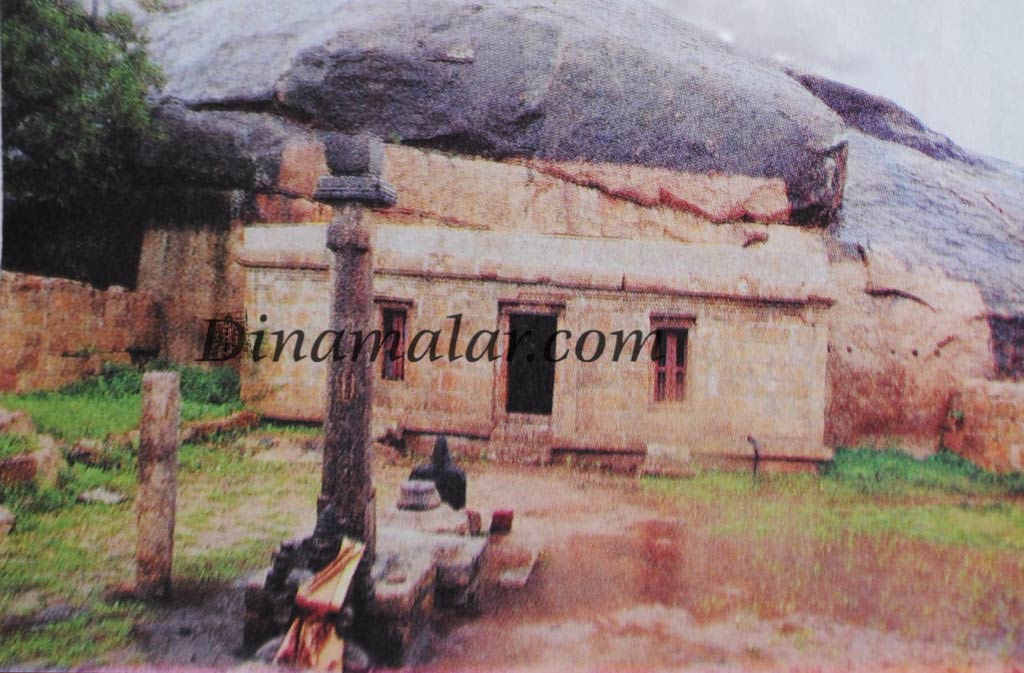
    Cave temple for Sleeping Vishnu is very rare.

    One such temple is Malayadipatti Anathapadmanabhaswamy Temple.


    Located 45kms from Tiruchirapalli in a remote village in the Kulattur Taluk of Pudukottai District is the largely unknown North Facing Rock Cut Anantha Padmanabhaswamy cave temple in Malayadipatti, one that dates back around 1200 years to the late 8th Century AD / early 9th Century AD.

    How To Reach.

    One can reach Malayadipatti by taking the Trichy- Keeranur – Killukottai route (17kms from Keeranur) or Trichy – Thuvakudi – Poyyakudi- Asur- Sengalur route.

    Bus Numbers: K3 and K12 from Keeranur
    No. 100 from Tiruverambur.
    No. 26 from Chatram Bus Stand

    The temple is 33kms from Pudukottai.

    Auto/Taxi from Trichy will cost around Rs.500.

    For local help, contact: Saivaraj @ 97878 18987


    Moolavar: Ananthapadmanabhan in Sthala Sayana Posture
    Thaayar : Kamala Valli Nachiyar
    Temple time : 7am- 11am and 5pm-630pm
    Priest : Srinivasa Bhattar @ 99407 49234


    Legend.


    Legend has it that Diwakara Rishi, who in a fit of anger tried to disrupt the yagna of King Indradyumna, was cursed to lose his powers. He is believed to have undertaken penance here invoking the blessings of Lord Vishnu, who pleased with sincerity of the prayers, provided him darshan as Anantha Padmanabhan in a Sayana Posture and handed back his yogic powers and knowledge. The temple is an Abhimana Sthalam.


    The 15feet Moolavar is a beautifully carved image of Lord Anantha Padmanabhan in a Sthala Sayana Posture lying on the serpent Adisesha and is similar to the one seen in Thiruvananthapuram Divya Desam. The five heads of the serpent are spread out like a canopy over the God’s head. While his right hand is hanging down in a posture of blessing the devotees, the Lord’s feet rest on a lotus. Performing poojas with Lotus flowers is a speciality at this temple. Above Anantha Padmanabhaswamy idol are interesting paintings on the ceiling.

    Citation

    Inside the sanctum are Pundareekaksha, in a standing posture, with the Gandharvas seen performing pooja on him, Malola Narasimha in a Sitting Posture, Vaikunta Nathan, with Sri and Bhoodevi, in a posture similar to the one seen at Vaikuntam and Chaturbhuja Hayagriva in a grand sitting posture.

    On the wall of the sanctum are two demons, Madhu and Kaitabha, who threatened to kill Brahmma- but were slain in the process.

    The two Dwarapalakas, Jaya and Vijaya, at the entrance are not conventional sculptures and are more in the form of portrait sculptures.

    Citation.

    http://prtraveller.blogspot.in/2011/06/malayadipatti-anantha-padmanabhaswamy.html


  • Know Veda Mantras For Election Ancient Tamil Election

    Know Veda Mantras For Election Ancient Tamil Election

    Yet another proof that Tamil and Sanatana Dharma walked hand in hand, nailing the canard perpetrated by the Aryan Invasion Theorists and followed by the Dravidian Parties.


    The Kings of Tamil Nadu were democratic and  conducted elections regularly at the Village level.


    Paranthaka Chola Inscription in Tamil,Uthiramerur.jpg
    Paranthaka Chola Inscription in Tamil,Uthiramerur


    This was organized systematically  with Qualification for the Candidates, election observers.


    This dates at least 1000 years ago!


    I shall be posting about this in detail in a separate article.


    Here we shall see how  learning the Vedas and at least well versed with one of the commentaries  of the Vedas, apart from other qualifications.


    This is evident from the  Inscriptions of the Chola Kings in Uthiramerur,Tamil Nadu.


    • Uttaramerur Inscriptions of Parantaka Chola I (முதலாம் பராந்தகன் )
    • Location: Uttaramerur, Kanchipuram Taluk, Kanchipuram District, Tamil Nadu, India
    • Chola Emperor: Parantaka Chola I (முதலாம் பராந்தகன்) (907 – 956 AD.)
    • Regnal Years: 12th Regnal year (919 AD) inscription 12 lines and 14th Regnal Year (921 AD) inscription 18 lines
    • Inscription Language: Tamil
    • Inscription Script: Tamil Grantha of 10th century
    Uttaramerur, an ancient Chola village once known as Chaturvedimangalam, is located about 85 km from Chennai.  This village, developed on the canons of the agama texts, has the village general assembly aka. mahasabha mandapa at the centre. The three temples well known for its architecture,  sculptures and epigraphy i.e, 1. Kailasanatha Temple dedicated to Lord Shiva, 2. Sundara Varadaraja Perumal Temple dedicated to Lord Vishnu and 3. the Balasubramanya temple dedicated to Lord Subramanya,  are oriented with reference to the mandapa. ..
    Resolution of the Assembly and the Settlement
    The village general assembly of the Uttaramerur Chaturvedimangalam met in the general assembly hall of the village, where it deliberated the resolution:
    The village general assembly of the Uttaramerur Chaturvedimangalam was convening the committee as directed in royal order and was resolved and settled as per the terms given in the royal letter. Accordingly it was resolved to choose the member  for the ‘Annual Committee,’ (ஸம்வத்ஸர வாரியம்) ‘Garden Committee,’ (தோட்ட வாரியம்) and the ‘Water bodies Committee’ (ஏரிவாரியம்) commencing from this year. (உத்திரமேருச்சதுர்வேதிமங்கலத்து சபையோம் இவ்வாண்டுமுதல் எங்களூர் ஸ்ரீமுகப்படி ஆஞையினால் தத்தனூர் மூவேந்த வேளான் இருந்து வாரியமாக ஆட்டொருக்காலும் ஸம்வத்ஸர வாரியமும் தோட்ட வாரியமும் ஏரிவாரியமும் இடுவதற்கு வ்யவஸ்தை செய்த பரிசாவது..)
    Village ward or Kudumbu’ (குடும்பு) 
    According to the inscriptions, each village was divided into wards or Kudumbu’ (குடும்பு), and each ward or Kudumbu’ (குடும்பு) could send one representative to the general assembly.
    There shall be thirty wards in Uttaramerur Chaturvedimangalam; (முப்பதா முப்பது குடும்பிலும் )
     ..
    Those who wanted to contest:
    1. Must own more than a quarter veli (One Veļi = 6.17 acre 6.17 ஏக்கர் ஒரு வேலி Tamil Wikipedia) tax-paying land (காணிலத்துக்கு மேல் இறை நிலமுடையான் );
    2. Must own a house built on a legally-owned site (தன் மனையிலே அகம் மெடுத்துக் கொண்டிருப்பானை );
    3.  Must be above 35 years of age and below 70 years (எழுபது பிராயத்தின் கீழ் முப்பத்தைந்து பிராயத்தின் மேற்ப்பட்டார் );
    4. Must have knowledge of ‘Mantrabrahmana’ (Mantra Text) as well as experience in teaching the same to others (மந்த்ர பிராமணம் வல்லான் ஒதுவித்தறிவானைக் );
    5. Can own only one – eighth (1 / 8) veli of land and must have learned one Veda and one of the four Bhashyas and experienced in explaining them to others, then he shall be eligible  to contest i.e, voters write his name on the pot-ticket (ballot) to be cast into the pot (ballot pot) (அரக்கா நிலமே யுடையனாயிலும் ஒரு வேதம் வல்லனாய் நாலு பாஷ்யத்திலும்  ஒரு பாஷ்யம் வக காணித்தறிவான அவனையுங் குட வோலை எழுதிப் புக இடுவதாகவும்);
    6. Must be among those possessing qualifications such as expertise in business and are known for their virtues (அவர்களிலும் கார்யத்தில் நிபுணராய் ஆகாரமு டையாரானாரை யேய் கொள்வதாகவும்);
    7. Must be among those who possess honest earnings and pure mind; (அர்த்த சௌசமும் ஆன்ம சௌசமும் உடையாராய்);”
    Citation.
  • Krishna Attended Tamil Sangam Daughter in Madurai

    Krishna Attended Tamil Sangam Daughter in Madurai

    This is  a part of a series of articles on how the Sanatna Dharma and Tamil Dravida was intertwined.


    Rama’s ancestor Vaivaswatha Manu migrated from Dravida to Ayodhya after a Tsunami.


    Krishna as a Toddler.jpgLord Krishna attended Tamil Poet summit.jpg
    Toddler Krishna


    Shiva and his son Ganesha  migrated through the Middle east to Arctic, after establishing their lineage, clan in the present Europe,Africa, and the successors reentered Bharata varsha from the Arctic through Russia ,Iran .


    Valmiki is considered as a Siddha and wrote a literary work Vanmikar Pathinaaru,Valmiki’s Sixteen, which deals with Philosophy and Practical Life.


    Krishna married a Pandya Princess and had a Daughter through her.


    Arjuna married a Pandyan Princess and had a son, Babruvahana.


    Sahadeva traveled in the South.


    Tamil Chera King,Perunchotru Udiyan Cheralathan fed both the Pandava and Kaurava Armies during the Mahabharata Battle and performed Tharpana in Tamil Nadu, (Rites for Dead killed during the war).


    Ravana entered into a peace treaty with a Pandya King.


    Rig Veda and Puranas have references to pieces, Elephant Tusks,Gems, and Pearls being imported from Tamil Nadu /Dravida.


    Tamil Kings were present during the Swayamwar of Damayanthi, Sita, Draupadi, descriptions of the may be found in the Ramayana ,Mahabharata and the Puranas.


    I have some articles on this.


    During the Mahabharata Days the interaction between the South and the North were more intense and frequent than what it was during the Ramayana Period.


    Lord Krishna attended the Tamil Sangam,Conclave of Poets held at Kavatapuram.


    He was a special Invitee.


    “Krishna was known to Tamil lands even during his life time. He had been one of the esteemed guests at the 2nd Sangam assemblage that took place in Kavaatam, the then capital of the Pandyans. Kavaatam’s location can be deciphered from Shugreeva’s description of the trail to the South which he described to the vanaras in chapter 4-41-19a. That place was submerged around the time Byt Dwaraka was submerged.”


    Krishna married Nappinnai, a Pandyan Princess and had a Daughter Pandyahs, that’s how Megasthanes calls her.


    Krishna had probably had his daughter married to a Pandya Prince and had her settled near Madurai.


    Krishna’s daughter had been given a gift of 365 Yadava Families by Krishna.


    Krishna’s daughter’s descendants have been in existence during the Silappadhikaram, A Tamil Epic, period, where it is mentioned that the Ayar woman performed the story of Hari Vamsa.


    “The inference is that she must have been one among the 365 families of Yadavas of Mathura or Dwaraka whom Krishna must have sent as his gifts to his daughter on her marriage to the Pandyan king. The Krishna cult can therefore be said to have started in Tamil lands even at that time when Krishna was around. The Rasa lila which is not found in any ancient Sanskrit text but cropped up as late as the 15th century in the North, is found mentioned in Agananuru written not less than 2000 years ago goes to show that the intimate memories of Krishna had been carried by the Yadavas who had once shared their moments with Krishna.

    Citation.

    http://jayasreesaranathan.blogspot.in/2012/11/time-line-of-lord-krishna-supported-by.html

  • Australian College makes Asians serve as ‘Colonial Waiters’

    Well..Australians seem to be reliving their past.

    Why not dress their ilk as penal prisoners?

    “An elite Australian college has sparked a race controversy after it organised a ‘colonial- themed’ party where Indians wearing traditional garments served guests present at the event.

    The St Paul’s college, affiliated with the University of Sydney, had organised its yearly ‘upscale’ dinner with an ‘end of the British raj‘ theme, asking guests to come dressed in ‘white tie of colonial uniform’ and served them Indian food.

    College students, who arrived at St Paul’s great hall dressed in immaculate black dinner suits with matching white handkerchiefs, were met by a team of Indian and south Asian waiters, dressed in colourful traditional cultural garments, who served them Indian delicacies and curries, the Sydney Morning Herald reported on Sunday.

    But within days of the event, ideological war broke out at the university over whether the college was basking in the glory of colonialism and slavery.

    Before long, vicious vitriol began ricocheting across Facebook, the report said. “I am Indian and I used to go to college. My relatives suffered in colonial India. This theme offended me and brought me to the brink of tears,” one female student wrote.

    “Please, can you all come to our next party? It’s Mexican themed, and we’ll be celebrating all the abductions and beheadings you can poke a stick at,” a student responded. “I have this turban and – what luck! – it’s just your size,” another provoked.

    “That’s it, ban ALL the upscale parties!!” another wrote. Had it not been a letter to the student newspaper, Honi Soit, from an outraged arts student, Mason McCann, the white tie event may have gone unnoticed.

    “I do not think the party was a celebration of Indian culture, it was a celebration of imperialism,” McCann told The Sun-Herald.

    “The party demonstrates a serious deep disconnect between the culture of St Paul’s and the culture of the University of Sydney. I am deeply offended by it.”

    “They have a responsibility as a prestigious and old institution to project a positive public image to both the other students and the public, and I think that party succeeded in doing just the opposite of that.”

    In response to McCann’s letter which was published in full, Hugo Rourke from St Paul’s, who as senior student speaks on behalf of his peers, wrote to Honi Soit to justify the party.

    http://www.asianage.com/international/australian-college-accused-racism-over-colonial-themed-party-583