Tag: Arabian History

  • Chandragupta II Chalukya Defeated Umayyad Second Caliphate

    On Emperor Vikramaditya, there is a lot of controversy.

    There are atleast two Vikramadityas. One belongs to the Maurya Dynasty.Chandragupta Maurya,son of Samudra Gupta ,was called Vikramaditya. His date is around 105 BC.

    There is another Vikramaditya who belongs to Chalukya Dynasty and his date is around 715 AD.

    There are more Vikramadityas in Chalukya Dynasty and I have traced. upto Vikramaditya VI.

    The term Vikramaditya means ‘ one who is a Conqueror of Sun’ meaning like Sun whose rays pervade the earth.

    So the epithet was applied to Emperors of India who were conquerors and righteous.

    Hence we come across many Vikramadityas.

    Now to the subject of this article,

    ‘Who Conquered Arabia ?

    Was it the Chandragupta Maurya or Vikramaditya of Chalukya Dynasty?

    This assumes importance because there is a lot of controversy over the point that Arabia was conquered by Indian Kings.

    I had written in detail about the conquest of Emperor Vikramaditya,that is Chandragupta Maurya, of Arabia and his establishment of Hinduism there.

    Even before this, Hinduism was established there during ancient times, the connections emanating from Tamils and Sanatan Dharma.I have written some articles on this. I shall be writing more on this angle.

    The established Hinduism and it’s Practices were destroyed when Prophet Muhammad overran Mecca.

    In the process, over 360 idols of Hindu pantheon was destroyed and one idol was rumoured to have been smuggled out to Somnath,India.This idol was that of Durga,which was called Mannat by Arabs.To recover this idol, Mohammad Ghazini invaded and looted Somnath eighteen times.

    It was not only the Chandra Gupta Maurya who fought the Arabs and Conquered Arabia.

    Vikramaditya of Chalukya Dynasty also defeated the Second Caliphate.

    Yet history is mum on whether Vikramaditya ,after conquering the Caliph proceeded to Arabia.

    Am checking this from Foreign neutral sources and will update

    ‘The Umayyad Caliphate (661–750 CE;  al-Khilāfah al-ʾUmawīyah) was the second of the four major caliphates established after the death of Muhammad.. https://en.m.wikipedia.org/wiki/Umayyad_Caliphate

    Between 724 and 810 CE, a series of battles took place between the Arabs and the north Indian King Nagabhata I of the Gurjara-Pratihara dynasty, the south Indian King Vikramaditya II of the Chalukya dynasty, and other small Indian kingdoms. In the north, Nagabhata of the Gurjara Pratihara Dynasty defeated a major Arab expedition in Malwa. From the South, Vikramaditya II sent his general Pulakesi, who defeated the Arabs in Gujarat.Later in 776 CE, a naval expedition by the Arabs was defeated by the Saindhava naval fleet under Agguka I.

    The Arab defeats led to an end of their eastward expansion, and later manifested in the overthrow of Arab rulers in Sindh itself and the establishment of indigenous Muslim Rajput dynasties (Soomras and Sammas) there.

    Source. https://en.m.wikipedia.org/wiki/Umayyad_campaigns_in_India#CITEREFMajumdar1977

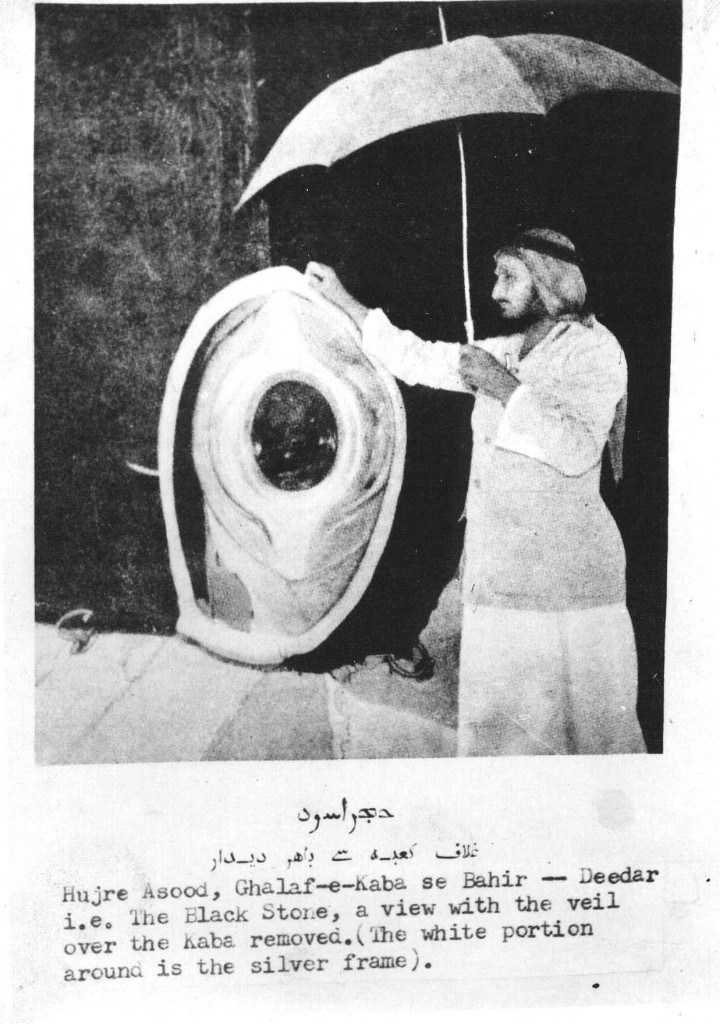
  • Description of Idol Worshipped in Kaaba Travels In Arabia 1829 Latest Video

    Description of Idol Worshipped in Kaaba Travels In Arabia 1829 Latest Video

    Islamic texts are cagey about the description of the Idol worshipped in in Kaaba.

    There were 360 Idols before The Prophet in Mecca.

    They were worshipped by the Arabs.

    These were destroyed on the orders of the Prophet.

    I have written on Pre Islamic Arabia.

    The Worship of Many God’s, Polytheism was practiced.

    The Religious concepts were from Sumeria,Sassanian empire,Iran and from Greece.

    All these were derived from Santana Dharma.

    I have written on the influence of Santana Dharma on all these civilisations from whom the Pre Islamic Deities were derived.

    Please check under Hinduism category in this site in the drop down Menu.

    Or Google the search term,for example Sumeria Hinduism +ramanan 50.

    I reproduce the description of The Idol at Kaaba from a Travelogue of 1829.

    ‘It is an irregular oval, about seven inches in diameter, with an undulated surface composed of about a dozen smaller stones of different sizes and shapes, well joined together with a small quantity of cement and perfectly well smooth; it looks as if the whole had been broken into as many pieces by a violent blow and then united again.”

    Below is the Video of the Idol worshipped in Kaaba.


    described in Western literature in the 19th century, Swiss traveler Johann Ludwig Burckhardt visited Mecca in 1814 and provided a detailed description of the Black Stone in his 1829 book Travels in Arabia:

  • Ghazni Muhammad Destroyed Somnath For Manat Arabia,A Hindu Goddess?

    Ghazni Muhammad Destroyed Somnath For Manat Arabia,A Hindu Goddess?

    I have often wondered why Ghazni Muhammad should single out the Somnath Temple,an Abode and Temple of Shiva in Gujrat.

    An idol of her was also likely among the 360 idols in the Kaaba. According to Ibn al-Kalbi, when worshipers would circumambulate the Kaaba, they would chant her name along with that of her sisters, al-Lat and al-Uzza, seeking their blessings and interception.[12]


    The attack on Somnath temple in India in 1024 by Mahmud of Ghazni may have been inspired by the belief that an idol of Manat had been secretly transferred to the temple.[20] According to the Ghaznavid court poet Farrukhi Sistani, who claimed to have accompanied Mahmud on his raid, Somnat (as rendered in Persian) was a garbled version of su-manat referring to the goddess Manat. According to him as well as a later Ghaznavid historian Abu Sa’id Gardezi, the images of the other goddesses were destroyed in Arabia but the one of Manat was secretly sent away to Kathiawar (in modern Gujarat) for safe keeping. Since the idol of Manat was an aniconic image of black stone, it could have been easily confused with a lingam at Somnath. Mahmud is said to have broken the idol and taken away parts of it as loot and placed so that people would walk on it. In his letters to the Caliphate, Mahmud exaggerated the size, wealth and religious significance of the Somnath temple, receiving grandiose titles from the Caliph in return’

    Source.

    https://en.m.wikipedia.org/wiki/Manat_(goddess)

    Manat was also thought to watch over graves, as indicated by a tomb inscription reading “And may Dushara and Manat and Qaysha curse anyone who sells this tomb or buys it or gives it in pledge or makes a gift of it or leases it or draws up for himself any document concerning it or buries in it anyone apart from the inscribed above”.[2]

    • 1025: Somnath: Mahmud sacks the temple and is reported to have personally hammered the temple’s gilded Lingam to pieces, and the stone fragments are carted back to Ghazni, where they are incorporated into the steps of the city’s new Jama Masjid (Friday Mosque) in 1026. He places a new king on the throne in Gujarat as a tributary. His return detours across the Thar Desert to avoid the armies of Ajmerand other allies on his return.( https://en.m.wikipedia.org/wiki/Mahmud_of_Ghazni )

    Islamic sources indicate that Ghazni Muhammad believed that an Idol of Manat was spirited away to Somnath ,India from Mecca when the idols at Mecca’s were destroyed at the behest of The Prophet.

    The information.


    Contrary to what we have been taught,Arabia indeed had Religion and street culture before the advent of The Prophet.

    The Pre Islamic Arabia had a Religion and they had a Pantheon of Gods ,whose legends have been borrowed from Hinduism.

    Arabia was influenced by Sumrerian Culture and Religious practices.

    Sumerian culture in turn was influenced by Vedic and Tamil culture.

    Among the host of Goddesses were three,Al-Uzza,Al-Lat and Manat.

    Three Arabian Goddesses.image

    Pre Islamic Goddesses Al-Lat, Al-Uzza, Manat

    Image Credit. https://www.booksfact.com

    The Prophet Muhammad destroyed around 300 Idols in Mecca.

    These included the Navagrahas and Saraswathi.

    The three Goddesses mentioned above are from the Hindu Trinity of Goddesses Saraswathi,Lakshmi and Durga.

    Please read my articles on Mithraism around the world.

    Will be writing on these  Arabian Gods and Goddesses in detail.

    The Goddesses Al-Uzza, Al-Lat and Menat formed a triad in pre-Islamic Arabia. They were widely worshipped: from Nabatean Petra in the North to the legendary Kingdoms of Arabia Felix in the South, including Saba, the Biblical Sheba; as far east as Iran and Palmyra; and the three of them were very popular Goddesses in Mecca at the time of Mohammed. From left they are: Al-Uzza, whose name means “The Mighty One”, the Goddess of the Morning Star; Al-Lat, the Mother, whose name means simply “The Goddess”, as Al-Lah simply means “The God”; and Manat, Crone-goddess of Fate or Time. Sometimes the three of them are referred to as the daughters of Al-Lah; sometimes Manat and Al-Lat are considered daughters of Al-Uzza.(. Image and quote from. http://www.thaliatook.com/AMGG/arabtriple.php )

    The pre-Islamic Arabs believed Manāt to be the goddess of fate. The followers prayed to her for rains and victory over enemies. She was considered the wife of Hubal.There are also connections with Chronos of Mithraism and Zurvan mythology. The Book of Idols describes her:

    The most ancient of all these idols was Manāt. The Arabs used to name [their children] ‘Abd-Manāt and Zayd-Manāt. Manāt was erected on the seashore in the vicinity of al-Mushallal in Qudayd, between Medina and Mecca. All the Arabs used to venerate her and sacrifice before her. The Aws and the Khazraj, as well as the inhabitants of Medina and Mecca and their vicinities, used to venerate Manāt, sacrifice before her, and bring unto her their offerings… The Aws and the Khazraj, as well as those Arabs among the people of Yathrib and other places who took to their way of life, were wont to go o

    n pilgrimage and observe the vigil at all the appointed places, but not shave their heads. At the end of the pilgrimage, however, when they were about to return home, they would set out to the place where Manāt stood, shave their heads, and stay there a while. They did not consider their pilgrimage completed until they visited Manāt.

    — Book of Idols, pp 12–14

    The attack on Somnath Temple in India in AD 1024 by Mahmud of Ghazni may have been inspired by the belief that an idol of Manat had been secretly transferred to the temple.According to the Ghaznavid court poet Farrukhi Sistani, who claimed to have accompanied Mahmud on his raid, Somnat (as rendered in Persian) was a garbled version of su-manat referring to the goddess Manat. According to him as well as a later Ghaznavid historian Gardizi, the images of the other goddesses were destroyed in Arabia but the one of Manat was secretly sent away to Kathiawar (in modern Gujarat) for safe keeping. Since the idol of Manat was an aniconic image of black stone, it could have been easily confused with a Shiva lingam at Somnath. Mahmud is said to have broken the idol and taken away parts of it as loot and placed so that people would walk on it. In his letters to the Caliphate, Mahmud exaggerated the size, wealth and religious significance of the Somnath temple, receiving grandiose titles from the Caliph in return.

    Reference and citation.
    Thapar, Romila (2004), Somanatha: The Many Voices of a History, Penguin Books India, pp. 45–51, ISBN 1-84467-020-1

    https://en.m.wikipedia.org/wiki/Manāt#cite_ref-10

    • Ibn al-Kalbī; (author) and Nabih Amin Faris (translator & commentary) (1952): The Book of Idols, Being a Translation from the Arabic of theKitāb al-Asnām. Princeton University Press. LCCN 52-6741.
    • Grunebaum, G. E. von (1970). Classical Islam: A History 600 A.D. – 1258 A.D.. Aldine Publishing Company. ISBN 978-0-202-15016-1.