Tag: Raghuvamsa

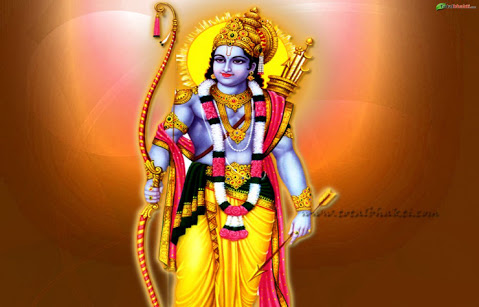
  • Lord Rama Grandmother Pandyan Princess Indumadhi

    Lord Rama Grandmother Pandyan Princess Indumadhi

    Indian historians,if there be any, being Secular (?) Anglophiles,are a strange species.

    They would accept accept as Gospel the information provided by Greek Historians like Thucydides,others like Plutarch and Edward Gibbon,would brush aside Indian History recorded by Puranas,Ramayana,Mahabharatha,Kalidasa’s Raghuvamsa as myths.

    Puranas and Ithihasas,Ramayana and Mahabharatha are dismissed because they are religious texts(?).

    Yet they would accept the Bible!

    Despite Kalidasa naming Raghuvamsa,meaning the Lineage of Raghu,ancestor of Rama,Raghuvamsa is ignored for history researches!

    Why?

    I shall be presenting information from Raghuvamsa on the Lineage of Raghu and Rama.

    I have written with evidence that Manu was a Dravidian and there was no Aryan Invasion.

    I have also written on the Ikshvaku Dynasty,the Solar Dynasty,Suryavansha.

    Lord Rama’s Sister Shanta was married to Rishyashrunga of Sringeri,presently in Karnataka.

    Rama’s ancestor Sibi,a Chola King built the Thiruvellarai Temple,about 10 km from Srirangam,Tamil Nadu in honour of Lord Vishnu as Pundarikaksha.


    Details of the temple can be had from this site.

    Details of the lineages of Ramayana and Seetha are described in the Bala Kandahar of Valmiki Ramayana.

    naabhaagasya bhabhuuva aja ajaat dasharatho abhavat |
    asmaat dasharathaat jaatau bhraatarau raama lakSmaNau || 1-70-43

    43. naabhaagasya aja bhabhuuva= Naabhaaga’s, Aja, became – son; ajaat dasharathaH abhavat= from Aja, Dasharatha, is manifest; asmaat dasharathaat= from him, from Dasharatha,; bhraatarau raama lakSmaNau jaatau= brothers, Rama, Lakshmana, are born.

    “Aja was Naabhaaga’s son and from Aja, this Dasharatha is manifest, and from him, from this Dasharatha, these brothers, Rama and Lakshmana are born… [1-70-43]’

    http://www.valmikiramayan.net/bala/sarga70/bala_70_frame.htm

    Rama was the son of Dasaratha and therefore the grandson of Aka.

    Aja married Indumathi,a Pandyan Princess at her Swayamvara.

    The suitor-princes assemble in the hall where Indumati enters with garland in hand fully robed as a selecting bride creating a sensation among the assembled princes. She is chaparoned by her nurse named lady sunanda under whose guidance she passes on from prince to prince until she comes in front of Aja; she looks lovingly at him and puts the garland round his neck much to the chagrin of the rival suitors and to the approval of the populace who express it by vociforous acclamations. – KMG

    Notes and commentary of Kishanrao Madhavarao Joglekar on this 6th canto is made available here 1 MB pdf for further reading….

    .

    स तत्र मञ्चेषु मनोज्ञवेषान्सिंहासनस्थानुपचारवत्सु|
    वैमानिकानाम् मरुतामपश्यदाकृष्टलीलान्नरलोकपालान्॥ ६-१

    sa tatra mañceṣu manojñaveṣānsiṁhāsanasthānupacāravatsu|
    vaimānikānām marutāmapaśyadākṛṣṭalīlānnaralokapālān || 6-1

    sa tatra ma~nceShu manoj~naveShAnsi.nhAsanasthAnupacAravatsu |
    vaimAnikAnAm marutAmapashyadAkR^iShTalIlAnnaralokapAlAn || 6-1

    sa tatra ma.mceSu manoj~na veSAn si.mhAsanasthAn upacAravatsu vaimAnikAnA.m marutAm apashyat AkR^iSTa lIlAn nara loka pAlAn

    6-1. saH= he that prince aja; tatra= there, in svayamvara maNDapa – the hall of bride’s personal selection of bridegroom; upacAravatsu= rAja upacAra upakaraNa yukteSu – which is having paraphernalia for attending kings; ma.nceSu= on such podium; si.mhAsanasthAn= on thrones – befitting to visiting kings; manoj~na veSAn= charmingly, decorated; vaimAnikAnA.m= those who travel in celestial aircrafts; marutAm= of such gods; AkR^iSTa= Atta = drwan, permeated; lIlAn= saubhAgyAn= [celestials’] magnificence; AkR^iSta vaimAnika marullIlAn – iti arthaH= who have pre-empted the magnificence of gods who travel in celestial aircrafts; nara loka pAlAn= human, world, rulers; sApekshatvAt api gamakatvAt samAsaH= mundane kings who looked ultramundane; apashyat= [prince aja] has seen.

    In the hall of swayamvara prince aja has seen other princes and kings who have come as suitors of princess indumati sitting on befitting thrones placed on a stepped podia, where apparatus required for the comforts of visiting kings, like fanning instruments, refreshment liquors etc are provided, and those mundane princes have decorating themselves charmingly and looked ultra mundane as though they have preempted the magnificence of celestials whose wont is to travel in aircrafts. [6-1]..

    –o)0(o–

    नेत्रव्रजाः पौरजनस्य तस्मिन्विहाय सर्वान्नृपतीन्निपेतुः|
    मदोत्कटे रेचितपुष्पवृक्षा गन्धद्विपे वन्य इव द्विरेफाः॥ ६-७

    netravrajāḥ paurajanasya tasminvihāya sarvānnṛpatīnnipetuḥ|
    madotkaṭe recitapuṣpavṛkṣā gandhadvipe vanya iva dvirephāḥ || 6-7

    netravrajAH paurajanasya tasminvihAya sarvAnnR^ipatInnipetuH |
    madotkaTe recitapuShpavR^ikShA gandhadvipe vanya iva dvirephAH || 6-7

    netra vrajAH paura janasya tasmin vihAya sarvAn nR^ipatIn nipetuH mada utkaTe recita puSpa vR^ikshA ga.mdha dvipe vanya iva dvirephAH

    6-7. paura janasya= of city, people; netra= eyes; vrajAH= hosts of [eyes]; sarvAn nR^ipatIn vihAya= all, kings, on leaving off – refraining to gaze at other kings; tasmin= on him, on prince aja; mada utkaTe= ichor, on temples – ruttish elephants with ichor oozing on temples; vanya= in forest – wild elephant; ga.ndha dvipe= on smelly, elephant; recita puSpa vR^ikshA= that are left off – leaving trees, flowered, trees; dvirephAH iva= honeybees, as with; nipetuH= fell – eye fell on prince aja like honeybees.

    Refraining from gazing at all the other suitor princes, the host of eyes of city dwelling hosts fell on prince aja, as with honeybees refraining from the flowered trees on which they are so far hovering for nectar fall upon a wild elephant when it nears with strong smelling ichor oozing on its temples. [6-7]

    Here the swarm of honeybees – u.mA; host of eyes of people – u.me; leaving one place to go to the other – anugAmidharma; leaving off all kings – bimba; leaving off flowered trees – pratibimba. There is no adhika visheShaNatva doSha in this upama

    ….

    sā cūrṇagauram raghunandanasya dhātrīkarābhyām karabhopamorūḥ |

    āsañjayāmāsa yathāpradeśam kaṇṭhe guṇam mūrtamivānurāgam || 6-83

    sA cUrNagauram raghunandanasya dhAtrIkarAbhyAm karabhopamorUH |
    Asa~njayAmAsa yathApradesham kaNThe guNam mUrtamivAnurAgam || 6-83

    sA cUrNa gaura.m raghunandanasya dhAtrI karAbhyA.m karabha upama UrUH Asa~njayAmAsa yathA pradesha.m kaNThe guNa.m mUrtam iva anurAgam

    6-83. karabha= kara pradesha visheSaH – from wrist to the tip of small finger of a hand, a hand sized; upama=similar to; UrUH= one having that much thighs – slender thighed indumati; sA= she – indumati; cUrNa gaura.m= with kumkum powder, which became red; guNa.m= usually means a thread, here a thread to which flowers are knotted – garland; mUrtam anurAgam iva= embodiment, of [her] love, as though; dhAtrI karAbhyA.m= with nurse sunanda‘s, hands; raghunandanasya kaNThe= around Raghu’s legatee – prince aja‘s, neck; yathA pradesha.m= in correct position; Asa~njayAmAsa= garlanded; na tu sva karrabhyAm – anaucityAt – The princess did not garland him with her own hands as it would be indecorous. So indumati used the hands of sunanda to garland prince aja.

    Then that princess with slender-thighs indumati caused the bridal-garland, which is already reddened with auspicious kumkum powder, to be properly placed by the hands of her nurse sunanda around the neck of raghu’s son, prince aja, and then that reddish garland looked the very embodiment of her blushing love towards him. [6-83]

    This is disputed as ‘kalpita upama’ and ‘utpreksha’.

    –o)0(o–

    तया स्रजा मङ्गलपुष्पमय्या विशालवक्षःस्थललम्बया सः|
    अमंस्त कण्ठार्पितबाहुपाशाम् विदर्भराजावरजाम् वरेण्यः॥ ६-८४

    tayā srajā maṅgalapuṣpamayyā viśālavakṣaḥsthalalambayā saḥ|
    amaṁsta kaṇṭhārpitabāhupāśām vidarbharājāvarajām vareṇyaḥ || 6-84

    tayA srajA ma~Ngala puShpa mayyA vishAla vakShasthala lambayA saH ama.msta kaNTha arpita bAhu pAshA.m vidarbha rAja avarajA.m vareNyaH

    84. vareNyaH saH [prince ajaH]= worthy to be chosen, he, that prince aja; ma~Ngala puShpa mayyA= which is with auspicious, flowers, full of; vishAla vakShasthala lambayA= on braod, chest, danglinng; tayA srajA= by that, garland; vidarbha rAja avarajA.m= vidarbha’s, king’s, sister – indumati; kaNTha arpita= around neck, dedicated; bAhu pAshA.m= arms, loop of; ama.msta= felt.

    By that garland of auspicious flowers looped around his broad chest that worthy prince aja felt as if princess indumati had whorled her delicate arms around his neck. [6-84]

    Citation and reference with eternal thanks to,

    https://sanskritdocuments.org/sites/giirvaani/giirvaani/rv/sargas/06_rv.htm

    Treasure chest of Sanatana Sharma.

    Related information.

    https://ramanisblog.in/2014/06/20/indus-valley-inscriptions-written-in-tamil/

  • Raghu Rama’s Ancestor Conquered Central Asia China Middle East

    Raghu Rama’s Ancestor Conquered Central Asia China Middle East

    My view that Indian Puranas,Ithihasas,Ramayana,Mahabharatha,Literary works of Kalidasa,Kalhana in Sanskrit and the Tamil Classics of the Sangam Era and later works including the works of Azhwars,the worshipers of Vishnu and Nayanmars,worshipers of Shiva are recorded History of India.

    We tend to treat the Puranas and Ithihasas as fiction and figment of imagination and the litereary works as mere hyperbole.

    Nothing can be farther from Truth.

    Puranas and Ithihasas ,no doubt talk of spirituality but they are also facts.

    Similarly the Sanskrit and Tamil literature might contain exquisitely composed allegories,descriptive hyperboles of Kings’achievements and Nature,they also contain facts,geographical and historical.

    This is evidenced by a careful reading of these Texts,starting from the Vedas through Ramayana,Mahabharatha,Puranas and Tamil Sangam Classics .

    The facts mentioned can be verified against Geological,Historical facts as found in foreign literature and physical verification of Geographical descriptions.

    This blog has details of such verified facts and they can be accessed undr Hinduism,Tamils Category.

    I have been concentrating on the texts mentioned above save Sanskrit literature.

    Now I begin by exploring the Raghuvamsa by Kalidasa,which details the Dynasty of Raghu of Ikshvaku Dynasty.

    Lord Rama,who is from Ikshvaku Dynasty,is of such great stature that one does not bither about Rama’s illustrious ancestors,say Dillepa and Raghu.

    Raghu was so powerful that Kalidasa named his epic as Raghuvamsa,the Raghu Dynasty.

    Kalidasa records that Raghu invaded Cetral Asia and middle east and conquered them

    He defeated the Central Asians,the Chinese, the ancestors of the Arabs and White Huns.

    Please read my article on Huns.

    The warrior Raghu leads a military expedition to Transoxiana. He defeats and subjugates local people along the way (presumably on his march through Central Asia) until he reaches the Vankshu, as the ancient Indians called the Oxus River. There, Raghu’s army battles the Hepthalites, or White Huns, whom the Indians called Hunas and Mlecchas (barbarians). The Hepthalites are defeated, and the Raghuvamsha boasts of “The exploits of Raghu, whose valor expressed itself amongst the husbands of the Huna women, became manifest in the scarlet colour of their cheeks.”

    After crossing the Oxus, Raghu and his army encountered the Kambojas, an ancient Indo-Scythian people often mentioned in Indian texts. The Kambojas submitted to Raghu and offered him gifts and treasures. Evidently, the Kambojas dwelt in the vicinity of the Pamirs. Kalidasa describes the preponderance of walnut trees in the Oxus country, this particular region is still known for the cultivation of walnuts…..

    Transoxiana (also spelled Transoxania), known in Arabic sources as Mā warāʼ al-Nahr(Arabicما وراء النهر‎‎ Arabic pronunciation: [ˈmaː waˈraːʔ anˈnahr] – ‘what [is] beyond the [Oxus] river’) and in Persian as Farārūd (Persianفرارود‎‎, Persian pronunciation: [fæɾɒːɾuːd]—’beyond the [Amudarya] river’), is the ancient name used for the portion of Central Asiacorresponding approximately with modern-day UzbekistanTajikistan, southern Kyrgyzstan, and southwest Kazakhstan. Geographically, it is the region between the Amu Darya (Ancient GreekΏξος Ốxos) and Syr Darya rivers.[1] The area had been known to the Romans as Transoxania (Land beyond the Oxus), to the Arabs as Mawarannahr (Land Beyond the River), and to the Iranians as Turan, a term used in the Persian national epic Shahnameh…

    Hephthalites (or Ephthalites) was the Latinised exonym for a people of Central Asia who were militarily important circa 450-560. They were based in Bactria and expanded east to the Tarim Basin, west to Sogdia and south through Afghanistan to northern India. They were a tribal confederation and included both nomadic and urban, settled communities…

    Chinese sources link the Central Asian tribes comprising the Hunas to both the Xiongnu of north east Asia and the Huns who later invaded and settled in Europe.Similarly, Gerald Larson suggests that the Hunas were a TurkicMongolian grouping from Central Asia. The works of Ptolemy (2nd century) are among the first European texts to mention the Huns, followed by the texts by Marcellinus and Priscus. They too suggest that the Huns were an inner Asian people’

    Reference and citation.

    https://en.m.wikipedia.org/wiki/Raghuvaṃśa

    Image Credit. https://www.google.co.in/search?q=raghuvamsa&client=tablet-android-huawei&prmd=vin&source=lnms&tbm=isch&sa=X&ved=0ahUKEwjls4Ghg4TVAhVBq48KHYOeALUQ_AUICigC&biw=1280&bih=800#imgrc=K9mOu81d3RC0LM: