
Skanda is referred to in the Vedas and the Mahabharata.
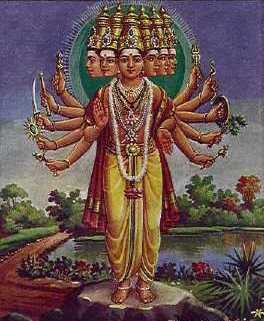

Popular conception is that Skanda is another name for Muruga or Subrahmanya.
However Mahabharata says Skanda is the son of Agni,possibly because Agni carried the Tejas of Shiva before he let if off in Saravana Poigai;the Tejas
became Skanda, Muruga,Subrahmanya.
However the narration in Mahabharata is different.
Skanda Upanishad , one of the 108 Upanishads,deals with Shiva Vishnu Identity.
It exhorts that Both Shiva and Vishnu are the same.
The text is devised as being addressed by Skanda.
One may find in the beginning of the Upanishad ‘He is confused’ etc.
Subrahmanya,the best of Brahmins is definitely not confused.
As a Self Enuiry, the Text is narrated.
We have Somaskanda which is not to be confused with Skanda.
It is a form of Siva worshiped by Vishnu.
Skanda is worshiped as A Deity in Chinese Buddhism as Bodhisattva.
‘
Another Story of Skanda’s Birth. Skanda not Muruga?
The Purānas relate many a stories of the birth of Kārtikeya or Skanda, the younger son of Rudra-Shankara and Umā-Pārvati, brother of Ganapati. In the Āranyaka Parva of Mahābhārata, Ŗshi Mārkandeya tells the forest-dwellingPāndavas, the story of the birth of Skanda. The most intriguing part of this story is that the father of Skanda is Agninamed as Adbhut(Fantastic) and Skanda is born in a weird manner and in the course of deception. The story goes like this:
‘In a yadnya performed by the seven great Sages, Indra and other Gods were present for Soma drinking. AnAgni called ‘Adbhut’, (which literally means ‘fantastic’) from the heavens arrived there without uttering a word. While returning from the yadnya, after giving the offering to the respective Gods; Adbhut eyed the wives of the Seven Sages. This made Adbhut extremely passionate and he developed a carnal desire for the seven ladies. Thinking that he will not be able to see them if he goes back to the heavens, he entered the ‘Gārhapatya Agni’, which is the Agni of the house. He could watch the ladies closely by staying there. In spite of his lust he was unable to woo the chaste matrons. In frustration, he went to the forest.
The daughter of Daksha was amorously attracted to Adbhut. She decided to impersonate the wives of the sages and have intercourse with Adbhut. First she impersonated ‘Shivā’, the wife of sage Angirā, and went to the forest. She told Adbhut that she had a discussion with her other six friends, the wives of the sages, who were all enamoured with him. Then she had intercourse with Adbhut. In order to keep her secret, she transformed herself into a female eagle and went to Mount Shaila on ‘Shwetaparvata’ and poured the sperm of Adbhut in a golden tank. She repeated this act six times (in one day?) by impersonating the wives of the sages one by one. However, she failed to impersonate Arundhati, the wife of sage Vasishtha.
From the sperm of Adbhut, ejaculated six times, a strange child with six heads, twelve eyes-ears and arms, but a single throat and abdomen was born. The ejaculation of the sperm took place on Day I (a day of new moon), the infant appeared on Day II, he showed himself as a child on Day III and on Day IV, he was in his full glory. At that time he resembled the Sun engulfed in a red cloud. He picked up the bow of Shankara and uttered a terrifying roar. The entire world almost fainted by his roar. The two elephants, ‘Chitra’ and ‘Airāvata’ who rushed to the scene upon hearing his roar, were picked like toys by him. At this time the child looked like the Sun.
The child, Skanda, stood on the Mount Mahāshwetā and started gazing in all directions with his six pairs of eyes. Then he started shooting arrows with his bow. The son of Himālaya, the mountain Krauncha, fell down with a great shriek as he was mutilated by the arrows. Other mountains also started shrieking. When a mountain top of Shwetagiri was cut off by one of the arrows; that frightened mountain flew away with other mountains from that region. This caused a lot of distress to the earth and it was torn on all sides. All this happened on Day V. Since then, on Day V of every month, people started worship of Skanda.
After the birth of Skanda, fearsome disasters of different kinds started occurring. The natures of men and women changed. The duality of heat and cold also changed. The sky and the planets looked as if on fire. The earth too started roaring loudly.’
In this story, the parenthood of Skanda has been given to a celestial Agni (Fire) called Adbhut and Swāhā, who represents through impersonation, the six wives of six sages. At the time of offering havi in Agni, the word ‘Swāhā’ is chanted. So this union of Agni and Swāhā has been depicted as the cause of Skanda’s birth.
The sage Mārkandeya narrates this story in the Mahābhārata. He describes the efforts made by the wives of the sages to prove their innocence. Of their husbands, only Vishwāmitra accepts their innocence and surrenders toSkanda. After noting these details the story turns to Indra.
‘On hearing of Skanda’s birth, his power and valour; all the Gods rushed to Indra and said, ‘O King of Gods, this power of Skanda has become unbearable. Destroy him quickly without any delay. O Mighty Indra, if you do not destroy him now; he will become the King of Gods by overpowering all of us and even you.’ ThenIndra said to all the Gods, ‘O Gods, this child is extremely powerful. He can even beat Brahmā the Creator in battle. Hence, I do not have the courage to fight him.’
On hearing this, the Gods said, ‘You are uttering such words because you do not have any power and valour left in you.’
Seeing that Indra has backed out, the Gods sent Matŗkas (Mother Goddesses) to destroy Skanda. But on seeing Skanda’s power and glory, the Mātŗkās started lactating. They wished that Skanda should suck milk from their breasts and Skanda fulfilled their wish. Thus, these Mātŗkās became the mothers of Skanda and stood with him for his defense. From the ire of these Mātŗkās a woman was created, holding a Trident in her hand. Her food was blood and she was cruel like the Red Sea. Goat-headed Agni as described in the Vedas stood alongside her to defend Skanda.’
Battle between Skanda and Indra
Now Indra himself attacked Skanda and his celestial army. Mahābhārata describes, ‘the celestial army of Skandaincluded Mātŗkās, Ŗshis, Grahas, fire-spitting ‘Pārshadas’ and other fierce-looking heavenly individuals. All of them surrounded Skanda in his defense.
Indra, surrounded by Gods, was proceeding with great speed with his Vajra in his hand; intending to destroy Skanda.’
The story further describes the two opposing forces and their battle cries in a poetic manner. Then the story continues as follows, ‘Skanda, the son of Agni, beheld the Gods come together with the intent to destroy him and was furious. He started spitting fire and burning the celestial army of Indra. The Gods then deserted Indra and surrendered to Skanda. After the Gods deserted Indra, he hurled his Vajra on Skanda. The Vajra woundedSkanda on his right hip and a part of it was broken. From that broken part another warrior emerged. This warrior was known as Vishākha. Indra was terrified on seeing another warrior resplendent like an infernalAgni (Fire). He surrendered to Skanda with folded hands. Then Skanda granted amnesty to Indra along with his forces. All the Gods were pleased by this and started playing musical instruments.’
The story further describes the male and female evil ‘Grahas’, formed out of Skanda’s body and concludes, ‘In this manner, on Day V several ‘Pārshadas’ having different shapes were formed. On Day VI, there was a great battle.’
The first half of this story ends with the surrender of Indra in his battle with the newly born Skanda. This story is a great challenge for someone trying to interpret Vedic literature. In this story Rudra-Mahādeva and Umā-Pārvati are nowhere mentioned as the parents of Skanda. Even their existence goes unnoticed except one mention of Skanda picking the bow of Shankara in his hand.
Skanda was born of a celestial Agni named Adbhut on Day I. He grew rapidly till Day IV. On Day V, fierce and fire-spitting ‘Pārshadas’ were formed and on Day VI there was a great battle between Skanda and Indra. This battle was fierce and although Indra lost, Skanda too was broken into two pieces by Indra’s Vajra. One piece continued to be called Skanda and the other was named as Vishākha. The destruction in the battle is related to mountains and rocks. The only human factor is Swāhā and that too because she impersonated the wives of the Sages.
One can either ignore this story as a figment of imagination or accept it as a metaphoric representation of some astronomical event. Before going further, we would like to narrate and comment on the second half of this story fromMahābhārata.
A part of the second half deals with the description of the reconciliation between Indra and Skanda, Skanda’s appointment as the General of the celestial army of Gods, his marriage with the daughter of Indra, acceptance ofSkanda as their son by the couple Shankara–Pārvati, and the destruction of Mahishāsura by Skanda as a representative of Gods. It can be taken as an attempt to reconcile an ancient legend with the prevalent and accepted ideas. However, the references to some astronomical events and concepts of deities from this story have an important bearing on the hypothesis propounded in this book.
Om ! May He protect us both together; may He nourish us both together; May we work conjointly with great energy, May our study be vigorous and effective; May we not mutually dispute (or may we not hate any).
Om ! Let there be Peace in me ! Let there be Peace in my environment ! Let there be Peace in the forces that act on me !
1-5. (Skanda says): Great god ! Owing to an iota of your compassion I am the lapseless being (not lapsing from the identity). I am a mass of knowledge ! I am also the Good – what more (can I need) ?
Owing to the waxing of the Internal organ, what is not spiritual appears as such; by its warning, this is nothing but pure knowledge or Hari.
I am knowledge alone, unborn – what more ? All that is other (than) It is inert and perishes like a dream.
He who discerns the consciousness as distinct from the inert is the unswerving mass of knowledge. Only he is Shiva, Hari, luminary of luminaries, the supreme god, the Brahman – I am that Brahman surely.
6-7. Jiva is Shiva and Shiva is Jiva; when bound by husk it is paddy, unbound of is rice. Thus the bound one is Jiva, released from karma he is eternal Shiva. Bound by ropes, he is Jiva, unbound, Shiva.
8-9. (I bow) to Shiva of the form of Vishnu and Vishnu who is Shiva; Vishnu is Shiva’s heart and Shiva, Vishnu’s. Just as Vishnu is full of Shiva, so is Shiva full of Vishnu. As I see no difference, I am well all my life.
10-15. The body is said to be the temple, the deity Shiva is Jiva; one should throw away the flowers after worship and worship with the sense of identity. Perception of non-difference is knowledge, meditation the objectless mind. The bath is removal of mental impurity; cleanliness is control of the senses. One should drink the nectar of Brahma, take alms for sustenance, live by oneself devoid of duality. Such a person of wisdom will get liberation.
I bow to the supreme, sacred seat of power, to secure well-being and long life. They know themselves to be Brahman, Brahma, Vishnu, Shiva, beyond thought, unmanifest, endless, undecaying, by your grace, Nrisimha.
That high place of Vishnu the wise ones always behold like an eye extended in heaven. The sages, praising and awake exalt that supreme status of Vishnu.
This is the doctrine of liberation according to the Vedas.
Om ! May He protect us both together; may He nourish us both together; May we work conjointly with great energy, May our study be vigorous and effective; May we not mutually dispute (or may we not hate any).
Om ! Let there be Peace in me ! Let there be Peace in my environment ! Let there be Peace in the forces that act on me !
Here ends the Skandopanishad belonging to the Krishna-Yajur-Veda.
Translated by Dr. A. G. Krishna Warrier
Published by The Theosophical Publishing House, Chennai.
Text of Skanda Upanishad.
yatraasaMbhavataa.n yaati svaatiriktabhidaatatiH . .
sa.nvinmaatraM paraM brahma tatsvamaatra.n vijR^imbhate ..
AUM saha naavavatu . saha nau bhunaktu . saha viirya.n karavaavahai .
tejasvi naavadhiitamastu maa vidvishhaavahai ..
AUM shaantiH shaantiH shaantiH ..

achyuto.asmi mahaadeva tava kaaruNyaleshataH .
vij~naanaghana evaasmi shivo.asmi kimataH param.h .. 1..

na nija.n nijavadbhaati antaHkaraNajR^imbhaNaat.h .
antaHkaraNanaashena sa.nvinmaatrasthito hariH .. 2..

sa.nvinmaatrasthitashchaahamajo.asmi kimataH param.h .
vyatirikta.n jaDa.n sarva.n svapnavachcha vinashyati .. 3..

chijjaDaanaa.n tu yo drashhTaa so.achyuto j~naanavigrahaH .
sa eva hi mahaadevaH sa eva hi mahaahariH .. 4..

sa eva hi jyotishhaa.n jyotiH sa eva parameshvaraH .
sa eva hi paraM brahma tadbrahmaaha.n na sa.nshayaH .. 5..

jiivaH shivaH shivo jiivaH sa jiivaH kevalaH shivaH .
tushheNa baddho vriihiH syaattushhaabhaavena taNDulaH .. 6..

evaM baddhastathaa jiivaH karmanaashe sadaashivaH .
paashabaddhastathaa jiivaH paashamuktaH sadaashivaH .. 7..

shivaaya vishhNuruupaaya shivaruupaaya vishhNave .
shivasya hR^idaya.n vishhNuH vishhNoshcha hR^idaya.n shivaH .. 8..

yathaa shivamayo vishhNureva.n vishhNumayaH shivaH .
yathaantara.n na pashyaami tathaa me svastiraayushhi .. 9..

yathaantara.n na bhedaaH syuH shivakeshavayostathaa .
deho devaalayaH proktaH sa jiivaH kevalaH shivaH .. 10..

tyajedaj~naananirmaalya.n so.ahaMbhaavena puujayet.h .
abhedadarshana.n j~naana.n dhyaana.n nirvishhayaM manaH .
snaanaM manomalatyaagaH shauchamindriyanigrahaH .. 11..

brahmaamR^itaM pibedbhaikshyamaachareddeharakshaNe .
vasedekaantiko bhuutvaa chaikaante dvaitavarjite .
ityevamaachareddhiimaansa evaM muktimaapnuyaat.h .. 12..

shriiparamadhaamne svasti chiraayushhyonnama iti .
viri~nchinaaraayaNasha~Nkaraatmaka.n nR^isi.nha devesha tava
prasaadataH .
achintyamavyaktamanantamavyaya.n vedaatmakaM brahma nija.n vijaanate.. 13..
tadvishhNoH paramaM pada.n sadaa pashyanti suurayaH .
diviiva chakshuraatatam.h .. 14..

tadvipraaso vipanyavo jaagR^ivaa.nsaH samindhate . vishhNoryatparamaM padam.h .
ityetannirvaaNaanushaasanamiti vedaanushaasanamiti
vedaanushaasanamityupanishhat.h .. 15..

.. iti kR^ishhNayajurvediiya skandopanishhatsamaaptaa
Citation.
Skanda Upanishad Sanskrit Text
http://www.themeaningofvedas.com/CHAPTER%2021.htm
Related articles


Dear ramani,
I have some serious advice regarding the subramanya mantra siddhi or upasana.I want to do the best of beSt in subramanya upsana .can you provide the details who can advice me in.getting the mantra siddhi , as I have already chanting subramanya mantra for the past 18 years , but till now I have not attained the siddhi.
Mantra siddhi is attained by His Kataksha.Guru Mukha Upadesa and strict discipline are warranted.Pray Subrahmanya to guide you.I shall write a detailed article on this