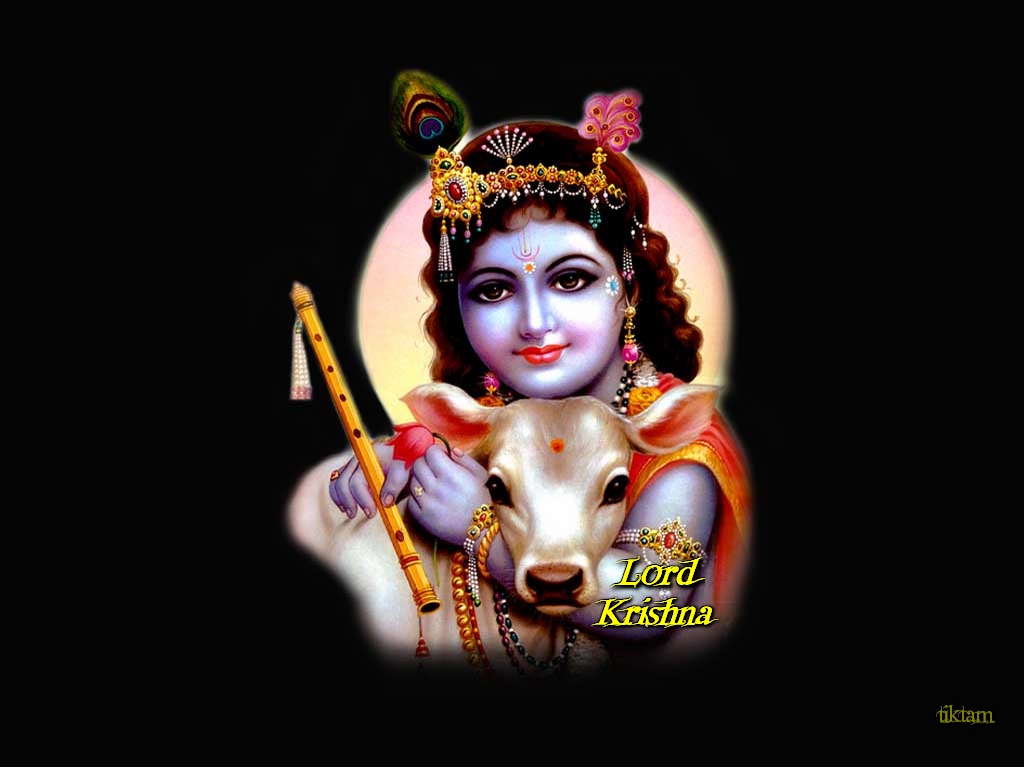
Tag: Vishnu purana

  • Veda Verses Hydrology Water Treatment

    The Vedas have not left even Hydrology.


    Water has been accorded the highest place in Hinduism.

    Water Cycle.Image.jpg.
    Water Cycle.


    So much so no Puja or Homa is complete without a praise of Water-Mantra Pushpam.


    Please read my post ‘Place of Water in Hinduism’


    Vedas describe Hydrology,Water Tables, the process of Rain.the system for increasing the Ground Water level..


    Every town,Village in the Vedic times has a Tank in the center of the city?village along with the temple.


    This water is meant for temple purposes.


    One more large pond was created just outside the village,Town, for bathing.


    For Drinking,wells were dug at Homes.


    There were two wells.


    One meant for Puja and drinking , another for taking Bath.


    The people were so conscious of pollution that they classified taking bath in a Pond as the least effective.


    The best places to take bath.


    1.Sea.

    2.River.

    3.Wells

    4.Ponds


    The Hydrology was so developed that they could predict Rainfalls region-wise.


    Atisthanteenam viveshnanam kashthanam madhyaey nihitam shareeram,

    Bratrasya nidyam vi varantyapo deerghatam aashaydindrashatruha.


    Verse I, 32, 10 says that the water is never stationary, but evaporates.


    Varahamihira in his Vraht Sanhita (550 A.D.), devotes three Chapters to hydro-meteorology comprising Pregnancy of clouds (Chapter 21),


    Pregnancy of air (Chapter 22) and quantity of rainfall (Chapter 23). Slokas 1 and 2 of Dakargelam (Chapter 54 of Vraht Samhita) state the importance of


    science of ground water exploration.


    These are,


    Dharmyam yashashyam va vadabhaytoham dakargalam yen jaloplabdhiha

    Punsam yathagdeshu shirastathaiva chhitavapi pronnatnimnasanstha.

    Ekayna vardayna rasayna chambhyashchyutam namasto vasudha vishayshanta

    Nana rastvam bahuvarnatam cha gatam pareekshyam chhititulyamayva.


    The water veins beneath the earth are like vein’s in the human body, some higher and some lower.


    The water falling from sky assumes various colours and tastes from differences in the nature of the earth. In Linga Purana a full-fledged chapter (I, 36) has been devoted to the science of hydrology.


    It scientifically explains evaporation, condensation, rainfall with suitable examples and says that the water cannot be destroyed, only its state is changed:


    Dandhaymanayshu charachayshu godhoombhootastvabha nishkramantee

    Ya ya oordhva mastraynayrita vai tastastvabhamyagnivayucha.

    Ato dhoomagnivatanam sanyogstavamuchyatay

    Vareeni varshteetyabhrambhrasyeshah sahastradrik.


    i.e. “after being heated by sun, water contained in most of the materials on earth gets converted to smoke (vapour) and ascends to sky with the air and subsequently gets converted to cloud. Thus the combination of smoke, fire and air is the cause of cloud formation. These clouds cause rainfall under the guidance of Lord Indra, having thousand eyes. Vayu (51. 14-15-16) states like this:


    Aadityapateetam suryaganeha somam sankramatay jalam

    Nadeebhirvayuyuktabhirlokadhanam pravartatay.

    Yatsomatstravatay surya tadbhayshvavatishthatay

    Megha vayunighatain visrajant jalam bhuvi.

    Evamutikshapyatay chaiva patatay cham punarjalam

    Na nashmu udkasyasti tadev parivartatay.


    i.e. the water evaporated by sun ascends to atmosphere through the capillarity of air, and there gets cooled and condensed. After formation of clouds it rains by the force of air. Thus, water is not lost in all these processes but gets converted from one form to other continuously. Verses of Rigveda (I, 27.6; I, 32.8):


    Vibhaktasi chitrabhano sindhoroorma upak aa

    Sagho dashushay chharasi.

    Nadam na bhinnamuya shayanam mano ruhana atim yantyapah

    Yashchidwatro mahina paryatishthattasamhih patsutah shirbbhoova.


    This verse explains that all water that goes to the sky with wind by the heat of Sun rays gets converted to clouds and then again after the penetration by sunrays it rains and gets stored into rivers, ponds, ocean, etc. Two verses (V, 54, 2 & V,55, 5) explain the cloud-bearing winds as the cause of rainfall, viz.:


    Pra vo marootaststavisha udnyavo vayovridho ashwayujah parijayah

    San vighuta dadhati vashati tritah swarntyapoivana parijayah.

    Udeeryatha marootah samudrato youam vrishtim varshyatha pureeshidam

    Na vo dastra up dasyanti dhanayvah shubam yatamanu ratha avratsat.


    Surface Water

    Efficient water use, lining of canals, construction of dams, tanks, essential requirements for the construction of good tanks, bank protection methods, spillways and other minor aspects were given due consideration in ancient times in India. Well organized water pricing system was prevalent during the time of Kautilya. Various references are available in the Vedas emphasizing the importance of efficient water use so as to reduce the intensity of water scarcity and drought, etc.


    Verses (184. 15–17) of Mahabharata state that the plants drink water through their roots. The mechanism of water uptake by plants is explained by the example of water rise through a pipe. It is said that the water uptake process is facilitated by the conjunction of air. This clearly reveals the knowledge of capillary action of soil in the movement of water up and down the plant. Two Mantras of Atharvaveda say that if the water source is on mountains, then the river formed will be perennial and will flow with high speed (AV.I., 15.3) and (AV.11, 3.1). Similarly Verse (II, 3.1) reveals the same fact saying that the rivers originating from snowclad mountains will keep on flowing in summers also.


    Ground Water

    People also developed technique of knowing the slope of an area by means of a flowing river. Variation in the height of water table with place, hot and cold springs, ground water utilization by means of wells, well construction methods and equipment are fully described in 54th chapter of Vrhat Sanhita named as ‘Dakargala’. Sunrays, wind, humidity, vegetation, etc., as the major causes of evapotranspiration were well realized.


    The Vishnu Purana (II, 5.3) classified the soils of subterranean region in seven categories, (i) Black (2) White or Yellowish (3) Blue or Red (4) Yellow (5) Gravelly (6) Hilly or boulder and (7) Golden hued. Regarding the occurrence of ground water, it says: “If there is a termite mound nearby to the east of a Jambu tree, plenty of sweet water, yielding for a long time occurs at a depth of two Purushas, at a distance of three hastas (cubit) to the south of the tree (Vr.S.54.9). Similarly, an Arjuna tree with a termite mound to the north shows water at a depth of 3.5 Purushas at a distance of 3 hastas to the west”.


    Hydro-meteorology

    In Vedic age, Indians had developed the concept that water gets divided into minute particles due to the effect of sunrays and wind. In various places in Puranas, it is stated that water cannot be created or destroyed, only its state is changed in various phases of the hydrologic cycle. Evaporation, condensation, cloud formation, precipitation and its measurement were well understood in India in Vedic times. Effects of Yajna, forests, reservoirs, etc. on rainfall; classification of clouds, their colour, rainfall capacity, etc.; forecasting of rainfall on the basis of natural phenomena, such as colour of sky, clouds, wind direction, lightening, and the activities of animals; all these were well developed in India even before the 10th century B.C. Contrivance to measure rainfall was developed during the time of Kautilya (4th century B.C.) which had the same principle as that of modern hydrology except that the weight measure of Drona was adopted instead of modern depth measurement of rainfall.


    The knowledge of monsoon winds and height of clouds along with the division of atmosphere was well-developed in the Vedic age.


    “O cloud-bearing winds, your troops are rich in water, they are strengthener of life, and are your strong bonds, they shed water and augment food, and are harnessed with waves that wander far and spread everywhere.


    Combined with lightning, the triple-group (of wind, cloud and lightning) roars aloud, and the water falls upon the earth.”


    By the time of Kautilya (4th century B.C.), Indians had developed the method and instrumental devices for measuring rainfall.


    This rain gauge was known as Varshaman. Kautilya describes its construction in these words


    “In front of the store house, a bowel (Kunda) with its mouth as wide as an aratni (nearly 18 inches) shall be set up as rain gauge,” (Arthasastra, Book II, Chapter V).


    Kautilya was acquainted with the distribution of rainfall in various areas.


    He furnishes a very accurate scientific description of the same with statistics.


    The quantity of rain that falls in the country of Jangala (desert countries) is 16 dronas (4 Adak = 1 drona and one adak equals nearly 7 lb, 11 oz), half as much in moist countries (the countries which are fit for agriculture), 13.5 dronas in the countries of Asmakas (Maharashtra); 23 dronas in Avanti, and an immense quantity in the western countries, the border of the Himalayas and the countries where water channels are used in agriculture.


    From this it is evident that the spirit of the methodology of the measurement of rainfall given by Kautilya is the same as we have today, the only difference is that he expresses it in weight measures while we use a linear measure nowadays (Arth, Chapter XXIV, Book II, P. 130).


    Further discussing the geographical details of rainfall, he observes “when one third of the requisite quantity of rain falls both during the commencement and closing months of the rainy season, and two third in the middle, then the rainfall is considered very even.”


    Discussing the classification of clouds and interrelationship of rainfall and agriculture, the celebrated author adds “there are the clouds which continuously rain for seven days; eighty are they that pour minute drops; and sixty are they that appear with the sunshine”.

    When rain, free from wind and unmingled with sunshine falls so as to render three turns of ploughing possible, then the reaping of good harvest is certain.


    The Vrhat Sanhita and Mayuracitraka by Varahamihira are two very important treatises which are replete with climatological and meteorological information, although they abound in astrological guesses, they contain sufficient scientific facts also.


    The Vrhat Samhita has three chapters (21st, 22nd, and 23rd_ on climatology and meteorology.


    The Jains have made considerable contribution in the field of meteorology.


    The ‘Prajnapana’ and ‘Avasyaka Curnis’ provide outstanding studies of the various types of winds.


    This tradition must have been far older than these treatises. The ‘Prajnapana’ makes reference of snowfall and hailstorm.


    The ‘Trilokasara’ of Nemichandra says that there are seven types of periodic clouds. T


    hey rain for seven days each in the rainy season. Then there are twelve species of white clouds.


    They also bring rain for seven days each.


    Thus the season of rainfall extends over 133 days in all.

    Buddhists too, at least before 400 B.C., have attempted at a very scientific classification of clouds and four species mentioned by them can be compared with the most important four species enumerated in modern meteorology.


    So much of subtle observation at such an early date is an achievement of the finest order.


    Water Purification

    It is very interesting to learn that Varahamihira in as early as 550 A.D. presented a simple method for obtaining potable water from a contaminated source of water.


    Various plant materials along with solar heating, aeration, quenching of water with fire heated stones, gold, silver, iron or sand were suggested for this purpose.


    The change in the quality of water with the months of year and suitability of water from different sources for various uses were described.


    Citation.


    Vedic Hydrology


    Enhanced by Zemanta
  • Mohenjo-Daro Destroyed by Indra Archaeology Hinduism

    Hinduism speaks of  Four types of Pralaya or Dissolution of the Universe.


    They are.


    FromVishnu Purana and Agni Purana,.

    Praakritik Pralaya, which is of 311,040,000,000,000 solar years duration, occurs after the completion of life of Brahma (i.e. 100 Brahma years = 311 trillion and 40 billion earth years = one day of Vishnu = 1 Parama). After the completion of one Brahma life cycle, the complete dissolution of all the entities (i.e. the Pancha Mahabhutha or Universe) takes place in the eternity (God). Praakritik Pralaya is the time for which Vishnu sleeps. The next morning, he again gives birth to a new Lord Brahma and asks him to create new worldly entities. Noticeably, Praakritik Pralaya and the Life of Brahma are of equal duration.

    Naimittika Pralaya, which is of 4,320,000,000 earth years, occurs just after the end of a Kalpa.

    Also, known as the Night of Brahma, it signifies the end of living world.

    In Bhagvata Purana, sage Shukdeva told king Parikshit that if Lord Brahma is supposed to be a child (for example), then in a similar way as a child plays with his toys i.e. making various structures from his toys during day and breaking or dismantling them before he goes to sleep at night; Brahma makes the living world during his day (i.e. Kalpa) and destroys it before going to sleep during night (i.e. Naimittika Pralaya). A new living world is created by Brahma, when he wakes up the next day and so on the cycle continues till Praakritik Pralaya. Again, Naimittika Pralaya and Kalpa are of equal duration.

    Atyantik Pralaya, also termed as Moksha, is the final deliverance or the attainment of salvation by a jivan (soul) and after that the jivan is never again in the clutches of karma; nor bounded by the tight ropes of Samsara. It is therefore a variable time span conditioned or determined by the practise of the different kind of Yogas or Prapatti.

    It is the final immersion of a soul (i.e. atma), thereby completely eliminating its individualism into the eternal almighty (i.e. Paramatma).

    Nitya Pralaya, is the sleep or by an extension thereof, Death.

    <img src="Brahma Life Span.jpg" alt="Brahma Life Span" />
    Life Of Brahma,Brahma Life Span


    In Naimithika Pralaya, that is at the end of the Day of Brahma’ the world is consumed by ferocious fire, people in Boo, Bhuva, Suvah Loka are


    destroyed and the people living in Mahar Loka move over to Jana Loka.


    Then these three worlds are inundated with water.


    Now archaeologists have found in Mohenja0- Daro,


    Mohenjo Daro
    Mohenjodaro .The ruins of Mohenjo-Daro in the Sindh province of Pakistan. Image: Arvind Garg

    ” the one anomaly among several at the site that has caused some researchers to suggest that there might have been forces unleashed in the past that are comparable to modern weapons. Walls, pottery and other items found in the city have been turned into a kind of ceramic glass, indicating that they were exposed to heat close to 1500 degrees Celsius. Evidence of ionizing radiation has also been found in some of the burial sites.

    The oldest myths of the Hindu religion, itself one of the oldest religions in the world, speak of gods flying in vehicles composed of dazzling light and intricately carved platforms calledvimanas, that waged war with one another using energy beams of incredible power. In the Hindu religious text known as the Mahabharata, there is a description of one such vehicle:

    “Gurkha flying in his swift and powerful Vimana hurled against the three cities of the Vrishis and Andhakas a single projectile charged with all the power of the Universe. An incandescent column of smoke and fire, as brilliant as ten thousands suns, rose in all its splendor. It was the unknown weapon, the Iron Thunderbolt, a gigantic messenger of death which reduced to ashes the entire race of the Vrishnis and Andhakas.”

    The thunderbolt is the weapon of Indra:he wields a lightning thunderbolt known as vajra and rides on a white elephantknown as Airavata.

    indra, God of Thunder
    Indra,God of Thunder_

    Indra is the supreme deity and is the twin brother of Agni.

    Many speculations have been forthcoming about what the vimanas were or what the Iron Thunderbolt might have been. Some of the more imaginative examples see UFO’s and alien spacecraft waging war against the backdrop of primitive humanity, leaving behind a mythological image of gods and demons in conflict. Since the old races were unable to comprehend the idea of technologies on such a vast scale, the only alternative was to invest the phenomena that they observed with divine power.

    Rather than presupposing a visitation from a super race of extraterrestrials, it is more probable that natural events – although orders of magnitude beyond what we experience today – imprinted themselves on the psyches of our ancestors and inspired the reports of gods in the sky.”

    Erich Von Daniken believes that extraterrestrials destroyed the earth by Atomic or similar weapons.

    Citation .

    http://www.thunderbolts.info/tpod/


    and

    Enhanced by Zemanta
  • LGBT Hinduism Accepts Understands

    Hinduism accepts Eunuchs,Transvestite, Homosexuality,Lesbianism.Bisexuality as  Natural.


    Ardhanareswara, Lord Krishna marrying Irvana,Arjuna becoming Bruhannala,Mandhafha being born of a Man,Chanda -Chamundi ,Bhagavathi,


    Hiinduism Undestands LGBT
    LGBT and Hinduism Image Credit, http://lgbtbristol.org.uk/history-month/


    Yellamma, the Birth of Lord Ayyapa.Lord Muruga are indicative of what is now termed as Normal Sexual Behavior.


    In most cases it is explained that one takes the Form of he other sex,like Bruhannala, or Lord Krishna becomes a woman .


    All said and done there is evidence that Hinduism did not treat this a s Deviant Behavior, it was not condescending towards them nor were they extended special privileges.


    These were not ostracized by the society,nor were they looked upon condescendingly.


    Rigveda says regarding Samsara that Vikruti Evam Prakriti (perversity/diversity is what nature is all about, or, what seems un-natural is also natural), which some scholars believe recognizes the cyclical constancy of homosexual/transsexual dimensions of human life, like all forms of universal diversities.[38] People of a third gender (tritiya-prakriti), not fully men nor women, are mentioned here and there throughout Hindu texts such as the Puranas but are not specifically defined. In general they are portrayed as effeminate men, often cowardly, and with no desire for women. Modern readers often draw parallels between these and modern stereotypes of lesbian, gay, bisexual and transgender sexual identities.


    However some Smritis censure them,like Manu, though ot severely.


    They took part in all Vedic activities , they were not prohibited from Religious or Spiritual activity.


    However the Vishnu Puran says hat the Eunuchs should not be present when one is performing Sradha.


    So, Hinduism does not treat LGBT as Deviants, not dos it treat them with special privileges.


    When looking at Human Nature and Facts Hinduism never flinches, ducks the issue or offer some farfetched justification.


    For Hinduism things are They Are


    Such is the greatness of Hinduism it accepts Nature as it is without delivering Value judgements on what is essentially a natural Phenomenon.


    On Gays:


    The Sangam literature on the Friendship between Pari and Kabilar says it is more than a friendship, clearly indication Homosexuality.


    ““For instance, the friendship between King Pari and poet Kabilar is shown as something more than just friendship. There are lyrical undertones suggestive of the intimate relationship they had. But since there are no explicit representation, one can only postulate a possibility.[65]”


    Although Hindu society does not formally acknowledge sexuality between men, it formally acknowledges and gives space to sexuality between men and third genders as a variation of male-female sex (i.e., a part of heterosexuality, rather than homosexuality, if analysed in Western terms). In fact, Hijras, Alis, Kotis, etc.— the various forms of third gender that exist in India today— are all characterized by the gender role of having receptive anal and oral sex with men. Sexuality between men (as distinct from third genders) has nevertheless thrived, mostly unspoken, informally, within men’s spaces, without being seen as ‘different’ in the way its seen in the West.[4] As in other non-Western cultures, it is considered more or less a universal aspect of manhood, even if not socially desirable. It is the effeminate male sexuality for men (or for women) which is seen as ‘different,’ and differently categorised. Men often refer to their sexual play with each other as ‘masti.’[5]”


    Mathematician Shakuntala Devi, in her 1977 book, The World of Homosexuals, interviewed Srinivasa Raghavachariar, head priest of the Srirangam temple. He said that same-sex lovers must have been cross-sex lovers in a former life. The sex may change but the soul retains its attachments, hence the love impels these souls towards one another. In 2002, I interviewed a Shaiva priest who performed the marriage of two women; he told me that, having studied Hindu scriptures, he had concluded, “Marriage is a union of spirits, and the spirit is not male or female.”

    As Amara Dasa, a Krishna devotee and founder of Gay and Lesbian Vaishnava Association (GALVA), notes in his recent book, Tritiya-Prakriti: People of the Third Sex, several Gaudiya Vaishnava authorities emphasize that since everyone passes through various forms, genders and species in a series of lives, we should not judge each other by the material body but view everyone equally on a spiritual plane, and be compassionate as God is.

    Gay activist Ashok Row Kavi recounts that when he was studying at the Ramakrishna Mission, a monk told him the Mission was not a place to run away from himself, and that he should live boldly, ignoring social prejudice. Row Kavi went on to found the Indian gay magazine Bombay Dost. In 2004, Hindu right-wing leader K. Sudarshan denounced homosexuality. Row Kavi, identifying himself as “a faithful Hindu,” wrote an open letter to Sudarshan in the press. He asked Sudarshan to read ancient Hindu texts, and noted that modern homophobia is a Western import”.


    Ancient Hindu law books, from the first century onwards, categorize ayoni (non-vaginal sex) as impure. But penances prescribed for same-sex acts are very light compared to penances for some types of heterosexual misconduct, such as adultery and rape. The Manusmriti exhorts a man who has sex with a man or a woman in a cart pulled by a cow, or in water or by day to bathe with his clothes on (11.174). The Arthashastra imposes a minor fine on a man who has ayoni sex (4.13.236). Modern commentators misread the Manusmriti’s severe punishment of a woman’s manual penetration of a virgin (8.369-70) as anti-lesbian bias. In fact, the punishment is exactly the same for either a man (8.367) or a woman who does this act, and is related not to the partners’ genders but to the virgin’s loss of virginity and marriageable status. The Manusmriti does not mention a woman penetrating a non-virgin woman, and the Arthashastra prescribes a negligible fine for this act. The sacred epics and the Puranas (fourth to fourteenth-century compendia of devotional stories) contradict the law books; they depict Gods, sages, and heroes springing from ayoni sex. Unlike sodomy, ayoni sex never became a major topic of debate or an unspeakable crime. There is no evidence of anyone in India ever having been executed for same-sex relations.”


    Lesbianism.

    There are other ancient Hindu/Sanskrit texts that refer to homosexuality. The Sushruta Samhita, for example, a highly respected Hindu medical text dating back to at least 600 B.C., mentions two different types of homosexual men (kumbhika – men who take the passive role in anal sex; and asekya – men who devour the semen of other men) as well as transgenders (sandha – men with the qualities, behavior and speech of women). It also states that men who behave like women, or women who behave like men, are determined as such at the time of their conception in the womb. (SS 3.2.42–43)[54] The Sushruta Samhita also mentions the possibility of two women uniting and becoming pregnant as a result of the mingling of their sexual fluids. It states that the child born of such a union will be “boneless.” Such a birth is indeed described in the Krittivasa Ramayana of Bengal ”


    The Kama Sutra also refers to svairini, who are “independent women who frequent their own kind or others” (2.8.26) — or, in another passage: “the liberated woman, or svairini, is one who refuses a husband and has relations in her own home or in other houses” (6.6.50). In a famous commentary on the Kama Sutra from the 12th century, Jayamangala, explains: “A woman known for her independence, with no sexual bars, and acting as she wishes, is called svairini. She makes love with her own kind. She strokes her partner at the point of union, which she kisses.” (Jayamangala on Kama Sutra 2.8.13). The various practices of lesbians are described in detail within the Second Part, Eighth Chapter of the Kama Sutra”


    Citations.

    http://en.wikipedia.org/wiki/LGBT_topics_and_Hinduism#Religious_art


    http://www.galva108.org/hinduism.html


    Enhanced by Zemanta
  • Lord Krishna’s Wives, 7,8,9 Details

    Lord Krishna was married and had  eight wives.

    Some sources claim that he has nine wives.

    Krishna's wives
    Krishna with his wives

    The Details.

    1. Rukmini
    2. Satyabhama
    3. Jambavati
    4. Kalindi
    5. Mitravinda
    6. Nagnajiti
    7. Bhadra
    8. Lakshmana(Bhagavatha Purana)

    Vishnu Purana.

    1. Rukmini
    2. Satyabhama
    3. Jambavati
    4. Kalindi
    5. Mitravinda
    6. Nagnajiti
    7. Madri
    8. Lakshmana
    9. Rohini

    Mahabharata.

    1. Rukmini
    2. Satyabhama
    3. Jambavati
    4. Mitravinda
    5. Nagnajiti
    6. Bhadra
    7. Lakshmana
    8. Rohini

    Harivamsa Puran.

    1. Rukmini
    2. Satyabhama
    3. Jambavati
    4. Mitravinda
    5. Nagnajiti
    6. Madri
    7. Lakshmana

    Kalindi: She is considered the daughter of Surya (sun-god), she is considered as the deity of river Yamuna.

    Once Krishna and Arjuna were hunting and resting along the coast of Yamuna. They see a young girl walking on the banks, Krishna asked Arjuna to enquire who she was, when Arjuna asks her who she was she says she is the daughter of Sun god and was in penance and is desiring to marry Lord Vishnu.

    Thus Krishna marries her


    Nagnajiti: She was the daughter of Nagnajita of Kosala, the king Nagnajit had taken a vow of giving his daughter’s hand in marriage to whoever tames his 7 bulls and puts noose on them successfully. Many had tried but failed.

    When Krishna heard about this he went to Kosala, he was greeted by the king and worshipped by him, When krishna expressed his intent to marry his daughter. He mentioned the task that Krishna has to complete before having her hand in marriage. Krishna assumes 7 forms and tames all of them at once, thus takes her hand in marriage.


    Mitravinda: She was a cousin of Sri Krishna, her brothers wanted her to marry Duryodhana and arranged for a Swayamvara, but they had not invited Krishna and Balarama, Balarama knowing of Mitravinda’s affection for krishna advised Krishna to abduct her. Krishna being not sure of Mitravinda’s wishes took his sister Subhadra with him, who talked with Mitravinda and conformed her love for Krishna. Thus knowing of her affection for him, Krishna abducted her and married her.


    Lakshmana: Lakshmana’s father the King of Madra had arranged for a swayamvara, where the archer had to shoot the target to win the hand of bride in marriage, Among all the princes gathered, Duryodhana and Jarasandha miss the target while Krishna hits the target. Arjuna misses the target intentionally.


    Rohini: She is sometimes considered as Jambavati, other scriptures mention her as one among 16100 wives and as chief among them”

    Source:

    http://aumamen.com/topic/names-of-wives-of-lord-sri-krishna-little-stories

    Enhanced by Zemanta
  • Hinduism List Of Hell Vishnu Garuda Puranas

    Hinduism, especially the Vedas,assert that Reality is a principle,Abstract and can be realized by mental and spiritual discipline.

    Worship of Idols is relegated to the beginners.

    Similarly there is the Law of Karma, where one is cautioned about his actions as Good actions get beneficial results, bad the Bad.

    The Law of Karma operates uniformly even for Gods, when they deign to take Human form or when they perform an action with attachment.

    Karma operates independently of every thing, including God, aver the Mimamsa Systems of Indian Philosophy.

    But Adi Shankaracharya asserts God is necessary for Karma to operate.

    How does the system operate?

    There is enough evidence to suggest that apt from being reborn and undergo sufferings,the stages of Hell or in the Mind and the sufferings are related to and restricted to Mind.

    But the Puranas also say that there is actual Hell and they are of various types.

    Almost all the Puranas deal with this;Kalki Purana and Garuda Purana deal with this subject extensively.

    Vishnu Purana , which is classified as  Maha Purana, also deals with this.

    Let us have a look at the various kinds of Hell as described in the Vishnu  Garuda Puranas.

    1.There are 400,000 types of Hell.

    Concept of Hell
    Hell-Hinduism

    2.28 are very important.

    Hhell Punishment
    Punishment In Hell Hinduism

    3.Some of them are located under Water and some under the Earth.

    4.Those who covet others’ wealth will reach ‘Tamasira Naraka’

    5.Unfaithful Spouse-Aniththaamisra.

    6.The selfish,who destroy other Families,Liars, false witnesses-Raurava, where they will be an Animal Ruru

    7.Those who kill other living Beings for ‘Taste’,Kumbheebaakam.

    8.Ill-treatment of Parents, Elders,Kaala Soothram.

    9.denial Of God and for leaving one’s Duty,Asipathram.

    10.Unjust,Dictators,Panri Mukham.

    11.Non Righteous Conduct, harassing other, Krimi Bhojanam.

    12.Murderers,betrayals, torturing,Antha koopam.

    13.Lustful, Saanmali.

    14.Grabbing others ‘property,Agni Kundam

    15.Unequal copulation,Vajra Kandakam.

    16.Power Hungry,betraying Trust,Vaitharani

    17.Copulation like animals,Bhoobhotham.

    18.Ill treatment of Animals,Praanai Rotham.

    19.For Perversions,Laala Paksham.

    20.Arson,Looting,Poisoning,killing subjects by a King,Saarameyadhanam.

    21.Deliberate False witnesses, Those who are proud,Aveesi.

    22.Consumption of Liquor,Narcotics, Drugs,Pari Paathanam.

    23.Those who declare that they are Great and Knowledgeable,Insulting others Kshaarakarthamam.

    24.Cannibalism,Killing a Human being for Yags,Rakshoonam.

    25.Those who do evil to others,Dantha Soothakam.

    26.Killing others beings Vada Rotham.

    27.Those who make the Guests wait, do not treat them with respect, The selfish,Parvavairathakam.

    28.Hoarding,Earning by unfair means,Soosi Mukham.

    The torture in Hell vary from being Burnt, Cut and salted.Fried in Oil,made to et worms viruses,Branding with Hot irons

    Enhanced by Zemanta