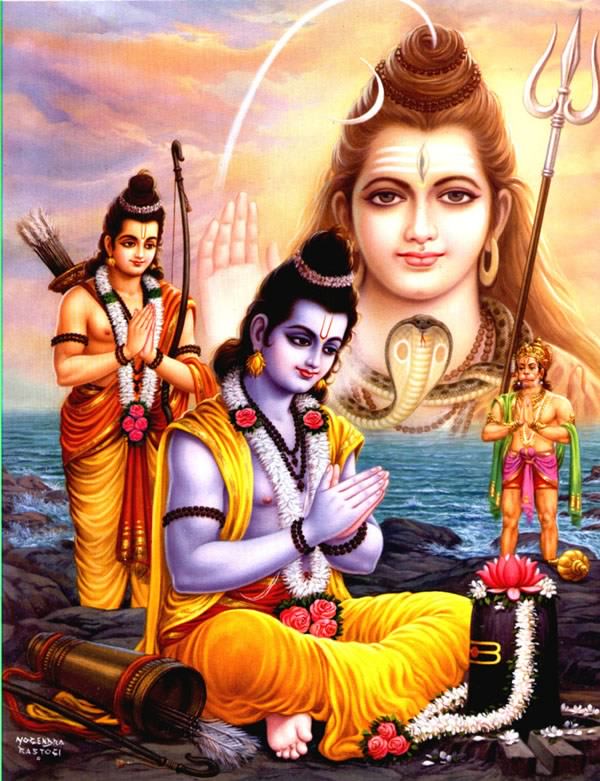
Tag: Sundara Kanda

  • Ramayana Sugreeva To Hanuman Describes Tamil Chera Chola Pandya Kingdoms

    Ramayana Sugreeva To Hanuman Describes Tamil Chera Chola Pandya Kingdoms

    Some time back there was a comment for one of my articles that there is no reference to Tamil Kings and Tamil Kingdoms in the Valmiki Ramayana. nd that I am making this up only to make Tamil and Tamils look ancient!
    Funny that it was nade by a gentleman in/from Tamil Nadu!

    Readers of Ramanis blog are aware that I do not promote or align my self to any language or region and I present facts as available in Indian and reliable foreign texts.

    The purpose of Ramanis blog is to get rid vof the misinformation spread over thecpast few cetuiries about India and Sanatana Dharma and to clear the cobwebs about Hinduism that had crept in because of not referring to original sources including Vedas , Puranas and Ithihasas.

    It is also aimed at sourcing ancient languages of India,Sanskrit , Tamil Brahmi texts along with other world languages cultures and Religion.

    I am aware that the other languages of India are also ancient have  vast information.

    I shall take them up too.

    These two languages have been taken up because I know something about these.

    Now the Tamil Kingdoms of Chera, Chola and Pandyas are described by Sugreeva to Hanuman and Angadason of Vaali, when Sugreeva directs them to routes to be taken by themthe places to search for Sita, who was kidnapped by Ravana.

    These verses appear in the Valmiki Ramayana.

    I am providing the text of slokas and translation hereunder.

    Valmiki Ramayana,Sundarakanda, Slokas 1 to 49.

    ‘Sugreeva sends Vanara-s to southward which troop includes Hanuma, Jambavanta, Niila and others and Angada is its leader. Sugreeva gives a vivid picture of the southern side of Jambu dviipa up to the south-most part of passable regions, next to which the abode of Yama, the Terminator is there. This troop is also given one month’s time to find the whereabouts of Seetha.

    tathaa vangaan kalingaam ca kaushikaan ca sama.ntataH |
    anviikSya daNDaka araNyam sa parvata nadii guham || 4-41-11
    nadiim godaavariim caiva sarvam eva anupashyata |
    tathaiva aandhraan ca puNDraan ca colaan paaNDyaan keralaan || 4-41-12

    11, 12. tathaa= like that; vangaan kalingaam ca=, Vanga, Kalinga [kingdoms,] also; sam antataH= verily, at its fringes; available; kaushikaan ca= Kaushika [territories,] also; you search and then; sa parvata nadii guham daNDaka araNyam = with, mountains, rivers, Dandaka, forest, caves; anviikSya= on seeing – on searching Dandaka; godaavariim nadiim caiva= Godavari, river, also, thus; tathaiva= like that; aandhraan ca= Andhra territory; puNDraan ca colaan paaNDyaan keralaan= Pundra, Chola, Paandya, Kerala [provinces]; sarvam eva= all of them; anu pashyata= closely, see – make a through search.

    “Like that Vanga, Kalinga territories shall be searched along with Kaushika territories available on their fringes, then cast about the Dandaka forest all over its mountains, rivers, and its caves, then River Godavari that courses through Dandaka forest, and then the provinces of Andhra, Pundra, Chola, Paandya, Kerala are to be searched thoroughly. [4-41-11, 12]

    Some other mms have Matsya desha in this verse instead of the Vanga desha. The Vanga is the present day Bengal and this territory retained its epical name, but while pronouncing it becomes banga because the Sanskrit grammar allows to pronounce or write va as ba by the rule va ba yoH abhedaH and thus it is called Baangla or Bengal as British used to call. Kaushika in some other mms is read as kaashika. Kalinga is Orissa which touches Bengal at its north, and it is the Kie-ling-kia as said by Huet Tsang.

    The Andhra is the present day Andhra Pradesh and Chola is the present Tamil Nadu, especially northern area, and Pundra is roughly in between Andhra and Chola. Paandya is south-most area where in Kanyakumari district the Cape Camorin is there, and Kerala is the present Kerala state from Gokarna to Kanyakumari. Its historical name was chera raajya and in Ashoka’s time, it was called kerala putra.

    ayomukhaH ca ga.ntavyaH parvato dhaatu maNDitaH |
    vicitra shikharaH shriimaan citra puSpita kaananaH || 4-41-13
    suca.ndana vanoddesho maargitavyo mahaagiriH |

    13, 14a. dhaatu maNDitaH= with ores, crowded with; vi citra shikharaH= verily, amazing, with crests; shriimaan= prosperous [mountain]; citra puSpita kaananaH = motley, flowered, with forests; such a; ayaH mukhaH parvataH= iron, mouths, mountain – a mountain having iron-ore mines in the shape of mouths, namely Mt. Malaya]; gantavyaH= reachable – you shall go to; su candana vanaat deshaH= best, sandalwood trees, with copses, places; mahaa giriH maargitavyaH = great mountain, is to be searched.

    “You shall go to the prosperous Mt. Malaya which is crowded with iron-ore mines as its vast mouths, and with amazing crests and motley flowered forests. Search shall be carried out on that great mountain in the places that are with the copses of sandalwood trees. [4-41-13, 14a]

    This Mountain is also called Agastyamalai and it is in Western Ghats from which River Tamraparni emerges.

    tataH taam aapagaam divyaam prasanna salilaashayaan || 4-41-14
    tatra drakSyatha kaaveriim vihR^itaam apsaro gaNaiH |

    14b, 15a. tataH= from there; divyaam= divine one; prasanna salila ashayaan= limpid, waters, receptacle of; apsaraH gaNaiH vihR^itaam = by apsara, throngs, make pleasure-trips; taam kaaveriim= her, Kaveri; aapa gaam= water, flowing [river]; tatra drakSyatha = there, you shall see.

    “From there you shall go and see the divine River Kaaveri there, a receptacle of limpid waters, to where throngs of apsara-s will be making pleasure-trips. [4-41-14b, 15a]

    The River Kaaveri is the best river in southern peninsula of India that flows from Braham Giri Mountains in Coorg of Western India to the East draining in Bay of Bengal and irrigating a major chunk of land. Many legends are associated with this river, of which one is that when Sage Agastya was bringing waters of River Ganga, they sprinkled from his kamandulau, the handy water-vessel, and flooded like Kaaveri. The original Tamil name is kakaviri where kaakam is ‘crow…’ viri ‘spread out…’ When Agastya is bringing water it sprinkled from his handy vessel and flooded the kaa ‘the garden…’ in Tamil, the garden of Indra. Then it is called kaaviri, but Shilpadikkaaram records its name as Kaaveri only pulavoy vazhi kaaveri… nadanthai vazhi kaaveri…

    tasya aasiinam nagasya agre malayasya mahojasam || 4-41-15
    drakSyatha aaditya sa.nkaasham agastyam R^iSi sattamam |

    15b, 16a. mahaa ojasam= highly resplendent [mountain]; tasya malayasya nagasya agre = of that, Mt. Malaya, mountain, on the top of it; aasiinam= who is sitting; aaditya sankaasham= Sun, in similarity; R^iSi sattamam agastyam drakSyatha= Sage, the eminent, Agastya, you shall see.

    “You shall see the eminent sage Agastya, whose resplendence is akin to that of the Sun, and who will be sitting on the top of that highly resplendent Mt. Malaya. [4-41-15b, 16a]

    saa candana vanaiH citraiH pracChannaa dviipa vaariNii || 4-41-17
    kaantaa iva yuvatii kaantam samudram avagaahate |

    17b, 18a. citraiH candana vanaiH = with amazing, sandalwood trees, copses; pracChannaa dviipa vaariNii= with overlapped, islands, water; saa= she [the river]; yuvatii= a young woman [Taamraparni]; kaantaa = one who is yearning for; kaantam iva= for whom she is yearning – her love, as with; samudram= to ocean; avagaahate = [she will be] rendezvousing.

    “She whose water is overlapped with amazing copses of sandalwood trees and islands that River Taamrapani will be drifting for a rendezvous with her much yearned lover, namely the ocean, as with a young woman who will be coursing to have a rendezvous with her yearned lover. [4-41-17b, 18a]

    tato hemamayam divyam muktaa maNi vibhuuSitam || 4-41-18
    yuktam kavaaTam paaNDyaanaam gataa drakSyatha vaanaraaH |

    18b, 19a. vaanaraaH= oh, vanara-s; tataH= from there; yuktam= joined to – braced to the wall of fortress; hemamayam divyam= full with gold, beautiful one; muktaa maNi vibhuuSitam= pearls, gemstones, decorated with; paaNDyaanaam kavaaTam= of Paandya [kingdom’s,] castle-door; gataaH= having gone there; drakSyatha= you shall see; search inside that gateway.

    “From there, on going to the Paandya Kingdome you shall see a fully golden castle-door bracing the compound-wall of the fortress, which is decorated with pearls and jewels, and conduct your search even in that kingdom. [4-41-18b, 19a]

    tataH samudram aasaadya sa.mpradhaarya artha nishcayam || 4-41-19
    agastyena antare tatra saagare viniveshitaH |
    citra saanu nagaH shriimaan mahendraH parvatottamaH || 4-41-20
    jaata ruupamayaH shriimaan avagaaDho mahaarNavam |

    19b, 20, 21a. tataH samudram aasaadya= then, [southern] ocean, on reaching; artha nishcayam sampradhaarya = purpose’s, resolve, on resolving; agastyena= by Agastya; tatra= there; saagare antare vi niveshitaH= in ocean, inside, verily, penned up [one end of mountain]; citra saanu nagaH= one with marvellous, terraces, trees; shriimaan mahendraH = glorious, Mt. Mahendra; parvata uttamaH= among mountains, best one; jaataruupamayaH= completely golden; shriimaan mahaa arNavam= august [Mt. Mahendra,] into great, ocean; avagaaDhaH= will be steeping in.

    “Then on reaching the southern ocean, and on taking a resolve with regard to the purpose of your task, viz., importance of the mission undertaken vis-à-vis your individual capacities to leap the ocean, you reach the glorious Mt. Mahendra. Sage Agastya once penned its one end in the ocean, and the other end is now visible. That august and best one among all mountains will be completely golden with marvellous terraces and trees, and it will be steeping into ocean on the other side of land, and this mountain becomes the jumping-off point for you vanara-s. [4-41-19b, 20, 21a]

    naanaa vidhaiH nagaiH phullaiH lataabhiH ca upashobhitam || 4-41-21
    deva R^iSi yakSa pravaraiH apsarobhiH ca sevitam |
    siddha caaraNa sa.nghaiH ca prakiirNam sumanoharam || 4-41-22
    tam upaiti sahasraakSaH sadaa parvasu parvasu |

    21b, 22, 23a. naanaa vidhaiH= numerous, sorts of; phullaiH nagaiH= with flowered, trees; lataabhiH ca upashobhitam= with climbers, also, glorified; deva R^iSi yakSa pravaraiH= by gods, sages, yaksha-s, important ones; apsarobhiH ca= by apsara-s, even; sevitam= adored; siddha caaraNa sanghaiH ca = by siddha-s, caarana, groups of, also; pra kiirNam= well, overspread; su manaH haram= truly, heart-stealing [for a look]; tam= it – to that mountain; sahasraakSaH= Thousand-eyed Indra; parvasu parvasu= on auspicious day, on auspicious day – on every auspicious day; sadaa = always – regularly; upaiti= he comes.

    “Mt. Mahendra is glorified with numerous kinds of flowered trees and climbers. Important gods, sages, yaksha-s and even apsara-s will adore it, and it is overspread with the groups of siddha-s and caarana-s, and thus it will be heart-stealing for a look. And the Thousand-eyed Indra will always be visiting that Mt. Mahendra on every auspicious day. [4-41-21b, 22, 23a]

    dviipaH tasya apare paare shata yojana visR^itaH || 4-41-23
    agamyo maanuSaiH diiptaH tam maargadhvam sama.ntataH |

    23b, 24a. tasya= its – Mt. Mahendra’s; apare paare= on the other, shore; shata yojana visR^itaH= hundred, yojana, in breadth; maanuSaiH= by humans; a + gamyaH = not, passable; diiptaH= a dazzling; dviipaH= island – is there; tam samantataH maargadhvam = that, till its fringes, you have to search.

    “There is a dazzling island on the other side of the shore of Mt. Mahendra, which is breadthwise a hundred yojana-s, and which is an impassable one for humans, and you have to search that island up to its fringes. [4-41-23b, 24a]

    This island on the other shore of the ocean is Ravana’s Lanka, and it is believed to be the present day Sri Lanka. That island’s association with River Taamraparni is as noted above.’

    Reference and citation.

    http://www.valmikiramayan.net/kishkindha/sarga41/kishkindha_41_frame.htm

  • Ramayana Sundara Kanda Navaha Slokas Video,Benefits

    I had posted an article on  the procedure to be followed in Sundarakanda Parayana.


    I deliberately left the Navaha in the article.


    That is reciting the Sundara Kanda 68 Chapters in Nine Days.


    Reason is that the Navaha is most effective and I wanted to post an artilce on this.


    There are 68 chapters in the Sundarakanda.


    And Rama Pattabhisheka from Yuddha Kanda is to be recited on the concluding day.


    So for Nine days it totals to 69 chapters.


    Recite Eight chapters a Day or Seven days.


    On the Eighth Day , Six Chapters.


    On the Ninth, concluding day , recite the balance Seven chapters.


    Begin with Parayana Slokas before Sundara Kanda.


    Smarthas may follow Smartha Sampradaya Parayana  Slokas and Sri Vaishnavas, Vaishnava Smpradaya Slokas.


    Follow the other procedures as mentioned in my earlier post.


    Link is provided here, which also details the Naivedya to be offered.


    Benefits of reading Sundara Kanda.


    • Salvation can be achieved by reading the first chapter daily for six months.
    • Effect of attack of devils, ghosts, spirits can be warded off by reading 3rd chapter.
    • To get rid of dullness of brain, read 13th chapter
    • To get rid of the sin of having affair with some one else’s wife, read chapters 7-11.
    • To get permanent wealth and happiness read chapter 15.
    • To get rid of bad dreams read Chapter 27.
    • To get good behavior read chapter 20-21.
    • To rejoin with lost relatives read chapters 33-40.
    • To get rid of impending danger read chapter 36.
    • To get pardon from god for insult done to him knowingly and unknowingly read chapter 38.
    • Read chapters 42-47 to win over enemies
    • To become just and charitable read chapter 51
    • For improvement of assets like house, land etc read chapter 54.
    • To get peace and happiness read Chapter 61
    • To get perennial happiness and to attain God read chapter 67.
    • To get what one wishes read chapter 41
    • To realize God and to become one capable of sweet words read chapter 19.

    The Navaha delivers all the results one desires.


  • Rama Sethu 18 Miles Hanuman Flew 800 Miles

    Lord Rama went to Sri Lanka and brought back Sita, after killing Ravana, who had kidnapped Sita.


    Hanuman was sent earlier by Rama to search for Sita and He located Sita in Sri Lanka.


    ‘Based on this information Rama proceeded to Sri Lanka.


    Lord Rama , with the help of the Vanaras, built a Bridge between Rameswaram   and Sri Lanka and it is called the Adams’ bridge.


    This is where I get sidetracked.Ramaeswaram.


    Adams Bridge is 18 miles long.


    The bridge is 18 miles (30 km) long and separates the Gulf of Mannar (southwest) from the Palk Strait (northeast)-wiki.


    Valmiki mentions that Hanuman  flew100 Yojanas across the sea from Rameshwaram to Lanka.


    The glorious Hanuma with the best courage, even though crossing a hundred yojanas, was without a sigh and did not obtain any tiredness.

    Comment : This verse and others clearly mention that Hanuma crossed an ocean of hundred yojanas. At the present time the shore to shore distance between southern tip of India and Northern tip of Sri Lanka is around sixty miles. Even with a measure of 2.5 miles per yojana, hundred yojanas translate to 250 miles. To explain this anomaly, we need to consider that around the time of Ramayana, the distance was lot more than the current sixty miles. This is in sync with the current theories by geologists that the ocean between India and the current Sri Lanka had been replaced by land mass over a period of time. Most of the land to the south of current Raghunatha Pura had been covered by landmass in antiquity. Also according to Ramayana, the mountains Trikuta, Lamba and Suvela were to the north of Lanka, but currently the mountains are found in the southern part of Lanka. This suggests that the northern parts of current Lanka were submerged in water during the Ramayana period.”

    http://www.valmikiramayan.net/sundara/sarga2/sundara_2_prose.htm)

    ( in the observation quoted above, one point is to be noted.The discrepancy would still exist even if Geographical positions change because the time gap between Hanuman crossing over the Ocean and Rama crossing over by Rama Sethu is too short for any geographical changes to have happened.There is no record of it in Ramayana or elsewhere for such a change)

    Accepted conversion of One Yojana is 8 Miles.

    One Yojana is approximately 8 miles,


    Hanuman flew 8oo miles from Rameshwaram to reach Lanka.


    But the bridge is only  18 Miles!


    “Sri Lanka is an island nation-state in the Indian Ocean. It is located 880 kilometers (547 miles) north of the equator, off the southern tip of India, and has a maximum length of 432 kilometers (268 miles) and a maximum width of 224 kilometers (139 miles).”


    The southern tip of Sri Lanka is 565 Miles(547+18) from Rameswaram.


    Assuming that the farthest place was where Ravana’s capital was located, there is still a shortfall of 235 miles.(800-18=782-547=235)


    Only possible explanation  is that these 235 miles could have been of shallow water and Hanuman flew over this as well.


    Asokavatika, Nuwara Eliya, where Sita was imprisoned is 189.03 miles, and 164.16 nautical miles from Rameswaram.

  • Ramayana Lanka Is Not Sri Lanka?

    As I have been going through the Original Texts of Indian Epics, especially the Ramayana, I have across some facts which I am unable to reconcile with geographical locations.


    Hanuman Crosses the Ocean to Lanka.
    Hanuman Crosses the Ocean to Lanka.

    I have checked most of the places mentioned in the Ramayana and has even posted the route taken by Lord Rama in search of Sita who was abducted by


    Ravana to Lanka.


    I also checked the places associated with the Ramayana  in Sri Lanka.


    I have been able to find Ravana’s city,his palace,the places where Sita was moved from one place to another in captivity,where She took bath.


    I have posted articles on these.


    I now have a problem in Sundara Kanda of Ramayana.


    Valmiki states clearly that Hanuman jumped from Mahenra Parvatha.


    ( I found an answer  relating to the place from where Hanuman jumped for Lanka, here the answer was Hanuman did not jump but walked over!


    This information is incorrect.


    Valmiki states in Sundara Kanda,


    niilalohitamaaJNjishhThapatravarNaiH sitaasitaiH |
    svabhaavavihitaishchitrairdhaatubhiH samalaMkR^itam ||5-1-5
    kaamaruupibhiraavishhTamabhiikshNaM saparichchhidaiH |
    yakshakinnaragandharvairdevaklpaishcha pannagaiH ||5-1-6
    sa tasya girivaryasya tale naagavaraayute |
    tishhThan kapivarastatra hrade naaga ivaababhau ||5-1-7

    5,6,7. saH= that, kapivaraH= great monkey, babhau= shone, naagaH iva= like an elephant, hrade= in a lake, tishhThan= being located, tasya girivarasya= on that great mountain’s, tale= foot, naagavaraayute= which had best of elephants, tatra= there, samalaMkR^itam= was decorated by, svabhaavavihitaiH= naturally formed, dhaatubhiH= mineral rocks, chitraiH= of varied hues, sitaasitaiH= (like) black and white, niilalohitamaaJNjishhThapatravarNaiH= blue, red, yellow, leaf color (green), abhiikshNam aavishhTam= surrounded to a great extent by, yakshakinnaragandharvaiH= Yakshas- Kinnaras-Gandharvas, kaamaruupibhiH= who could assume desired form, saparichchhadaiH= together with their families, cha deva kalpaiH pannagaiH= and godly serpents.

    That great monkey Hanuma shone like an elephant in a lake, standing on the foot of that great mountain by the name of Mahendra, where many elephants of good breed resided, which was beautifully decorated with many naturally formed mineral rocks of varied hue like black, white, red, blue, yellow and green and which was surrounded by godly serpents and Yakshas, Kinnaras, Gandharvas who were capable of assuming desired form, together with their families.(Verse 8,Sundara Kanda, Sarga 1)

    The problem is that Iam unable to find the Mountain in India, save for a refernce to Tirukurungudi  in Tirunelveli district, Tamil Nadu, South India. The taluk of Thirukurungudi isNanguneri and it belongs to Nanguneri Assembly. At the foothills of the Western Ghats and 40 km to the North of Cape Comerin.

    This is reported to be the place from Hanuman jumped for Lanka.

    Another one is near Rameswaram, where Rama’feet, Ramar Padam, are found with Sugreeva’s Temple.

    Both these refernces do not seem to meet with the description of Valmiki.

    There is yet another mahendragiri found in Odisha.

    There is also the theory that there was an island off the Narmada  River.

    This could be the Lankaof Ramayana!

    “n an article “The Antiquity of Rama’s Era”, in the journal Prachya Pratibha
    (published by Prachya Niketan, a Birla sponsored institution in Bhopal),
    Vol. 11-1, 1982[?], the author, R.L. Gupta, a retired engineer and
    government secretary, says, that for India’s geography to match that
    described in the Ramayana, particularly the existence of the ‘hundred yojana
    sea’, the Ramayana era must have been at that time in the geological past
    when a lake, large enough to be described by that phrase and abutting the
    Vindhyan mountain range where it is described in the Ramayana and is
    accepted by geologists as having existed… in the Narmada valley. He
    identifies Lanka as an Island in that Narmada lake, now Bagra hill. He also
    re-identifies several other places in the the Ramayana by correlating
    geographical features and present place names; Chitrakuta, Panchvati (where
    Sita was abducted), the Pampawati river, Kishkindha, Mahendra Parvata,
    Trikuta Parvata, Rameshwaram, Pampa lake, Kishyamuka, Pravarsan, Mynaka and
    Suvela Parvatas, Dhawalgiri and the Setu (bridge) built by Rama… all in
    locations in present Madhya Pradesh.

    According to the author of the article, Reva Khanda of Skandha Purana speaks
    of a big lake or sea in the Narmada valley and that modern fossil finds in
    the area substantiate this. He refers to the Madhya Pradesh Chronicle of May
    23, 1982 and to an article in the Times of India, June 20, 1982. Geologists
    believe in the existence of an ancient lake existing till the middle or late
    Pleistocene extending from about the town of Harda, District Hoshangabad in
    the west to about the town of Jabalpur M.P. in the east, a distance of over
    320 km. At places it was over 300 meters deep and 65 km wide — enough to
    appear as a ‘sagar’.

    He refers to a book ‘Lanka ki khoj’ which lists many past attempts by
    various authors to identifiy the ‘true’ location of Lanka (including,
    outside India: Sumatra, the Maldives, Lakshadwip, Liggadwip, 800 miles into
    the Indian ocean, Lanka (the present Sri Lanka) and Australia (!), and
    within the boundaries of India: Assam, Rekanpalli, between the Godavari and
    Krishna rivers, near Maheshwar, near Jabalpur, Amarkantak and near Pendra in
    Bilaspur district, M.P. The book’s author (Hiralal Shukla), himself suggests
    the Godavari delta as the location of Lanka.

    According to Ramayana, Lanka was located on Trikuti Parvata close to
    Dhawlagiri surrounded by the hundred yojana sea and in a area where Sal
    trees grew (the trees used both by both Hanuman and his followers and Ravana
    and company in the Ramaa-Ravana battle). The article describes Bagra hill as
    close to and a little west of Pachmarhi Hill, district Hoshangabad, Madhya
    Pradesh. Pachmarhi hill is identified in the respected reference book
    ‘Castes and Tribes of the Central Provinces’ as Dhawlagiri. The article’s
    author refers to Survey of India (SOI) topographical map 55 F/14 showing
    three hill tops on Bagra Hill at longitude 78° E. It marks the beginning of
    a region extending east to Chota Nagpur and south almost to Bhadrachalam on
    the Godavari. It also is in a Sal area.

    The author says (plausibly), that the phrase “hundred yojana sea” has more
    than one interpretation: that it was only a general expression to create the
    impression of ‘large size’. In at least one Bhagavatam verse (5.16.23)
    ‘hundred yojanas’ appears to be used in this way.

    It is long ago that I read the complete Ramayan (and would not have
    remembered such details in any case) but according to the article, the
    Ramayan indicates the sagar as lying along the Vindhya mountain range,
    citing that Swanyaprabha, while escorting Hanuman and other Vanaras out of
    the tunnel in those mountains, pointed out that they were on Mahendragiri
    and that the expanse of water below was the Sagara. Jatayu’s brother Sampati
    also indicated the Sagara as the location of the island of Trikuta parvata
    with Lanka on it.

    The article claims that the geography described in the Ramayana establishes
    the antiquity of Rama’s era. The Mynaka Parvata which Hanuman used in his
    leap — in geological terms the ‘Vindhyan geosyncline’ (‘uplifted trough’),
    came up from the sea. In Rama’s ancestor Bhagtratha’s time, Bhagiratha had
    to work hard to bring the Ganga river to the plains. In his father Dilip’s
    time, it was confined to the mountains. The Ramayana, also shows that in
    Bhagiratha’s ancestor Sagar’s time the river Saryu, which at present flows
    southwards, flowed northwards. These changes and events had their causes in
    the rise of land masses and the last such land rise of any magnitude in
    India is reported by the geologists to have been associated with the
    uplifting of the Himalayas in late pleistocene to early recent times. The
    drying up of the Saraswati River is another instance… attributed to the
    rising up of the Sivalik Himalaya foothills.

    Regarding the Setu, causeway, the “bridge”, the topography map of the once
    Narmada lake bed shows a formation compatible with its having once been a
    setu from near the present town of Hosangabad to about the town of Itarsi
    and to the Bagra hill, just where the lake is narrowest. The level of this
    formation is fifty metres higher than those of the neighbouring areas.
    Furthermore, based on bore hole drillings, the rock in this formation is
    different from surrounding rock: It is black basalt, as compared to anything
    but black basalt for many kilometres on either side. The floating stone,
    presumably pumice, used by Hanuman and the monkeys has the same origin as
    black basalt, namely lava flows and is formed by the solidifying froth on
    the surface of glassy lava. There is the significant description in Ramayan
    that the sea started boiling as soon as Rama but an arrow to his bow. This
    could be due to submarine volcanic activity. Furthermore, there is a place
    presently known as Bandrabhan which the author points out sounds very much
    like “Vänara Bandh”, or the “Bandh (Setu) built by the Vanaras”. The author
    says that there is no basalt south of Bombay (Panaji region) except an
    isolated flow at Rajamundry, A.P.

    According to the Ramayana Hanuman crossed the Sagara by jumping from
    Mahendra Parvata north of Lanka. Lord Caitanya visited a Mahendra Parvata
    after visiting Madurai and before visiting Setubandha, Dhanus-tirtha,
    Ramesvara, the Tamraparni River, Sri Vaikuntham and Kanya-kumari — all in
    South India. But Lord Balaram, “after finishing His bathing and ritualistic
    ceremonies at Gangasagara, proceeded toward the mountain known as Mahendra
    Parvata. After this He turned toward southern India and visited the banks of
    the river Godavari” indicating this Mahendra Parvat to be in North India.
    The author of the article refers to a hill Mahendra shown on governemt maps
    today in the Vindhyan range in the Ken river basin at latitude 23° N, 79° E
    and suggests, based on the time Lord Rama took to travel between the places
    He visited, that it is the Mahendra parvat of the Ramayana — north of the
    Bagra hill and almost at the edge of the Narmada lake.

    Ramayana describes the rising of Mynaka parvata from the sagar to assist
    Hanuman in his jump over it. The Vindhyas arose from the ocean over 500
    million years ago. The author suggests the likelihood that the rise of the
    Vindhyan trough coincided with Hanuman’s jump. The uplifted trough has a
    break where Hanuman crossed it.


    There is anotherview.


    The Mahedra Pavatha city is found in, of all places, Cambodia.


    And to add to this confusion, the Trikuta Parvatha from where Hanuman is reported to have jumped from Lanka to India is found in Kashmir.


    Please read my post Hanuman to Lanka, distance controversy.


    A lost city that thrived on a mist-shrouded Cambodian mountain 1,200 years ago has been discovered by archaeologists using airborne laser technology, Sydney Morning Herald reported on Saturday in a world exclusive.

    Over two dozen temple sites have been discovered on the site, which is thought to have been built around 802 AD when the Angor Empire was founded.

    It is believed to be the lost city of Mahendraparvata, located on a misty mountain called Phnom Kulen deep in the hinterland of Cambodia. It was thought to be built 350 years before the famed Angor Wat. A journalist and photographer from the newspaper accompanied the expedition, led by a French-born archaeologist, through the landmine-strewn jungle in the Siem Reap region where Angkor Wat is located.

    Citation.

    http://www.indiadivine.org/content/topic/1269560-is-ceylon-the-lanka-mentioned-in-ramayana/

    http://www.valmikiramayan.net/sundara/sarga1/sundara_1_frame.htm


    http://timesofindia.indiatimes.com/world/rest-of-world/Lost-city-of-Mahendraparvata-discovered-in-Cambodian-jungles/articleshow/20603681.cms

  • What Is The Color of Lord Rama Blue Black Dark Brown

    It is generally believed that Lord Ram is blue back in Color.


    Ladies in Tami Nadu  has a Name for this color, Rama Blue.


    It is a mix of Blue and Black.

    Lord Ram with Hanuman.jpg
    Lord Ram with Hanuman.


    Valmiki Describes Rama’s Complexion thus.


    “Hanuman to Sita.

    dundubhi svana nirghoShaH snigdha varNaH prataapavaan |
    samaH sama vibhakta ango varNam shyaamam samaashritaH || 5-35-16

    16. dundubhisvananirghoSaH= He has a voice like the sound of a kettle-drum; snigdhavarNah= He has a shining skin; prataapavaan= He is full of splendour; samaH= He is square-built; samavibhaktaaN^gaH= His limbs are symmetrically built; samaashritaH= He is endowed with; shyaamam varNam= a dark-brown complexion.

    “He has a voice like the sound of a kettle-drum. He has a shining skin. He is full of splendour. He is square-built. His limbs are built symmetrically. He is endowed with a dark-brown complexion.” Sundara Kanda Sarga  35 Sloka 16.

    Rama, whose face is like the full moon, of dark brown complexion, whose collar-bone is invisible (because of its being covered with flesh), a conqueror of foes, whose arms descend to his knees, whose eyes resemble lotuses, the elder brother of Lakshmana, who takes initiative in speaking and expresses with sweetness, truthful of speech and possessed of extra ordinary strength, is benevolent to all, delightfully charming as the moon, that tiger among men, as mighty as an elephant in rut, that great car-warrior, will surely adorn the woods, while roaming through them..

    (Valmiki Ramayan – Book II : Ayodhya Kanda – Book of Ayodhya: Chapter 48.)

    There is a doubt.

    Rama was born in Ayodhya, in North India where they are fair skinned.

    Rama, ‘Dark-brown?’

    Dravidians have this complexion.

    Yet another twist.

    ““In the four yugas—Satya, Tretä, Dväpara and Kali—the Lord incarnates in four colors: white, red, black and yellow respectively. These are the colors of the incarnations in different millenniums.
    Madhya 20.330

    The yugas are known as Satya-yuga, Treta-yuga, Dvapara-yuga and Kali-yuga. The incarnations of each yuga are of different color. The colors are white, red, black and yellow. In the Dvapara-yuga, Lord Krsna in black color appeared, and in the Kali-yuga Lord Caitanya in yellow color appeared.
    –Purport Srimad Bhagavatam 1.3.5.

    One has to take Valmiki’s word as final,

    Citation.

    http://www.indiadivine.org/content/topic/976222-what-color-is-ramachandra/

    http://www.valmikiramayan.net/sundara/sarga35/sundara_35_frame.htm

    http://www.livinghindu.com/whiteness-complexion-skin-color/

    Image Credit.

    http://www.santabanta.com/photos/lord-rama/9102039.htm