Many are under the impression that Hinduism, especially the Vedas are theoretical and do not address to the problems of daily Life or Science.
Nothing can be farther from the Truth.
Surya Siddhanta.
I had posted articles on practical application of Science,Dealing with daily life, Botany,Zoology, Food and other vital subjects that deal with our daily needs, developed by Hinduism.
Here I am furnishing details from the Surya Siddhanta that deals with Astronomy in detail.
I had earlier posted an article on Vishnu’s Navel Galaxy and how it has been validated by modern Astronomy.
”
The Surya Siddhanta is one of the oldest treatises (siddhanta) in Hindu astronomy. The extant text as edited by Burgess (1860) is medieval (c. 12th century), but it is clearly based on older versions, which may go back to before the Common Era[citation needed].
It has rules laid down to determine the true motions of the luminaries, which conform to their actual positions in the sky. It gives the locations of several stars other than the lunar nakshatras and treats the calculation of solar eclipses. as well as solstices eg.summer solstice 21/06 Significant coverage is on kinds of time, length of the year of gods and demons, day and night of god Brahma, the elapsed period since creation, how planets move eastwards and sidereal revolution. The lengths of the Earth’s diameter, circumference are also given. Eclipses and color of the eclipsed portion of the moon is mentioned.”
Table of contents in Surya Siddhanta.
The Mean Motions of the Planets
True Places of the Planets
Direction, Place and Time
The Moon and Eclipses
The Sun and Eclipses
The Projection of Eclipses
Planetary Conjunctions
Of the Stars
Risings and Settings
The Moon’s Risings and Settings
Certain Malignant Aspects of the Sun and Moon
Cosmogony, Geography, and Dimensions of the Creation
The Gnomon
The Movement of the Heavens and Human Activity.
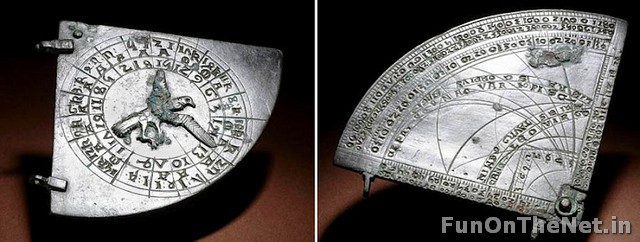
Design of Astronomical Instruments are also provided.
Astronomical Instruments by Surya Siddhanhtam.Click to enlarge
6. raamaH= Rama, svayambhuuriva= like the Brahma, bhuutaanaaM= among all the living beings, guNavattaraH= the most virtuous, teshhaamapi= among those brothers, mahaatejaH= the mightiest, ratikaraH babhuuva= was a source of joy, pituH= for his father.
Rama, like the Brahma among all the living beings, the most virtuous among those brothers and the mightiest was a great source of joy for his father.
sa hi devai rudiirNasya raavaNasya vadhaarthibhiH |
arthito maanushhe loke jajJNe vishhNuH sanaatanaH || 2-1-7
7. saH= That Rama, sanaatanaH= the eternal, vishhnuH= Vishnu, jajJNehi= was born, maanushhe loke= on the earth, arthita= as urged by, devaihi= gods, vadhaarthibhihi= to kill, udiirNasya raavaNasya= the egoistic Ravana.
That Rama – was He not the eternal Vishnu who was born on earth as prayed by celestials to kill the egoistic Ravana?
8. aditiryathaa= like Adithi, vajrapaaNinaa= by Indra, devaanaaM vareNa= the best among celestials, kausalyaa= Kausalya, shushubhe= was shone by, putreNa= her son, amitatejasaa= the mighty.
Like Adithi by Indra, best among the celestials, Kausalya shone by her son Rama, the mighty.
sa hi ruupopapannashcha viiryavaananasuuyakaH |
bhuumaavanupamaH suunurgaNairdhasharathopamaH || 2-1-9
9. saH= Rama, ruupopapannaH cha= having beautiful form, viiryavaan= a hero of valor, anasuuyakaH= without envy, gunaiH= by virtues, dasarathopamaH= like Dasaratha, anupamaH= an incomparable, suunuhu hi= son indeed, bhuumau= on earth.
Rama was beautiful in form, a hero of valor and without envy. By virtues, he was like Dasaratha. In this way, he was an incomparable son on earth.
sa cha nityaM prashaantaatmaa mR^idupuurvaM tu bhaashhate |
uchyamaano.api parushhaM nottaraM pratipadyate || 2-1-10
10. saH= that Rama, nityam= always, prashaantaatmaa= with a peaceful mind, bhaashhate= talked, mR^idupuurvakaM= softly, uttaram na prapadyate= he did not respond to, parushhaM= hard words, uchyamaanaha api= spoken by others.
That Rama was always peaceful in mind and spoke softly. He did not react to the hard words spoken by others.
11. saH= That Rama, aatmavattayaa= because of his good bent of mind, tushhyati= feels glad, kathaMchit= even by , aikena= one, upakaareNa= good thing, kR^itena= done, na smarati= (but) does not mind, satamapi= even a hundred, apakaaraaNaam= bad things.
That Rama, because of his good bent of mind, feels glad even by whatever way a good thing is done to him. He does not remember any number of bad things done to him.
12. astrayoga antareshhvapi= Even during intervals while practising archery, nityam= always, kathayannaasta= used to converse with, shiilavR^iddhai= elders by conduct, jJNaanavR^iddhai= elders by wisdom, vayovR^iddhai= elders by age (or), sajjanaiH= with good people.
Whenever he finds some time even while practising archery, Rama used to converse with elderly people, elder by way of conduct or wisdom or age or with good- natured people.
13. buddhimaan= wise man, madhurabhaashhii= sweet conversationalist, puurvabhaashhii= one who initiated a talk, priyaMvadaH= whose speech was compassionate, viiryavaan= person with valor, na cha vismitaH= not arrogant of, svena= his own, mahataa= great, viiryeNa= valor.
Rama was a wise man. He used to speak sweetly. He was the first man to initiate a talk. His speech was compassionate. He was valorous. But he was not arrogant of his mighty valor.
14. na cha= not, anR^itakathaH= speaking untruth, vidvaan= all knowing person, pratipuujakaH= Receptive and worshipful to, vR^idhaanaam= elders, anuraktaH= being loved, prajaabhi= by people, anurajyate= loving, prajaashchapi= also the people.
He did not speak untruth. He was all knowing. He used to be receptive and worshipful to the elders. People used to love him and he used to love the people.
15. saanukroshaH= had compassion, jitakrodhaH= conquered anger, braahmana pratipuujakaH= receptive and worshipful to the wise, diinaanukampii=had mercy towards the meek, dharmajNaH= knew what was to be done, nityam pragrahavaan= Had always self control, suchiH= was clean (in conduct).
He had compassion. He conquered anger. He used to be receptive and worshipful to the wise. He had mercy towards the meek. He knew what was to be done. He had always self-control. He was clean (in conduct).
16. kulochitamatiH= attitude suitable for his social rank, bahumanyate= giving due respect to, kshaatraM dharmam= righteousness of warrior-class, manyate= thought, tataha= by following that righteousness, parayaa kiirtya= by great fame, mahat= great, swargaphalam= fruit of heaven.
That Rama, having an attitude suitable for his social rank, giving due respect to righteousness of warrior-class, believed that by following the righteousness he would attain great fame and through it the fruit of heaven.
17. na rataH= not interested(in), ashreyasi= actions not beneficial, vidvaan= scholar, Na viruddhakathaaruchiH= no taste in tales opposing righteousness, vaachaspatiryathaa= like brihaspathi, uttarottarayuktau= in showing series of strategies, vaktaa= a fluent speaker.
Rama was not interested in actions, which were not beneficial. He was a scholar. He had no taste in tales opposing righteousness. Like vächaspathi, his eloquent speech contained a series of strategies for action.
18. arogaH= without disease, taruNaH= young man, vaagmii= speaker, vapushhmaan= person with a good body, deshakaalavit= knew time and place, purushhasaarajJNaH=could grasp the essence of men, ekaH= the one, saadhuH= gentleman, vinirmitaH= created, loke= on earth.
Rama was a young man without any disease. He was a good speaker. He had a good body. He knew both time and place. He could grasp the essence of men. He was the one gentleman born on earth.
sa tu sreshhThairguNairyuktaH prajaanaaM paarthivaatmajaH |
bahishchara iva praaNo babhuuva guNataH priyaH || 2-1-19
19. prajaanaam= To people, priyaH= loving, saH= that, paarthivaatmajaH= prince, shreshhThaiH= with good, guNaiH= virtues, yuktaH= contained, babhuuva= existed, praanaH aiva= like spirit, bahishcharaH= moving outside, guNataH= by virtues.
People loved the virtuous prince Rama and treated him as their spirit moving outside.
20. vidyaavratasnaataH= after bathing in the discipline of education, samyak= properly, saaN^gavedavit= After knowing archery, yathaavat= as prescribed, bharataagrajaH= elder brother of Bharatha (Rama), babhuuva= was, shreshhThaH= better than, pituH= father, ishhvastre= in archery.
After completing his education properly, Rama, after knowing the science of archery as prescribed, was better than his father in the use of bow and arrows.
21. kalyaanaabhijanaH= having born in a good clan, saadhuH= gentleman, adiinaH= not a feeble man, satyavaak= speaker of truth, R^ijuH= straightforward man, abhiviniitaH= properly trained by, vR^iddhaiH= elderly, dvijaiH= wisemen, dharmartha darshibhiH= who realized righteousness.
Rama, having born in a good clan, was gentle minded. He was not feeble. He spoke truth. He was straightforward. He was properly trained by elderly wise men that knew righteousness.
22. dharma kaamaartha tattvajnaH= one who knew the real form of desire, wealth and righteousness, smR^itimaan= one who had a good power of memory, pratibhaanavaan= one who had a spontaneous wisdom to respond, vishaaradaH= one who had skill, kR^itakalpaH= one who had created arrangement of, samayaachaare= customs useful at that time, laukike= for the society.
Rama knew the real form of desire, wealth and righteousness. He had a good memory power. He had a spontaneous wisdom. He had skills in arranging customs useful to society prevalent at that time.
23. nibhR^itaH= Humble man, saMvR^itaakaaraH= Had an enclosed form, gupta mantraH= kept thoughts to himself, sahaayavaan= helped others, amogha krodha harshhashcha= his anger and pleasure not wasteful, tyaagasaMyama kaalavit= knew the timing of giving and non-giving.
Rama was humble. He did not let his feelings appear outwardly. He kept his thoughts to himself. He helped others. His anger and pleasure were not wasteful. He knew when to give and when not to give.
dR^iDhabhaktiH sthiraprajJNo naasadgraahii na durvachaaH |
nistandrirapramattashcha svadoshhaparadoshhavit || 2-1-24
24.dR^iDha bhaktiH= had a firm devotion, sthira prajJNaH= had steadfast mind, aasadgraahii= was not stubborn, na durvachaaH= not speaking evil words, nistandriH= had no idleness, apramattaH= was alert, svadoshhaparadoshhavit= and recognized his own errors and those of others.
Rama had a firm devotion and steadfast mind. He was not stubborn nor did he speak evil words. He was free from idleness and was ever alert. He recognized his own errors and those of others.
25. shaastrajJNaH cha= He knew sciences, kR^itajJNaH + cha= knew their practice, purushhaantarakovidaH= understood differences among men, yathaanyaayam= as per justice, vichakshaNaH= discriminator of, pragrahaanugrahayoH= punishment and protection.
Rama knew the theory and practice of sciences. He understood the differences among men. He could judiciously discriminate whom to protect and whom to punish.
satsaMgrahapragrahaNe sthaanavinnigrahasya cha |
aayakarmaNyupaayajJNaH saMdR^ishhTavyayakarmavit || 2-1-26
26. satsaMgrahapragrahaNe= identifying the good and protecting them, sthaanavit= knew the people, nigrahasya cha= to be reprimanded, upaayajJNaH= knew the ways and means of, aaya karmaNi= getting income, sandR^ishhTa vyaya karmavit= knew the system of spending as mentioned in sastra.
He identified good men and protected them. He knew the people worthy of reprimand. He knew the ways and means of getting income as well as the system of spending, as perceived by economic sciences.
shraishhThyaM shaastrasamuuheshhu praapto vyaamishrakeshhu cha |
arthadharmau cha saMgR^ihya sukhatantro na chaalasaH || 2-1-27
27. praaptaH= obtained, shraishhThyam= great skill, shaastrasamuuheshhu= in groups of sciences, vyaamishrakeshhu cha= and in their subsidiaries, sukhatantraH= Interested in enjoying comforts, saMgR^ihya= after understanding, artha dharmau= economic realities, na alasaH= and never remained inactive.
Rama could obtain great skill in the groups of sciences along with their subsidiaries. He was interested in enjoying comforts only after understanding the economic realities. He never remained inactive.
28. vijJNaataa= acquainted with, shilpaanaam= fine arts, vaihaarikaaNaam= useful in entertainment, arthavibhaagavit= knew how to distribute wealth, yuktaH= efficient in, aarohe= in riding, vinaye= in taming, vaaraNavaajinaam= elephants and horses.
Rama was acquainted with the fine arts useful for entertainment. He knew how to distribute the wealth. He was efficient in riding and taming of elephants and horses.
dhanurvedavidaaM sreshhTho loke.atirathasaMmataH |
abhiyaataa prahartaa cha senaanayavishaaradaH || 2-1-29
29. shreshhThaH= best of persons, dhanur veda vidaam= knowing the science of archery, athirathasaMmataH= appreciated by the champions of archery, senaa nayavishaaradaH= Attained skills in moving the army properly, abhiyaataa= facing the enemies, prahartaa cha= (He) used to kill them.
Rama was the best of persons knowing the science of archery in the world; and was well appreciated by the champions of archery. He attained skills in marshalling the army. He faced and killed the enemies in battle.
apradhR^ishhyashcha saMgraame kruddhairapi suraasuraiH |
anasuuyo jitakrodho na dR^ipto na cha matsarii |
na chaavamantaa bhuutaanaaM na cha kaalavashaanugaH || 2-1-30
30. kruddhaiH= enraged, suraasurair api= even by suras and asuras, apradhR^ishhyaH= (He) could not be defeated, saMgraame= in battle, anasuuyaH= had no jealousy, jitakrodhaH= conquered anger, na dR^iptaH= Had no arrogance, na matsarii cha= Had no envy, na cha avamantaa= not humiliated, bhuutaanaam= living beings, na kaala vashaanugaH cha= had not surrendered to time.
Even enraged celestials and demons could not defeat Rama in battle. He had no jealousy. He conquered anger. He had no arrogance and envy. He had not humiliated any living being. He had not surrendered to time.
31. paarthivaatmajaH= That prince Rama, evam shreshhThagunaiH= with these good virtues, yuktaH= fair, prajaanaam= to the people, saMmataH= was agreeable, trishhu lokeshhu= to the three worlds, kshamaa guNaiH= virtue of forgiveness, vasudhaayaaH= (comparable) to the earth, budhyaa= By wisdom, bR^ihaspate= to brihaspathi, viiryeNa= by valour, shachiipate= to devendra, tulyaH= (He was) equal.
That Prince Rama, with these good virtues, was fair to the people. He was agreeable to the three worlds. By patience and the related virtues, he was equal to earth, by wisdom to Brihaspathi and by valor to Devendra.
32. raamaH= Rama, guNaiH= by virtues, sarva prajaakaantaiH= which are enlightening to all the people, priitisamjananaiH= which are source of liking, pituH= to his father, viruruche= was shining, suurya eva= like the sun, diiptaH= shining, aMshubhiH= by the rays.
Rama, by his virtues, was a source of happiness to all the people and a spring of joy to his father. As the sun shines with his rays, Rama was shining, thus, with his virtues.
33. medinii= the Earth, akaamayata= wished, tam= Rama, naatham= (to be) the lord, evaM vrathasaMpannam= as he was adorned with disciplined life, apradhR^ishhya paraakramam= having undefeatable valor, lokapaalopamam= equal to the universal lords like Indra.
The earth wished Rama to be her Lord as he was adorned with self -control and norms of behavior bearing undefeatable valor equal to that of universal lords like Indra.
Temples which are not well-known contain wonders and rare information.
The temple at Thavasi Medai in Dindigull District,Tamil Nadu has two Female Deities,Ambal while there is only one male Deity,Mahalingeswarar.
“Following Shivarathri, the rays of Sun fall on the presiding deity continuously for 30 days in the mornings and on Sri Bhairava in the evenings.
While we see only one Ambica in Shiva shrines, there are two in this temple.
Presiding deity, Lord Mahalingeswarar graces facing east. In the shrine, right to Him, there are two Ambicas named after Meenakshi in Madurai. They are close to the wall facing south. The devotee has to peep closely into the shrine to have their darshan. They represent two powers – Icha Shakti and Gnana Shakti. Worshipping them would benefit the devotee with wisdom to know God.
As Maharshi Bharadwaja performed penance sitting on a platform with concentration on the Lord controlling all his senses, the place is known as Odukkam Thavasi Medai. Odukkam-controlling the senses; Thavasi-one performing penance and Medai-platform.
Aadhi Bhairava: Bhairava shrine is generally on the northeast corner in the temple. Here, He is just opposite Lord Shiva. As Lord Mahalineswara is all powerful, it is said that to protect the devotees from the scorching heat (Ugra), Bhairava is installed here balancing the temperature. Bhairava here is known as Aadhi Bhairava. There is a hole behind the Bhairava through which the devotees worship Lord Shiva and Bhairava before entering the temple.
Following Shivarathri, the rays of Sun God continuously fall on the Lord for thirty days during mornings and on Bhairava during the evenings.
Special pujas are performed on Magam star days remembering Maharshi Bharadwaja’s birth star.
Moolavar.Mahalingeswarar
Amabal-Maragathavalli,Manikkavalli.
The temple is situated in Viralpatti,Udukkumedai Thavasi Medai in Dindigul District,Tamil Nadu.
Can be reached from Dindigul
This Temple is known for Bhairava Sthala and also one of Star Temples for Maka Nakshatra
Temple Address and Timings.
Sri Mahalingeswarar Temple, Viralipatti, ‘Odukkam Thavasi Medai’, Via Natham-624 304, Dindigul district.
You must be logged in to post a comment.