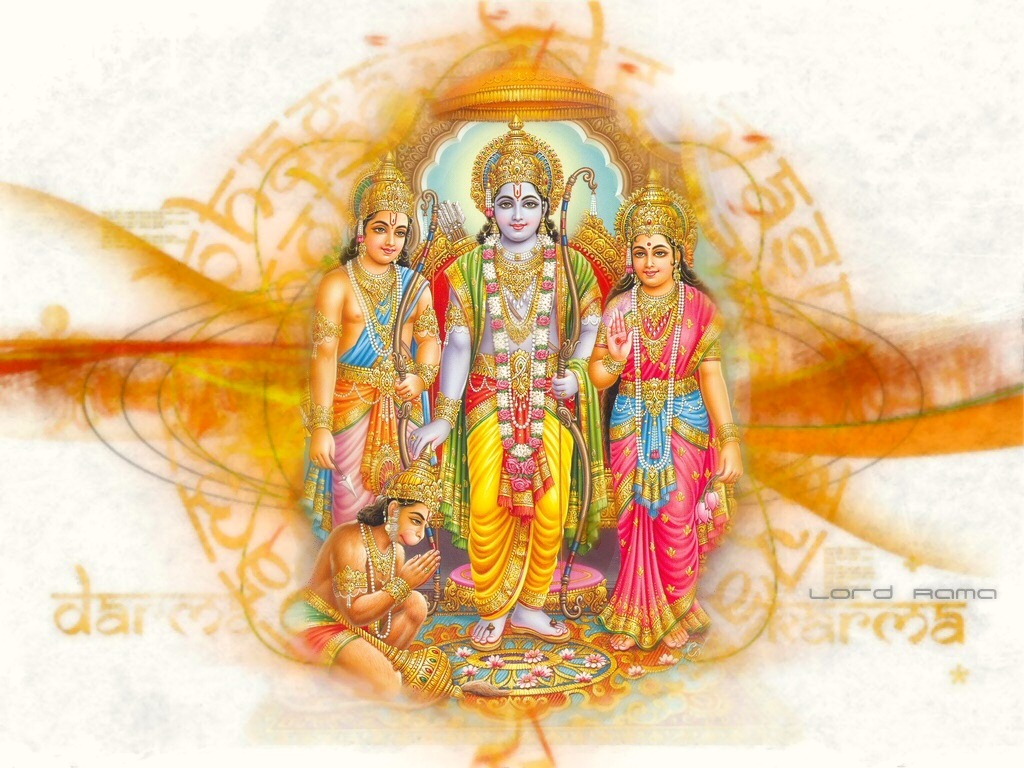
Tag: Ramayana

  • Ramayana.Ravana Real, Existed Study

    I have been posting on the historicity of Lord Rama and am planning to write on the Birth date od Lord Krishna.

    While I was ‘Story telling’ my grand son, 4, he asked me whether Ravana was real or a story.

    That struck me.

    Ramayana, scenes from the Hindu Epic.,
    Scenes from The Ramayana

    I have been going after facts on Lord Rama, the route taken by Him, His Birth Date and never for a moment it struck me to go after Ravana.

    If Lord Rama is real, so should Ravana Be, as the whole Ramayana minus Ravana is Zero!

    I did some checks  and this Post.

    A Study by Tharaka Devinda Gunasekera, a Sri Lankan( what better source could there be!) attempts to prove Ravana was real.

    The author has sifted Facts from Myths and has done a good interpretation.

    His proof consists of Three  facts.

    1.The Runways built by Ravana are still intact.

    2. Ravana’s Pushpaka Vimana,Fore runner of modern Airplane.

    .3.The Sunken city of Ravana.

    4.The place where Sita was incarcerated.

    The Airstrips ,Runways of Ravana.

    “The first clue that comes to us is from three places still intact. Those are Maha-eliya
    (Known today as Horton’s plains named after the person who shot down all the deer in the
    park, to the last one), Ussangoda in Hambanthota and “Wariyapola”.

    . What do these places 7
    have in common? For starters, all these places are flat lands with wide open areas, ideal for
    landing an airborne craft.
    The place name “Wariyapola” breaks down in to “Air-Ship-Port” (Waa=air). Couple
    together this, with the fact that almost all the place names in this country has a history that
    made them, we have our first clue, the runway lines of the king’s airplane, or was it fleet?

    The palce where Rvana had his Airstrips. Ussanagoda
    Ussangoda, Sri Lanka

    Ussangoda also seems a good spot for landing an aircraft. But the land is somewhat tilted
    in some areas. The best craft to land there would be a helicopter. But we also know that it is
    possible to land airplanes in a short distance, which is done in a fighter carrier. There are
    certain models that can land vertically too. Thus, the uneven ground may not be a problem. It
    might have been completely flat by the time of Ravana, so the problems might not have been
    there at all. The fact that, the Ussangoda rock has no high rising trees is intriguing. The soil
    there does not support high growing trees, not even coconuts that grow normally in that area
    are there on the rock formation.

    2.The Plane,Pushpaka Vimana.

    Findings from a pyramid in Egypt revealed four airplane structures shown in terracotta
    slabs. Among them are the two crafts that show resemblance to the current day helicopter and
    the passenger airplane. A third is said to show a structure similar to a faster craft may be used
    in battle. There is however references that the queen “Devayani”, mother of Tharaka, 8
    Surapadma and Sinha-mukha, showed her sons how the bombing is done. Where it is said that
    rock turned into marble. Only at very high temperatures will this happen and either a nuclear or
    a plasma grade weapon is necessary to do such damage.
    (Suriya Gunasekera, 2006)
    There are findings of airplane like structures all round the world. The first is from Egypt,
    which resembles a bird. Although archaeologists categorised it as a bird at first, people now
    have their doubts about it. The wings that are flat as well as a tail which is vertical rather than
    horizontal are the facts that tell us it’s actually a sculpture of an airplane.

    Different types of Airplanes in used in ancient India
    Vimanaas-Planes In ancient India

    The writings on the sculpture said it was the “Gift of Amon”. “Amon” is the god of wind in
    Egyptian mythology. As I suspect, this is not a gift from Amon, but a gift to Amon. From whom, I
    do not know, but it might as well be from Ravana.
    A similar finding was done in Central America and coastlines of South America. This time
    it was made out of gold rather than wood. The sculpture shows patterns of wind upon it very
    clearly.

    The sunken City of Ravana.

    In the South-East of Sri Lanka there are two lighthouses erected on two small islands,
    known even today as “Maha Ravana Kotte” (Great Basses) and “Kuda Ravana Kotte”. The word
    “Kotte” may well be fort. There is evidence in the nearby vicinity that depicts the ruins of a fort
    or a citadel. However the rocks that are visible only in the low tide can only be examined with
    great care as the sea is very rough in the area.
    The “Lankapura” that is in the Ramayana cannot be located anywhere in the island.
    Therefore the only clues that come from are from the sea. The findings from a Babylonian
    terracotta slab revealed that the city Babylon was constructed according to the instructions
    given by the “Lion People” that came from the sky. This is acceptable, since we know that the
    king Sinha-Mukha (Lion Mouth?) built the city, and he may have led a team of engineers to help

    build Babylon according to his city. Comparing the records of Plato (4th Cent. BC) and the
    description that comes from Ramayana’s Hanuman, Plato’s Atlantis and Hanuman’s Lankapura
    seem to be the same.
    Then where is this city of gold? To find the city now, we would have to dive deep in the
    eastern seas of Sri Lanka. Legend has it after the death of Ravana; the city sank into the sea.
    Clues can be found in the areas given above, where the lighthouses were and the areas of
    Trincomalee. The lover’s leap is a ridge of rock that is no natural formation, a good indicator
    that the land that was once connected to it, sank in to the sea.
    People still have no correct answer to whether the city was actually there or how it sank,
    but recent history tells us how it sank. The tidal wave that hit the eastern shore tore apart most
    of the buildings and took many lives. We could place our doubt in a larger scale tidal wave,
    bringing the city down. Since there are no ground structures even islands left in the eastern
    shoreline, we can assume that most of the city was artificially built ground

    Other Facts.

    There are several other scattered facts that support the existence of Ravana. One of them
    is a holding cell that is said to have held “Seetha” while Ravana was carrying her to his kingdom.
    This is found in the Devinuwara area. This conflict with the stories that tell Seetha was held in
    the hill country where “Seetha-eliya” is. But as we know, the kingdom that we know as
    “Lankapura”, was in the Eastern shores of the island. The holding cell that we talk about,
    support that fact. It was supposed to have made for Seetha to rest on the journey to the
    capital.

    Cell where Sita was imprisoned,Sri Lanka
    Side view of the Place where Sita was imprisoned,Lankapura.

    We took into account various facts and sources that prove or disprove the existence of
    Ravana. From all these facts that have been laid out, my opinion is that Ravana did exist. The
    ambiguities that arise saying otherwise are there because of the lack of solid facts. But, like all
    other great findings, they will come some day, slowly though, to prove that there was actually a
    great kingdom, here in our country.
    History is the very foundation of a civilization. Our history is golden compared to other
    countries’ past records. But some have ignored it or covered it with a veil of dust and mud. It is
    time for us to clean that dust and rediscover the gold that lies within our legends, the golden
    part that lies within us ourselves. It is time to rewrite our history from scratch, to rewrite the
    true version; not something that was planted there purposely.
    Finally, I tell you, Ravana is solid fact. There is too mush evidence to believe he was only a
    myth. A real king that walked in our country, leading it to be the world’s number one.

    Sources:

    http://www.ent.mrt.ac.lk/~040119/study/IMAGES/Independant_Study_Report.pdf

    http://in.answers.yahoo.com/question/index?qid=20120422093213AAVfZMc

    Related:

    Satellite has shown the existence of bridge between India & Sri Lanka. At Anuradhapura hills, you will find a large patch of vegetation which doesnt tally with the local vegetation at all and corresponds to Himalayan Vegetation..


  • Rama Spoke Tamil In Ayodhya

    I came across an interesting article which sought to prove that Tamil was the language spoken throughout India in Bharatavarsha,Tamil being the Language of Mankind and Sanskrit of God’s!

    I could have brushed it aside for the thought seemed to be outrageous.

    Lord Ram's Sculpture at Hampi,Karnataka, India.
    Lord Rama, Sculpture at Hampi

    The references in the article were compelling, them being quoted from The Ramayana, the early Tamil Literature,Puranas .

    The author tries to prove that Tamil was the spoken language of  Bharatavarsha,Rama ,Hanuman spoke Tamil, Rama in Ayodhya, Hanuman when he met Lord Rama in Kishkinda Kandam.

    It is said Sanskrit belongs to Aryan Group of languages while Tamil belongs to the Dravidian Group.

    This thought was propagated by The British when they colonized India concurrent with the theory floated by them that the Aryans invaded Davidians.

    I leave the judgement to the readers.

    I feel that the references in the post need careful evaluation with an open mind.

    ‘LP. KR. Ramanathan Chettiar and a host of others. He was widely respected as letters written to him by the great scholar and patron of scholars, Pandithurai Thevar, “Thamizh Thatha” U. Ve. Saminatha Iyer, Srinivasa Pillai of Thanjavur, who wrote the “Thamizh Varalaru”, Pandithamani Kathiresan Chettiar and others, which are in our possession now, show. He has established through these articles that Tamil was the spoken language throughout Bharath or India, during the Ramayana period and even earlier while Sanskrit was the language of the litterateurs and it was in Tamil that Lord Rama and others conversed in Ayodhya).’

    Valmiki wrote a Sangam Poem.

    The “Purananooru” poem by Vanmikiyar also glorifies the importance of penance. It contains many words and sentences, which are pleasing to the ears, have great depth, and contain many Vedantic truths. It is very much in tune with his Ramayana verses.
    The poem has not been commented upon by later day scholars. To help research scholars, the poem, with its commentary, is given below:
    “Parithi soozhnda vippayankezhu maanilam
    oru pahal ezhuvar eithiyatre
    vaiyamum thavamum thookitravathukku
    ayyavi anaithum aatrathu aagalin
    kaivittanare kaathalar adhanal
    vittorai vidaall thiruve
    vidaa thorivall vidappattore”

    The meaning of this poem is that the world is surrounded by the Sun who drives away darkness. This earth is full of worldly pleasures, which are not eternal, and many kings claimed possession of this world as a day is divided into many parts and each part (Horai) is looked after by a “Horai Nayagan”. Some of them are big, others small. Some of them are inauspicious, while others are considered as auspicious and some of them are considered as enemies of each other. They are the masters of their own time and cannot interfere in other’s time. The worldly life is so impermanent, but what gives one permanence is penance. If one puts the benefits of worldly life in one plate in a balance and that of penance in the other, he will find the former stands no comparison with the latter. Hence many kings who ruled this world renounced it and became ascetics’…

    Instead of naming it Soundaryakandam, Valmiki has given the name of Sundarakandam as it is more pleasing to the ears and even those who are not well versed can understand its meaning. But Valmiki was a Sanskrit poet. Why did he not name it as Soundaryakandam following the Sanskrit custom and named it as Sundarakandam following the Tamil custom? It was because he was well versed in Tamil and wanted to make known to the Sanskrit scholars such a fine usage. He wanted Sanskrit scholars to study many Tamil works. It is the custom of epic poets to make known the greatness of works in other languages to Sanskrit scholars…

    Tamil, The Language of Maknkind, Manusha Bhasha.

    . “Antharathvaha maasaadhya raakshashenami hasthitha”
    (I have reached this place when the demonesses are taking rest)
    2. “Sanairachvaasyishyami santhaapa bahu dhamimam”
    (I will try to pacify her, as she is highly agitated)
    3. “Ahamthvathithanuchaiva vaanarascha visheshatha”
    (I am a monkey, which is a small creature, not respected by others)
    4. “Vaachannodhaa harishyaami maanusheemiva samskruthaam”
    (If I speak the language spoken by human beings which is full of grammar)
    5. Yathivaacham praathasyami dwijathiriva samskruthaam
    (If I spoke Sanskrit, which is spoken by the twice born (dwija – Brahmin)
    6. Ravanam manyamanaa maam sita bhithaa bhavishyathi
    (Sita will think that Ravana has come disguised as a monkey)..

    http://tashindu.blogspot.in/

    ஒரே வால்மீகி எழுதியிருந்தால்தானே இது சாத்தியமாகும்?
    அதிலும் அந்த வால்மீகி சீதையிடம் பக்தி பூண்ட ராமாயண காலவால்மீகியாக இருந்தால்தானே அப்படி எழுதியிருக்க முடியும்?
    அந்த விசாரணைக்குப் போவதற்கு முன், இந்தப் பாடல்களைத் தெரிந்துகொள்வோம்.
    புறநானூறு 358:-
    பரிதி சூழ்ந்த விப்பயன்கேழு மாநிலம்
    ஒரு பகல் எழுவர் எய்தியற்றே
    வையமும் தவமும் தூக்கிற்றவக்துக்
    கையவி யனைத்து மாற்றா தாகலிர்
    கைவிட்டனரே காதலர் அதனால்
    விட்டோரை விடாள் திருவே
    விடாதோர் இவள் விடப்பட்டோரே “
    ஏழு வரிகளாலான சிறிய செய்யுள் இது. காஞ்சித்திணையில், மனையறம்,துறவறம் என்னும் துறையின் கீழ் கொடுக்கப்பட்டுள்ள இது, வான்மீகியார்அல்லது வான்மீகையார் என்பவரால் இயற்றப்பட்டுள்ளது என்று டா.உ.வே.சா அவர்கள் கண்டெடுத்த சுவடிகளில் கொடுக்கப்பட்டுள்ளது.
    இதன் பொருள்:-
    இந்த உலகம் எல்லாப்பக்கங்களிலும் சூரியனால் சூழப்பட்டு, அதாவதுஅதன் ஒளியால் சூழப்பட்டு, அந்த சூரியன் பொருட்டு கொடுக்கப்படும்அவிப்பயனையும் பெற்று, ஒரு பகலில் ஏழு பேர்களால் (ஏழு ஓரைகள்)அடையப்படுகிறது. அப்படிப்பட்ட இந்த உலகத்தின் பொருட்டுகிடைக்கின்ற பயனையும், தவத்தின் பயனையும், ஒரு தராசில் எடைபார்த்தால், உலக இன்பத்தால் கிடைக்கும் பயன், ஒருவெண்சிறுகடுகளவும் இருக்காது. அதனால் காதலர்கள் (காதலர் = வீடுபேறு விரும்புவோர்). உலக இன்பத்தைக் கைவிட்டனர். அப்படிவிட்டவர்களை திரு என்னும் லக்ஷ்மியானவள் கைவிட மாட்டாள்.ஆனால் உலக இன்பங்களை விடாதவர்களை லக்ஷ்மியானவள் கைவிட்டு விடுவாள்.
    இதுவே அந்தச் செய்யுள் தரும் விவரமாகும்.”
    லக்ஷ்மி நம்மை விடமாட்டாள் என்கிறது இந்தச் செய்யுள்
    அதாவது உலக இன்பத்தைத் துறக்க வேண்டும்
    அப்படித் துறந்தாருக்கு லக்ஷ்மி கடாக்ஷம் கிடைக்கும்
    அந்த நிலையில் உள்ளவர்களுக்கு அவள் தரும் கடாக்ஷம்,அஷ்டமாசித்திகளும்ஆத்ம சாதனைகளும்வீடு பேறும் ஆகும்.
    மேற்சொன்ன புறநானூறின் தொடர்ச்சியோ என்று நாம் நினைக்கும்வண்ணம் இதே கருத்தை வால்மீகன் பதினாறு தெரிவிக்கிறது
    பதினாறு செய்யுட்களைக் கொண்ட வால்மீகன் பதினாறு என்பது மற்றசித்தர் பாடல்களிலிருந்து வேறுபட்டது
    எப்படி என்றால்மற்ற சித்தர்கள் சிவனையே முழு முதற் கடவுளாகப்போற்றிசிவனருளால் முக்தியைத் தேடினர்
    அது அவர்கள் இயற்றிய பாடல்களிலும் எதிரொலிக்கிறது
    ஆனால் வால்மீகன் பதினாறின் முதல் செய்யுளிலேயே,
    சிவசக்தி திருமாலின் ரூபமாகும்.
    வருமுருவே சிவசக்தி வடிவமாகும்
  • Ramayana Data Tools For Dating Proof.

    Sage Valmiki provides extensive Data in Ramayana Slokas that help us in determine the date of Ramayana .

    They can be divided into two parts.

    1.Internal Evidence linking to the other happenings during the period, which in turn refer to the Ramayana.

    2.The events in The Ramayana described are annotated with the planetary configurations, like

    the Birth of Lord Rama,

    Rama’s exile,

    Kara, Dhushan’s Fight with Rama,

    Eclipses during the period of Ramayana,

    Descriptions of Twelve Constellations during Hanuman’s return journey from Sri Lanka to Sunaabh Hill in the middle of the sea which apparently took about four and a half hours from 6:30 AM to 11 AM. All these details of planets and nakshtras with reference to eight constellations described in Sarga 57 (1, 2, 3) of chapter five tally exactly with the sky view generated by the software for the morning of 14th September 5076 BC from Lanka.

    Sea Level Curve of the Rama Sethu,Adam’s Bridge.

    These have been analysed by

    1.Computer aided extraction of planetary references from ancient books.
    2. Planetarium softwares for astronomical dating of such references
    3. Satellite based Remote Sensing techniques
    4. Underwater explorations and Geospatial Technologies
    5. Radiocarbon dating, Thermo Luminescence dating methods
    6. Human Genome studies, Biological and Cultural Anthropology
    7. Palaeobotanical, Palaeozoological and Palaeoclimatic studies
    8. Geographic and Geological research tools.
    References:
    Date of Birth of Lord Ram

    Aadikavi Valmiki in 1/18/8-10 of Ramayan has given details that Shri Ram was born on 9th tithi of Chaitra month during day time when the position of different planets vis-à-vis zodiac constellations and nakshatras (visible stars) was as under:

    1. Sun in Aries                         2. Saturn in Libra 3. Jupiter in Cancer                4. Venus in Pisces 5. Mars in Capricorn              6. Lunar month of Chaitra 7. Ninth day after Amavasya  8. Lagna as Cancer 9. Moon near the star Punar vasu (Pollux) in Gemini Constellation.

    Moon & Jupiter were shining together in Cancer.

    This data was entered into the ‘Planetarium Gold’ software, the results indicated that this was exactly the location of planets/stars vis-à-vis zodiac constellations on the 10th of January noon time in the year 5114 BC if viewed from latitude/longitude of Ayodhya (25°N 81°E). Thus Shri Ram was born on 10th January in 5114 BC.

    By making use of software to convert solar calendar into lunar calendar, it was found that this date also happened to be the 9th day of Shukla Paksha in ‘Chaitra’ month and the time was around 12 to 1 noontime. This is exactly the time and date when Ramnavmi is celebrated all over India till date .

    Constellations during Rama'a Birth.
    Position of Stars during Lord Rama’s Birth
    Solar Eclipse during War with Khar-Dushan
    Ramayan refers to the solar eclipse at the time of war with Khar-Dushan in later half of 13th year of Shri Ram’s stay in the forests. Valmiki has also mentioned that it was Amavasya day and planet Mars was in the middle. When this data was entered, the sky view generated by computer software indicated that there was a solar eclipse on 7th October, 5077 BC (Amavasya day) which could be seen from Panchvati (20° N; 73° E) (Fig. 2). On that date planetary configuration was the same as has been described by Valmiki i.e. Mars was in the middle; on one side were Mercury, Venus and Jupiter and on the other side were Sun, Moon and Saturn.
    Ramayana Eclipse details during Kara Dhushan's War with Rama.
    Fig. 2: Showing Planetary position on 7th October, 5077 BC (Amavasya), the day of Solar Eclipse, when Lord Ram fought the battle with Khar.

    Ram’s Bridge – its satellite image and oceanographic evidences:

    Ram-sena first camped in Koddikarai but after surveying the sea area, the location was found unsuitable for constructing the bridge. Therefore, Shri Ram shifted the entire army to Rameshwaram. In Yuddh Kand, sarg 22 (shlokas 45-73) Valmiki has given graphic details of Lord Ram carrying out research and exploration to identify a suitable location for construction of the bridge. After identifying the location, he requested Sugriva to search for an expert Shilpakar who could construct such a bridge. Sugriva recommended the name of Nal, a famous shilpakar, who had the expertise similar to that of Vishwakarma in constructing the bridge. Accordingly Nal was called; he concurred that bridge could indeed to constructed at the location identified by Shri Ram. The construction of this bridge was completed under the supervision of Nal in five days by filling up of the gaps in the existing natural chain of land route consisting of islands, rocks and shoals (6/22/68-73).The armymen of Lord Ram utilized various tools and implements for uprooting trees like saal, taar, coconut, mango, ashoka, arjun, bakul and bilva etc (6/22/47). With the help of various yantras they transported these stones, trees, creepers, and boulders to the seashore (2/22/60). Shilpakar Nal directed the armymen to stand with long ropes on either side and got the bridge constructed in five days by binding such transported materials together. Even the use of measuring tools has been described (6/22/65).

    Satellite Image A few years back, NASA had put pictures on internet of this bridge, the ruins of which are found submerged in Palk Strait between Rameshwaram (Dhanush Koti) and Mannar (Thalaimannar). The bridge is composed of a series of islands, rocks, and shoals and it is stated to be 30 kilometers long. It is found exactly at the location narrated in Valmiki Ramayan. See NASA picture of this Bridge (Fig. 10).

    Adam's Bridge, Rama Sethu as mentioned in Ramayana, NASA Image.
    Rama Sethu,Adam’s Bridge,he bridge is composed of a series of islands, rocks, and shoals and it is stated to be 30 kilometers long. It is found exactly at the location narrated in Valmiki Ramayan. See NASA picture of this Bridge (Fig. 10).

    Related:

    http://ramanisblog.in/2011/03/13/birth-date-of-lord-ramaroute-taken-by-him-to-sri-lanka-maps/

    External Link.

    http://serveveda.org/?p=87

  • Lemuria Home Of Tamils In Ramayana ,Mahabharata

    I will be posting a couple of blogs on the Lost Continent of Lemuria, the Home of the Tamils.

    Proof is available  Texts, History Archaeology and Photos.

    Lemuria, Home of The Tamils.
    Lemuria, Home of The Tamils.

    Ancient Tamil Literature dating back to 5000 years speak of the Home of the Tamils Lemuria , ‘குமரிக்கண்டம்  .

    Please refer  ‘History of The Tamils’ By Srinivasa Iyengar, available in Google Books.

    Internal evidence may be found there .

    There are references to Tamil Kingdoms  in The Ramayana, Mahabharata.

    In Ramayana.

    There is also a thought that the Yaksha Kingdom is Ancient Tamil Nadu, containing the present South Indian States,Kerala, Karnataka,Andhra and Kerala.

    “The probable location of these southern Yakshas is the eastern Kerala or the western Tamilnadu, where lies the southern parts of the Western Ghats (Malaya Mountains). The mountain peaks in these regions are very high, close to 2.5 KM in height, the highest in India after Himalayan peaks, with temperature dropping to zero degrees like in Himalayas as well as in the central mountains (Trikuta) of Lanka. Assuming that the Yakshas and Rakshasas always seek such a climate (high mountains, cold climate) which is found in all these places (the Western Ghats, the Himalayas, the Trikuta mountains of Srilanka), we can safely assume that this (the southern parts of the Western Ghats) was indeed the location of the territory of Ravana’s step brother Kubera. Besides this, the description of flora and fauna, of Kuvera’s territories contains mention of coconut trees and Panasa trees, which are found abundant in Kerala, but not found in a mountainous Kailasa in the northern Himalayas.”

    These southern Yaksha territories seems to have existed from Kanyakumari to Palani, probably also extending along the mountainous Kerala-Tamilnadu boarder to Kerala-Karnataka boarder reaching as north as Mangalapuram, where Yaksha-Gaana is attested as popular dance form. They might have had their sea-port in Kanyakumari allowing them to control Indian Ocean from there, launching their ships and navy.

    In The Mahabharata.

    Mahabharata mentions the Chera King ‘Perunchotru Udhiyan Neduncheralaathan’ during the Epic Mahabharata war fought between the Pandavas and Kauravas.

    He is reported to have fed both the Armies.

    Hence his name’Perunchotru Udhiyan, meaning ‘who has fed many a stomachs’

    He is reported to have performed the ‘Tharpana. for all those killed in the Mahabharata War in Chera Kingdom,the present Kerala.

    There are references to the Tusks’ and pearls from Tamil Nadu in the Vedas.

    These references may be found in Srinivasa Iyengar’s Book

    It is evident that the Tamils were a highly developed Society during the Vedic period.

    (The book  ‘Hindu Manners,Customs and ceremonies  by Abbe A.J.Dubois, in the Epilogue mentions that even as the Hindu Culture is very ancient, there is equally ancient Culture.

    That made me read the reference Books on Tamil History)

    Arjuna is also reported to have married a Pandya Princess from Madurai(probably the Madurai further down South (Then Madurai) which sunk with Lemuria.

    Viswamitra had banished his  sons to Dravida and they mingled with he Tamils,evolved the Agamas and ‘Dravidianised the Vedas a bit

    These references may be found in Pargiter’s Books as well.

    Sources:

    http://ancientvoice.wikidot.com/article:valmiki-ramayana

  • When Lord Rama Realized He Was ‘Brahman’

    One of the differences between the Avatars Rama and Lord Krishna(both being the Avatars of Vishnu) is that Lord Krishna  was aware all the time He was the Avatar of Vishnu, while Lord Rama was not aware of it.

    Lord Sri Rama
    Lord Sri Rama

    Excepting in one instance.

    Lord Rama was facing Ravana in the Final battle in the penultimate day before the death of Ravana in the Battle field.

    The battle was fierce and both Rama and Ravana were fighting each other fiercely.

    Ravana was matching Rama arrow for arrow(Astra) and Castra(Divine Weapons).

    Rama got weary and sent his Rama Bana, which can never return unconquered.

    There is famous saying about Lord Rama in Telugu,

    Oka Mata,Oka Bana, Oka Baarya’

    One word, One Arrow, One Wife -That’s Sri Rama.

    This Rama Bana went screaming at Ravana.

    Ravana saw this and realized he could do nothing about it.

    He remembered the Sathi Ayudha, given to him by his Grand Father, Lord Brahma, who told him thus,

    “In  battle field when everything fails for you, you us e this.

    Nothing can stop it. It will destroy everything’

    Ravana sends it across.

    It meets up with the Rama Bana and goes past it towards Lord Rama.

    Lord Rama was stunned.

    He was helpless.

    It was nearing his neck.

    Without being Conscious, He utters the Pranava ‘Om from His Navel (Nabhi)

    Pranava, coming from the Reality, shatters the Sakthi Ayudha.

    Rama realizes He is more than the son of Dasaratha, husbanf Sita or the Preceptor of Hanuman.

    Ravana recalls the second part of his Grand father‘s Boon,

    ‘ If and when this Sakthi Ayudha fails, understand thatwho is facing yoyu is Para Brahman

    Ravana gets down from his chariot and prostrates  before Lord Rama, saying,

    ‘ Now In Know You are The Brahman,

    I can not win you,

    Dying in Your hands will grant me Mukthi.

    I can not surrender for people have died, including my brothers and son,s for Me.

    I can not sully them’

    Ram replies,

    .’Ravana, you are with out Arms to-day,

    Go to-day and come forth prepared to morrow’

    Related:

    Following is the procedure for performing Sri Rama Navami Pooja.

    For Sankalpam, please refer my blog on Sarasvati Pooja and make necessary changes-Kara nama Samvatsaram,Punarvasu,Ashtami/Navami)

    Astothram. Click The Link below.

    http://ramanisblog.in/2012/03/31/sri-rama-navami-pooja-details-with-mantras/

    Birth Date of Lord Rama.

    As for as The Ramayana goes, external evidence is provided in the Puranas(means ‘ very old’) , Eighteen in Number( in Sanskrit) and in regional Languages of India, be it Tamil,Telugu,Kannada, Malayalam,Hindi,Bengali,Oriya,other languages .

    In addition Dialects of India have this spread through word of mouth.

    Though the versions vary in embellishments, the basic fact that there was a King called Rama , he had been sent to forest with his wife called Sita by his father who wanted to appease his wife(not Rama’s mother),she was abducted by a Chieftain called Ravana of Sri Lanka and he was killed by Rama , never varies.(History of The Tamils by P.T.Srinivasa Iyengar)

    http://ramanisblog.in/2011/03/13/birth-date-of-lord-ramaroute-taken-by-him-to-sri-lanka-maps/