Tag: Pradhyumna

  • ‘  I have never seen anything of the kind.” Vladimir Putin. ON Krishna’s Sons City Por-Bazhyn, Siberia

    ‘  I have never seen anything of the kind.” Vladimir Putin. ON Krishna’s Sons City Por-Bazhyn, Siberia

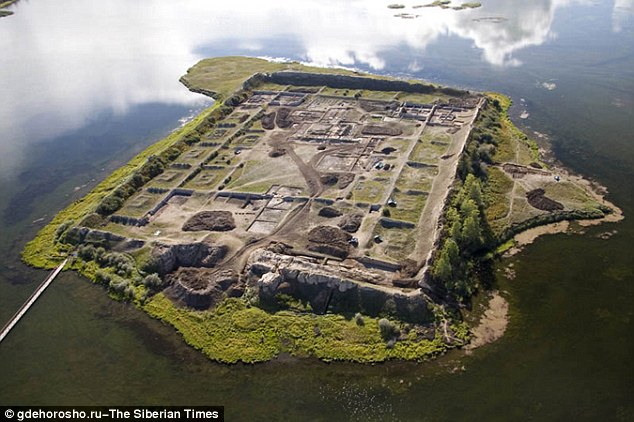
    Russian president Vladimir Putin visited the mysterious island with Prince Albert of Monaco and said that:

     “I have been to many places, I have seen many things, but I have never seen anything of the kind.”

    Russia had been the Home of Sanatana Dharma.

    The Rig Veda was composed in the Arctic.

    Russia has a Veda ,’Santees,’

    It was also called ,

    The Book of Veles considered to be the Russian Vedas’

    Russia was called Sthree Varsha.( Kingdom of Women).

    It was run by women and it was a Republic.

    Indra’s ( chief of devas) City Amravathi is Baikal

    Baikal the Vaikanasa Thertha,Sacred Pond.

    Zhetysu (Kazakh: Жетісу, pronounced [ʒi̯ɘtɘsʊw] meaning “seven rivers”; also transcribed ZhetisuJetisuwJetysuJeti-suJity-su,ЖетысуДжетысу, etc.) is a historical name of a part of Central Asia, corresponding to the South-Eastern part of modern Kazakhstan. It owes its name, meaning “seven rivers” (literally “seven waters”) in Kazakh, to the rivers which flow from the south-east into Lake Balkhash.’

    Seven Sacred Rivers of India.

    Ganga,

    Yamuna,

    Godavari,

    Sarasvathi,

    Narmada,

    Sindhu and

    Kaveri.

    Gange ca Yamuneschaiva Godavari Sarasvati,

    Narmadhe Sindhu Kaveri Jalesmin Sannidhim Kuru.

    (Kalash Mantra)

    Narada’s Mountain Narodnaya is Narada’s Mountain in the Urals.

      was Rig Vedic Mandala City.

    Siberians worship Ayur Devathas of Hinduism.

    Yama,the God of Death,Time built a Temple in Arkaim Russia.

    ‘Arkaim Yama temple.

    In Russia’s more mystical quarters there is intense interest in the ancient town, seeing it as the city temple built by the legendary King Yama, ruler of the Aryans in the Golden Age, which will once again become the centre of the world.6

    However, the discovery of the settlement has opened a historical aperture onto far more than the battles and conquests of an aggressive Indo-European people waged across Eurasia and south into the Mediterranean lands, where their war chariots shattered the peace of Old Europe. What the Land of Cities has revealed in its very structure and history is above all the still earlier past of the Ural-Altaic peoples – a past of such enormous antiquity that it presents more mysteries than it solves.

    Built in the unique architectural mould of nordic Asgard, the most sacred shrine of the Aesir of which the Prose Edda relates that “men call it Troy,” Arkaim may have been a shrine dedicated to the Aryan Sun religion, yet the roots of its dedication would have lain ultimately in the far older cult of the Pole star. Essentially, this was the religion of the shaman, the wizard, the medicine-man and other wonder-workers in touch with the spirits of nature.

    Thus the swastika, thought to be the exclusively Aryan symbol of sun-worship misappropriated by the Nazis,7 and found depicted on many of the clay pots unearthed in Arkaim, is an older religious and metaphysical symbol than that attached to the Aryan Sun God, its roots lying in totemic shamanism. René Guénon, the eminent French esotericist, points out that the swastika, symbolising eternal motion around a motionless centre, is a polar rather than a solar symbol, and as such was a symbol central to the Pole star cult, originally dedicated to a planetary deity connected to Ursa Major, the Great Bear. This centre, Guénon stresses, “constitutes the fixed point known symbolically to all traditions as the ‘pole’ or axis around which the world rotates…” The swastika is therefore known world-wide as the ‘sign of the pole.’8′

    Port Baijn or Bazhyn was built by Pradhyumna,son of Lord Krishna.

    As per various ancient Indian sources, Sri Krishna’s son Pradyamna is known to have extended the Yadhu Empire north of what is present day India. He had attacked the city of Vajrapura and defeated King Vajranabha. Later a truce was called and Pradyamna married the king’s daughter Prabhavati. The poetic versions of this war say that Pradyumna is transported by geese to a land far far away.’

    ‘Some historians identify this kingdom as Kyrgistan, a Central Asian Republic. This identification is based on the Mahabharata epic which describes a Kuru warrior Bhishmaabducting three brides from the Kasi kingdom for making them wives of his half-brother Vichitravirya. This same custom of abduction of brides by bridgegroom or his allies for marrying them, still prevails in Kyrgistan. At some point during the reign of Pururavas-Aila (the first king mentioned in the line of lunar dynasty of Indian kings) Uttara Kuru and the Kurus of India could have belonged to the same Kuru Empire. Arjuna collected tribute from Uttara Kuru during his northern military campaign for Yudhisthira’s Rajasuya sacrifice. The epics also mention that they followed a republican constitution with no monarchy.’

    • There is the fact that Lord Krishna fled Dwaraka because of the repeated attacks by Jarasandha and built a fortress amid the sea to escape him.
    • I do not subscribe to the view that there were seven Dwarakas and what is found off Gujarat coast was the latest of Krishna because if you want to escape from an enemy you do not settle very near to where you had been attacked.
    • And the construction of the Por-Bazhyn is of of an Indian fortress and temple.
    • And it is surrounded by water.

    Loot at this video of Dwaraka fortress that reminds of Por-Bazhyan.Check this video with Por-Bazhyn videos of Port Baizhyn and Krishna’s Dwaraka,excavated off the coast of Gujarat India.

    Watch the Sudashan Chakra of Krishna,carved in Stone ,lying amidst ruins.

    Following video from History Channel.


    Dwaraka and Port Baijn were Islands.

    Krishna built Dwaraka amidst an Island with heavy fortifications to save the city from Jarasandha.

    Even though Por-Bajin is believed to date back at least 1,300 years, many of the walls are intact and extremely well-preserved. The main structure on the island—positioned in the inner courtyard—is separated into two parts and is covered by a tiled roof walkway which is held by 36 massive wooden columns placed on stone bases.

    The Island, its design, its purpose, and practically everything about it is a mystery.

    Experts have no idea why it was built, but an even greater mystery is why it was abandoned.

    Scientists have noticed that there is a lack of heating on the island, even though it is located in Siberia and endures periods of extremely harsh weather. The Island is located over 7,000 above sea level.

    As noted by the Siberian Times, “…what puzzles the experts, however, is the lack of rudimentary heating systems, particularly given that Por-Bajin sits at 2,300 meters above sea level and endures harsh Siberian weather.”’ ( source of this quote, http://www.ancient-code.com/a-1300-year-old-island-in-siberia-shocked-vladimir-putin-i-have-never-seen-anything-like-it/

    Dwaraka is now being dated around 30,000 years back!

  • Krishna’s Son Pradhyumna’s City In Por Bajin Siberia

    After the Mahabharata War, the Yadava Clan was very nearly destroyed and a Group left Bharatavarsha,now called India .

    They spread throughout the world and in the words of Gene D. Matlock,

    “Even ancient Hindu mythology states that the forefathers of the Hindus came down in successive waves from Eastern Siberia (Uttara Kuru). Even now, the major tribes in Eastern Siberia bear virtually the same names as the three major grass-roots Indian groups: Saka, Buryat, and Yakuts. In India, they became the Saka (Scythians), Bharats, and Yakhu-Deva (Now the Yadavas). The Yadavas later became the Hebrews or the Phoenicians and Jews, fathering the civilizations of all mankind. As you’ve read in some E-Mails I’ve received, some people hate me for saying that.

    The Bharats were the Kashi or founding leadership caste of India. The Sakas (Scythians) became the fathers of Guatama Buddha and also the Mesheks that the Bible talks about. These Mesheks became our American Indians because the Bharats and Yadavas feared them as did our forefathers in Bibleland. As I said in a prior E-Mail, the evangelican Christians, who make much of “Last Days Prophecies,” say that the Meshecks of Russia and Turkey will take us over. However, thousands of real Mesheks (Meshika) cross over into our country every day – and even ancient Mexican myths prophesied this.

    By the way, DNA tests proved that these Siberian groups and the Hindus of Northern India share the same DNA. I have even more proof of these matters in my files and references.’

    There were inroads made already into the East and the Kingdom was called the Uttara Kuru.


    Krishna as a Toddler.jpgLord Krishna attended Tamil Poet summit.jpg
    Toddler Krishna

    Uttara Kuru was an ancient kingdom located north of the India. The name Uttara Kuru means the Northern Kurus. The Kurus were a tribe during the Vedic civilization of India. The Uttara Kuru were therefore a population to the north of the Kurus, or north of the Himalayas.

    Some historians identify this kingdom as Kyrgistan, a Central Asian Republic. This identification is based on the Mahabharata epic which describes a Kuru warrior Bhishmaabducting three brides from the Kasi kingdom for making them wives of his half-brother Vichitravirya. This same custom of abduction of brides by bridgegroom or his allies for marrying them, still prevails in Kyrgistan. At some point during the reign of Pururavas-Aila (the first king mentioned in the line of lunar dynasty of Indian kings) Uttara Kuru and the Kurus of India could have belonged to the same Kuru Empire. Arjuna collected tribute from Uttara Kuru during his northern military campaign for Yudhisthira’s Rajasuya sacrifice. The epics also mention that they followed a republican constitution with no monarchy.’

    Krishna’s son Pradhyumna established a Kingdom in Siberia.


    It is believed that a Palace built by him is in Por Bajin.

    This hasa striking resemblance to Krishna’s Dwaraka, now excavated off the coast of Gujarat, India

    Bajin Palace.jpg
    A fortress, summer palace, monastery, or even an astronomical observatory. Picture: gdehorosho.ru Bajin


    ‘Por-Bajin is legally treated as one of the most mysterious archaeological monuments of Russia,’ says the official website for the complex, about 3,800km from Moscow.

    ‘Apparently it was built at the period of the Uighur Khagante nomadic empire (744-840 AD), but it’s not clear what they built a fortress for in such a solitary place, far from big settlements and trade routes. ‘The architecture also produces many questions and it has reminders of a model of an ideal Chinese city-palace.’

    Por-Bajin, which translates as ‘clay house’ in the Tuvan language, is located in the very centre of Eurasia, on the borders of Russia and Mongolia. It sits on a small island in a lake high in the mountains between the Sayan and Altai ranges, about five miles west of the isolated Kungurtuk settlement in southern Siberia…

    Por-Bajin on the map of Uighur Kaganate. Picture: Irina Arzhantseva jpg
    Por-Bajin on the map of Uighur Kaganate. Picture: Irina Arzhantseva


    Bajrapur is mentioned as Vajrapur in the Harivamsa Purana. The story of Vajrapur was revealed by the ruler of Jaiselmer in the 1790s to Lt. Col. James Tod, Political Agent of the East India Company, who was researching the Rajput tribes of India which included the Yadhu tribe, of which Sri Krishna and his son Pradyamna are the most well known.

    The ruins of the City of Por Bajin located in Siberia bears an uncanny resemblance to the design of Dwarka City, which was the city that Sri Krishna had built earlier.

    The Harivamsa Purana describes the conquest of Vajrapuram in the Vishnu Paran section. It says that an a city was built by ‘builder’ Nikumba for King Vajranabha with the name Vajrapuram (later Bajra Pur). The city was an ‘Asura’ city in a far off land.
     In his work ‘The Goose in Indian Literature and Art’ (Volume 2 of Memoirs of the Kern Institute), author Jean Philippe Vogel writes that the ancient Vajrapura was surrounded by a huge lake. Por Bajin, as it is called today, is surrounded by a lake called ‘Tere Kol. ‘Kul’ (कूल) in Sanskrit means ‘lake’, ‘pond’ or ‘pool’. Or else, ‘Tere Kol’ may be a distortion of ‘Tri-Kut’ (त्रिकूट) meaning ‘Three Peaks or Ranges’ which maybe a reference to the surrounding Altay, Sayan and Tochi Mountain Ranges.
    Please read my Post on Baikal

     As per various ancient Indian sources, Sri Krishna’s son Pradyamna is known to have extended the Yadhu Empire north of what is present day India. He had attacked the city of Vajrapura and defeated King Vajranabha. Later a truce was called and Pradyamna married the king’s daughter Prabhavati. The poetic versions of this war say that Pradyumna is transported by geese to a land far far away.
    Siberia -‘the beautiful land’. Siberia translates as ‘the beautiful land’ from Sanskrit. In Sanskrit ‘Su’ (सु) means ‘good’ or ‘beautiful’ and ‘Pura’ (पुरा), ‘Puri’ (पुरी) or ‘puram’ (पुरम) all mean ‘land’ or ‘city’. It may well have been the beauty of the land, rather than of a woman, that attracted the Yadus to Siberia.

    Many rivers in Siberia still bear Sanskrit names – examples: Tara (तारा), Om (ओम्), ‘Apa’ (आप) and the ‘Angara’ (अङ्गार). For a note on the Sanskrit Connection to the names ‘Angara’ and lake ‘Baikal’ click here.

    Citation.
    \Graham Hancock Forum.-Myesteris Forum

    Uttara Kuru