Tag: Pilgrimage

  • Pancha Kedar Five Shiva Temples By Pandavas

    Pancha Kedar Five Shiva Temples By Pandavas

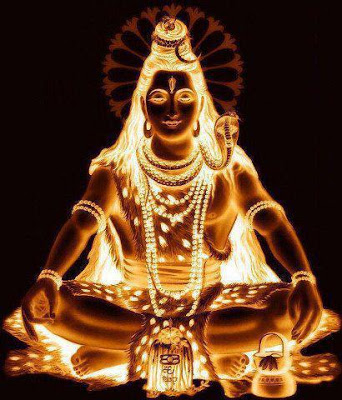
    The Pandavas are said to have esablished five temples for Lord Shiva in the Garhwal Region of  North India.

    In Tamil Nadu,South India there are seven Temples of Lord Shiva, called Saptha Vidanga Sthala.

    I shall be posting on this and on individual Pancha Kedar( Article on Tunganath has been published)

    Scroll down for video.

    The Five temples of Shiva in garhwal Region.png
    Panch kedar Temples of Shiva.

    Panch Kedar (Sanskrit: पंचकेदार) refers to five Hindu temples or holy places of the Shaivite sect dedicated to god Shiva. They are located in the Garhwal Himalayan region in Uttarakhand, India. They are the subject of many legends that directly link their creation to Pandavas, the heroes of the Hindu epic Mahabharata.

    The five temples designated in the strict pecking order to be followed for pilgrimage for worship are the Kedarnath (Sanskrit:केदारनाथ) at an altitude of 3,583 m (11,755 ft), the Tungnath (तुंगनाथ)(3,680 m or 12,070 ft), Rudranath (रुद्रनाथ) (2,286 m or 7,500 ft),Madhyamaheshwar (मध्यमहेश्वर) or Madmaheshwar (3,490 m or 11,450 ft) and Kalpeshwar (कल्पेश्वर) (2,200 m or 7,200 ft). The Kedarnath is the main temple, which is part of the four famous Chota Char Dhams (literally ‘the small four abodes/seats’) or pilgrimage centers of the Garhwal Himalayas; the other three dhams are the Badrinath, Yamunotri and Gangotri. Kedarnath is also one of the twelve Jyotirlingas.

    The Garhwal region is also called the Kedar-Khanda after Kedar — the local name for Lord Shiva. The region abounds in emblems and aniconic forms of Shiva sect of Lord Shiva, much more than the Vaishnava sect. The western part of this region in particular, which constitutes half of Chamoli district being known as Kedar-Kshetra or Kedar mandala, encompasses in its ambit all the five temples constituting the Panch Kedar.

    The most famous folk legend about Panch Kedar relates to the Pandavas, the heroes of the Hindu epic Mahabharata. The Pandavas defeated and killed their cousins — the Kauravas in the epic Kurukshetra war. They wished to atone for the sins of committing fratricide (gotra hatya) and Brāhmanahatya (killing of Brahmins — the priest class) during the war. Thus, they handed over the reigns of their kingdom to their kin and left in search of the god Shiva and to seek his blessings. First, they went to the holy city of Varanasi (Kashi), believed to Shiva’s favourite city and famous for its Shiva temple. But, Shiva wanted to avoid them as he was deeply incensed by the death and dishonesty at the Kurukshetra war and was, therefore, insensitive to Pandavas’ prayers. Therefore, he assumed the form of a bull (Nandi) and hid in the Garhwal region.

    Not finding Shiva in Varanasi, the Pandavas went to Garhwal Himalayas. Bhima, the second of the five Pandava brothers, then standing astride two mountains started to look for Shiva. He saw a bull grazing near Guptakashi (“hidden Kashi” — the name derived from the hiding act of Shiva). Bhima immediately recognized the bull to be Shiva. Bhima caught hold of the bull by its tail and hind legs. But the bull-formed Shiva disappeared into the ground to later reappear in parts, with the hump raising in Kedarnath, the arms appearing in Tunganath, the nabhi (navel) and stomach surfacing in Madhyamaheshwar, the face showing up at Rudranath and the hair and the head appearing in Kalpeshwar. The Pandavas pleased with this reappearance in five different forms, built temples at the five places for venerating and worshipping Shiva. The Pandavas were thus freed from their sins. It is also believed that the fore portions of Shiva appeared at Pashupatinath, Kathmandu — the capital of Nepal.

    A variant of the tale credits Bhima of not only catching the bull, but also stopping it from disappearing. Consequently, the bull was torn asunder into five parts and appeared at five locations in the Kedar Khand of Garhwal region of the Himalayas.[7] After building the Panch Kedar temples, the Pandavas mediated at Kedarnath for salvation, performed yagna (fire sacrifice) and then through the heavenly path called the Mahapanth (also called Swargarohini), attained heaven or salvation.[citation needed]

    After completing the pilgrimage of Lord Shiva’s darshan at the Panch Kedar temples, it is an unwritten religious rite to visit Lord Vishnu at the Badrinath Temple, as a final affirmatory proof by the devotee that he has sought blessings of Lord Shiva.


    Citation.

    http://en.wikipedia.org/wiki/Panch_Kedar

    How  to reach and tour package , check the Link

    http://www.sacredyatra.com/panch-kedar

  • Ganesha With 1010 Mark By Pandavas Alwar Shiva Temple

    One does not find marks on the Deities of Hinduism except Vibhuthi,Tiruman or Kumkum in the forehead.


    There is a temple in Alwar,Rajasthan, where the Ganesha Idol has number ‘1010’ marked.


    Ganesha,Hinduism.jpg.
    Ganesha.


    This is assumed to have been the year the temple was built.


    The Shiva Temple in Alwar , legend has it, that it was built by the Pandavas and the outer walls were built by Raja Jai Singh .


    This Temple is declared as a Protected site by The Archeological Survey of India,


    “It is also believed that the temple was built by the Pandavas. The popular religious belief tells us that Lord Shiva opposed Raja Jai Singh’s army from conquering this land. It actually prompted the king to offer his prayers to the Lord. He also took the decision of appointing priests to offer regular worship in the temple. As a part of it, a lam would always burn in the honor of Lord Shiva. On visiting the temple, you will also be able to see small, oval shaped structures in front of the temple. These mark the graces of the various priests who were appointed for worshipping the Lord. It will be a unique experience to see those graves at the foot of the stairs of the temple.”


    How To reach Alwar.

    Airport.New Delhi,133Km.Sanganeer 113 Km.

    Alwar Junction.connected well with the rest of India.

    Bus Station.Alwar.

  • Hanuman Hundred Temples List

    Here is a List of Hundred Hanuman Temples in India.

    Hanuman with Five faces.jpg
    Pancha Mukha Hanuman

    Andhra

    01. Sri Dasanjaneya of Machavaram, Vijayawada, Krishna Dist,

    02. Sri Nettikanti Anjaneya Temple, Kasapuram, Ananthapur Dist,

    03. Gandi Veera Anjaneya of Gandi, Cuddapah,

    04. Sri Veera Anjaneya temple, Aragonda, Chittoor,

    05. Jool Sri Mukhya Praana Temple,Cuddapah,

    06. Jabali [Jaabaali] Sri Anjaneya Temple, Tirupati, Chittoor Dist,

    07. Sri Anjaneya, Pujya Guru Sri Raghavendra Brindavana, Mantralaya, Karnool Dist,

    08. Bigam Sri Anjaneya Swamy Temple, Lower Ahobilam, Ahobilam, Karnool Dist,

    09. Karanja Sri Anjaneya Swamy, Sri Karanja Narasimha Temple, Ahobilam, Karnool Dist,

    10. Sri Sanjeevaraya [Hanuman] Temple, Vellala, Cuddapah Dist,

    Chhattisgarh

    11. Sri Sankata Mochan Hanuman of Dudhadhari Mutt, Raipur.

    Delhi

    12. Sri Pracheen Hanuman Mandir, New Delhi

    13. Sri Markata babaji Hanuman Mandir Yamuna Bazzar, Delhi

    Gujarat

    14. Dandi Sri Hanuman Mandir, Bet / Beyt Dwarka,

    15. Bihdbhanjan Sri Hanuman Mandir, Harni, Vadodara [Baroda],

    16. Sri Kasht Nivaran Hanuman Mandir, Somnath,

    Himachal

    17. Sri Digambara temple of Hanuman, Sidhabari,

    18. Sri Hanuman Mandir,Jakhoo hill. Simla,

    19. Sri Hanumana Mandir of Mankey point at Kasauli.

    Jharkhand

    20. Sri Hanuman Mandir, Tapovan.

    Kerala

    21. Sri Anjaneya of Haumarambalam, Payyanur,

    22. Sri Kote Anjaneya Temple, Palaghat,

    23. Sri Hanuman Ambalam, Alathoor, Malappuram,

    24. Sri Rama and Sri Hanuman Temple, Triprayar,

    25. Sri Rama and Sri Hanuman of Vilwadrinathan Temple, Tiruvilwamala, Trichur.

    Karnataka

    26. Sri Karanji Anjaneya Temple, Basavangudi, Bangalore,

    27. Sri Gali Anjaneya Temple of Mysore road, Bangalore,

    28. Sri Kere Anjaneya Temple, Sringeri,

    29. Sri Mukhya Praana Temple of Bichale, Raichur Dist,

    30. Sri Hulikunteraya Hanuman Temple, Bommaghatta, Bellary,

    31. Sri Panchamukha Hanuman Temple, Panchamukhi, Raichur,

    32. ‘PURNA PRASAD’ Sri Mukhya Prana [Hanuman] Temple, near BTC,

    33. Yelahanka Gate Sri Anjaneya Swamy Temple, Mysore Bank Circle, Bengaluru

    34. Sri Anjaneya Temple, Sri Raghavendra Mutt, Malleswaram, Bangaluru

    35. Sri Kare Kallu Anjaneya Swamy temple, Mysore road, Bangaluru

    36. Kunchitagara Sri Anjaneya Temple, Killari Road, Bangaluru

    37. Sri Anjaneya Swamy of Sri Venugopala Swamy Temple, 11th Cross, Malleswaram, Bangaluru

    38. Sri Pressana Anjaneya Swamy temple, Subedar Chatram Road, Gandhi Nagar, Bangaluru

    39. Gutte Sri Anjaneya Swamy Temple, near Lal Bagh Garden [west gate] of Bangaluru

    Madhya Pradesh

    40. Sant Kamali ka Sri Hanuman Temple, Bhopal,

    41. Sri Chola Hanuman Temple, Bhopal,

    42. Sri Sankata Mochan Hanuman Mandir, Jaivilas Palace, Gwalior,

    43. Sri Hanuman Mandir, Gadpahra, Sagar,

    Maharashtra

    44. Sri Viswaroopa Anjaneya Swamy Nerul, Navi Mumbai,

    45. Bhadra Maruti temple , Khuldabad,

    46. Sri Sharminda Maruti, Sri Kala Ram Mandir, Nasik,

    47. Vada vrikshak Sri Maruti Mandir, Dadar West, Mumbai,

    48. Sri Anjani putra Sri Hanuman Temple, Anjaneri, Nasik,

    Orrisa

    49. Sri Mahavir Temple, Sirulee, Puri Dist,

    Punjab

    50. Pracheen Sri Bara Hanuman Mandir, [Langoorwala], Amritsar,

    Tamil Nadu

    51. Sri Veera Anjaneya Temple of Mylapore, Chennai,

    52. Sri Veera Mangala Anjaneya temple, Nallatore village, Tiruttani taluk,

    53. Sri Yoga Anjaneya temple, Solingar,

    54. Sri Jaya Veera Anjaneya Swamy at Tanjavur,

    55. Sri Mukhya Praana (Anjaneya) Temple of Triplicane, Chennai,

    56. Sri Sitarama Dasa Anjaneya Temple, Dharmapuri,

    57. Sri Veera Anjaneya Temple, Chengalput,

    58. Sri Sanjeevirayan Temple of Iyenkulam, Kanchipuram,

    59. Sri Veera Anjaneya Temple, Ananthamangalam,

    60. Sri Anjaneya of Namakkal Digambara Temple,

    61. Sri Jaya Anjaneya of Lalapet, Karur,

    62. Sri Kallukuzi Anjaneya Temple, Trichy,

    63. Sri Veera Anjaneya Temple, Cuddalore,

    64. Sri Anuvavi Anjaneya Temple, Coimbatore,

    65. Sri Anjaneya Swamy temple (nalu kal mandap) Tanjavur,

    66. Sri Anjaneya temple [Bunk] of Thanjavur,

    67. Sri Dasa Anjaneya of Pattabirama Temple, Pudhu Agraharam, Thiruviyaru,

    68. Sri Pratapah Veera Hanumar or Moolai Anjaneyar Temple,

    69. Sri Rama Baktha Anjaneya Temple, Saidapet, Chennai.

    70. Sri Veera Anjaneya Temple, Bawa Swami Agraharam Thiruviyaru,

    71. Sri Anjaneya temple, North Bank, Potramarai tank, Kumbakonam,

    72. Sri Anjaneya Swami temple, Bazzar Street, Kumbakonam,
    73. Sri Twin Anjaneya, Pattiswaram, Kumbakonam,

    74. Sri Veera Anjaneyar Temple, Padavedu, Thriruvanamalai Dist,

    75. Sri Abhayahastha Jayaveera Anjaneyer Temple, Krishnapuram,

    76. Sri Jayaveera Anjaneya Swami Temple, Simmakal, Madurai,

    77. Sri Krishnaraya Theppakulam Anjaneyer Temple, Madurai,

    78. Sri Bala Anjaneya of Sri Lakshmi Narashimha Temple, Singri, Vellore Dist.,

    79. Sri Hanuman of Sri Kothandaramar Temple, Mudikondan, Nannilam taluk,

    80. Sri Anjaneya Swamy [Vyasaraja pradeshta]of Kakkalur, Tiruvallur,

    81. Sri Veera Anjaneya Swamy Temple, Arani, Arcot Dist,

    82. Sri Anjaneya Swami Temple, Kallanai,

    83. Sri Sanjiviraya Perumal Temple, Mannachanallur, Trichi,

    84. Sapthaswara Sri Anjaneya, Vanamutti Perumal Kovil, Kozhikuthi, Mayiladuthurai

    85. Sri Veera Anjaneya Temple, MKN Road, Mangulam, Guindy, Chennai

    86. Sri Ramanama Anjaneya of Sri Kalyana Vekatesa Temple, Koranadu Karuppur,

    87. Sathyavijaya Nagaram Sri Anjaneya Temple, SV Nagaram, Arani,

    88. Sri Anjaneya Temple, Karuveli, Kudavasal Taluk, Thiruvarur Dist,

    89. Sri Anjaneya temple, Poovanur, Needamangalam Taluk, Tiruvarur Dist,

    90. Sri Veera Anjaneya Swami temple, Municipal Office complex, Vellore,

    91. Sri Bhavabodha Anjaneya Swami temple, Srirangam,

    Telangana

    92..Sri Beechupally Anjaneya Temple, Beechupally, Itikyal Mandal, Mahbubnagar District,

    Utter Pradesh

    93 Sri Panki Hanuman Temple, Panki, Kanpur,

    94. Sri Hanuman badi temple (Old) of aliganj, Lucknow,

    95. Sri Hanuman badi temple (New) of aliganj, Lucknow,

    96. Sri Sankata Mochana Hanuman of Varanasi,

    97.. Sri Hanuman of Sri Hanuman Dhara, Chitrakoot,

    98. Sri Bade Hanuman of Prayagraj, Allahabad,

    99. Sri Hanuman of Hanuman Garhi, Ayodhya, Faizabad,

    100. Sri Bade Hanuman Temple, Ayodhya, Uttar Pradesh

  • Balarama Worships Muruga In South Visits Pandyas

    Here is yet another proof that the South was a part of Sanatana Dharma, Aryan Dravidian Theory is a myth and the people of North India and South India were a part of the Glorious Bharatavarsha.


    Rama’s marriage was  graced by the Kings of South India.


    Damayanti’s Swayamwara had Tamil Kings presence.


    Lord Krishna married a Pandya Princess.


    Arjuna went on a pilgrimage to South and married a Pandya princess.


    Chola and Pandya Kings fought on the side of Pandavas in The Mahabharata War.


    Chera King fed both the Kaurava and Pandava armies and performed Sraddha , Obsequies for those killed in the war.


    The Vedas mention Lord Muruga as Skanda.


    Lord Balarama on a Pilgrimage to South met and worshiped Murugan in Mahendragiri, now in Tirunelveli Disrict.(This Mahendragiri is a different one from the one from in Odisha.


    He also met Parashurama there.


    It may be note that Parashurama was born in Treta Youga and was elder to Lord Rama and a Chiranjeevi, Immortal.


    Balarama also met Sage Agastya, visited Kanyakumari


    and worshiped Durga.


    The place he visited Muruga is Valliyur, 30 km from Tirunelveli,Tamil Nadu.


    Sri Balarama’s pilgrimage (Mahabharata 9 – Shalya Parva)

    “Then, given leave by the sages, the Lord went with a contingent of brahmanas to the Kausiki River, where He bathed. From there He went to the lake from which flows the river Sarayu.

    “The Lord followed the course of the Sarayu until He came to Prayaga, where He bathed and then performed rituals to propitiate the demigods and other living beings. Next He went to the asrama of Pulaha Rsi. [also known as Hari-ksetra]

    “Lord Balarama bathed in the Gomati, Gandaki and Vipasa rivers, and also immersed Himself in the Sona. He went to Gaya, where He worshiped His forefathers, and to the mouth of the Ganges, where He performed purifying ablutions. At Mount Mahendra He saw Lord Parasurama and offered Him prayers, and then He bathed in the seven branches of the Godavari River, and also in the rivers Vena, Pampa and Bhimarathi. Then Lord Balarama met Lord Skanda and visited Sri Saila, the abode of Lord Girisa. In the southern provinces known as Dravida-desa the Supreme Lord saw the sacred Venkata Hill, as well as the cities of Kamakosni and Kanci, the exalted Kaveri River and the most holy Sri-ranga, where Lord Krsna has manifested Himself. From there He went to Rsabha Mountain, where Lord Krsna also lives, and to the southern Mathura. Then He came to Setubandha, where the most grievous sins are destroyed.

    “There at Setubandha (Ramesvaram) Lord Halayudha gave brahmanas ten thousand cows in charity. He then visited the Krtamala and Tamraparni rivers and the great Malaya Mountains. In the Malaya range Lord Balarama found Agastya Rsi sitting in meditation. After bowing down to the sage, the Lord offered him prayers and then received blessings from him. Taking leave from Agastya, He proceeded to the shore of the southern ocean, where He saw Goddess Durga in her form of Kanya-kumari.

    “Next He went to Phalguna-tirtha and bathed in the sacred Pancapsara Lake, where Lord Visnu had directly manifested Himself. At this place He gave away another ten thousand cows.

    “The Supreme Lord then traveled through the kingdoms of Kerala and Trigarta, visiting Lord Siva’s sacred city of Gokarna, where Lord Dhurjati (Siva) directly manifests himself. After also visiting Goddess Parvati, who dwells on an island, Lord Balarama went to the holy district of Surparaka and bathed in the Tapi, Payosni and Nirvindhya rivers. He next entered the Dandaka forest and went to the river Reva, along which the city of Mahismati is found. Then He bathed at Manu-tirtha and finally returned to Prabhasa.” (SB 10.79.9-21)


    Citation.


    Bhagavatham.


  • Muruga With Sangu Conch Chakra Financial Prosperity

    The Conch and Discus are associated with Lord Vishnu.

    They are weapons He Wields.

    Padikkasunallur
    Padikkasunallur Temple,Alakaputhur

    Lord Muruga, Subramanya,Karthikeya wields the Vel,  a form of Spear.

    In a rare appearance Lord Subramanya has Conch and Discus in His hands.

    Legend has it that He was given this by His Maternal Uncle Lord Vishnu before Muruga embarked on annihilating Surapadman .

    Subramanya with Sangu and Chakra
    Muruga with Conch and Discus

    Muruga with Sangu(Conch) and Discus(Chakra) Padikkasunallur.

    “Padikkasunathar temple at Alagaputhur near Kumbakonam is one such temple where the presiding deity blesses His devotees with financial prosperity.

    The main deity here is also known as Swarnapureeswarar.

    His consort at this temple is Alagammai or Azhagammai.

    The deity taken out in processions (Utsavar) during festivals is Somaskandar.

    The sthala vruksham is vilva.

    The Shiva Linga is a swayam bhu or self manifested.

    Alagaputhur is on the banks of the river Arasalar.

    The old name for this place is Arisilkaraipudur.

    This three-tiered temple is believed to be about 2000 years .

    The priest at this temple was a staunch Shiva devotee who performed the daily pooja with great devotion along with all the customary offerings.

    Famine and poverty struck the whole region that was once prosperous.

    In spite of his poverty and the difficulty he had in making the ends meet, he never shirked from his “responsibility” of performing the daily poojas to the Lord. Please with his devotion, one night the Lord appeared in his dreams and granted a boon.

    The priest wished that the village must become prosperous once again and that he himself should have enough to continue performing the daily poojas without any hurdle.

    As per his wish Lord Shiva left him one gold coin at the steps of the temple everyday.

    The priest used this to take care of the villagers and also to perform the daily pooja.

    Soon the famine was gone and the village became prosperous once again.

    The descendents of that noble priest are still the priests at this temple.

    The priest performed the padikasu pooja for us.

    We handed to him an even number of ten rupee notes for the pooja.

    After performing the pooja the priest gave us back half of them (that is the reason for taking even number of currency notes).

    The money retained by the priest is utilized for temple maintenance etc.

    The priest asked us to preserve the currency notes he gave us and also issued detailed instructions on performing poojas at home using these.

    Devotees believe that performing this ritual will bring prosperity.


    Lord Muruga here is very unique.

    He is seen with the Conch and Discus that one normally associates with Mahavishnu.

    The story goes that it is the Conch and Discus given by Lord Vishnu to Muruga when He set out to wage a war on the demons

    . He is seen sitting on a peacock with His consorts Valli and Deivayanai.

    Since Muruga appears with both His consorts He is known as Kalyanasundara Shanmuga Subramanyar.

    The decoration in the background is in the form of Om.

    Talking of Om, there is a story linking this temple to the Swaminatha Swamy temple at Swamimalai.

    Once Lord Brahma, the Creator was asked how he created life in the Universe.

    Lord Brahma replied that he used the Pranava Mantra.

    When Lord Muruga further asked Lord Brahma the meaning of the Pranava Mantra,

    Lord Brahma was stumped for an answer.

    An angry Muruga imprisoned Him and stripped Him of the responsibility of creation.

    He took upon the responsibility Himself.

    Lord Shiva approached Muruga and requested Him to free Brahma and reinstate Him as the creator.

    He also wanted to know the meaning of the Pranava Mantra.

    Lord Muruga taught Lord Shiva the meaning of this mantra at Swami Malai.

    Later, when Lord Shiva appealed to Lord Muruga again, He relented.

    He was also remorseful for having punished and insulted an elder for his ignorance.

    Lord Muruga performed penance on Lord Shiva at this temple and sought forgiveness.

    Lord Shiva pardoned Him and said that while pointing out of mistakes committed by the elders can be accepted, you should take sufficient care to ensure that it does not offend the elders.

    This is one of the 275 Padal Petra Sthalams and all the four Great Saints have sung hymns in praise of the Lord at this temple.

    This village is just about 2.5 Kames from Nachiyar Kovil on the Kumbakonam-Nachiyar Kovil-Tiruvarur route.

    It is about 7 Kms from Kumbakonam. This temple is almost on the State Highway.

    It is just a two-minute walk from the highway.

    The bus services are frequent and is well connected with the important places around here.

    Other Nearby Temples

    Nachiyar Kovil

    Karuvalarkum Nayaki Temple, Karuvalarcheri

    Uppiliappan Kovil

    Thirunageswaram

    Ramanathaswamy Koil, Thirunaraiyur (This temple houses Saneeswaran, who is present with His wives and sons)

    Saranatha Perumal Kovil, Thirucherai

    Kadan Nivartheeswarar Kovil, Thirucherai

    Amirthakaleswarar Temple, Sakkottai

    Siddhanathar Temple, Tirunaaraiyur

    Travel Base: Kumbakonam

    Temple Timings:

    7 AM to 12 Noon & 4 PM to 8 PM

    Temple Address:

    Arulmigu Padikkasunathar Kovil

    Alagaputhur – 612 401

    Thanjavur District”

    Source:

    Published in Public interest and the source is,

    http://templesoftamilnadu.co.in/tag/murugan-with-conch-and-discus/

    Enhanced by Zemanta