Tag: Mimamsa

  • Adrishta Is Not Luck .A Philosophical Concept on Actions

    It is common to use the term ‘Adrushta’ or Adrishta for Luck,especially in South India.

    People use this term when something,auspicious/good happens to them,which they did not expect.

    This is incorrect.

    Adrishta is not Luck.

    Nothing in the Universe,according to Hinduism,without a Cause or Reason.

    The term Adrushta means ‘unseen,unexplained’

    The Sanskrit term, Adrishta (Sanskrit: अदृष्ट), as an adjective means – not seen, unseen, unobserved, unforeseen, unknown, invisible, unexpected, not experienced, destiny, fate, luck, not permitted or sanctioned, illegal, virtue or vice as the eventual cause of pleasure or pain. In Hindu philosophy it refers to the unseen force, and the invisible results of works which accrue to a person; it refers to the Doctrine of Apurva.’

    The term Adhrushta has been used colloquially to denote some thing which one can not understand or explain.

    When we act or plan,we expect some specific results,though, at times,we might not be aware of some other results that are possible.

    We become surprised when the results of our action produces an efffect we have not anticipated.

    It that happens to our advantage or benefit,we call it Adrushta.

    If the result is unfavourable or disagreeable to us, we call it Destiny,usually in its negative connotation.

    Not correct.

    Every action we perform gets results.

    When we perform an action,we are only a part of the Causes that make the results.

    There are other Causes facilitating the completion of the Act.

    These Causes also determine the Effect.

    We anticipate results based only on our actions and do not take these factors into consideration.

    Moreover,there are infinite number of choices for embarking upon an action.

    But ,the Choices available to us are limited at any given point of time.

    We make choices out of what is available to us as we are not aware of other choices.

    Therefore,the Choices we ignored might produce results which we least anticipate.
    We call these as due to Adrushta.

    In Mimamsa system of Indian Philosophy,Adrushta is the invisible result of a ritual that accrues to a person.

    In Vaiseshika school of Thought,Adrushta is  the equally invisible negative karmic accrual, as the unknown quality of things and of the soul, and brings about the cosmic order and arranges for soul according to their merits or demerits.Adrishta is all the elements which are not known and verified with the help of the five senses, and which can be realized through mind, intelligence and soul.

    However Brahma Sutras do not accept even this.

    As they believe in one Reality ,Brahman,they disprove Vaiseshika theory thus.

    उभयथापि न कर्मातस्तदभावः | (Brahma Sutras II.ii.12)

    “In either case (viz the Adrishta, the unseen principle, inhering either in the atoms or in the soul) the activity (of the atoms) is not (possible), therefore the negation of that (viz of creation through the combination of atoms).

    Patanjali in his Yoga Sutra says,

    क्लेशमूलः कर्माशयो दृष्टादृष्टजन्मवेदनीयः (Yoga Sutras II.12)

    that obstacles are the breeding ground for tendencies that give rise to actions and the consequences thereof; such obstacles are experienced as visible and invisible obstacles.Swami Prabhavananda translates this sutra as – “A man’s latent tendencies have been created by his past thoughts and actions; these tendencies will bear fruits, both in this life and in lives to come.”

    That is some of the obstacles one encounters in Yoga Sadhana , are due to causes invisible and that is Adrushta.

    Reference and citation for Block Quotes.  https://en.m.wikipedia.org/wiki/Adrishta

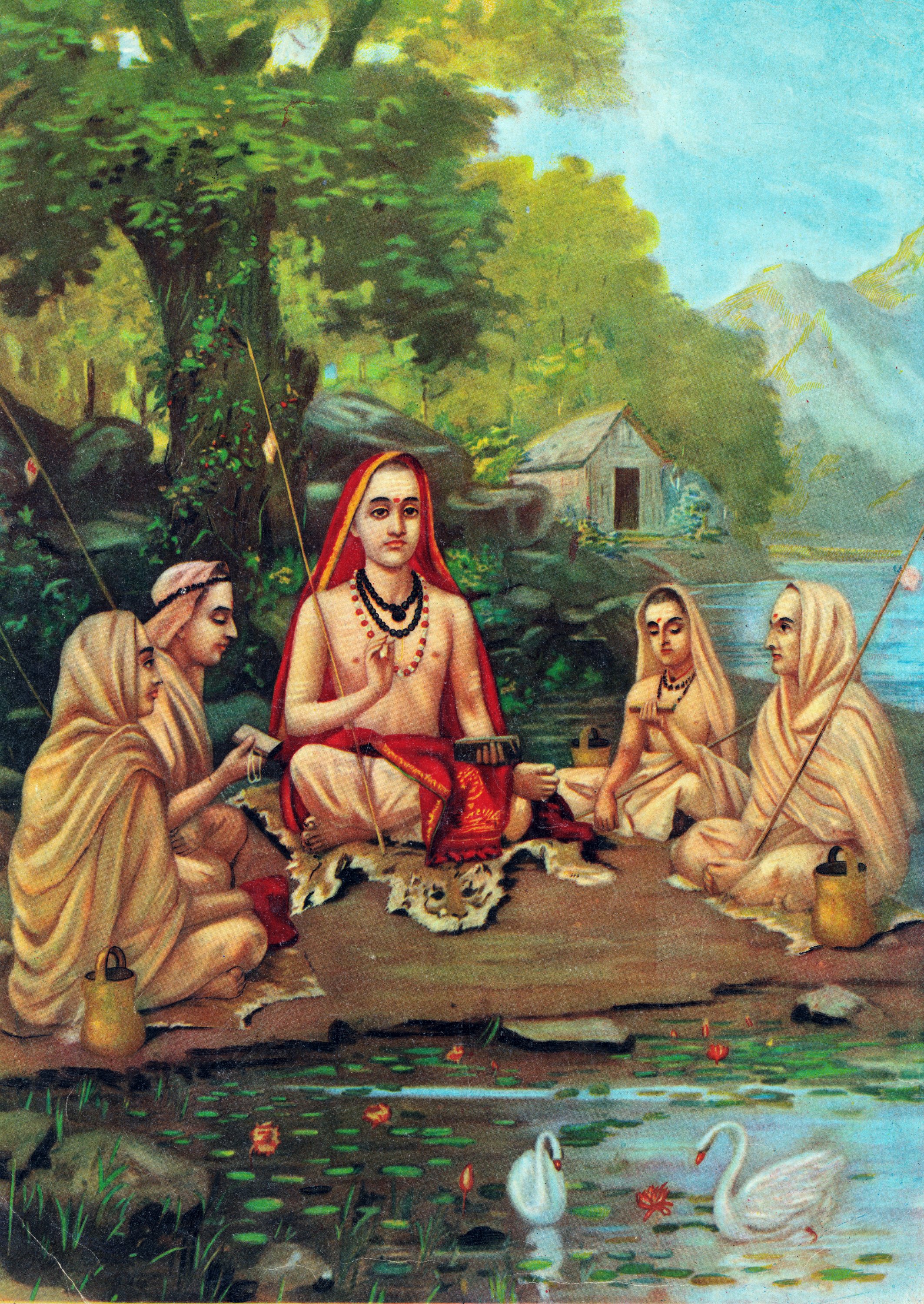
  • Shankaracharya Misinterpret Vedas Misled, Shiva In Padma Purana?

    Shankaracharya Misinterpret Vedas Misled, Shiva In Padma Purana?

    Not for nothing Dr. Radhakrishnan, former President of India and a Philosopher said that ,

    ‘Indian Philosophy is not a view of Life, but a Way of Life’.

    It is one thing to read,study the Vedas and other Hindu Texts but it is another proposition to understand its soul and ethos.

    Mere Intellectual or Bhakthi approach would not help one to understand the spirit of Hinduism.

    Hinduism should be lived and practiced for years  to understand it in its multifarious aspects.

    Mere abstraction would remain just that, an intellectual Narcissism..

    Mere Bhakthi, or total surrender to God , though highly recommended, is likely to lead one into disappointment as this path is, though seems easy to say, is the toughest to practice.

    One must understand that Hinduism is a personal Religion in the sense that one can practice it the way it suits him, so long it is in conformity with the Vedas.

    As individuals are numerous, so are their mental attitudes.

    Hence Hinduism provides four paths to follow so that people of different mindsets can follow Spirituality.

    They are,

    Karma Yoga, Path of Action,

    Gnana Yoga, Path of Knowledge,

    Raja Yoga, Path of Mental and Physical Discipline and

    Bhakthi Yoga, the Path of total surrender.

    The fact that one is emphasized in the Vedas and other Hindu texts, when they speak of a particular path, does not mean that the other Paths are inferior.

    They are spoken this way so as to instill in the mind the conviction to follow the path that appeals to them and such sayings reinforces the attitude.

    The same logic applies to Nirguna Brahman,Reality without Attributes and Saguna Brahman,Reality with Attributes.

    (for details  please read my article God with names and forms Yes and No)

    This one can understand from the Vedas, Puranas, Ithihasas and the Slokas /Mantras.

    One would, in the same breath, the Vedas talk about Nirguna Brahman and Saguna Brahman.

    One would find the Reality being described as a principle, Nirguna, in the Mahavakyas thus,

    1. prajñānam brahma – “Prajña is Brahman” or “Brahman is Prajña”(Aitareya Upanishad 3.3 of the Rig Veda)
    2. ayam ātmā brahma – “This Self (Atman) is Brahman” (Mandukya Upanishad 1.2 of the Atharva Veda)
    3. tat tvam asi – “Thou art That” (Chandogya Upanishad 6.8.7 of the Sama Veda)
    4. aham brahmāsmi – “I am Brahman”, or “I am Divine” (Brhadaranyaka Upanishad 1.4.10 of the Yajur Veda)

    Then you find in the Narayana Suktha.

    Narayanam mahagyem Viswaathmaanam Parayanam,

    Vishnu Suktha,

    Vishnornukam veeryani pravosam..

    or the Sri Rudram,

    nama sivaya cha, Sivadharaaya Cha,

    where the Individual deities are  praised.

    or look a the Lalitha Sahasranama, where a portion is allotted for worshiping the Devi as Nirguna, the chapter being Nirguna Upasna and another Saguna Upasna where personal deity is worshiped.

    So both options are provided.

    Reading one and discarding the other is not compatible with the Vedas.

    Quoting Vedas in isolation lands one into situations and interpretations that run counter to Vedas themselves, as it has happened in the case of the Mimamsa.

    The Karma Kanda, the portion of the Vedas that deal with duties and performance of Yagas and Yagnyas, was carried to such an extreme that only the Karmas in the form of Yagnyas were followed and the Gnana and Bhakthi were totally omitted..

    And the performance of only Yagnas and sacrifices caused a revulsion among people and this one of the reasons for the raise of Buddhism.

    And many Gods were worshiped in the Yagnyas.

    It took all the Life of Shankaracharya to set matters right and establish the authority of the Vedas, by systematizing  worship into Shanmaha, Six systems of worship.

    And he reestablished the concept of Nirguna Upasna and also provided room for Saguna Upasna.

    Iswara concept found in Patanjali’s yoga Sutra was reinforced by him.

    Such being the case I was shocked to find an observation by Stephen Knapp who has done yeoman service to Hinduism by propagating Sanatana Dharma concept that Shankaracharya misinterpreted the Vedas!

    and

    he quotes Padma Purana and Siva Purana.

    We must point out that some spiritual authorities say that Shankaracharya was an incarnation of Lord Shiva who had been ordered by the Supreme Lord to cheat the atheists. The Shiva Purana quotes the Supreme Lord as ordering Shiva: “In Kali-yuga mislead the people in general by propounding imaginary meanings from the Vedas [Vedic literature] to bewilder them”:

    dvaparadau yuge bhutva

    kalaya manushadishu

    svagamaih kalpitais tvam ca

    janan mad-vimukhan kuru 1

    The Padma Purana also says that Lord Shiva would descend as a brahmana sannyasi and teach Mayavada philosophy in the verse:

    mayavada ashat shastram prachchanna

    boudhyam uchyate moya ebe godidam

    devi kalou brahmana murtina

    To do this, Shankara gave up the direct method of Vedic knowledge and presented an indirect meaning which actually covered the real goal of Vedanta. This is confirmed in the Padma Purana where Lord Shiva addresses his wife, Parvati:

    shrinu devi pravaksyami

    tamasani yathakramam

    yesham shravana-matrena

    patityam jnaninam api

    apartham shruti-vakyanam

    darshayal loka-garhitam

    karma-svarupa-tyajyatvam

    atra ca pratipadyate

    sarva-karma-paribhramsan

    naiskarmyam tatra cocyate

    paratma-jivayor aikyam

    mayatra pratipadyate

    “My dear wife, hear my explanations of how I have spread ignorance through Mayavada philosophy. Simply by hearing it even an advanced scholar will fall down. In this philosophy which is certainly very inauspicious for people in general, I have misrepresented the real meaning of the Vedas and recommended that one give up all activities in order to achieve freedom from karma. In this Mayavada philosophy I have described the jivatma and Paramatma to be one and the same.” 2

    The Padma Purana, in the quote that follows, describes how Lord Shiva tells his wife, Parvati, that he would appear in Kali-yuga to teach the impersonalistic philosophy, which is impious and merely a covered form of Buddhism. Yet, as explained next, there was a purpose for it.

    mayavadam asac-chastram

    pracchannam bauddham ucyate

    mayaiva kalpitam devi

    kalau brahmana rupini

    brahmanas caparam rupam

    nirgunam vaksyate maya

    sarvasvam jagato’py asya

    mohanartham kalau yuge

    vedante tu maha-shastre

    mayavadam avaidikam

    mayaiva vaksyate devi

    jagatam nasha-karanat

    “The Mayavada philosophy is impious. It is covered Buddhism. My dear Parvati, in the form of a brahmana in Kali-yuga I teach this imagined Mayavada philosophy. In order to cheat the atheists I mislead them by describing the Supreme Lord to be without any personal form or qualities.”

    Herein, Lord Shiva himself points out that to believe God has no form is not accurate and is equal to atheism. Even though this Mayavada philosophy was not good for pious people to hear because it would sway them toward an impersonalistic viewpoint, we should note that Shankara’s philosophy was just right for the time and circumstance. The Buddhists, who had spread throughout India and neglected the Vedas, believed in neither a soul nor a God and that, ultimately, the essence of everything is the nothingness or void wherein lies nirvana, freedom from all suffering. So considering how the Buddhists had followed a philosophy of what would generally be considered atheism for hundreds of years and would never have accepted a viewpoint which advocated a supreme personal God, Shankara’s was the only philosophy they would have considered. It was like a compromise between atheism and theism, but Shankara used portions of Vedic knowledge as the basis of his arguments. In this way, as Shankara traveled throughout India his arguments prevailed. Thus, Buddhism bowed and Vedic culture was brought back to prominence. Therefore, his purpose was accomplished, so much so that his Sariraka-bhasya is considered the definitive rendition of Vedanta even to the present day.’

    Totally wrong interpretation.

    If Bhaja Govindam is quoted to buttress the view that Shankaracharya was really only after

    Bhakthi to Vishnu, what about his nirvana Shatgam ,Manisha Panchakam, Soundarya Lahari,Kanakadhara Sthavam,Subrahmanya Bhujanga,Ganesha Pancharatnam?

    Shankaracharya should be studie in full an no in bits.

    And if proof is needed that there are interpolations in the Puranas, Padma Purana and Shiva Purana, this is it.

    This accusation against Shankaracharya is not new.

    He was also called a Pseudo-Buddhist for His Advaita!

    If Shankaracharya was misquoting the Vedas, then how come the Mahavakyas I have quoted above speak of Nirguna Brahmana and not Saguna Brahman, Reality without Attributes?

    ‘AUM
    That supreme Brahman is infinite, and this conditioned Brahman is infinite.
    The infinite proceeds from infinite.
    Then through knowledge, realizing the infinitude of the infinite, it remains as infinite alone-

    Mundaka Upanishad.

    Great indeed are the devas who have sprung out of Brahman.-Atarva Veda.

    ‘satyam jnanam anantam brahman
    “Brahman is of the nature of truth, knowledge and infinity” -Taittriya Upanishad.

    Reference and citation.

    http://www.stephen-knapp.com/complete_review_of_vedic_literature.htm

    Images credit.

    https://ribhuv.wordpress.com/tag/shankaracharya/

  • Śrauta Tradition Hinduism Organised By Janamejaya

    Most of us are aware of the fact that Janamejaya was Arjuna’s Grandson and the Grandson of Abhimanyu.

    He conducted the Sarpa Yaga, sacrifice of the Snakes to avenge his father Parishits’ deat at the hands of a Snake.

    What makes him great is that he was the king who consolidated the Kuru Dynasty and stabilised the Bharatavarsha.

    He had the Karma Kanda portion of the Vedas systematized and had them as Srauta.

    These actions to be performed by an individual during the course of his life in various stages,

    Brahmacharya,

    Gruhastha,

    Vanaprastha and

    Sanyasi.

    It is a different matter that these practices were carried to the extreme and they were followed more by rote than by conviction and understanding of the Gnana Kanda of the Vedas.

    The message of the Vedas is that , the Ultimate Aim being the Realization of Brahman, The Reality, the performance of actions are to be a tool in the path Realization as Brahman is identified with Knowledge.

    Unfortunately, the spirit was lost and the practice of performing Srauta Karmas reached a peak with the advent of Mimamsa.

    And innumerable Deities were worshiped, causing confusion.

    This caused a revulsion and result was the emergence of Buddha, a Brahmin of Gautama Gotra to question the existence and authenticity of the Vedas.

    Buddhism ran rampantly till Shankaracharya stopped the tide and reorganised Hinduism by establishing Shan Mathas , Six Modes of Worship and streamlining the procedures.

    Srauta Karmas generally relate to the Yagnyas, which are around 400.

    Read my Post on this.


    Śrauta (Devanagari श्रौत) traditions are conservative ritualistic traditions of the historical Vedic religion in Hinduism, based on the body of Śruti literature. They are still practiced in India today although constituting a small minority within Hinduism…


    Shrauta traditions.

    • Rig veda: Ashvalayana (Shakala) and Sankhayana (Kausitaki)
    • Sama veda: Drahyayana (Kauthuma), Latyayana (Ranayaniya), Jaiminiya
    • Krishna Yajurveda: Baudhayana, Vadhoola, Bharadvaja, Apastamba, Hiranyakesin, Vaikhanasa (for Taittiriya) and Manava, Varaha (for Maitrayani)
    • Shukla Yajurveda: Katyayana (for Kanva and Madhyandina both)
    • Atharva Veda: Vaitana (Shaunaka and Paippalada)

    The Shrauta tradition places more emphasis on the performance of rituals rather than having a set of beliefs. The practices of the Shrauta tradition mainly consist of yajnas. Theyajnas are divided into two categories, nitya-karma and kaamya karma. Nitya-karma refers to those yajnas that have to be performed daily or as per occasion. Kaamya-karmarefers to those yajnas performed with a particular purpose, such as wishing for rain, cattle, overlordship or for a son (e.g. Putrakameshti).

    It may be noted that since the Srata is from Sruti, it has more authority than Smritis.

    But following Sratha is to be tempered with the total understanding of the Vedas, mainly the Gnana Kanda which states that Knowledge and attainment of Liberation is the goal of Life , not mere performance of Karmas.

    However Karma Yoga states that performance of actions is a tool by itself.

    But as Krishna puts it performance of Karma is the renunciation of the fruits of action in the Mind, more a Sankalpa.

    Contrary views welcome.

    Janamejaya.

    Janmejay (Sanskrit: जनमेजय) was a Kuru king who reigned during the Middle Vedic period (12th or 11th century BCE). Along with his predecessor Parikshit, he played a decisive role in the consolidation of the Kuru state, the arrangement of Vedic hymns into collections and the development of the orthodox srauta ritual, transforming the Kuru realm into the dominant political and cultural center of northern Iron Age India. He also appears as an important figure in many later legends and traditions, such as theMahabharata, where he appears as the listener of the first narration of the great epic

    Citation.

    https://en.wikipedia.org/wiki/Shrauta

    https://en.wikipedia.org/wiki/Janamejaya


  • The Brain: The Mystery of Consciousness.

    On consciousness II

    The Physiological /Neurological explanation of consciousness is nothing more than that has been stated in philosophy, adding strength to the ditctum’The more you seem to know the less you know’.

    The problems cited in the article are the questions raised in Philosophy and answers have been attempted.

    The problem is one of Perception.

    Do we see/perceive things because we have senses or we are aware of the senses because objects are there?

    How do we perceive things  at  the very first instance?

    Do we perceive because of the qualities of objects?

    This may not be true for if you peel away all the qualities of objects one by one nothing remains.

    Then what is it we perceive?

    Again what we perceive is subject to change in which case how do we recognize it the same as such at different points of Time?

    Consciousness as has been rightly observed is more than  awareness.

    Indian Philosophy states thus.

    We have sense organs,eyes,ears,nose,tongue and skin.

    We also have five organs of awareness(loose translation of Gnana,which really means Knowledge), namely the sense of seeing ( as distinct from eyes),hearing,smelling,tasting and touching.

    We also have mind which is the activity of the brain,

    Intellect which distinguishes between correct and the incorrect , between Right and Wrong.

    We also have Chitta that guides Intellect.

    Beyond is ‘ I’ or Ahankaara..

    Self or Atman is the embodiment of Being, Chitt and Bliss.

    The Universal Chit is present is present in every being and is reflected as individual Chit in the individual because we are conditioned by Space and Time.

    Henri Bergson calls the Chit as ‘elan vital’

    Rene Descates calls it proof for the existence of the Self.

    Spinoza calls is Substance, defining it as’ that which does not need the existence of anything or which does not need the conception of anything else in order to be conceived’

    Mimasa of Indian Philosophy calls it the Karma or action reaction cycle and Kant as categorical Imperative.

    Consciousness is an attribute of Reality;Reality is not conditioned by it.

    The difference between Mind and Matter is one of degree not of kind.All things are made up of vibrations,lesser the vibrations grosser the object becomes; greater , it becomes subtle or mind.( Miamsa and Buddhism)

    Story:

    The young women had survived the car crash, after a fashion. In the five months since parts of her brain had been crushed, she could open her eyes but didn’t respond to sights, sounds or jabs. In the jargon of neurology, she was judged to be in a persistent vegetative state. In crueler everyday language, she was a vegetable.

    So picture the astonishment of British and Belgian scientists as they scanned her brain using a kind of MRI that detects blood flow to active parts of the brain. When they recited sentences, the parts involved in language lit up. When they asked her to imagine visiting the rooms of her house, the parts involved in navigating space and recognizing places ramped up. And when they asked her to imagine playing tennis, the regions that trigger motion joined in. Indeed, her scans were barely different from those of healthy volunteers. The woman, it appears, had glimmerings of consciousness.

    Try to comprehend what it is like to be that woman. Do you appreciate the words and caresses of your distraught family while racked with frustration at your inability to reassure them that they are getting through? Or do you drift in a haze, springing to life with a concrete thought when a voice prods you, only to slip back into blankness? If we could experience this existence, would we prefer it to death? And if these questions have answers, would they change our policies toward unresponsive patients–making the Terri Schiavo case look like child’s play?

    The report of this unusual case last September was just the latest shock from a bracing new field, the science of consciousness. Questions once confined to theological speculations and late-night dorm-room bull sessions are now at the forefront of cognitive neuroscience. With some problems, a modicum of consensus has taken shape. With others, the puzzlement is so deep that they may never be resolved. Some of our deepest convictions about what it means to be human have been shaken.

    AfrikaansAlbanianArabicBelarusianBulgarianCatalanChineseCroatianCzechDanishDetect languageDutchEnglishEstonianFilipinoFinnishFrenchGalicianGermanGreekHaitian Creole ALPHAHebrewHindiHungarianIcelandicIndonesianIrishItalianJapaneseKoreanLatvianLithuanianMacedonianMalayMalteseNorwegianPersianPolishPortugueseRomanianRussianSerbianSlovakSlovenianSpanishSwahiliSwedishThaiTurkishUkrainianVietnameseWelshYiddishAfrikaansAlbanianArabicBelarusianBulgarianCatalanChineseCroatianCzechDanishDutchEnglishEstonianFilipinoFinnishFrenchGalicianGermanGreekHaitian Creole ALPHAHebrewHindiHungarianIcelandicIndonesianIrishItalianJapaneseKoreanLatvianLithuanianMacedonianMalayMalteseNorwegianPersianPolishPortugueseRomanianRussianSerbianSlovakSlovenianSpanishSwahiliSwedishThaiTurkishUkrainianVietnameseWelshYiddish 

    Detect language » Hungarian
    AfrikaansAlbanianArabicBelarusianBulgarianCatalanChineseCroatianCzechDanishDetect languageDutchEnglishEstonianFilipinoFinnishFrenchGalicianGermanGreekHaitian Creole ALPHAHebrewHindiHungarianIcelandicIndonesianIrishItalianJapaneseKoreanLatvianLithuanianMacedonianMalayMalteseNorwegianPersianPolishPortugueseRomanianRussianSerbianSlovakSlovenianSpanishSwahiliSwedishThaiTurkishUkrainianVietnameseWelshYiddishAfrikaansAlbanianArabicBelarusianBulgarianCatalanChineseCroatianCzechDanishDutchEnglishEstonianFilipinoFinnishFrenchGalicianGermanGreekHaitian Creole ALPHAHebrewHindiHungarianIcelandicIndonesianIrishItalianJapaneseKoreanLatvianLithuanianMacedonianMalayMalteseNorwegianPersianPolishPortugueseRomanianRussianSerbianSlovakSlovenianSpanishSwahiliSwedishThaiTurkishUkrainianVietnameseWelshYiddish 

    Detect language » Hungarian
    AfrikaansAlbanianArabicBelarusianBulgarianCatalanChineseCroatianCzechDanishDetect languageDutchEnglishEstonianFilipinoFinnishFrenchGalicianGermanGreekHaitian Creole ALPHAHebrewHindiHungarianIcelandicIndonesianIrishItalianJapaneseKoreanLatvianLithuanianMacedonianMalayMalteseNorwegianPersianPolishPortugueseRomanianRussianSerbianSlovakSlovenianSpanishSwahiliSwedishThaiTurkishUkrainianVietnameseWelshYiddishAfrikaansAlbanianArabicBelarusianBulgarianCatalanChineseCroatianCzechDanishDutchEnglishEstonianFilipinoFinnishFrenchGalicianGermanGreekHaitian Creole ALPHAHebrewHindiHungarianIcelandicIndonesianIrishItalianJapaneseKoreanLatvianLithuanianMacedonianMalayMalteseNorwegianPersianPolishPortugueseRomanianRussianSerbianSlovakSlovenianSpanishSwahiliSwedishThaiTurkishUkrainianVietnameseWelshYiddish

    Detect language » Hungarian