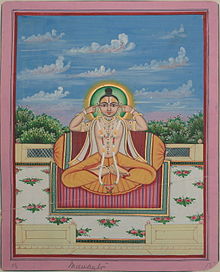
Tag: Kalpa Avatars

  • Yagnyeswara Avatar of Adi Narayana, Manvantara Avatar

    Yagnyeswara Avatar of Adi Narayana, Manvantara Avatar

    It is very rare to find Vishnu being addressed as Iswara.

    He is the Sustainer of the Universe.

    He is the supporter.

    Vedic thoughts revolve around the Worship of Agni,Fire.

    Though Agni carries what is offered in the homa to respective deities to whom the Oblations are offered,Agni is not addressed as Iswara.

    That epithet is reserved for lord Vishnu.

    The mahamantra Vishnu Sahasranama states thus.

    Yagyo Yagya-Patir-Yajva Yagyango Yagya-Vahanah

    Yagyabhrud Yagyakrud Yagyi Yagyabhrug Yagyasadhanah

    Yagyanantakrud Yagyaguhyam Annam Annada Eva Cha,

    You are the Sacrifice,Yagnya.

    Are the Lord of Yagnya,

    You are the reason for Yagnya,

    You are the Limbs of Yagnya,

    Yagnya is your vehicle,

    Yagnya is embedded in you,

    You are the reason,cause for Yagnya,

    You are the instrument of Yagnya,

    You are the secret of Yagnya.

    There is a difference between Yagnya and Yaaga.

    Yagnya is a duty to be performed as it ought to be, as in the Categorical Imperative of Immanuel Kant,Yaaga is performed with a specific purpose in mind.

    Sri Rudra addressed to Lord Shiva elevates Yagnya to another level.

    While performance of Yagnya is to be without any specific desire in mind,it is hard to do so.

    So Sri Rudra dedicates Yagnya thus.

    Vaak Yagnyena kalpathaam,

    Mano Yagnyena kalpathaam,

    Chakshur Yagnyena kalpathaam,

    Srothram Yagnyena kalpathaam,

    Atma Yagnyena kalpathaam,

    Yagnyo Yagnyena kalpathaam.

    After offering the beneficial results that accrue by performing Yagnya ( though we may not seek the fruits of Yagnya,they will accrue),to Speech, Mind,Eyes,Ears,Self,Sri Rudra dedicates the fruits of Yagnya to Yagnya Itself!

    Such an Yagnya has a deity.

    That is Yagnyena,a Manvantara Avatar of Vishnu .

    Yagneswara.

    Yajna (Sanskrit: यज्ञ, yajña) or Yajneshwara(“Lord of Yajna”) is mentioned as an avatar of the Hindu god Vishnu in the Bhagavata Purana. As Yajna, Vishnu is the embodiment of the Hindu sacrifice ritual or Yajna.He was also Indra (king of the gods) of the Svayambhuva Manvantara, era of Svayambhuva Manu...


    Yajna is classified as one of the 14 main Manvantara-avatars (an avatar corresponding to a Manvantara and who supports the corresponding Indra and other gods to maintain the principles of religion) called vaibhava-avatars. Yajna is also categorized as a Kalpa-avatar (an avatar corresponding to an aeon called Kalpa) of Vishnu.- Devi Bhagavatha,Garuda Puranas’

    Yajna had a twin sister named Dakshina (“donation”). Later, Yajna married Dakshina and had twelve sons. These twelve Devas (gods) are collectively called the Yāmas.

    The Bhagavata Purana identifies Yajna with Vishnu and Dakshina with goddess Lakshmi, the goddess of fortune and consort of Vishnu. After Yajna’s birth, he lived at the house of his grandfather Svayambhuva Manu. The sons to Yajna and Dakshina are named as Tosha, Pratosha, Santosha, Bhadra, Sânti, Idaspati, Idhma, Kavi, Vibhu, Svahna, Sudeva and Rocana. They are collectively called as the Tushita gods. Later Yajna is described to become the Indra. Garuda Purana says that he performed many sacrifices’ – Vishnu Purana,Bhagavatha Purana.

    Source for block quotes.

    https://en.m.wikipedia.org/wiki/Yajna_(avatar)

    The details of Dakshina and children of Yagnyena have philosophical import.

    Shall write.

  • Manvantara Kalpa Avatars Vishnu Six Classifications

    Manvantara Kalpa Avatars Vishnu Six Classifications

    Avatar in Sanskrit means coming down.

    However this does not convey the full import of the term.

    This term denotes the manifestation of the Divine with Form.

    Vedas,the authority of Hindus do not speak of Personal God’s.

    Reality called Brahman is beyond Attributes.

    However, considering the fact that human nature is limited and it is difficult to meditate on the abstract,the concept of Personal God came in.

    It was first coined by Patanjali as Iswara under the category of Iswara Pranidhana.

    However, Puranas speak of Avatars of the Godhood.

    There are avatars of Gods.

    Of the Trinity of Hinduism,Brahma ,Vishnu and Rudra/Shiva.

    We have Avatars of Ganesha,Subrahmaya as well.

    In the case of Vishnu and Brahma they are portrayed as being born of womb.

    Shiva Avatars do not seem to have this attribute.

    Shiva Avatars seem to occur in a flash and disappear as evidenced in the Shiva Avatars as described in the Thiruvilayadal Purana in Tamil.

    This does not seem to be reflected in North Indian texts.

    Some of Shiva Avatars mentioned in Thiruvilayadal Purana,are mentioned in Linga,Shiva Puranas.

    In the case of Vishnu,there are different classification of the Avatars.

    People generally speak of the ten Avatars of Vishnu.

    Matsya, Korma,Varaha,

    Narasimha,Vamana, Parashurama,

    Rama,Krishna,Balarama and Kalki.

    Of these the first five happened during Krutha)Satya Yuga,

    Rama and Parashurama in Treta Yuga
    Krishna and Balarama in Dwapara Yuga.

    And Kalki is yet to manifest towards the end of the present time scale Kali Yuga.

    Parashurama seems to be present Dwapara,and even in Kaliyuga as he is a Chiranjeevi, Immortal.

    To understand this one has to understand the Hindu Time Scale.

    Time, according to Hindus,is cyclic and not linear.

    That is Time recoils on itself.

    We have the same time scale appearing again and again.

    For details please refer my articles on Time, Cyclic.

    The time scales are,

    Manvantara,

    Kalpa and Yuga.

    Based on this concept there are two two classifications of the Avatars of Lord Vishnu.

    Manvantara Avatars and Kalpa Avatars.

    Manvantara Avatars are,

    Brahma’s day – 1,000 catur yugas – is divided into fourteen periods of the rule of Manus (fathers of mankind) known as manvantaras. The incarnations during these manvantaras are listed as follows:

    Yajna
    Vibhu
    Satyasena
    Hari
    Vaikuntha
    Ajita
    Sarvabhauma
    Rsabha
    Visvaksena
    Dharma
    Sudhama
    Yogesvara
    Brhadbhanu.

    2.Kapla/Yuga Avatars of Vishnu.

    Four yugas ( Ages ) which come in cycles:
    Satya yuga, lasting 1,728,000 years
    Treta yuga, lasting 1,296,000 years
    Dwapara yuga, lasting 864,000 years
    Kali yuga, lasting 432,000 years

    In each of these yugas the Lord incarnates with a different body color according to the yuga.

    asan varnas trayo hy asya
    grhnato ‘nuyugam tanuh
    suklo raktas tatha pita
    idanim krishnatam gatah

    “Krishna appears as an incarnation in every millennium. In the past, He assumed three different colors – white, red and yellow – and now he has appeared in a blackish color.”
    – Srimad Bhagavatam 10.8.13

    In the Satya yuga a white avatara appeared to Kardama muni to establish meditation as the process for self-realization.

    In the Treta yuga a red avatara appeared to Brahma to establish fire sacrifice as the process for self-realization.

    In the Dvapara yuga a dark avatara (Krishna) appeared as the son of Devaki to establish temple worship as the process for self-realization.

    In the Kali yuga a Yellow avatara appeared (Chaitanya Mahaprabhu) as the son of Sachi Mata to establish the chanting of the holy names (nama-sankirtana) as the process for self.

    3.Purusha Avatars of Vihsnu.

    Krishna first incarnates as the three purusha avataras namely:
    Karanodakashayi Vishnu – “The Lord who is lying on the causal ocean”.
    Garbhodakashayi Vishnu – “The Lord who is lying on the universal ocean”.
    Kshirodakashayi Vishnu – “The Lord who is lying on the ocean of milk”.

    In addition,Gaudiya Sampradaya of Vaishnavam lists three more.

    4.Kumaras
    Narada
    Varaha
    Matsya
    Yajna
    Nara-Narayana
    Kardami
    Dattatreya
    Hayasirsa
    Hamsa
    Dhruvapriya or Prsniggarbha
    Rsabha
    Prthu
    Nrsmha
    Kurma
    Dhanvantari
    Mohini
    Vamana
    Bhargava Parasurama
    Ramachandra
    Vyasa
    Prlambhari Balarama
    Krishna
    Buddha
    Kalki

    5.Guna Avatars based on Samkya concept of Disposition s,Gunas

    Vishnu assumes this guna avatar post. Sattvik Guna = Mode of goodness = Maintanence
    Brahma Rajik Guna = Mode of passion = Creation
    Siva Tamas Guna = Mode of ignorence = Destructiion

    6.

    Shaktyavesha avataras: – Empowered Incarnations

    There is no limit to the number of shaktyavesha incarnations. But some are mentioned in the vedic literatures as examples. They are of two kinds, direct and indirect.

    When the Lord Himself expands displaying a particular power of His opulences He is known as Sakshat.

    When He empowers a living entity with some particular sakti – power, for some specific activity, to represent Him , that living entity is called indirect or avesha incarnation.

    Avesha incarnations:

    Four Kumaras empowered with knowledge.
    Narada empowered with devotional service.
    Brahma empowered with creative power.
    King Pritu empowered with power to maintain living beings.
    Parasurama empowered with power to kill evil elements.
    VedaVyasa to compile the vedas.

    Source.

    https://iskcondesiretree.com/page/six-categories-of-avatars

    Of these Purusha Avatars explain Universal Time Scale so are the Kalpa Avatars.

    You may note the Avatars under the categories overlap.

    This is because of our classification.

    I shall write on each classification and their philosophical implications.

    In addition,we have Archavatara mentioned in Southern Tradition.

    ##My observations are in italics.