Tag: Indian Manuscripts

  • Ancient Tamil Medicine Manuscripts Institute of Asian Studies Chennai

    Ancient Tamil Medicine Manuscripts Institute of Asian Studies Chennai

    People often ask me on the sources of my articles. I have listed the sources in my ‘About’ Page.And I keep updating it. I also provide the relevant Link or the text or Book at the end of each article.When it comes to Indian history, people are not still convinced about the authenticity of the sources.When a Link or source is provided regarding Indian History, these sources are in turn based on Manuscripts Epigraphs,Temple Sthala puranas, References in Sanskrit and other Regional languages and word of mouth and legends. These are cross checked with archelogical findings, Astro dating,C4 dating, References in contemporary literature of the period.

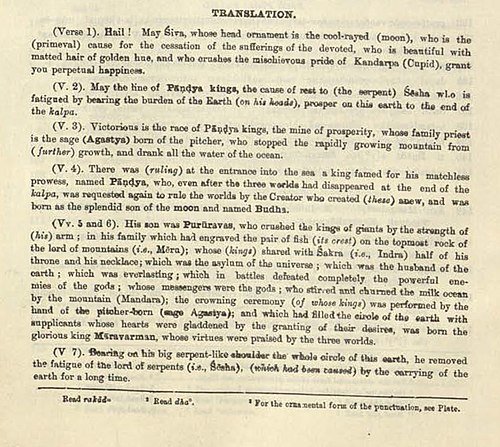
    Where are the main sources, Manuscripts and Epigraphs?These are available in Foreign countries’ Museums,Private Collections and a very negligible portion with India.When I was reading the Ancient Tamil writings, Epigraphs in Darparanyeswara Sanctum outer wall, at Thirunallaru, I was requested by the Executive of the temple and presented a Book 📚.It was a copy of the text of the Epigraphs at the temple and the deciphered version of the writings /Epigraphs. The work was carried out by French Organization at Pondicherry.I shall produce excerpts with my notes in a series of articles.

    To the point at hand… Ancient Tamil texts dealing with Medicine,herbs, preparation of special medicines, chanting to be done while preparing medicines, rare diseases and their treatment are housed at The Institute of Asian Studies,Chennai.Thesr documents are preserved in the Memory of the World Register in 1997.

    The I.A.S. Tamil Medical Manuscript Collection

    Documentary heritage submitted by India and recommended for inclusion in the Memory of the World Register in 1997.

    Mostly Tamil Medical Manuscripts preserved at the Institute of Asian Studies reflect the ancient system of medicine, practised by yogis. This system explains the methods of obtaining medicines from herbs, herbal roots, leaves, flowers, barks, fruits etc. The proportions of the ingredients as well as the specific processes are explained in detail.

    Traditional Indian Medicine has a long history. Its theories and detailed practices are recorded in classic texts written by medical scholars of the past. Modern practitioners study these texts to increase their skills. The Institute of Asian Studies in Chennai has collected 564 copies of these texts, all written in South India, mostly in Tamil, on palm leaves, mostly dating from the 19th century. The collection is part of a wider collection of ancient Tamil texts. The texts reflect both the Siddha and Ayurvedic medical systems. They discuss the nature and symptoms of diseases, and methods of cure. Most are general texts, giving prescriptions for use in a number of diseases, but some are specialist texts covering diseases of children and women. The texts explain how medicines can be produced from herbs, and from the roots, leaves, flowers, bark and fruit of medically valuable products, detailing the specific processes and the proper proportions of the several ingredients in any specific medical product. Traditional Indian Medicine requires that certain rituals and ritual chants should be undertaken while medicine is administered, and 57 of the manuscripts give such details.

    Traditional medical systems are a major part of the world heritage of learning and culture, and preservation of this collection is of great importance in consequence This collection is the finest and most complete library of traditional Indian medical texts extant. The collection reflects, in particular, the medical traditions of South India: most other collections of traditional Indian medical texts reflect the traditions of other parts of India. The collection was inscribed on the International Memory of the World Register in 1997.

    International Register
    https://mowcaparchives.org/items/show/36

  • 650 Vedic Manuscripts 60000 Books Sanskrit Pali with British Museum.

    650 Vedic Manuscripts 60000 Books Sanskrit Pali with British Museum.

    I have come across people who ask me, where the manuscripts of of Sannata Sharma are, about which I have been writing for the past twelve years. The question, I could infer from their tone, is one of mocking Hinduism by implying I write about things which have no proof. They then add that though Vedas were transmitted orally, they were transcribed as Manuscripts. And where are these manuscripts? Or the information that the manuscripts exist is a lie? And the talk about Hinduism had advanced system of thought encompassing wide range of subjects, Astrology, Astronomy, Aeronautics, Physics, Chemistry, Biology, Microbiology, Botany, Medicine, General Surgery, Dentistry, Cosmetic Surgery, Virology, Space technology, …

    Then there are innumerable philosophical treatises, Ethics texts, Literature, Fine Arts.. You name any Branch of Human knowledge, India had dealt with it exhaustively.

    Where are these manuscripts?

    They were taken out of India by invaders, Greeks, Dutch, Portuguese, Spanish, French, British, Mughals. Some manuscripts were destroyed. Most of the manuscripts survived. Apart from what was forcefully taken out, Indians themselves sold them or gave them away as gifts to gain the invaders’ Trust.

    Some of these precious manuscripts are with Bhandarkar Institute, Pune, some in Calcutta, Madras to cita a few. I shall be sharing where in India our ancient texts are available in future posts.

    But majority of the works are abroad, mainly in museums. I had written in earlier lost as to what are available with USA Library of Congress and Canada.

    An outstanding source of different materials in Sanskrit, Prakrit, and Pali language from South Asia and beyond covering a vast range of subject areas.

    About the collection

    Our collections include about 10,800 Sanskrit and Pali manuscripts from pre-modern and modern periods and 1,700 Pali manuscripts. We also hold over 3,500 Sanskrit and Gandhari manuscript fragments from North-Western India and Central Asia in Brahmi and Kharosthi scripts dating from the 1st to 11th centuries AD.

    Manuscripts

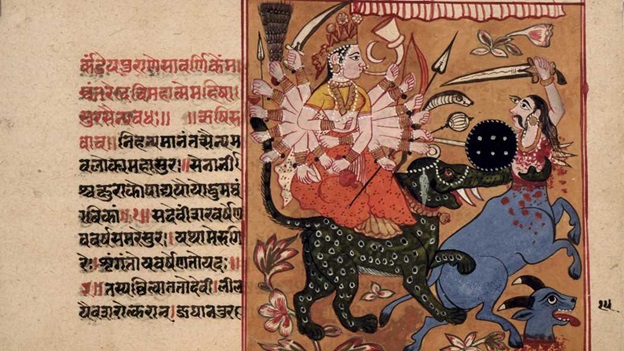
    The manuscript collections stem from the British Museum and India Office Libraries and owe their early growth to the activities of the first patrons of Indology studies who served in South Asia as employees of the East India Company. They include some of the earliest known Buddhist manuscripts (the Gandhari birch bark scrolls, Or. 14915) and the earliest datable Sanskrit manuscript (Or. 6403-04).

    The Stein and Hoernle manuscripts comprise Buddhist canonical literature from the 4th to the 10th centuries, from Dunhuang, Khadalik and other Silk Road oases. 

    Hindu manuscripts covering philosophy, theology, literature, law, science, astronomy, astrology, mathematics, and medicine date from the 10th century or earlier (Or. 3568). Beside we hold a collection of about 600 Vedic manuscripts including accented versions and ritual texts.

    A very wide range of different regional scripts in use over the centuries across the Indian Subcontinent is represented in these collections.

    Books and periodicals

    Our collections include about 60,000 printed books, mostly in Sanskrit and Prakrit, 450 of which were printed before 1850. 

    We have 2,900 Pali books in Sinhalese and South-East Asian scripts, as well as in Devanagari and Roman, including a large proportion of nissaya (exegetical literature) in Burmese script. They form an important source for the study of Theravāda Buddhism. 1,500 of the Pali books belong to the Hugh Nevill collection, many with Sinhalese commentaries. The collection is particularly strong on monograph series and ‘Vernacular tracts’ published between 1867 and 1947 (under the Indian Press and Registration of Books Act) by various South Asian presses such as Nirnaya Sagara and Chowkhamba. They include limited-edition publications in Grantha and other South and North Indian scripts.

    What is available online?

    What is available in our Reading Rooms?

    Reference sources listed below are available in the Asian and African Studies Reading Room.

    Printed books acquired before 1984 are listed in card and microfiche catalogues also available in the Asian and African Studies Reading Room.

    Further information

    Catalogues and reference works on manuscripts

  • Thirty Million Manuscripts 700 Poetic Meters Amazing Sanskrit

    With Thirty Million  Manuscripts existing even today,Sanskrit is the oldest Language of the world and the Rig Veda , which is in Sanskrit ,is the oldest literature of the world.

    There is a view that the Hitti Language is older than Sanskrit.

    Not so.

    I shall be posting on this  an article.

    Some interesting Facts about Sanskrit.

    Encrypting the value of pi in a shloka. – There is a numbering system in Sanskrit called the Katapayadi system. This system ascribes a number to every letter or alphabet in the script, something similar to the ASCII system in computer science. When the letter in the following shloka is replaced with their corresponding number from the Katapayadi Sankhya, we get thevalue of pi accurate to 31 digits.
    गोपीभाग्यमधुव्रात-शृङ्गिशोदधिसन्धिग ।
    खलजीवितखाताव गलहालारसंधर ॥
    OR
    Gopibhagya madhuvrata srngisodadhisandhiga|
    Khalajivitakhatava galahalarasandhara||
    (The shloka extolls Krishna and his achievements.)

    Read my post on this.

    Sanskrit is the “mother” of the most languages of North India and even the Romani language of the Romani people (“Gypsies”). To be precise, the Indo-Aryan languages evolved from Middle Indo-Aryan languages, which in turn evolved from Old Indo-Aryan = Sanskrit). Moreover, even the Dravidian languages (Telugu, Malayalam, Kannada, and to quite some extent Tamil), which do not have their origins in Sanskrit have borrowed such a large proportion of their vocabulary from Sanskrit that it could well be called their foster-mother.

    There is a Sanskrit epaper ,even to-day,since 1970,published out of Mysore.

    The Sanskrit’s sphere of influence extended all the way to South-East Asia (what is now Laos, Cambodia, etc.), without any invasion or use of military power originating from India.

    Though the importance of Sanskrit has diminished significantly in the last few centuries, it is far from a dead language: Sanskrit literature continues to thrive and flourish, with novels, short stories, essays and epic poems continuing to be written, and its authors picking up several literary awards (including the Jnanpith award in 2006).

    It is the official language (along with Hindi) of the state of Uttarakhand.

    The most extreme example are the Vedas, which apart from being among the world’s oldest texts might well be the ones with the largest interval of time between their composition and first being written. The oldest layers are dated around 1500 BCE by modern scholars, and they were not set down in writing until probably the Gupta period (5th century or so), which makes some 2000 years.

    Despite the above fact (initial reluctance to writing), the proliferation of works continued, with the result that there are an estimated over 30 million Sanskrit manuscripts today with a conservative estimate of 7 million in India itself. This means there are orders of magnitude more manuscripts in Sanskrit than in Latin and Greek put together.

    These manuscripts are on a very diverse range of topics, everything from sacred texts to literary works (poetry, drama, satires, histories, epics, novels) to scientific works (mathematics, linguistics, logic, botany, chemistry, medicine,) to entire works on things as seemingly obscure as elephant-raising or even “A Method to Grow Crooked Bamboos for Palanquin Beams”.

    Poetry in Sanskrit is extraordinarily diverse, with over 100 common meters, and books of prosody listing over 600 metres. Its literature includes works of dazzling complexity, including works that tell several stories at once using puns, works that contain words several lines long, brilliant examples of constrained writing, …

    Research has shown that the phonetics of this language has roots in various energy points of the body and reading, speaking or reciting Sanskrit stimulates these points and raises the energy levels, whereby resistance against illnesses, relaxation to mind and reduction of stress are achieved.
     
    Sanskrit is the only language, which uses all the nerves of the tongue. By its pronunciation, energy points in the body are activated that causes the blood circulation to improve. This, coupled with the enhanced brain functioning and higher energy levels, ensures better health. Blood Pressure, diabetes, cholesterol etc. are controlled. (Ref: American Hindu University after constant study)

    Sanskrit is the Most Computer Friendly Language.

    Citation.

    Amazing Sanskrit