Tag: human migration India

  • Vasishta Kaundinya Gotra Migrated from Sumeria DNA Study

    Vasishta Kaundinya Gotra Migrated from Sumeria DNA Study

    *Evidence substantiating information found in Puranas and Ithihasa, Ramayana and Mahabharata are now being validated by Astronomy, Astroarcheology , Epigraphy, Archeological finds, Tectonic plates movements,C4dating, Infra-red analysis, Stratification studies.

    Before going into the Research find,let us look at some seemingly contradictory facts mentioned in the Puranas and Ithihasa.

    And cross check them with references in ancient Tamil literature.

    On Sage Vasishta.

    1.Vasishta appears in Ramayana and not much of him is heard since.

    2.Yet , Vasishta is one of the Sapthapathi,who are eternal.

    Atri,Bhrigu,Kutsa, Vasishta,Gautama,Kashyapa and Angirasa

    3. Vasishta is found in Ancient Tamil literature.

    4.Though Sanatana Dharma is reported to have sprung from the north of the Vindhya Mountains,latest finds prove that the Founder of Ikshvsku Dynasty, Ikshvsku’s Father Manu was from the South of Vidhyas.

    5..Emperor Aja of Ikshvsku clan married a Pandya princess from South.

    6.Chola kings of South trace their lineage to Ikshvsku Dynasty.

    7.Cholas call themselves from Kashyapa Gotra.

    8.Sage Viswamitra banished his sons to Dravida Desa,south of Vindhya.

    9. Their descendant Apasthamba composed the Apasthamba Sutras, which are followed by Brahmins of South India.

    10.Parashurama settled families from Dwaraka to Kerala.

    11.Sage Agastya settled seventy two families on the present border area of Tamil Nadu and Kerala.

    12.The Tamil homeland Lemuria is 230 million years old.

    13. Rama refused to wage war against the Dravidas as they were his ancestors.

    14. Lord Rama fought with the Atlantis people at seven Rishi valley currently in Pakistan

    15.Chola king SibiChola king Sibi ruled from the present NWFP of Pakistan.

    It was his second capital.

    He was ancestor of Lord Rama.

    He built a temple for Vishnu as Pundarikaksha at Thiruvellarai near Srirangam, Tamil Nadu.

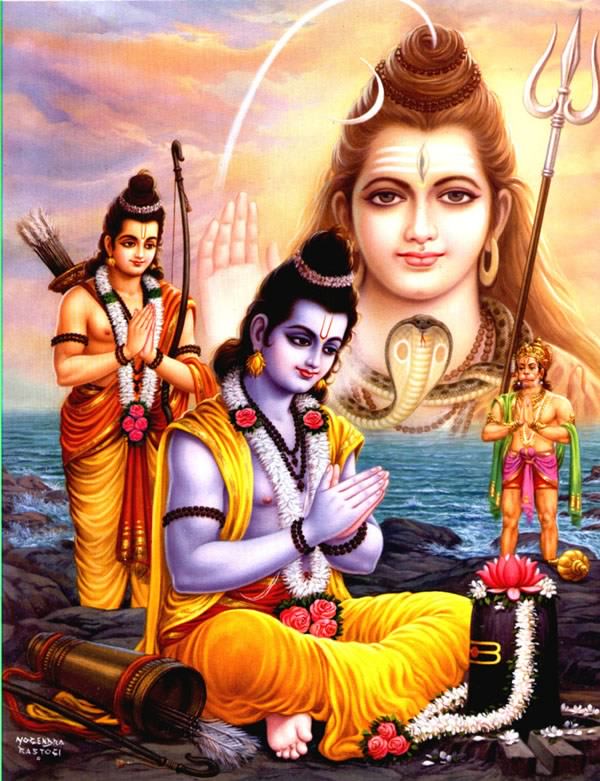
    16. When a Tsunami struck south,Lord Shiva,Ganesha and Vasishta migrated to Arctic via what is now middle East, Europe,America.

    Rig Veda was composed in Arctic.

    Then they reentered India.

    One must remember the landmass then, was different from what it is today.

    Lemuria million years ago

    17.Rama’s empire covered the world.

    18. Sanatana Dharma was present throughout the world.

    19.People of Bharathavarsha were spread throughout the world.

    20. They remigrated from wherever they were to the present India,mostly from Sumeria.

    21. Names of Dasaratha,Rama and Bharatha are found in Sumerian Kings List.

    Now the research on Vasishta and Kaundinya Gotta migrated from middle East towards India , South India through Bolan Pasd.

    This study is based on DNA presence.

    Abstract

    A rare R1a1 Y-haplogroup (Y-HG) L657 clade subtype designated as LPKSTR is found in most male members of a clan of “founder” families within the Goud Saraswat Brahmin community in Lotli town in Western India. TMRCA calculations using pairwise comparisons to control cohorts suggested a probable migration history distinct from the canonical narrative for medieval migration of orthodox Brahmin families to South India. Using Y-HG centroid analysis, chi-square analysis of TMRCA distributions and archeological find-spots, and discriminant function analysis we show that the parental Z93 L342.2 subclade in which LPKSTR occurs originated in West Asia and that LPKSTR individuals migrated toward the southeast by a Bolan Pass route distinct from the traditionally presumed route of Brahmin ingress into the Indian subcontinent. The proposed migration route is supported by archeological, toponymic, numismatic, linguistic, iconographic, and literary data. Lastly, we present cultural metrics demonstrating that these LPKSTR lineages retained distinct family practices with respect to literacy, religious practice, and emigration not shared with orthodox Brahmins of canonical geographic origin within the same community, despite centuries of intermarriage. Long-term transmission of differentiated family practices within a patrilineal endogamous community has rarely been documented.

    It is notable that Rig Vedic Book 7 is ascribed to the sage Vasishta, whose affiliation with the mainly Iranic sun-worshipping Mitra-Varuna tradition is nevertheless codified in the Hindugotra system and became especially popular in the medieval assimilation of sun-worshipping Iranic peoples (Huna, Maitraka, and Gurjar) in Gujarat and the Western states []. LPK Brahmins follow the Kaundinya gotra of the Vasishta group. Moreover, Brahmins of the Vasishta gotra occur in significantly higher numbers along the western side of the subcontinent (Supplementary File S42). Taken together, these observations support the possibility of Mitra-Varuna antecedents for LPKSTR LPK families..

    Source and credits.

    Research Article

    Genetic and Cultural Reconstruction of the Migration of an Ancient Lineage

    1Mayflower Organization for Research and Education, Sunnyvale, CA, USA
    2Department of Forensic Medicine and Toxicology, All India Institute of Medical Sciences, New Delhi 110029, India
    3Department of Pediatrics, University of Oklahoma Health Sciences Center, Oklahoma City, OK, USA

    Received 10 May 2015; Revised 24 August 2015; Accepted 25 August 2015

    Academic Editor: Peter J. Oefner

    Copyright © 2015 Desmond D. Mascarenhas et al. This is an open access article distributed under the Creative Commons Attribution License, which permits unrestricted use, distribution, and reproduction in any medium, provided the original work is properly cited.

    https://www.hindawi.com/journals/bmri/2015/651415/

    PS. I have provided some links for points mentioned,not all.

    Please check related posts in each article or search the term +ramanan50 for more articles.

  • 313 World Languages From India World Migration from Bharatvarsha 

    People do not look beyond what has been noted by the Western writers and that too what is prescribed to be read by our erstwhile British colonists and the pseudo secularists,who,in the garb of Intellectuals,name given to them by themselves advocate misinformation.

    When you look at history from architectural remains,archeology and references in world literature,you would find that the present date of Neolithic,Paleolithic and other age stretch farther back in time than what has been assigned to them.

    Shall be writing on these anamolies with evidence.

    Thanks to Internet, one can delve deep and find information.

    To human presence in the world.

    I have written quite a few articles proving that the First human was from India and how the people have migrated from here to other parts of the world.

    In fact, there were no other parts,it was only Bharatavarsha.

    Please read my articles on Bharatavarsha and Hinduism for details.

    Science has advanced.

    We now have Archeo-astronomy,that studies archaeology with astronomy,Linguistics as a Science,and archeogenetics.

    These tools have helped in identifying the migration of peoples and the cultural and linguistic mother of present peoples ,language and culture.

    The languages ,which the west consider as ancient,like Latin,Greek,the cultures like Mynecian,Siberian,Hitties and Anatolian are from India.

    During prehistoric times,there was a common language and culture from which all other cultures sprang from.

    It was Proto-Indo-European.

    Indo European languages distribution .image.
    Indo European Languages,Proto Indo European origin. Indo-European branches map.png: Hayden120 Georgia (orthographic–projection).svg: Giorgi Balakhadze, Flappiefh derivative work: Alphathon • CC BY-SA 3.0

    Map legend.

    Description

    English: A map showing the approximate present-day distribution of the Indo-European branches within their homelands of Europe and Asia. The following legend is given in the chronological order of the earliest surviving written attestations of each branch:

       Hellenic (Greek) 

       Indo-Iranian 

       Italic (includes Romance) 

       Celtic 

       Germanic 

       Armenian 

       Balto-Slavic (Baltic) 

       Balto-Slavic (Slavic

       Albanian 

       Non-Indo-European languages

    Dotted/striped areas indicate where multilingualism is common (more visible upon full enlargement of the map).

    The people were also classified as such and they lived in Eurasia,comprising of present Asia and Europe.

    The root of their languages were either Sanskrit or Tamil.

    Most of them belong to Indo Iranian language,which is from Sanskrit,Brahmi,Prakrit from India.

    Their Cultural practices were from Sanatana Dharma/Tamis.

    The concept of Cow Worship,Shiva,Sky God is found.

    Their land division is akin to Tamils Division of Land.

    The Tamils classified regions into five.

    Kurinji,mountainous terrain,

    Marutham,Agricultural,

    Mullai,Pastoral,

    Neydhal,Seashore and

    Deser regions.

    Curiously,Snow region is missing.

    This is because the,Tamil land Kumari Kandam was located below the Vindhya Ranges in India and extended to Antarctica.

    The land of MU formed its periphery.

    Even then no Ice!

    Only Ocean!

    More of this in a later article.

    The land divisions,the evolution of world cultures,language forces me to postulate that th the people of the world were indeed from Bharatavarsha,India.

    The Indo-European languages are a language family of several hundred related languages and dialects. There are about 445 living Indo-European languages, according to the estimate by Ethnologue, with over two-thirds (313) of them belonging to the Indo-Iranian branch.The most widely spoken Indo-European languages by native speakers are Spanish, English, Hindustani (Hindi and Urdu), Portuguese, Bengali, Russian, and Punjabi, each with over 100 million speakers, with German, French and Persian also having significant numbers. Today, about 46% of the human population speaks an Indo-European language as a first language, by far the highest of any language family.

    The Indo-European family includes most of the modern languages of Europe â€“ with the notable exceptions of Altaic languages such as Turkish and Azeri; of Uralic languages such as Hungarian, Finnish, Estonian, and others spoken in parts of Russia; and of the language isolate Basque. The Indo-European family is also represented in Western, Central, and South Asia. It was also predominant in ancient Anatolia (present-day Turkey), the ancient Tarim Basin (present-day Northwest China) and most of Central Asia until the medieval Turkic and Mongol invasions. With written evidence appearing since the Bronze Age in the form of the Anatolian languages and Mycenaean Greek, the Indo-European family is significant to the field of historical linguistics as possessing the second-longest recorded history, after the Afroasiatic family, although certain language isolates, such as Sumerian, Elamite, Hurrian, Hattian and Kassite are recorded earlier.

    All Indo-European languages are descendants of a single prehistoric language, reconstructed as Proto-Indo-European, spoken sometime in the Neolithic era. Although no written records remain, aspects of the culture and religion of the Proto-Indo-European people can also be reconstructed from the related cultures of ancient and modern Indo-European speakers who continue to live in areas to where the Proto-Indo-Europeans migrated from their original homeland. Several disputed proposals link Indo-European to other major language families.’

    Source. https://en.m.wikipedia.org/wiki/Indo-European_languages