Tag: Hinduism Italy

  • Bhoomi Pooja House  Building Ceremony Ancient Rome Vishnu Temple Complex

    Bhoomi Pooja House Building Ceremony Ancient Rome Vishnu Temple Complex

    I have written on the connection between Sanatana Dharma and Italy.

    On,

    Rome was founded on Rama Navami April 27, 753 BC

    Hindu Kings of Italy Iraq Turkey Syria Labanon

    Lakshmi in Pompeii 83 BC

    First Pyramid Builder Roman Emperor With Vaishnava Marks

    Sharada Devi in Sardinia

    Lombardi Indian DNA connection

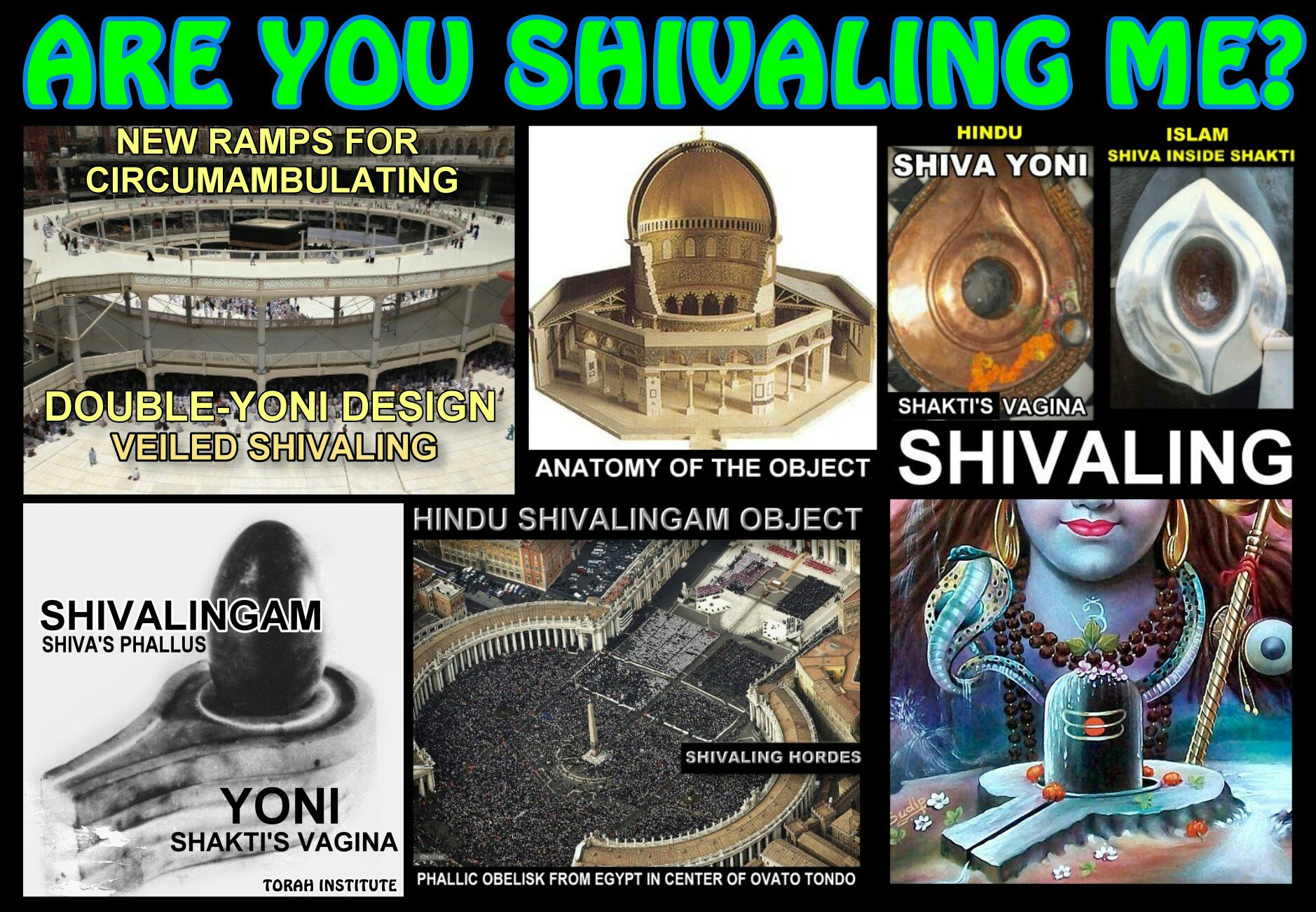
    Vatican Aerial view View Shiva Linga At.Peters Square.

    Now more on this Italian connection.

    The name Vishnu is pronounced as Vistu even in India, and so it used to be pronounced in Europe. Therefore Vestal Virgins in Rome were girls dedicated to Lord Vishnu.

    The entire terminology associated with ancient historic Rome will be found to be Vedic, Sanskrit. The Ventine hill under the monastery of St. Saba derives its name from Avanti, a famous ancient city in India. The monstery of Saba is an ancient Shiva temple. The Paletine Hill in Rome is the counterpart of Palitana, a city in the Saurashtra region of India noted for its hill covered with numerous temples.

    At Rome, the vault of the old well-house of the capitol is called the Tullianum. Such well-houses are a common feature of ancient Hindu temples and palaces. They may still be seen in Lucknow, in the Tejo Mahalaya (alias Taj Mahal) temple palace in Agra, and in Ashoka’s palace (wrongly called Ferozshah Kotla) in Delhi and in several other princely capitols. Such well-houses are known as Baoli-Mahals in Hindu parlance.

    “The gates of Roma Quadrata on the Palatine were not bare openings in the line of wall but consisted of a square chamber with two doors, one opening inwards and the other outwards. The temple of Janus was a modification of such a gateway chamber.”

    That description is taken from page XXIV of the Introduction to the volume titled Rome and the Campagna by R. Burn (Deighton, Bell & Co., London, 1871).

    Those square gateways are a Hindu feature. They may be seen in almost every historic mansion in India. In fact, we would like to suggest a slight amendment. It may probably have escaped the notice of the above-mentioned author Robert Burn (Fellow and Tutor at Trinity College, Cambridge, U.K.) that the gateways have a subtle octagonal feature about them. In the interior, every corner usually has some kind of a joint, which gives it the appearance of a twin, turning the square into an octagon.
    GaneshGanesh receives homage at the entrance before one enters the sanctum to worship the main deity.

    The western side of the Tiber Valley in Rome is bounded by Vatican Hill and the long ridge of the Janiculum.

    The Vatican is the Sanskrit name Vatica, i.e. Vedic hermitage. The term Janiculum is the Sanskrit term Ganesalayam, i.e. a temple of Lord Ganesh.

    The Capitoline Hill and the Janiculum Hill are opposite to each other. In between them flows the Tiber. On both those hills were temples of Vedic deities. On the Capitoline was the temple of Saturn, and on the Janiculum was that of Ganesh.

    Thus, as in the Kaaba (Mecca), in Rome too, Lord Vishnu was surrounded by a number of other deities.

    “…Historians and poets of Imperial Rome give us a description of the solemn ceremony observed on the occasion of marking out the limits of a new settlement…. a bull and a cow were yoked together, the cow being placed on the inner side, a furrow was made with a plough round the proposed site. This was done on a lucky day to satisfy religious scruples….”

    This procedure of choosing an auspicious day with reference to astrology and breaking the ground for a new city with a plough drawn by kine is Vedic practice. As late as the early 17th century, Shivaji, a Maratha ruler of India, adopted the same procedure when he first arrived in Pune city to look after his fief. He had the land furrowed with a gold-tipped plough.

    The Arch of Constantine in Rome is a triple archway with a tall arch in the centre, flanked by two smaller arches. This also is a common sight in India.

    “The temple of Hercules Victor was pulled down under Sixtus IV. The statue of Hercules in bronze now in the capitol was found there,” records R. Burn.

    Hercules is the Sanskrit term Heri-cul-eesh, meaning the Lord of the clan of Hari, i.e. Vishnu alias Krishna. The term Hercules Victor is the Sanskrit term Hari-Vijay.

    Forum Romanum is the ancientmost part of Rome. Romanum is Ramayanam, obviously because that was the central point around which the city of Rama was erected.

    “The longer side of this piazza measured about 200 yards. … Round this confined space were grouped the most important buildings of Republican Rome, the temples of the most ancient and venerated gods, the senate hose, the Comitium and the Rostra. … The House of the Pontifex Maximus was a little further along the sacred way (Summae Sacra Via) and was called the Regia, the Atrium Regium or the Atrium Vestae. This Regia was the house of the Pontifex… The sacred spears of the God Mars were kept there….”

    The above is a very important passage. It pinpoints the sacred Vedic core of the ancient city of Rome. The city itself was named after Rama, an incarnation of Vishnu, alias Vishtu. Therefore the highway leading from it to the temple was known as the Regia, i.e. “royal way” i.e. Raja Marg in Sanskrit. It was also known as Vestae from Vishnu and Atrium from sage Atri. Ancient Italy was known as Etruria and its civilization was known as Etruscan civilization, and the sea to its east is known as the Adriatic Sea—all from the Vedic sage Atri, who had his Vedic establishment in Rome in remote antiquity. The office of the Pontifex Maximus, that is the chief priest of the Vishnu temple complex in Rome, originates from sage Atri. The Sanskrit term Pantah Mahan has been corrupted to Pontifex Maximus in Latin. His house was naturally a part of this great temple complex, presided over by Lord Vishnu. And as at the Kaaba in Mecca, in Rome too Vishnu was surrounded by the other deities such as His incarnations Rama and Krishna and planetary deities such as Saturn and Mars.

    The Italian word “Via” for highway is a truncated form of the Sanskrit term Veethi.

    The chief priest (the Pontifex Maximus) was from the time of Constantine forced to call himself a Christian priest. Maximus is the Sanskrit term Mahattamas, i.e. “the topmost”.

    Reference and citation.

    http://hindureligionn.blogspot.in/search?updated-max=2013-12-10T14:56:00%2B05:30&max-results=20&reverse-paginate=true&start=14&by-date=false


    1. — p.1, Preface to A Complete History of the Druids, Their Origins, Manners, Customs, Powers, Temples, Rites and Superstitions, with an Inquiry into Their Religion and Its Coincidence with the Patriarch by Lichfield, printer T.G. Lomax, marketed by Longman, Hurst, Rees and Orms, London Back to text
    2. — p.31, Rome and the Campagna by R. Burn
  • Lakshmi in Pompeii Italy 80 BC

    Lakshmi in Pompeii Italy 80 BC

    I have,in my search for finding the evidence of Sanatana Dharma throughout the world,written its presence in almost all the countries.

    You may search the country+Hinduism+ramanan50 to get the articles.

    The history of the countries in Europe always begins with a statement that there was an influx of people from the East and they mingled with the local population.

    The question is where did they come from?

    The time of Immigration coincides with the Great Flood mentioned in the Hindu texts and ancient Tamil Classics.

    The next question is about the people who were present locally when the Immigration took place.

    I postulate that both belonged to Bharatavarsha,the name the present India.

    One must remember the landmass was different then.

    I have been able to find evidence to back up my theory,in fact I formulated the theory after  I found the evidence in the areas.

    In this attempt I have written on the presence of Sanatana Dharma in Greece.

    The first Mitanni king was Sutarna I (good sun). He was followed by Baratarna I (or Paratarna great sun), Parasuksatra(ruler with axe),…. Saustatar (Sauksatra, son of Suksatra, the good ruler), Artadama (abiding in cosmic law)..Tushratta (Dasaratha), and finally Matiwazza (Mativaja, whose wealth is thought) during whose lifetime the Mitanni state appears to have become a vassal to Assyria”. Subhash Kak traces the ‘arna’ syllable in the names of the kings to ‘araNi’ (अरणि) meaning ‘sun’…

    (Akhenaten, Surya, and the Rigveda’, Prof Subhash Kak (an Indian American computer scientist, previous Head of Computer Science Department, Oklahoma State University)’

    Hindu Kings of Iraq Turkey Syria Lebanon Egypt Italy

    Rama Hanuman Sita in Pre Roman Italy

    And Rome was founded on April 21,753 BC on Sri Rama Navami,Lord Rama’s birth day.

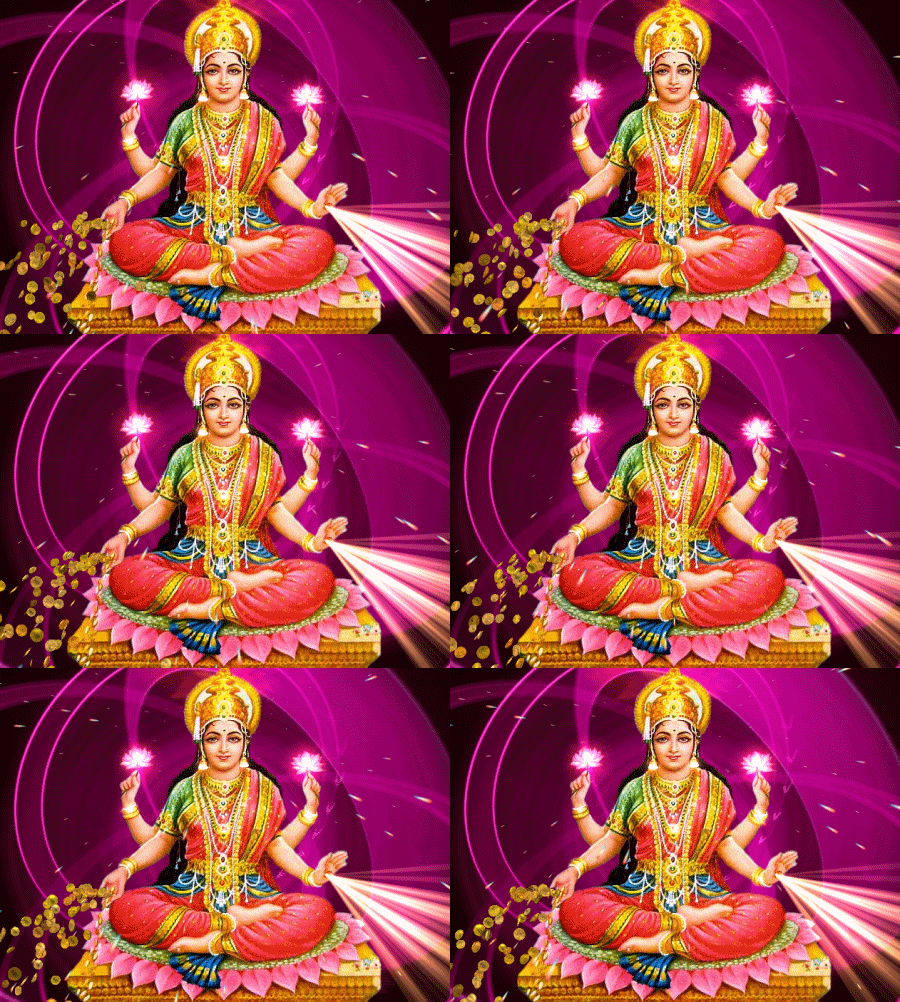
    And now more evidence in the form of A figurine of Goddess Mahalakshmi being found in Pompeii.

    Lakshmi ,Pompeii image.jpg.
    Laksmi Idol found in Pompeii

    The statuette was discovered in a small house on Via dell’Abbondanza in the ruins of Pompeii. The house is now called “House of the Indian statuette”.The year of the discovery is variously given as between 1930 and 1935, and in 1938.

    The statuette is nearly naked apart from her lavish jewels. She has two female attendants, one facing outward on each side, holding cosmetics containers...

    The figure is now in the Secret Museum in the Naples National Archaeological Museum.

    The existence of this statuette in Pompeii by 79 CE, when Mount Vesuvius erupted and buried the city, testifies to the intensity of Indo-Roman trade relations during the 1st century CE.This statuette has been dated by the Naples National Archaeological Museum as having been created in India in the first half of that century...

    The Western Kshatrapas under king Nahapana invaded the Satavahana realm for 50 years between approximately 25 CE and 75 CE. There is therefore a distinct possibility that the Pompeii Lakshmi was looted and sent to the West by the Western Satraps for purpose of trade. The Western Satraps are known from the Periplus of the Erythraean Sea to have had intense commercial contacts with the Roman Empire around that time.’

    References and Citations.

    https://en.m.wikipedia.org/wiki/Pompeii_Lakshmi

    //ws-na.amazon-adsystem.com/widgets/q?ServiceVersion=20070822&OneJS=1&Operation=GetAdHtml&MarketPlace=US&source=ac&ref=qf_sp_asin_til&ad_type=product_link&tracking_id=ramasblog-20&marketplace=amazon&region=US&placement=1846684714&asins=1846684714&linkId=b7701b17605e80f019ddac7d2ea693fb&show_border=true&link_opens_in_new_window=true&price_color=333333&title_color=0066c0&bg_color=ffffff