I have written quite a few articles on Caste and its rationale.
Also the Gotras,which identifies an individual.
The concept of Gotra in Hinduism is unique in that it traces your ancestry and guides you the exact practices to be followed as mentioned in the Vedas,the scriptural authority of the Hindus.
Hinduism lists forty smaskaras,the duties to be performed by an individual.
Varna Dharma,which is loosely translated as Caste,which is incorrect,depends on Disposition and conduct and is not based on Birth.
There are four Varmas.
Brahmana,
Kshatriya,
Vaisya and
Sudras.
One is expected to marry in the same Varna,as it facilitates better integration of individuals who are getting married,The Life Style being compatible, similar and not totally divergent.
If one marries in the same Varna,there would be no confusion in assigning Gotra.
In the Vedic system,which was mostly Patriarchal,the Husband’s Gotra is assigned.
In Matriarchal society,as was in Vogue in Kerala,India,the wife’s Gotra was assigned.
However predominant was Patriarchal.
Now if one were to marry from the other Varna,how to determine the Gotra and Caste?
If A Brahmin man marries from other Varna,it was called Anuloma.
If A Brahmin woman marries from the other Varna,it is Pratiloma.
This is also said this.
‘Anuloma is marriage between a sudra woman and higher caste man. Pratiloma is marriage between a sudra man and higher caste women.‘
As to the Caste to which the child belongs to,is normally, the Varna,Caste of the father.
If A Brahmin man marries a woman of other Varna,the Varna of the Child is Brahmin at Birth.
But to be qualified as Brahmin depends on Disposition and Character.
The general perception that the Varna or Caste is based on the Higher Caste does not seem to be supported in Vedic Thought,though Some subscribe to this view.
I am of the view,in the case of conflict in interpretation between Vedas,Sruthi and Smriti,the last word is that of Shruthi,Vedas.
Therefore,the automatic assignment of Gotra,based on Varna hierarchy is not in tune with the spirit of the Vedas.
That is, in the case of inter- varna marriages,the Gotra need not be assigned to that of the father,if he is considered Higher in Caste.
Hence those who follow the Patriarchal system need not assign father’s Gotra to the child.,in the case of inter-varna marriages.
Varna may be assigned later based on Disposition and Character and based on Varna ,the Gotra may be assigned.
Generally speaking Siva Gotra is not found among Brahmins,who follow the Vedic Fire worship,
I have observed that Vishnu Gotra is found among people who do not worship Agni,Fire.
Gotras bearing God’s names seem to belong to this group.
Otherwise,Gotra names are from Rishis, Saptha Rishis.
As the disposition of children born of inter-varna are not determined soon after birth, I think God’s,Siva, Vishnu name are assigned initially.
However this procedure may not really provide the Veda Shaka details.
This article is exploratory and scholarly inputs with credible sources may be sent .
It is of interest to note that Viswamitra,who gave the most important Mantra Gayatri, has been credited with two Gotras.
Kaushika and Viswamitra.
Kaushika Gotra is assigned to descendants of Viswamitra,when he was a Kshatriya King, Kaushika.
And Viswamitra Gotra to his descendants born to him after he became a Raja Rishi,Brahmana.
*Evidence substantiating information found in Puranas and Ithihasa, Ramayana and Mahabharata are now being validated by Astronomy, Astroarcheology , Epigraphy, Archeological finds, Tectonic plates movements,C4dating, Infra-red analysis, Stratification studies.
Before going into the Research find,let us look at some seemingly contradictory facts mentioned in the Puranas and Ithihasa.
And cross check them with references in ancient Tamil literature.
1.Vasishta appears in Ramayana and not much of him is heard since.
2.Yet , Vasishta is one of the Sapthapathi,who are eternal.
Atri,Bhrigu,Kutsa, Vasishta,Gautama,Kashyapa and Angirasa
3. Vasishta is found in Ancient Tamil literature.
4.Though Sanatana Dharma is reported to have sprung from the north of the Vindhya Mountains,latest finds prove that the Founder of Ikshvsku Dynasty, Ikshvsku’s Father Manu was from the South of Vidhyas.
Now the research on Vasishta and Kaundinya Gotta migrated from middle East towards India , South India through Bolan Pasd.
This study is based on DNA presence.
Abstract
A rare R1a1 Y-haplogroup (Y-HG) L657 clade subtype designated as LPKSTR is found in most male members of a clan of “founder” families within the Goud Saraswat Brahmin community in Lotli town in Western India. TMRCA calculations using pairwise comparisons to control cohorts suggested a probable migration history distinct from the canonical narrative for medieval migration of orthodox Brahmin families to South India. Using Y-HG centroid analysis, chi-square analysis of TMRCA distributions and archeological find-spots, and discriminant function analysis we show that the parental Z93 L342.2 subclade in which LPKSTR occurs originated in West Asia and that LPKSTR individuals migrated toward the southeast by a Bolan Pass route distinct from the traditionally presumed route of Brahmin ingress into the Indian subcontinent. The proposed migration route is supported by archeological, toponymic, numismatic, linguistic, iconographic, and literary data. Lastly, we present cultural metrics demonstrating that these LPKSTR lineages retained distinct family practices with respect to literacy, religious practice, and emigration not shared with orthodox Brahmins of canonical geographic origin within the same community, despite centuries of intermarriage. Long-term transmission of differentiated family practices within a patrilineal endogamous community has rarely been documented.
It is notable that Rig Vedic Book 7 is ascribed to the sage Vasishta, whose affiliation with the mainly Iranic sun-worshipping Mitra-Varuna tradition is nevertheless codified in the Hindugotra system and became especially popular in the medieval assimilation of sun-worshipping Iranic peoples (Huna, Maitraka, and Gurjar) in Gujarat and the Western states []. LPK Brahmins follow the Kaundinyagotra of the Vasishta group. Moreover, Brahmins of the Vasishtagotra occur in significantly higher numbers along the western side of the subcontinent (Supplementary File S42). Taken together, these observations support the possibility of Mitra-Varuna antecedents for LPKSTR LPK families..
Source and credits.
Research Article
Genetic and Cultural Reconstruction of the Migration of an Ancient Lineage
1Mayflower Organization for Research and Education, Sunnyvale, CA, USA 2Department of Forensic Medicine and Toxicology, All India Institute of Medical Sciences, New Delhi 110029, India 3Department of Pediatrics, University of Oklahoma Health Sciences Center, Oklahoma City, OK, USA
Received 10 May 2015; Revised 24 August 2015; Accepted 25 August 2015
1.Badgujar Kshatriya: Gothra – Vashishtha. Ved – Yajurved. Kuldevi – Kalika. From the vansha of Ramchandraji. Branches – Sikarwar, Khadal, Batela, Raghav, Chopra, Bafna etc.
2.Gyatvanshi Kshatriya: Tirthankar Mahavir was Rajput Kshatriya and belongs to this vansha. He later formed Jain Dharma.
3.Gour, Goud Kshatriya: Gothra – Bhardwaj. Ved – Yajurved. Devi – Mahakali. Ishta – Hridradev. From the vansha of Lord Raja Jayadrata, Sinhaditya, Laxmanaditya also belongs to this vansha. States – Ajmer, Takshasheela, Awadh, Gohati, Shivgarh. Branches – Amethiya Kshatriya . Total 5 branches. Existed from 1290.
4.Raikwar Kshatriya: Gothra – Bhardwaj. Ved – Yajurved. King Suval, Shakuni belongs to this vansha. States – Raikagarh near Jammu, Ramnagar, Rampur, Mathura etc. Named Raikwar as they belongs to Raikgarh. This is a branch of Rathor.
5.Sikarwar Kshatriya: Shikharwal, Sakarwar are the same. Gothra – Bhardwaj. Kuldevi – Durga. Devata – Vishnu. This is a branch of Badgujar. Many kings belongs to this vansha. State – Shikarwar (City). Branches – Kadoliya, Saraswar etc. 6.Dixit Kshatriya: Gothra – Kashyap. Ved – Samved. Devi – Durga (Chandi). King Durgbhav belongs to this vansha. Samtat Vikramaditya has given them the title of Dixit as they belongs to Dikhitana. Being from the vansha of Raja Durgbhav the are called Durgvanshi. King Udaybhan, Banwarisingh, Gaibarshah also belongs to this vansha. Branches – Durgvanshi, Kinwar. States – Nevnatangarh, Umri, Phulwariya. Dixit surname also comes under Bhumihar caste which is different.
7.Gohil Kshatriya: Gothra – Kashyap. Ved – Yajurved. Kuldevi – Banamata. Kuldev – Mahadev. Branches – Vajasniya. This is a branch of Gahlod vansh. Maharaja Gohil founded a state at the basin of Luni river which includes 350 villeges with capital Khergarh. State – Sourashtra, Kathiyawarh, Gohilwarh, Bhavnagar, Sihor, Palitana etc. Grahadatta was the first king from Gohin vansha. Great king Shiladitya also belongs to this vansha. This vansha existed from 703. This is a branch of Gahlod.
8.Suryavanshi Kshatriya: These are Suryavanshi Kshatriya and their kul is also Suryavanshi. Gothra – Bhardwaj, Kashyap, Savanya. Guru – Vashishtha. Ved – Yajurved. King Akaldev, Tilakdev etc. belongs to this vansha. States – Shrinagar and Garhwal.
9.Singhel Kshatriya: Gothra – Kashyap. Ved – Yajurved. Kuldevi – Kali. State – Sinhalgarh. Being from Sinhalgarh they are called Singhel. Branches – Chhokar, Jadeja, Jaiswal, Khagar, Kharbad. Sub-Branch – Jadoun.
10.Thakur Kshatriya: Thakur – Thakurai Kshatriya are Suryavanshi. Thakur is their Kul also. Notice: Thakur is not our caste, our caste is Rajput Kshartiya. Thakur is a title given to Rajput Kshatriya. There is also a different caste called thakur.
11.Nimivanshi Kshatriya: Gothra – Vashishtha. Ved – Yajurved Gothra – Kashyap. Ved – Samved. This vansha is named after Nimi, son of Maharaja Ishwaku. Branch – Nimodi kshatriya.
12.Sisodiya Kshatriya (Branch of Gahlod) : Rana Vansha Being from Sisoda village they are called Sisodiya. This is a third branch of historical Gahlod Rajputs. They have same Gothra, Ved, Kuldevi and Isht dev as for Gahlod Vansha. The great heroes from history like Maharana Pratap, Chhatrapati Shivaji belongs to Sisodiya Vansha. State – Udaypur. Ranawat, Chundawat, Sangawat, Meghawat, Jagawat, Shaktawat, Kanhawat etc are included. This is just like Chundawat is a son of Chunda, Shaktawat is a son of Shaktisingh. In Sanskrit, meaning of “wat” is son. The name of Kul begins with the name of Rajput King. The Rajput king who fighted in a battlefield (Ran) has given a title Rana and those who fought greatly were awared with a title Maharana.
13.Kachhwah Kshatriya: Gothra – Goutam, Vashishtha Kuldevi – Durga. Isht – Ramchandraji. From the vansha of Kusha. Famous king Prithviraj belongs to this vansha. They have 21 branches – Narwar, Gwalior, Drawakunda, Majkotiya, Jasrotiya, Jammuwal, Dhar etc. Semi-branches are Shekhawat, Dudhawat, Ratnawat, Rajwat, Bakawat, Pahadi Suryavanshi, Naruka, Jamuwal, Gudwar, Rai Malot, Mounas Kaushik, Manhas, Minhas etc. State – Rohtasgarh, Amer, Jaipur, Amethi, Karmati, Fort of Gwalior. Kings from this vansh are Sumitra, Suryasen, Sawai Jaishingh etc. Their state existed from 1503 to (Sawai Jaisingh) 1930. There are also many branches and sub-branches of this vansha.
14.Rathor Kshatriya: Gothra – Goutam, Kashyap, Shandilya. Ved – Samved, Yajurved. Devi – Pankhani, (Vindhyavasini). Nagnecha (nagana) Isht – Ramchandraji. Kings belongs to this vansh are Raav Bika (14650, King Jaichand, Veer Durgadas Rathor, Veer Amarsingh Rathor etc. States – Idar, Jodhpur, Marwad, Bikaner, Kishangarh, Kannouj. Having 24 branches and many sub-branches like – Chandawat, Champawat, Jaitawat, Jhabua, Kumpawat, Kailwarh, Raikwarh, Surwarh, Jayas, Kanoujia, Bikawat, Dangi, Kotecha, Kupawat, Jodhawat etc.
15.Nikumbha Kshatriya: Gotra – Vashishtha, Bhardwaj. Ved – Yajurved. Kuldevi – Kalika. Nikumbha, Sagar, Bhagirath etc. were the kings from this vansha. States – Mandalgarh, Fort of Alwar etc. Branch – Kathariya.
16.Shrinet Kshatriya: Gothra – Bhardwaj. Ved – Samved. Kuldevi – Chandrika. This is a branch of Nikumbha. Kings from this vansha are Dirghabahu, Bahusuket, Shakun Dev etc. State – Kapilvastu, Shrinagar etc. Narouni Kshatriya is one of its branch. Being originated from Shrinagar they are called Shrinet.
17.Nagvanshi Kshatriya: Gothra – Kashyap, Shunak. Isht Dev – Nag Devta. Ashwasen, Ritusen belong to this vanshaRaj . State – Mathura, Marwad, Kashmir, Chhota Nagpur. Branches – Taank, Katoch, Takshak etc.
18.Bais Kshatriya: Gothra – Bhardwaj. Kuldevi – Kalika. Ved – Yajurved. Isht Dev – Shivji. First king from this vansha was Harshawardhan. Other kings are Trilokchand, Vikramchand, Kartikchand, Ramchandra, Adharchandra, Narwardhan, Rajyawardhan etc. States – Baiswada, Pratishthanpur etc. Branches – Trilokchandi, Kotbahar, Rawat, Pratishthanpuri, Dodiya, Chandosiya, Kumbhi, Narwariya etc. Being originated from Baiswada they are called Bais.
19.Bisen Kshatriya: Gothra – Parashar, Bhardwaj, Shandilya, Atri, Vatsya. Ved – Samved. Kuldevi – Durga. Kings from this vansha are Mayurbhatt, Birsen. Vansh Bisen obtain its name from Raja Birsen. States – Bisenvatika, Gorakhpur, Mankapur, Pratapgarh. Branches – Donwar, Bambwar, Bamtola.
20.Goutam Kshatriya: Gothra – Goutam. Ved – Yajurved. Devi – Durga. Isht Dev – Ramchandraji. This is the vansh who destroyed Shakya Dynesty. Branches – Kandawar, Antoyya, Rawat, Maurya, Goniha. Lord Goutam Buddha was born in this vansha, then after he founded Boudha Dhamma. Mahapurush Dhumraj also belongs to this Vansha. Note: Bhoomihar community also has a caste Goutam which is different.
21.Raghuvanshi Kshatriya: Gothra – Kashyap, Vashishtha. Ved – Yajurved. This vansha is named after Suryavanshi King Raghu who was born in the 54th generation of King Ishwaku. Raja Raghu was a great warrior, he conqured in all the directions and when he returned to his capital he performed Vishwajeet Yagya and donate all his wealth to the Bramhins. He defeated Kings of Suhadra desh, Bang desh, Basins of Ganga river. He marched towards north by defeating the kings of Durdul and Malay mountains. He destroyed the Hoon Kshatriyas and expanded his regime upto kailash. The history of Raghuwansh is very famous.
22.Rawat Kshatriya: Gothra – Bhardwaj. Ved – Yajurved. Kuldevi – Chandika. Vethhar is their place of orgin. This is a branch of Bais, and according to Kshatriya Bhaskar this is also a branch of Goutam.
23.Pundir Kshatriya: Gothra – Pulutsya. Ved – Yajurved. Kuldevi – Dahima. Veer Pundhir was the first king from this vansha. This vansha was very popular during the regime of Prithviraj Chouhan. Kulwal, Kanpuriya and Dhakad are its branches. Pundhir is Suryawanshi Kshatriya, Hrishivanshiya. This is a branch of Dahima Kshatriya. Lahore was their state. Being from the vansha of Punchrik they called Pundhir. Their ansistors ruled on Telangana (Andhra) and their territory was Jasmor. The world famous Shakhumbari Devi Fair is organised in this state. This temple is situeated in the terrains of Shivalik Temple.
Other Suryawanshi Kul Amethiya kshatriya from Amethi, Gohil, Kaktiya, Udmatiya, Madiyar, Chumiyal, Kulwal, Donwar, Dhakar, Maurya, Kakan, Shanguvanshi, Bambobar, Cholavanshi, Pundir, Dogra, Lichhawi etc.
Chandravansha
1.Somvanshi Kshatriya:
Gothra – Atri.
Ved – Yajurved.
Kuldevi – Mahalaxmi.
King Lakhansen was one of the king from this vansha.
State – Pratapgarh.
2.Yadav Kshatriya:
Gothra – Kondinya.
Ved – Yajurved.
Guru – Durvasa.
Kuldevi – Jogeshwari.
Lord Vishnu was born in this vansha. Raja Arjundev was also from this vansha.
States – Dwarka, Karoli, Kathiyawara.
3.Bhati Kshatriya:
They are also called as Somvanshi. Somvanshi belongs to the vansha of Pradyumna, elder brother of Lord Krishna. The first king from this vansha was Raja Jaisa Bhati. This brave king was the son of Baland Yadav. Raja Gajsingh, Abhaypal, Prithvipal, Maharawal, Ranjitsingh, Maharawal Shalini Vahan were also the kings from this vansha. State Jaisalmer, Sirmur, Mysore, Karoli, Jaisawat.
Branches – Sirmour, Jaiswar, Sarmour, Sirmuria, Kaleria Kshatriya, Jadeja. Rawal Jaisal founded Jaisalmer. The temple, palaces of this city are build from yellow stone. Raja Rawal ruled from 1212.
4.Jadeja Kshatriya:
At some places this vansha is also called as Chudasa.
State – Gondal state, Navnagar (Gujarat).
5.Tanwar/Tomar Kshatriya:
Gothra – Gargya.
Ved – Yajurved.
Kuldevi – Yogeshwari.
This is a branch of Yaduvanshi. Sinharaj was the first king from this vansha who ruled from 1013. Angpal and Tungpal were also from this vansha. Tomar vansha begins from Tungpal. He was the son of king Yayati from the vansha of Puru.
States – Delhi, Gwalior, Nuspur (Himachal), Paatan (Sikat).
Branches – Sub Branches – Beruar, Birwar, Badwar, Katiyar, Katouch, Jinwar, Indoria Kshatriya and Tirota Kshatriya. Indoria Kshatriya has branches – Raikwar, Jaiwar.
6.Kalchuri Kshatriya:
Kalchuriya : This is a Haihya Kshatriya Vansh.
Gothra – Krishnatreya, Kashyap.
Kuldevi – Durga and Vindhyavasini.
Devta – Shivji. Raja Kartvirya was from this vansha.
States – Ratanpur, Raipur, Koushal (M.P.) and Mahashati City. The inscription from this vansha are kept in a museum at Nagpur.
7.Koushik Kshatriya:
Gothra – Koushik.
Ved – Yajurved.
Kuldevi – Yogeshwari.
Devta – Shiv. Raja Koushik belongs to this vansha.
State – Gorakhpur, Gopalpur.
8.Sengar Kshatriya:
Gothra – Goutam, Shandilya.
Ved – Yajurved.
Devi – Vindhyavasini.
River – Sengar. Kings from this vansha are Chitrarath, Dashrath, Dharmrath.
States – Chedipradesh, Dakshinpradesh, Sourashtra, Malwa, Champanagari.
9.Chandel Kshatriya:
Gothra – Chandatreya (Chandrayan), Sheshdhar, Parashar and Goutam is also found.
Kuldevi – Maniyadevi. Devta – Hanumanji. Veer Shishupal, Chandrabramha (Chandravarma), Yashovarman was from this vansha. This vansha defined itself.
State – Chanderi (Gwalior). Many brave kings were from this vansha.
Chandel, Chanderi nagar, Khajuraho Temple, Madan Sagar of Mahoba are the glory symbols of this vansha. The mark of Hanuman was engraved on the coins of Chandel vansha.
10.Gaherwar Kshatriya:
Gothra – Kashyap.
Ved – Samved.
Devta – Vishnu, Mahadev.
State – Kashi and Kashipuri. Kashya, Dinadas, Manikchand were the kings from this vansha. Bundela is a branch of Gaherwar vansha and Bundelkhand is the state of Bundela vansha. Kherwad is the branch of Bundela.
11.Janwar/Janakwar Kshatriya:
Gothra – Koushik.
Ved – Yajurved.
Kuldevi – Chandika.
Research and historical inscription has proved that this vansha belongs to Maharaj Janmejay, grandson of Arjun.
States – Chhaoni in Gujarat, Japaner near Nimach and Pawagarh.
12.Jhala Kshatriya:
Gothra – Kashyap.
Ved – Samved.
Kuldevi – Durga, Mahakali.
Isht – Mahadev.
Veer Kundmal, Harpal, Vijaypal were from this vansha.
States – Kuntalpur, Sekhrigarh, Krantigarh, Bikaner, Kathiyawarh, Jhalawarh, Limdi. When the three prince of Raja Harpal and Rani Shaktidevi were playing, an elephant lifted them. Rani Shaktidev catched them (“Jhel lena” in hindi) in her hands and from then this vansha is named Jhala.
13.Palwar Kshatriya:
Gothra – Vayaghra.
Ved – Samved.
Dev – Nag.
As they lived in Pali village, this vansha is named as Palawar.
14.Gangavanshi Kshatriya:
Gothra – Kanvayan.
Ved – Samved.
This vansha was named after Raja Gangeya. The famous Jagannath temple at Puri was build by this vansha. This vansha also has its own calender.
15.Biladariya Kshatriya:
Gothra – Atri.
Ved – Yajurved.
Kuldevi – Yogeshwari. Raja Bhogpal migrated to Biladar and thereafter this vansha comes into existance.
16.Puruvanshi Kshatriya (Paur):
Gothra – Bahryasptya.
Ved – Yajurved.
Devi – Durga.
Devta – Shiv.
Paurav (Poras) was the son of King Ila. He fought with Alexander at the basin of river Jhelum. Branch – Bhardwaj.
17.Khaati Kshatriya:
Gothra – Atri, Bhardwaj.
Kuldevi – Durga. They are the Kshatriya from Garhwal. Kursela was their state. They are Bihari Kshatriya.
18.Kanhvanshi Kshatriya:
Gothra – Bhardwaj.
Ved – Samved.
Kanhvansha begins from Raja Kanhsingh. The city of Kanpur is founded by them. Kaithola was their capital.
Branch – Kanpuria.
19.Kuruvanshi Kshatriya:
Gothra – Bhardwaj.
Ved – Yajurved.
Devta – Bandi. Kuruvansha begins fromm Raja Kuru and Yaduvansha begins from Raja Yadu.
20.Katouch Kshatriya:
The fort and temple of Kangra (Himachal) was build by Katouch Kshatriya Vansha. The temple of Ambika devi is situated inside the fort.
Branch – Jaswal, Guleria.
21.Banafar Kshatriya:
Gothra – Koundilya, Kashyap.
Ved – Yajurved.
Kuldevi – Sharda. King Daksharaj and Bachharaj belongs to this vansha. Brave Alha and Udal were their sons also known as Malkhan and Sulkhan respectively. Pathania is their branch.
22.Bhardwaj Kshatriya:
Gothra – Bhardwaj.
Ved – Samved.
Kuldevi – Sharda. Bhardwaj vansha begins from king Puru.
23.Sarniha Kshatriya:
Gothra – Bhardwaj.
Kuldevi – Durga.
They belongs to Sarangarh and hence called as Sarniha Kshatriya.
Branch – Karmwar/Karamwar.
Drahyavanshi Kshatriya: This vansha begins from Raja Drahayu, the thirt brother of Raja Yadu. Tripura was their capital. This vansha is from Bengal.
24.Choukatkhamb Kshatriya:
This vansha found its name (Choukatkhamb) as the used to break apart the pillars (Khamb) of the Rath of enemy to defeat them.
Branch – Bachhil.
Note: Gargvanshi, Bachhil, Jadeja, Bundela, Jaiwar, Katiaar etc are also comes in Chandravansha.
Agnivansha
1.Parmar Kshatriya:
Pramar, Parmar, Pambubar.
Gothra – Vashishtha.
Ved – Yajurved.
Kuldevi – Sinchimaay Mata, Durga in North India, Kali in Ujjain.
Their ancient capital was Chandrawati, situated 4 miles away from Abu station. This vansha evolves out from the Agni Kunda of Yagya on the Abu mountain.”Parajan Marithi Parmar” means “Vansha which defeats the enemy” hence it is called Parmar. Great Brave king Vikramaditya, Raja Bhoj, Shalinivahan, Gandharwasen were from this vansha.
States – Malwa, Dharanagari, Dhar, Devas, Narsinghgarh, Ujjain. Samrat Vikramaditya was also recognised as a great ruler by the muslim community. According to the book Shayar ul Okul at Makab e Sultania, His glory was written on a golden plate kept at Kaba. It is also mentioned in Shayar ul Okul that Khushnuba dhoop was the giving of Vikramaditya. The entire world knows that Shivling and Kutubminar were build in Kaba by Vikramaditya.
Parmar Kshatriya has 35 branches which includes Pawar, Baharia, Ujjainia, Bholpuria, Sounthia, Chawda, Sumda, Sankla, Doda, Sodha, Bharsuria, Yashoverma, Jaivarma, Arjunvarma etc.
King Umravsingh, Jaiprakashsingh, Babusahabjadasingh were belongs to Ujjaini Kshatriya. The great Kunwarsingh Mahaveer was the son of Babusahabjadasingh.
2.Solanki Kshatriya:
Gothra – Bhardwaj, Manavya, Parashar.
Ved – Yajurved.
Kuldevi – Kali.
In South India they are also known as Chalukya or Choulukya. Kings Prithvidev, Madansingh was from this vansha. Madanakul was build by King Madansingh. King Chandradeep Narayan singh also from this vansha who build an ashram for Mahatma Gandhi on his own land. This ashram is known as Hajipur congress ashram.
States – Ayodhya, Kalyan, Andhra, Paatan, Gangatat. Solanki Kshatriya has 16 branches which includes Baghela, Baghel, Solanke, Kataria, Sikharia, Sarakia, Bharsuria, Tantia etc.
This vansha is existed from 1079.
3.Parihar Kshatriya:
Gothra – Kashyap.
Kuldevi – Chamunda.
Isht – Lord Vishnu. The first king from this vansha was Nagbhatta.
The great king Harishchandra was also from this vansha. He has two wifes, one was a Brahmin and the other was Kshatriya.
States – Kathiwarh, Ayodhya, Kurukshetra to Banaras, Bundelkhand, upto Himachal.
This vansha has 19 branches which includes Surawat, Chandrawat, Gajkeshar, Badkeshar, Chandrayan, Kalhansa etc. The state of Kalhansa Kshatriya was at Basti (U.P.). Many kings were born in this vansha. Chopra Kshatriya vansha is also one of its sub-branch. This vansha is existed from 894.
4.Chouhan Kshatriya:
Gothra – Vatsa.
Ved – Samved.
Kuldevi – Ashipuri.
Guru – Vashishtha.
Isht – Mahadev.
Devta – Shrikrishna.
Samrat Prithviraj Chouhan, Lakha (1451) were from this vansha.
States – Bundi, Kota, Sirohi, Asthir. Delhi, Ajmer, Bhadoch, Dholpur was also come under their regime. They build beautiful lakes. Samrat Prithviraj Chouhan defeated Mohammad Ghori several times and forgive him later 16 times. The coward Mohammad Ghori deceitfully arrested Prithviraj Chouhan and take out both his eyes. Like Arjun, Prithviraj Chouhan was very fluent in his verbal approach. There are many other kings also belongs to this vansha.
Chouhan Kshatriya Vansha has 25 branches, sub-branches includes Hada, Khinchi, Bhadoria, Songar, Songara, Devra, Rajkumar, Sambharia, Gadharia, Bhurecha, Balecha, Tassera, Chachera, Bhawar, Bankat, Bhople etc. Chouhan vansha existed from 1067.
5.Hada Kshatriya:
Gothra – Vatsa.
Devi – Ashapuri.
Guru – Vashishtha.
Ved – Samved.
King Maniklal was from Hada vansha. One of the famous personality from this vansha is Ramdeva. Hada Kshatriya Vansha is also popularly known as Hadouti.
States – Bundi, Kota. There is a history of Brave Hada Rani.
King Kirtipal, Samarsingh, Udaysingh, Samantsingh, Kanhdev, Maldev belongs to this vansha. The fort of Jalor was captured by this vansha. The mother of Maharana Pratap was from this vansha.
Branch – Bhadoria. Songira Kshatriya is a branch of Chouhan Kshatriya.
7.Baghel Kshatriya:
Baghela/Baaghela.
Gothra – Bhardwaj, Kashyap.
Ved – Yajurved.
Devi – Kali. This vansha derive its name from their ancistor Vyaghradev. Many brave perfonalities were born in this vansha.
State – Madarv, Pandu, Pothapur, Nayagarh, Ranpura etc. This is a branch of Solanki. Branch of Baghel Kshatriya is Pawar.
8.Bhadoria Kshatriya:
Gothra etc. are the same as that of Chouhan Kshatriya. They ruled on Bhadawar and hence named as Bhadoria. This is a branch of Songara.
9.Bachgoti Chouhan Kshatriya:
They derived mis-spelled name from Vatsa Gotri and called themselves as Bachgoti Kshatriya. Rajkumar and Rajwar are their branches.
10.Khinchi Kshatriya:
Gothra – Vatsa and Goutam is also found.
Ved – Samved.
Devi – Bhagwati.
Kings Bhagwatrai, Gugalsingh and Jaisingh were from this vansha. Khinchipur was their state. Raja Bhagwatrai has translated 7 stories of Ramayana into poems very beautifully. He has also written Hanuman Pachhisi.
This is a branch of Chouhan Kshatriya.
11.Dogra Kshatriya:
They are the natives of Kashmir.
Gothra – Kashyap.
States – Jammu, Balia.
Negi Kshatriya, Katnaas etc. are also Agnivanshi Kshatriya.
KULDEVI
They are also called as family goddess. It is told that some 64 Charan kanya became Sati, in process of saving that kul (nukh). We have 12/13 kuldevis for our various surnames (kul).
Here are surnames with there kuldevis:
1. Parmar(Rana-vadvala),Bhundia,Solanki,Wadhia(wanza)=Chamunda maa
I have written articles on the Gotra, the Hindu System of tracing Lineage, with a List of Brahmin Gotras and Brahmin Surnames in India.
I have also published Vaisya and Kshatriya Surnames.
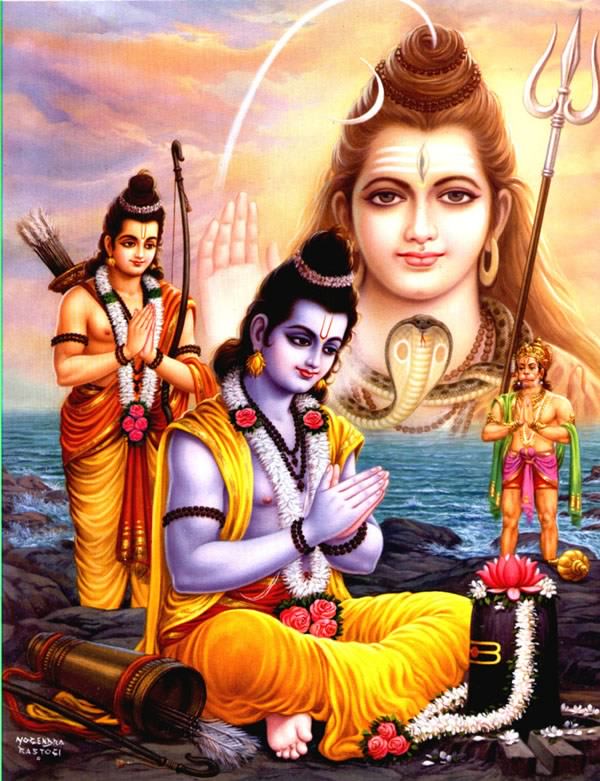
Shiva, Image credit.www. stephen Knapp.com
Often I receive mails and calls to verify whether a Gotra belongings to Brahmins and I have been replying.
I shall be writing a Post on How to identify Brahmin Gotra.
In the course of answering these questions I was struck by one fact.
That there is No Shiva Gotra is not found among Brahmins, despite Shiva being considered as a Brahmin because of Function and Vishnu as Kshatriya because of the same yard stick, that of protecting us.
And Subrahmanya is considered as the best among the best of Brahmins-Su+Brahmanya.
One does not find Rama and Krishna Gotras among Hindu community.
I have written on this, explaining the reason.
Then why Shiva is left out, even though He is described as a Brahmin?
1.Shiva is truly a Ayonija, never born of a womb.He appears from nowhere and disappears.
He does not have progeny ,like Rama or Krishna.
2.The term Brahmin denotes one who realizes Brahman by self efforts.
Shiva being Para Brahman Himself, He need not realize.
He is without attributes, Nirguna.
Hence to belong to a Brahmin Gora he should have realized Brahman which is not the case with Him.
Hence no Shiva Gotra among Brahmins.
In comparison between Rama and Krishna. while Rama was aware of Himself as Brahman occasionally, Krishna was all the time aware of it and He, like Shiva did not need to Realize Himself.
And Krishna’s Children were killed and He was left with no progeny, consequent to Gandhari’s Curse.
However Shiva Gotra is found among communities other than Brahmins for it had been a practice to denote Shiva as the Father when one is unable to trace the ancestry.
Anoter intersting point to note is that though Viswamitra was not a Brahmin by birth we find Viswamitra Gotra among Brahmins indicating that caste is by disposition and character and not by birth.
You must be logged in to post a comment.