I have posted a blog on the essence of Navaratri,Golu.
Couple of Posts on the Slokas Poojas details have been posted in the site.
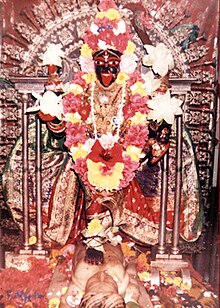
Mahalakshmi
Navaratri 2016.
Navratri Day 1 – October 1, 2016 – Ghatsthapana – Navratri Begins
Navratri Day 1 – October 2, 2016 – Chandra Darshan (Tithi is repeated)
Navratri Day 2 – October 3, 2016 – Sindoor Tritiya
Navratri Day 3 – October 4, 2016 – Varad Vinayak Chaturthi
Navratri Day 4 – October 5, 2016 – Upang Lalita Vrat – Lalitha Panchami
Navratri Day 5 – October 6, 2016 – Saraswati Awahan
Navratri Day 6 – October 7, 2016 – Saraswathi Puja (western parts of India)
Navratri Day 7 – October 8, 2016 – Saraswathi Balidan – Maha Lakshmi Puja (western parts of India)
Navratri Day 8 – October 9, 2016 – Mahashtami – Annapoorna Parikrama – Saraswati Visarjan – Mahanavami fasting
Navratri Day 9 – October 10, 2016 – Mahanavami The tenth day is celebrated as Dasara or Vijaya Dashami.
Note – Navratri day 9 and 10 are marked on same date in many calendars.
South India
In South India, Goddess Durga is worshipped during the first three days.
Goddess Lakshmi is worshipped during the next three days
Goddess Saraswathi is worshipped during the last three days.
The Navratri commences on the first day (pratipada) of the bright fortnight of the lunar month of Ashwin.
The festival is celebrated for nine nights once every year during the beginning of October, although as the dates of the festival are determined according to the lunar calendar, the festival may be held for a day more or a day less.
The Navratri commences on the first day (pratipada) of the bright fortnight of the lunar month of Ashwin.
The festival is celebrated for nine nights once every year during the last week of September/ beginning of October, although as the dates of the festival are determined according to the lunar calendar, the festival may be held for a day more or a day less.
The term more or less is not indicative of ambiguity.
It is because the date varies depending on the fact whether you follow the Solar or the Lunar Calendar, Surya or Soura Manasa, or Chandra Manasa
Now the Kanchi Periyava Forum, dedicated to the Maha Periyavr has provided a Link for an E Book on Navaratri, which is quite informative.
Navarathri is celebrated five times a year. They are Vasanta Navaratri, Ashadha Navaratri, the Sharada Navaratri, and the Paush/Magha Navaratri. Of these, the Sharada Navaratri of the month of Puratashi and the Vasanta Navaratri of the Vasanta kala are very important.
1. Vasanta Navaratri: Basanta Navaratri, also known as Vasant Navaratri, is the festival of nine days dedicated to the nine forms of Shakti (Mother Goddess) in the spring season (March–April). It is also known as Chaitra Navaratri. The nine days of festival is also known as Raama Navratri.
2. Gupta Navaratri: Gupta Navaratri, also referred as Ashadha or Gayatri or ShakambhariNavaratri, is nine days dedicated to the nine forms of Shakti (Mother Goddess) in the month of Ashadha (June–July). Gupta Navaratri is observed during the Ashadha Shukla Paksha(waxing phase of moon).
3. Sharada Navaratri: This is the most important of the Navaratris. It is simply called Maha Navaratri (the Great Navratri) and is celebrated in the month of Ashvina. Also known as Sharad Navaratri, as it is celebrated during Sharad (beginning of winter, September–October).
Vedas do not advocate Temple Worship or Collective/Public Worship.
It does not mention Temples at all.
Yet Hinduism has many Gods and Temples.
For an explanation please read my post God has Name and Form, Yes and No, as entering this topic will take us away from the present post.
Every family, by custom, has a Family Deity குல தெய்வம்
Any auspicious function should be preceded by a Pooja first to this Deity.
It is mandatory to visit the Temple of the Deity, at least once a year.
Customs vary with regard to the Poojas being performed for the Deity.
Some times it happens(which should not), the children are not informed of the Family Deity by the Elders.
As a Result. the generation remains ignorant of the Family Deity.
In such cases, one can ask Family elders who are still alive.
If this attempt fails, check the names of your ancestors on your Father’s( for men only) side., for minimum three generations.
The family custom is to name the first child of the Family after the Family Deity.
If the Family Deity is a Female, and the eldest of the Family is a Male, check if a female name is given for a male , as in Kamakshi (and for Female the reverse).
And that will be your Family Deity.
The most common name will be your Family Deity.
Otherwise continue The present Deity( of which you are unsure) and if a Saivaite have Subramanya as an additional Family Deity and if a Vaishnavaite, have Lord Balaji of Tirupati.
If you are sincere in your quest you will get the name of the Deity from unexpected quarters..
Personal Deity-இஷ்ட தெய்வம்
Many have some special attachment to some Deity other than the Family Deity.
One can worship that as well.
Abirami, Thirukkadavur(Thirukkadayur)
But the first Pooja or priority should be for the Family Deity.
For instance our family Deity is Pazhani Dhandayudhapani.
My Personal Deity is Thirukkadiyur Abirami.
I follow both.
There is a small story about my personal Deity.
I have studied the Vedas under His Holiness Abhinava Vidyathhertha Swamigal of Sringeri Mutt.
He taught me the Pancha Suktas,( Purusha Sukta,Narayana Sukta, Vishnu Sukta,Sri Sukta and Durga Sukta) and Sri Rudram and Chamakam, among many other things.
I was enamored of Sri Rudram, am even now.
I used to recite quite often.
One day I visited my niece’s house( sister’s daughter, she is elder to me)
Her hsuband who was a close friend of mine was doing Pooja to Goddess Lalitha.
Despite learning from the Great man , I used to be playful, even now, on many aspects.
Instead of attending to Pooja, I asked my niece what she has cooked for the day.
She replied that she had prepared my favourite dishes but I must wait till the Naivedyam (Nivedan ) is over.
Her husband performed the Arati and as he came out, said’
‘ I am doing every thing for you and you are calling out my husband’s name”
I was confused.
I asked my niece,
She was also perplexed for she had never seen her husband talking like this.
No doubt he was a pious man , but not to the extent of being immersed in God.
He came out and I asked him what he meant.
He replied that he did not know what he said and asked me to confirm what I said “he said’
He paused for a moment and asked me whether I was doing the Sri Rudram recitation.
When I said yes he said to me.
” Fool(மடையா (Goddess Lalitha is saying that she is giving every thing to you and you are reciting Rudra, her Husband, You worship her”
I left it at that , ate a hearty meal and came Home.
Next morning, I chanced upon a copy of Abirami Andhadhi of Abhirama Bhattar.
( Curious thing is I never had a copy of it at home at all, This copy, I chanced upon in my office, where such books have no place-I was International Sales Manager of the organization)
As I read it, I felt moved and I took the copy.
Evening, I received a copy of Lalitha Sahasranamam form my friend as a compliment as he did not have much faith in the Mantras.
In the subsequent days I have received Soundarya Lahari, Shyama Dandakam, a flood,.all free of cost.
Then I immediately proceeded to Tirikkadayur to see Goddes Abirami.
I had never been to Tirukkadayur( actually it is Thitukkadavur).
On seeing the Idol of Abirami I felt happy beyond words and felt I was seeing The Mother of All.
From that day, She became my personal Deity .
Then on, when ever I feel like seeing her I will hop in any transport and proceed to Tirukkadavur, no planning
This happens quite often.
I go there for the Happiness I get on seeing Her and I never ask Her for anything.
Many call me Superstitious and a Fool.
If being Superstitious and a Fool brings me Happiness, I am more than happy to be one.
Please add ‘Om’ at the beginning of each Name and conclude with ‘Namah’
1) Durga – the Inaccessible
2) Devi – the Diety
3) Tribhuvaneshwari – Goddess of the Three Worlds
4) Yashodagarba Sambhoota – Emerging From Yashoda’s Womb
5) Narayanavarapriya – Fond of Narayana’s Boons
6) Nandagopakulajata – Daughter of the Nandagopa Race
7) Mangalya – Auspicious
8) Kulavardhini – Developer of the Race
10) Kamsavidravanakari – Threatened Kamsa
11) Asurakshayamkari – Reducer of the Number of Demons
12) Shilathata Vinikshibda – At Birth,Slammed By Kamsa
13) Akashagamini – Flew In the Sky
14) Vasudevabhagini – Sister of Vasudeva
15) Divamalya Vibhooshita – Adorned With Beautiful Garlands
16) Divyambaradhara – Beautifully Robed
17) Khadgaketaka Dharini – Holder of Sword and Shield
18) Shiva – Auspicious
19) Papadharini – Bearer of Others’ Sins
20) Varada – Granter of Boons
21) Krishna – Sister of Krishna
22) Kumari – Young Girl
23) Brahmacharini – Seeker of Brahman
24) Balarkasadrushakara – Like the Rising Sun
25) Purnachandra Nibhanana – Beautiful Like the Full Moon
26) Chaturbhuja – Four-Armed
27) Chaturvakttra – Four-Faced
28) Peenashroni Payodhara – Large Bosomed
29) Mayoora Pichhavalaya – Wearer of Peacock-Feathered Bangles
30) Keyurangadadharini – Bejewelled With Armlets and Bracelets
31) Krishnachhavisama – Like Krishna’s Radiance
32) Krishna – Dark-Complexioned
33) Sankarshanasamanana – Equal to Sankarshana
34) Indradhwaja Samabahudharini -With Shoulders like Indra’s Flag
35) Patradharini – Vessel-Holder
36) Pankajadharini – Lotus-Holder
37) Kanttadhara – Holder of Shiva’s Neck
38) Pashadharini – Holder of Rope
39) Dhanurdharini – Holder of Bow
40) Mahachakradharini – Holder of Chakra
41) Vividayudhadhara – Bearer of Various Weapons
42) Kundalapurnakarna Vibhooshita – Wearer of Earrings Covering the Ears
43) Chandravispardimukha – Beautiful Like the Moon
44) Mukutavirajita – Shining With Crown Adorned
45) Shikhipichhadwaja Virajita – Having Peacock-Feathered Flag
46) Kaumaravratadhara – Observer of Fasts like Young Girls Do
47) Tridivabhavayirtri – Goddess of the Three Worlds
48) Tridashapujita – the Goddess of the Celestials
49) Trailokyarakshini – Protector of the Three Worlds
50) Mahishasuranashini – Destroyer of Mahisha
51) Prasanna – Cheerful
52) Surashreshtta – Supreme among the Celestials
53) Shiva – Shiva’s Half
54) Jaya – Victorious
55) Vijaya – Conqueror
56) Sangramajayaprada – Granter of Victory in the War
57) Varada – Bestower
58) Vindhyavasini – Resident of the Vindhyas
59) Kali -Dark-Complexioned
60) Kali – Goddess of Death
61) Mahakali – Wife of Mahakala
62) Seedupriya – Fond of Drinks
63) Mamsapriya – Fond of Flesh
64) Pashupriya – Fond of All Beings
65) Bhootanushruta – Well-Wisher of Bhootaganas
66) Varada – Bestower
67) Kamacharini – Acting On One’s Own Accord
68) Papaharini – Destroyer of Sins
69) Kirti – Famed
70) Shree – Auspicious
71) Dhruti – Valiant
72) Siddhi Successful
73) Hri – Holy Chant of Hymns
74) Vidhya – Wisdom
75) Santati – Granter of Issues
76) Mati – Wise
77) Sandhya – Twilight
78) Ratri – Night
79) Prabha – Dawn
80) Nitya – Eternal
81) Jyotsana – Radiant like Flames
82) Kantha – Radiant
83) Khama – Embodiment of Forgiveness
84) Daya – Compassionate
85) Bandhananashini – Detacher of Attachments
86) Mohanashini – Destroyer of Desires
87) Putrapamrityunashini – Sustainer of Son’s Untimely Death
88) Dhanakshayanashini – Controller of Wealth Decrease
89) Vyadhinashini – Vanquisher of Ailments
90) Mruthyunashini – Destroyer of Death
91) Bhayanashini – Remover of Fear
92) Padmapatrakshi – Eyes Like the Lotus Leaf
93) Durga – Remover of Distress
94) Sharanya – Granter of Refuge
95) Bhaktavatsala Lover of Devotees
96) Saukhyada – Bestower of Well-Being
97) Arogyada – Granter of Good Health
98) Rajyada – Bestower of Kingdom
99) Ayurda – Granter of Longevity
100) Vapurda – Granter of Beautiful Appearance
101) Sutada – Granter of Issues
102) Pravasarakshika – Protector of Travelers
103) Nagararakshika – Protector of Land
104) Sangramarakshika – Protector of Wars
105) Shatrusankata Rakshika – Protector from Distress Caused By Foes
106) Ataviduhkhandhara Rakshika – Protector from Ignorance And Distress
107) Sagaragirirakshika – Protector of Seas and Hills
108) Sarvakaryasiddhi Pradayika – Granter of Success in All Attempts


You must be logged in to post a comment.