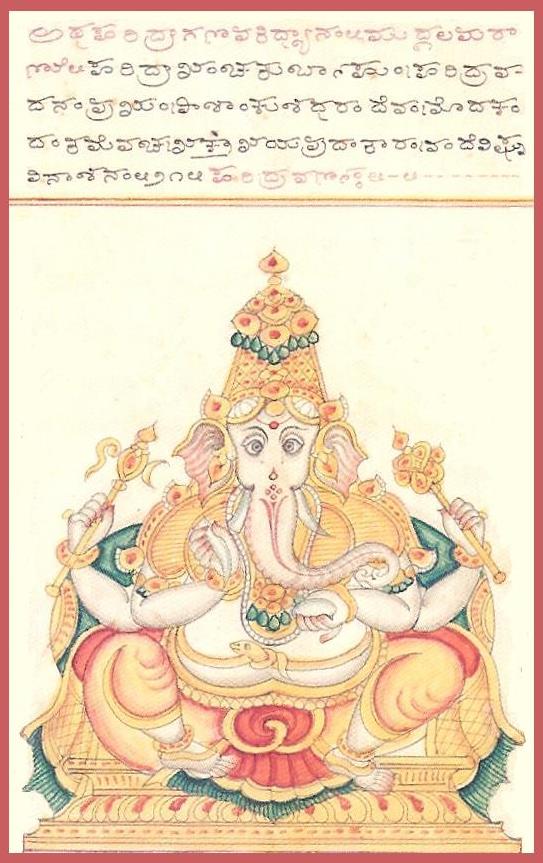
Tag: Ganesha Mantras

  • Ganapathi Homa Procedure Mantras Text Details

    Ganapathi Homa Procedure Mantras Text Details

    Ganpathi Homa is most auspicious Homa and is performed when,

    One ventures into new business,

    Moves to a new house,

    To succeed in Endeavour which is plagued by difficuties,

    Ill health and for

    Any auspicious occasion.

    The ideal day is Krishna Paksha,waning Moon,Chaturthi ,the othe days ,Shukla Paksha,Waxing Moon,Chaturthi,Panchami,Sashti,Sapthami and Poornima

    Ideal time between 4.30 am and 6.30 am.

    This article is meant for those who would like to know what the details are in performing Ganapathi Homa.

    This article is prepared by checking  with various sources and therecare differences in practice,though there is no difference in the Moola Mantra and Ahuthi.

    The differences might be in the introductory ,concluding mantras and procedures.

    The Homa is to performed by facing East or North.

    Feeding Brahmins and the poor recommended.

    There is bound to be errors in this article.

    Please offer corrections with source.

    But as general information and to help people follow the Homa,this article will be useful.

    Materials required.

    One homa kundam (a copper container with preferably a square shaped base). If a homa

    kundam is not available, one can dig a square shaped pit in the ground (with 1-2 foot sides

    and half to one foot deep) and arrange a few layers of bricks around the pit. It is symbolic of

    the mooladhara chakra.

    • A small idol of Ganesha. If you have none, use a metallic coin or any metallic object.

    Actually, you can do without any idol and just invoke Mahaganapathi in fire.

    • Dry coconut halves (available in Indian stores)

    • Ghee from cow’s milk (clarified butter from cow’s milk). It is available in Indian stores. If

    unable to find, just get some butter and melt it in low heat. After it melts, some black stuff

    will separate from the melted liquid. Filter out the black deposit and use the liquid. It will

    solidify after a time. Before the homam, melt it again and use it.

    • A mixture of various auspicious materials, from the havan samagri (available in India

    stores), if possible.

    • Some sesame seeds, some mamra/murmura (puffed white rice), some nuts, some mildly

    popped corn and other materials that can be offered in fire. Small fruits are also fine. All

    these are optional. The absolute minimum needed is coconut pieces and ghee.

    • A wooden spoon/ladle to put ghee into the fire

    • Some akshatas. Those can be made by mixing raw (uncooked) white rice grains with a drop

    of sesame oil (or some other oil) and a pinch of turmeric powder. Instead of turmeric powder,

    one can also use vermilion (kumkum) powder used for the dot on the forehead.

    • Some darbhas (dried blades of sacred grass). Check with a local temple priest to find out how

    to procure them. If darbhas are unavailable, you may think of creative alternatives. For

    example, find some other dry grass or dry leaves or just thin twigs and pray to your ishta

    devata before the homam to make them acceptable.

    • A small container to light a sesame oil/ghee deepam (lamp). A candle can also be used as an

    alternative, though it is better to burn ghee and sesame oil than wax.

    • A wick to place in oil to light the fire.

    • A match box to light fire

    • An incense stick (agarbatti) if available and a holder to stick it to (a banana can be used

    instead)

    • Camphor and a container or plate for lighting camphor and offering haarati

    • Some flowers, if available.

    • Some food that you can offer to god. Preferably onion, garlic, spices and too much of chillies

    should be avoided. Fruits are also fine.

    • Some honey, if available.

    • Some milk, if available.

    • One tumbler or cup to store water. It should preferably be made of silver or copper or clay. If

    unavailable, you may use steel or glass.

    One spoon (preferably silver or copper) and two small bowls (preferably silver or copper).
    Preparation for Ganapathi Homa.

    Instead of arranging homa kundam directly on the floor, place a wood plank or something on

    the floor, wrapped with aluminum foil (or some such thing), and put 4 bricks of the same

    height on it and place the homa kundam on the bricks. Thus, there is some air and a wooden

    plank under the homa kundam and the floor does not get heated up.

    (2) If you want easy cleaning, place some aluminum foils on the floor all around the plank

    containing homa kundam. If ghee or something is spilled in that area, it is easy to clean.

    (3) If you want, you can also cover the interior of homa kundam with some aluminum foils, so

    that it is easy to clean.

    (4) Mix a little honey and a little ghee (e.g. half spoon each) and make a paste. Keep it aside.

    (5) Make a couple of different food items you can offer to god. You can just use rock sugar

    candy or raisins or dates or fruits also. Try to not use eggs, meat, onion or garlic in that food.

    (6) Cook a little plain white rice. I put a few grains of rice and a little water in a small container

    and put it in microwave oven before my homam and cooked rice is ready at the end when I

    need it.

    (7) Fill water in the tumbler/cup and place the spoon in it. Put one small empty bowl next to it.

    Fill the other small bowl with water.

    (8) Make a seat for yourself in front of the homa kundam. Ideally you should be facing east, i.e.

    homa kundam should be on the east from you. On the east of the homa kundam, place a small

    plate or a wooden plank, make a pile of some rice grains on it and place the idol on it. You

    can decorate based on your ability and taste.

    ॐ सर्वेभ्यो गुरुभ्यो नमः ||.
    ॐ सर्वेभ्यो देवेभ्यो नमः ||.
    ॐ सर्वेभ्यो ब्राह्मणेभ्यो नमः ||
    प्रारंभ कार्यं निर्विघ्नमस्तु | शुभं शोभनमस्तु |
    इष्ट देवता कुलदेवता सुप्रसन्ना वरदा भवतु ||
    अनुज्ञां देहि ||

    At Shrii Ganesha Vedi
    २ आचमनः Achamana,Purification of the senses and Mind.

    ॐ केशवाय स्वाहा | |
    ॐ नारायणाय स्वाहा | |
    ॐ माधवाय स्वाहा | |
    (sip one spoon of water after
    each of the above three mantras)

    ॐ गोविंदाय नमः ||. ॐ विष्णवे नमः ||.
    ॐ मधुसूदनाय नमः ||. ॐ त्रिविक्रमाय नमः ||.
    ॐ वामनाय नमः ||. ॐ श्रीधराय नमः ||.
    ॐ हृषीकेशाय नमः ||. ॐ पद्मनाभाय नमः ||.
    ॐ दामोदराय नमः ||. ॐ संकर्षणाय नमः ||.
    ॐ वासुदेवाय नमः ||. ॐ प्रद्युम्नाय नमः ||.
    ॐ अनिरुद्धाय नमः ||. ॐ पुरुषोत्तमाय नमः ||.
    ॐ अधोक्षजाय नमः ||. ॐ नारसिंहाय नमः ||.
    ॐ अच्युताय नमः ||. ॐ जनार्दनाय नमः ||.
    ॐ उपेंद्राय नमः ||. ॐ हरये नमः ||.

    श्री कृष्णाय नमः ||

    प्राणायामःPranayaama,Purification of the Life Force.

    ॐ प्रणवस्य परब्रह्म ऋषिः | परमात्मा देवता |
    दैवी गायत्री छन्दः | प्राणायामे विनियोगः ||

    ॐ भूः | ॐ भुवः | ॐ स्वः | ॐ महः |
    ॐ जनः | ॐ तपः | ॐ सत्यं |
    ॐ तत्सवितुर्वरेण्यं भर्गोदेवस्य धीमहि
    धियो योनः प्रचोदयात् ||

    ३ पुनराचमन
    (Repeat aachamana 2 – given above)

    ॐ आपोज्योति रसोमृतं ब्रह्म भूर्भुवस्सुवरोम् ||
    (Apply water to eyes and understand that you are of the
    nature of Brahman)

    ४ संकल्पः
    (Stand and hold a fruit in hand during sankalpa) Sankalpa is Right determination. For more details please read my article on Sankalpa /Sankalpa for US.
    ॐ श्रीमान् महा गणाधिपतये नमः ||.

    श्री गुरुभ्यो नमः ||.
    श्री सरस्वत्यै नमः ||.
    श्री वेदाय नमः ||.
    श्री वेदपुरुषाय नमः ||.
    इष्टदेवताभ्यो नमः ||.
    कुलदेवताभ्यो नमः ||.
    स्थान देवताभ्यो नमः ||.
    ग्राम देवताभ्यो नमः ||.
    वास्तु देवताभ्यो नमः ||.
    शचीपुरंदराभ्यां नमः ||.
    उमामहेश्वराभ्यां नमः ||.
    मातापितृभ्यां नमः ||.
    लक्ष्मीनारायणाभ्यां नमः ||.

    सर्वेभ्यो देवेभ्यो नमो नमः ||.
    सर्वेभ्यो ब्राह्मणेभ्यो नमो नमः ||.
    येतद्कर्मप्रधान देवताभ्यो नमो नमः ||

    ||अविघ्नमस्तु ||

    शुक्लांबरधरं देवं शशिवर्णं चतुर्भुजम् |
    प्रसन्नवदनं ध्यायेत् सर्व विघ्नोपशांतये ||

    सर्वमंगल मांगल्ये शिवे सर्वार्थ साधिके |
    शरण्ये त्रयंबके देवी नारायणी नमोऽस्तुते ||

    सर्वदा सर्व कार्येषु नास्ति तेषां अमंगलं |
    येषां हृदिस्थो भगवान् मंगलायतनो हरिः ||

    तदेव लग्नं सुदिनं तदेव ताराबलं चंद्रबलं तदेव |
    विद्या बलं दैवबलं तदेव लक्ष्मीपतेः तेंघ्रिऽयुगं स्मरामि ||

    लाभस्तेषां जयस्तेषां कुतस्तेषां पराजयः |
    येषां इन्दीवर श्यामो हृदयस्थो जनार्दनः ||

    विनायकं गुरुं भानुं ब्रह्माविष्णुमहेश्वरान् |
    सरस्वतीं प्रणम्यादौ सर्व कार्यार्थ सिद्धये ||

    श्रीमद् भगवतो महापुरुषस्य विष्णोराज्ञाय प्रवर्तमानस्य
    अद्य ब्रह्मणोऽद्वितीय परार्धे विष्णुपदे श्री श्वेतवराह कल्पे
    वैवस्वत मन्वन्तरे भारत वर्षे भरत खंडे जंबूद्वीपे
    दण्डकारण्य देशे गोदावर्या दक्षिणे तीरे कृष्णवेण्यो उत्तरे
    तीरे परशुराम क्षेत्रे (samyukta amerikA deshe St Lewis grAme
    or Australia deshe Victoria grAme or Bahrain deshe)
    शालिवाहन शके वर्तमाने व्यवहारिके विकरम नाम संवत्सरे
    उत्तरायणे/दक्षिणायणे, अमुक मासे, अमुक पक्षे, अमुक तिथौ,
    अमुक नक्षत्रे, अमुक वासरे सर्व ग्रहेषु यथा राशि स्थान
    स्थितेषु सत्सु येवं गुणविशेषेण विशिष्टायां शुभपुण्यतिथौ
    अस्माकं सकुढुम्बानां मम कार्यक वाचिक मानसिक ज्ञात अज्ञात
    समस्त पापक्षयद्वारा चिन्त शुद्ध्यर्थं करिष्यमाण सकल कार्येषु
    निर्विघ्नता पूर्वक सर्वाभिष्ठसिद्ध्यर्थं काम्ना विशेषेतु अमुक
    काम्ना Replace with whicheverकन्याः विवाह कार्य or
    वर अन्वेषणे सिद्धयर्थं orविध्याभ्यास सफलार्थे
    orपरदेश गमन सिद्ध्यर्थे orमोक्ष सिद्ध्यर्थे
    श्री महागणपतिं प्रीत्यर्थं श्री महागणपति होमं करिष्ये |
    तदा आदौ शान्त्यर्थं पुण्याः वाचनं निर्विघ्नता सिद्ध्यर्थं
    गणपथि पूजनं करिष्ये ||

    इदं फलं मयादेव स्थापितं पुरतस्तव |
    तेनमे सफलावाप्तिर् भवेत् जन्मनि जन्मनि ||

    (keep fruits in front of the Lord)
    (Keep yantra in the north of homakunDa.
    Keep the ashhTha dravya in the south of the Homa kuNDa)

    ५ आवाहनं

    मोदके विघ्नेशं आवाहयामि (put axata/tulasi in Modak)
    प्रतुके उर्विं आवाहयामि (put axata/tulasi in Jaggery)
    लाजेषु दिनेशं आवाहयामि (put axata/tulasi in Rice flakes)
    सत्त्कुनि अग्निं आवाहयामि (put axata/tulasi in Appam)
    इक्षौ सोमं आवाहयामि (Put axata/tulasi in Sugarcane)
    नालिकेरे ईशानां आवाहयामि (put axata/tulasi in Coconut)
    तिले हरिं आवाहयामि (Put axata/tulasi in black sesame)
    कदलिफले ब्रह्मणां आवाहयामि (Put axata/tulasi in Bananas)

    ध्यायामि | ध्यानं समर्पयामि ||
    आवाहनं समर्पयामि | आसनं समर्पयामि ||
    पाद्यं समर्पयामि | अर्घ्यं समर्पयामि ||
    आचमनीयं समर्पयामि | स्नानं समर्पयामि ||
    वस्त्रं समर्पयामि | यज्ञोपवीतं समर्पयामि ||
    गंधं समर्पयामि | धूपं आघ्रापयामि ||
    दीपं दर्शयामि | नैवेद्यं निवेदयामि ||
    मन्त्रपुष्पं समर्पयामि | सकल पूजार्थे अक्षतान् समर्पयामि ||

    (Mix all of these and take 8 hand fulls)

    मुद्रा
    (Show mudras as you chant )

    निर्वीषि करणार्थे तार्क्ष मुद्रा (to remove poison)
    अमृति करणार्थे धेनु मुद्रा (to provide nectar )
    पवित्री करणार्थे शंख मुद्रा (to make auspicious)
    संरक्षणार्थे चक्र मुद्रा (to protect)
    विपुलमाया करणार्थे मेरु मुद्रा (to remove maayaa)

    Offer Gandha, Chandana etc. Sprinkle water around.
    Chant OM vaM 108 times. It is the amRita bIjaM
    Treat it is as amRita and offer dhUpaM and dIpaM
    and naivedhyaM

    ६ अग्नि पीट पूजा

    (In the Homa kuNDA draw shrI Keep some banyan leaf sticks
    or dharbha and tiirtha. Then arrange the wooden pieces on top.
    The agni should be brought by a lady (Sowbhaagyavathi). It can be brought
    with camphor or ghee and the fire should not get extinguished)

    बलं वर्धन नाम्नां अग्निं प्रतिष्ठापयेत्

    (Now do piiTha puuja, pouring ghee for each mantra)

    १. ॐ आदार शक्त्यै नमः ||
    २. ॐ मूल प्रकृत्यै नमः ||
    ३. ॐ कूर्माय नमः ||
    ४. ॐ अनन्ताय नमः ||
    ५. ॐ पृथिव्यै नमः ||
    ६. ॐ इक्षु सागराय नमः ||
    ७. ॐ रत्न दीपाय नमः ||
    ८. ॐ कल्प वृक्षाय नमः ||
    ९. ॐ मणि मण्डपाय नमः ||
    १०. ॐ रत्न सिंहासनाय नमः ||
    ११. ॐ श्वेत छत्राय नमः ||
    १२. ॐ धर्माय नमः ||
    १३. ॐ ज्ञानाय नमः ||
    १४. ॐ वैराग्याय नमः ||
    १५. ॐ ऐश्वर्याय नमः ||
    १६. ॐ अधर्माय नमः ||
    १७. ॐ अज्ञानाय नमः ||
    १८. ॐ अवैराग्याय नमः ||
    १९. ॐ अनैश्वर्याय नमः ||
    २०. ॐ सर्व तत्व पद्माय नमः ||
    २१. ॐ आनन्द कन्दाय नमः ||
    २२. ॐ सांविन्नलाय नमः ||
    २३. ॐ प्रकृतिमय दलेभ्यो नमः ||
    २४. ॐ विकारमय केसरेभ्यो नमः ||
    २५. ॐ पञ्चाशद्वर्ण कर्णिकायै नमः ||
    २६. ॐ पृथिव्यात्मने परिवेशाय नमः ||
    २७. अं अर्क मण्डलाय अर्थप्रद द्वादश कलात्मने नमः ||
    २८. उं सोम मण्डलाय कामप्रद षोडष कलात्मने नमः ||
    २९. रं वह्नि मण्डलाय धर्मप्रद दश कलात्मने नमः ||
    ३०. सं सत्वाय नमः ||
    ३१. रं रजसे नमः ||
    ३२. तं तमसे नमः ||
    ३३. मं मायायै नमः ||
    ३४. विं विध्यायै नमः ||
    ३५. आं आत्मने नमः ||
    ३६. अं अन्तरात्मने नमः ||
    ३७. पं परमात्मने नमः ||
    ३८. सं सर्वतत्वात्मने नमः ||
    ३९. ॐ तीव्रायै नमः ||
    ४०. ॐ ज्वालिन्यै नमः ||
    ४१. ॐ नन्दायै नमः ||
    ४२. ॐ भोगदायै नमः ||
    ४३. ॐ कामरूपिण्यै नमः ||
    ४४. ॐ उग्रायै नमः ||
    ४५. ॐ तेजोवत्यै नमः ||
    ४६. ॐ सत्यायै नमः ||
    ४७. ॐ विघ्न नाशिन्यै नमः ||
    ४८. ॐ श्रीं ह्रीं क्लीं ग्लौं गं नमो भगवते सर्व भूतात्मने
    सर्व शक्तिर् कमलासनाय नमः ||

    ७ प्राण प्रथिष्ठा

    ॐ एकदन्ताय नमः ||(pour water thrice)
    गणक ऋषिः गायत्रि छन्दः श्री महागणपतिं देवता
    महागणपति प्रीत्यर्थ होमे विनियोगः

    ||ंअहा गणपति न्यास ||

    ॐ गणानां त्वा इति मंत्रस्य घृत्समद ऋषिः.
    गणपतिर्देवता | जगति छंदः ||
    महा गणपति न्यासे विनियोगः ||

    गणानांत्वेति अंगुष्ठाभ्यां नमः ||
    गणपतिं हवामहे इति तर्जनीभ्यां नमः ||
    कविं कवीनां इति मध्यमाभ्यां नमः ||
    उपवश्त्रम इति कनिष्ठिकाभ्यां नमः ||
    आन: शृण्वन्नूतिभिः सीदसादनमिति करतलकरपृष्ठाभ्यां नमः ||

    ||एवं हृदयादि न्यासः ||

    ॐ भूर्भुवस्सुवरोम् | इति दिग्बन्धः ||

    गणानांत्वायै शिरसे स्वाहा | ||
    गणपतिमिति ललाटाय नमः ||
    हवामहे इति मुखाय नमः ||
    कविं कवीनामिति हृदयाय नमः ||
    उपमश्रवस्तमम् इति नाभ्यै नमः ||
    ज्येष्ठराज्य इति कट्यै नमः ||
    ब्रह्मणां इति ऊरुभ्यां नमः ||
    ब्रह्मणस्पत इति जानुभ्यां नमः ||
    आ नः शृण्वन् इति जठराभ्यां नमः ||
    नूतिभिः इति गुल्फौभ्यां नमः ||
    सीदसादनम् इति पादाभ्यां नमः ||

    ८ दिग्बन्धन
    (Show mudras)

    ॐ भूर्भुवस्सुवरोम् | इति दिग्बन्धः.(Snap fingers circle head
    clockwise and clap hands)

    दिशो बद्नामि||
    (Shut off all directions i.e. distractions.
    So that we can concentrate on the Lord.)

    ९ ध्यानं

    ॐ ॐ (Repeat 15 times)
    Close eyes and bring Lord Ganesha’s image in your mind and chant

    श्री गणेशाय नमः ||
    श्री गणेशाय नमः ||
    श्री गणेशाय नमः ||

    विनायकं हेमवर्षं पाशांकुशधरं विभुं |
    दययोर् गजाननं देवं भालचंद्र समप्रभं ||

    ॐ सहस्रशीर्षा पुरुषः सहस्राक्षः सहस्रपात् |
    स भूमिं विश्वतो वृत्वा अत्यतिष्ठद् दशाङ्गुलम् ||

    श्री विनायकाय नमः ||. ध्यानात् ध्यानं समर्पयामि ||

    १० आवाहनं

    स्वात्म संस्थं अजं शुद्धं अध्य गणनायक |
    हरण्यां इव हव्याश्म अग्न्यावा आवाहयाम्यहं ||

    ॐ ह्रिं भूर्भुवस्सुवरोम् ||

    आवाहितो भव | स्थापितो भव | सन्निहितो भव |
    सन्निरुद्धो भव | अवकुण्ठितो भव | सुप्रीतो भव |
    सुप्रसन्नो भव | सुमुखो भव | वरदो भव |
    प्रसीद प्रसीद ||
    (show mudras to Lord)
    Ahuthi.Pour Ghee gently into the Fire with Homa Spoon(avilable at Pooja materials shop) or fold Mango leaf vertically and pour ghee through it.

    Pour ghee after ‘Swaha’

    Perform this 108 times.

    For Ganapathy Homa there are Veda mantras.I am providing two mantras.Any one of them will do.

    The first Mantra is used more.

    1.Om Hreem GumKleem  Kleem Gaa Ganapathaye varavarada Sarvajaname Vachamaanaya Swahaa.

    2.Gannantgva Ganpathigum Havaamahe Kavinkaveenaam

    Jyestarajam Brahmanaan Brahmanasthapatha Aana Srunvann Udhibhissidasanam Swaha.


    Suggested chanting 1008 times.

    Poornahuti  Mantra

    Poorna Ahuthi.

    ॐ इतः पूर्व प्राण बुद्धि देह धर्मार्धिकारतो जागरत् स्वप्न
    सुशुप्त्य अवस्तासु मनसा वाचा कर्मणा हस्ताब्यां पद्भ्यां
    उदरेन शीर्ष्णा यद्कृतं यदुक्तं यत्स्मृतं तत् सर्वं
    ब्रह्मार्पणं भवतु स्वाहा | स्वाहा | ||

    ब्रह्मार्पणं ब्रह्म हविर् ब्रह्माग्नौ ब्रह्मणा हुतम्

    ब्रह्मैव तेन गन्तव्यं ब्रह्म कर्म समाधिना ||

    ॐ लम्बोदराय नमः ||. तृप्तिरस्तु ||


    Now, you have to prepare a package for poornaahuti (“complete offering”). The normal

    procedure is to place a full dry coconut, some metal coins, some turmeric, some sandalwood,

    some kumkum, some akshatas, samples of some of the materials used in homam as offerings and

    tie the cloth. We have a special wooden ladle called “srk”. We pour a little melted ghee in the

    hole in srk, place the poornahuti package on it and place the other normal wooden ladle on top of

    it, then say the poornaahuti mantra and drop the poornaahuti package in fire. Then, while reading

    “Rudra Chamakam”, we pour the ghee in srk into fire.

    For a simple homam with a small fire, the following is suggested. Place a few akshatas, one coin,

    little sandalwood powder, turmeric powder, kumkum powder, samples of materials offered

    earlier, in a dry coconut half. Make everyone attending the homam touch it and then say the

    moolamantra given earlier 4/8/12 times while holding the poornaahuti in hand. Then place it on

    the wooden ladle, say the mantra below and then place the coconut half in fire carefully with

    hand (if you drop it on a small fire, it can extinguish the fire and also materials from the coconut

    can spill everywhere in the homa kundam).

    When offering poornaahuti, imagine that you are completely surrendering yourself to

    Mahaganapathi. Poornaahuti basically means “complete surrender”. The full (or half) coconut

    used in the poornaahuti is a symbol of one’s head, i.e. ego (“I-ness”), which is to be sacrificed

    (surrendered) to Mahaganapathi. Without that inner sense of surrender, an elaborate poornaahuti

    ritual has no purpose.

    Spread the burning dry coconut pieces that are already in the homa kundam and re-arrange them

    around this new dry coconut half (poornaahuti), so that it can catch fire. Then take a little ghee

    into the ladle and pour it slowly inside and along the edges of the dry coconut half while reading

    the third verse from “Rudra Chamakam”. It is given below.

    śaṃ ca’ me maya’śca me priyaṃ ca’ me‌உnumaśca’ me kāma’śca me saumanasaśca’ me bhadraṃ ca’ me śreya’śca me vasya’śca me yaśa’śca me bhaga’śca me dravi’ṇaṃ ca me yantā ca’ me dhartā ca’ me kṣema’śca me dhṛti’śca me viśva’ṃ ca me maha’śca me saṃvicca’ me ṅñātra’ṃ ca me sūśca’ me prasūśca’ me sīra’ṃ ca me layaśca’ ma taṃ ca’ me‌உmṛta’ṃ ca me‌உyakṣmaṃ ca me‌உnā’mayacca me vātu’śca me dīrghāyutvaṃ ca’ me‌உnamitraṃ ca me‌உbha’yaṃ ca me sugaṃ ca’ me śaya’naṃ ca me ṣā ca’ me sudina’ṃ ca me ||’

    Don’t pour too much ghee if you don’t want much smoke. Just take one teaspoonful of ghee in

    the wooden ladle and manage with it.

    Uttarangam.

    om prajä×pateÞ na tvadeÞtänyaÞnyo viçvä× jäÞtäniÞ pariÞ tä ba×bhüva| yatkä×mäste juhuÞmastanno× astu

    va×yað syä×maÞ pata×yo rayéÞëäm| svähä÷| prajäpataya idaà na mama||

    om bhüù svähä÷| agnaya idaà na mama||

    om bhuvaùÞ svähä÷| väyava idaà na mama||

    om suvaùÞ svähä÷| süryäyedaà na mama||

    yada×syaÞ karmaÞëo’tyaré×ricaàÞ yadväÞnyü×namiÞhäka×ram| agniñöaÞt svi×ñöaÞkådvidvän sarvaà

    svi×ñöaàÞ suhu×taà karotuÞ svähä÷| agnaye sviñöakåta idaà na mama||

    om bhürbhuvaÞssuvaùÞ svähä÷| prajäpataya idaà na mama||

    Now do pranaayaamam again. The procedure of pranaayaamam is explained earlier.

    Now, make three offerings to the fire god, asking for forgiveness for any mistakes committed

    knowingly or unknowingly, while using fire as the medium. Read the following and offer a drop

    of the ghee in the fire at each “swaahaa”.

    anä÷jïätaà yadäjïä×taà yaÞjïasya kriÞyateÞ mithu×| agne÷ tada×sya kaÞlpaÞyaÞ tvað hi vettha×

    yaÞthäÞtatham| svähä÷| agnaya idaà na mama||

    puru×ñasammito yaÞjïo yaÞjïaù puru×ñasammitaù| agne÷ tada×sya kaÞlpaÞyaÞ tvað hi vettha×

    yathäÞtatham| svähä÷| agnaya idaà na mama||

    yatpä×kaÞträ manasä déÞnada×kñäÞ na| yaÞjïasya× maÞnvate× martä×saù| agniÞñöaddhotä÷

    kraÞtuÞvidvi×jäÞnan| yaji×ñöho deÞvän åÞtuÞço ya×jätiÞ| svähä÷| agnaya idaà na mama||

    Next, three offerings are made to the fire god, wind god and sun god. Read the following and

    offer a drop of the ghee in the fire at each “swaahaa”

    om bhüù svähä÷| agnaya idaà na mama||

    om bhuvaùÞ svähä÷| väyava idaà na mama||

    om suvaùÞ svähä÷| süryäyedaà na mama||

    One final offering to Prajapati is made to beg for forgiveness for various mistakes made in the

    homam, with respect to pronunciation, actions, procedure, devotion, materials used etc. Read the

    following and offer of drop of ghee.

    asmin homakarmaëi madhye sambhävita samasta mantralopa tantralopa kriyälopa bhaktilopa

    çraddhälopa niyamalopa niñöhälopa dravyalopädi samasta doña präyaçcittärthaà sarva

    präyaçcittähutià hoñyämi| om bhürbhuvaÞssuvaùÞ svähä÷| prajäpataya idaà na mama||

    An offering to Vishnu and an offering to Rudra must be made before the homam can conclude.

    Read the following two lines and offer a drop of ghee for each line. Think of Vishnu and Shiva.

    om çré viñëa×veÞ svähä÷| viñëave paramätmana idaà na mama||

    om namo ruÞdräya× paçuÞpata×yeÞ svähä÷| rudräya paçupataya idaà na mama||

    After making an offering to Rudra, wash the hand once. You can sprinkle a little bit water on the

    right palm for that purpose.

    The fire god (Agni) has carried all our offerings to various gods. So the final offering is to him.

    Read the following and offer a drop of ghee in the fire.

    saptaÞ te× agne saÞmidhaù× saÞptajiÞhväù sapta åña×yassaÞptaù dhäma× priÞyäëi×| saÞpta hoträ÷ saptaÞ

    dhätvä× yaÞjaÞntiÞsaÞptayonéÞräpå×ëasvä ghåÞteÞnaÞ svähä÷| agnaye saptavata idaà na mama||

    we will not need any more ghee. Take the ghee container and place it in the northern side

    of the homa kundam. Take some water in a spoon and sprinkle it around the homa kumdam as

    shown in the figure.

    The Mantra.

    adiÞte’nva×maàsthäù|

    anu×maÞte’nva×maàsthäù|

    sara×svaÞte’nva×maàsthäù|

    deva× savitaùÞ präsä×véù|

    This is similar to what we did at the beginning, but the mantras to say are

    different.

    When sprinkling water, start from A to D to C to B  to A as in the figure.

    Homa kunda. Image.
    Homa kunda. From bottom left A,clockwise B,C and D.(A to D North,D to C East, C to B South,B to A West)

    Now, take the darbhas placed at the beginning outside the homa kundam on the western side (or

    new darbhas, if you did not place any darbhas along the boundaries due to lack of darbhas),

    apply a little ghee to them and place the tips in fire. When they catch fire, remove them from the

    fire, place them in a container and let the whole darbhas burn. The black ash you get is called

    “rakshaa” (protection). At the end of the homam, you can apply a little rakshaa to the forehead of

    the idol and then a little to your own forehead and the foreheads of others. This is believed to

    protect from evil forces. You can store the rakshaa for future use on important occasions.

    Now, read the moolamantra 12 times again. If you have time, you can do anga nyaasam and kara

    nyaasam also again. This is just meditation, without any offerings made into fire.

    Then, get a little milk in a cup or a tumbler. If you don’t have milk, use water. Keep your right

    palm horizontal, with the palm facing up. Make an upward vertical circle with thumb and index

    finger. Pour a little milk in the palm. Then angle the palm slightly and make the milk drop from

    the palm through the tips of middle and ring fingers into the homa kundam. While doing that, say

    the following:

    Om Hreem GumKleem  Kleem Gaa Ganapathaye varavarada Sarvajaname Vachamaanaya Swahaa.

    Repeat this 12 times. At the end, throw away the milk remaining in the cup/tumbler and

    don’t use it.

    Suddhanna Bali.

    Now, we have to offer bali (sacrifice to other demigods – associates of Mahaganapathi). Get the

    cooked white rice (or banana slices or something like that). Just place a small token amount as

    bali. You need to place bali in six different places outside the homa kundam. First, place it on the

    east of the homa kundam. Then on the west, then on the north, then on the south and finally two

    more on the east (a little north to the previous bali(s) placed in the east). The order and positions

    can be found in Figure 3. While offering balis in six places, the following sentence should be recited..

    om sri mahägaëapati pärñadebhyo namaù| balià samarpayämi|

    The rice remaining after offering balis should be thrown away and not consumed. If cooked rice

    is not available, small banana slices can be used. Again, any banana piece left after removing

    some slices bali should be thrown away


    Uddvaasana,Taking Leave.

    Take a couple of darbhas in your right hand and a couple more darbhas with your left hand. Take

    some flowers or akshatas also if available. Hold the darbhas with the tips facing away from you

    and the bases in your hands. Now touch the two sides of the homakundam with the darbhas in

    the two hands. Then touch the idol with those darbhas and leave the akshatas and flowers on the

    god. Imagine that the energy from the homakundam has been transferred into the idol. To

    simplify this, you can also place your fists containing a few akshatas on top of the northern and

    southern sides of homa kundam and then deposit the akshatas in those fists at the feet of the idol.

    Say the following and show your heart with your hands. Imagine that Sri Mahaganapathi has

    exited the fire and the idol and entered your heart.

    asmänmürteçca agneçca çrémahägaëapatià yathästhänaà pratiñöhäpayämi

    Say the following and bow to the fire god.


    agneÞ naya× supathä× räÞye aÞsmän viçväni× deva vaÞyunä×ni viÞdvän| yuÞyodhya×smajju×huräÞëamenoÞ 

    bhüyiñöhäà× teÞ nama× uktià vidhema| agnaye namaù||.


    Conclusion.

    Say the following three verses. Think of Krishna and imagine that you are not the doer and

    Krishna is the doer who is acting through you. While you do it, place a few akshatas on the tips

    of the ring and middle fingers of the right hand, place the palm on the small deposit bowl and

    wash it such that the water and akshatas are deposited in the deposit bowl.

    mantrahénaà kriyähénaà bhaktihénaà hutäçana| yaddhutaà tu mayä deva paripürëaà

    tadastu te||

    präyaçcittänyaçeñäëi tapaù karmätmakäni vai| yäni teñämaçeñäëäà çré kåñëasmaraëaà

    paraà|| çré kåñëa kåñëa kåñëa|

    käyena väcä manasendriyairvä buddhyätmanä vä prakåteù svabhävät| karomi yadyat sakalaà

    parasmai näräyaëäyeti samarpayämi||

    Say the following finally. Imagine that Sri Mahaganapathi became pleased with your homam.

    Surrender the doership of the homam to Krishna and pray for peace. After this, you should not

    think of yourself as the doer of the homam just finished!

    anena divya maìgaÿa homena bhagavän sarvätmakaù çrémahägaëapatiù préyatäm| om tatsat|

    sarvam çré kåñëärpaëamastu| om çäntiù çäntiù çäntiù|.

    Krishnarrpananamasthu.


  • Gannan Tvaa Ganapati Mantra Inner Meaning

    All of us aware of Lord Ganapati,Ganesha,who is invoked at the beginning of all auspicious occasions. Why Ganapati is given the Prime Position at the beginning,even though there are more powerful Devathas,including Brahma,Vishnu and Maheshwara?

    Legend has it that Shiva Himself ordained that Ganapati must be propitiated first.

    And Lord Vishnu,who is the Uncle of Ganesha,had also confirmed this on Ganesha’s Namakarana.

    The Basic Mantras of Ganapati refer to Brahman,the Reality in its Apara,beyond the world,

    Beyond the Attributes,Nirguna.

    Ganapati is the Chief of Ganas of Shiva.

    Gana also means count, numbers one to ten in Sanskrit.

    गण gaNa m. verbclass  [ classes 1 to 10 in Skrt. grammar ]

    Among other meanings,’Attendant of Shiva’

    Reality is an abstract principle.

    It can not be seen or perceived.

    It can be Perceived only by Experience.

    As it can not be Perceived , It can not be counted as a  number.

    This is the reason why Adi Shankaracharya called his system of philosophy as Advaita,non-two, but not as Ekam,which means One.

    One becomes a Countable number and as Brahman,the Reality is beyond Perception, it can not be ascribed or described as a number.

    Numbers, by nature are workable images,hypotheses to run our day to day affairs.

    They are useful tools that help us comprehend things in the Universe.

    But this has limitations.

    When one talks of millions of Stars and other huge numbers,we do not really comprehend as we do,say one hundred thousand.

    We know it is something huge.

    So Reality can be expressed in such a way to indicate that it can not be counted a nd Itcis beyound ‘Count’

    Ganapati is thus propitiated as the Brahman, at the beginning of every auspicious occasion.

    This is in tune with the Vedic Concept of Reality.

    The Reality is Beyond Attributes,Nirguna.

    However,knowing the limitation of human mind,which can not concentrate on  Vaccum principle,the Vedas prescribe the mode of worship through Gods,Saguna Upasna.

    This is the first step.

    As one advances in Spirituality,one can dispense with the worship of Gods with Names and Forms.

    This worship of Gods,in the image of Man,Symbols,Geometric symbols,Yantra is like a preparatory course.

    Once you pass through it,it looks redundant as LKG looks whenone gets a Phd.

    One should never forget that without LKG,one would never have reached Phd level

    Thus the mantra  of Ganesha reflects on the Reality ,Ganan tvaa and als in Sukambaratharm vishnum.

    शुक्लाम्बरधरं विष्णुं शशिवर्णं चतुर्भुजम् ।
    प्रसन्नवदनं ध्यायेत् सर्वविघ्नोपशान्तये ॥
    Shukla-Ambara-Dharam Vissnnum Shashi-Varnnam Catur-Bhujam |
    Prasanna-Vadanam Dhyaayet Sarva-Vighno[a-U]pashaantaye ||

    Meaning:
    1: (We Meditate on Sri Vishnu ,,here the term Vishnu is used from its root Jisnhu,as onecwhich supports) Who is Wearing White Clothes, Who is All-Pervading, Who is Bright in Appearance like the Moon and Who is Having Four Hands,
    2: Who is Having a Compassionate and Gracious FaceLet us Meditate on Him To Ward of all Obstacles.
    * Note that there is no mention of a specific God.


    गणानां त्वा गणपतिं हवामहे

    कविं कवीनामुपमश्रवस्तमम्
    ज्येष्ठराजं ब्रह्मणाम् ब्रह्मणस्पत

    नः शृण्वन्नूतिभिःसीदसादनम्
    महागणाधिपतये नमः
    Om Gannaanaam Tvaa Ganna-Patim Hava-Amahe
    Kavim Kaviinaam-Upama-Shravas-Tamam |
    Jyessttha-Raajam Brahmannaam Brahmannas-Pata
    Aa Nah Shrnnvan-Nuutibhih-Siida-Saadanam ||
    Om Mahaa-Ganna-Adhipataye Namah ||

    Meaning:
    1: Om, O Ganapati, To You Who are the Lord of the Ganas (Celestial Attendants or Followers), we Offer our Sacrificial Oblations,
    2: You are the Wisdom of the Wise and the Uppermost in Glory,
    3: You are the Eldest Lord (i.e. ever Unborn) and is of the Nature of Brahman (Absolute Consciousness); You are the Embodiment of the Sacred Pranava (Om),
    4: Please come to us by Listening to our Prayers and be Present in the Seat of this Sacred Sacrificial Altar.
    5: Om, our Prostrations to the Mahaganadhipati (the Great Lord of the Ganas).

    The Mantra occurs in the Rig Veda 2.23.1.

    The Mantra drashta (the visionary) was Rishi Gritsamada.

    The meaning:

    We meditate on you Ganapathi, leader  of the countable hordes, a seer superior to all other seers,
    who causes the hearing of the divine inspiration, who is the Para-Brahman the presiding deity of the Mantra;

    May He hear us;

    May He repose on the seat within, so that He may increase our awareness.

    Mantra translation from,

    http://www.greenmesg.org/mantras_slokas/sri_vishnu-shuklambaradharam_vishnum.php

  • 19 Ganesha Veda Mantras For All Occasions

    Lord Ganesha is referred to as the Pranava Svaroopa, the Embodiment of OM.


    Ganesha Hindu God.
    Lord Ganesha


    Ganapati Upanishad speaks of Lord Ganesha.


    He is the Remover of Obstacles, both material and Spiritual.


    Sage Avvaiyar composed Vinayakar Akaval, which is a highly developed system of Yoga Siddhanta.


    I am posting very important Ganapati Mantras from the Vedas for all to suit all occasions and needs.


    Ganapathy
    Lord Ganesha


    1.Aum ekadantaya vidmahe
    vakratundaya dhimahi
    tanno dantih prachodayat

    We devote our thought to the one-tusked Lord.
    We meditate upon Him who has a curved trunk.
    May the tusked One guide us on the right path.

    Ganapati Upanishad

    2.Aum tatpurushaya vidmahe
    vakratundaya dhimahi
    tanno dantih prachodayat

    We devote our thought to that supreme person.
    We meditate upon Him who has a curved trunk.
    May the tusked One guide us on the right path.

    Narayana Upanishad

    3.Aum tat karataya vidmahe
    hasti mukhaya dhimahi
    tanno dantih prachodayat

    We devote our thoughts to the mysterious Lord.
    We meditate on His elephant face.
    May the tusked One guide us on the right path.

    Maitrayani Samhita 2.6-9

     Special Ganesha Mantras

    Ganesha mantras are siddhi mantras .

    Each mantra contains certain specific powers of Lord Ganesha.

    When chanted with the proper pranayama (rhythmic breathing) and sincere devotion, they will yield good results.

    In general, Ganesha mantras will ward off all evil and bless the devotee with abundance, prudence and success.

    Evil spirits dare not enter the home or the mind of the devotee where Ganesha mantras are recited.

    Those so mystically inclined and knowledgeable of the seven chakras below the muladhara use these powerful incantantions under the direction of the guru to close off these regions of the mind one by one and free consciousness from deep depression, confusion, jealousy, rage, lingering anger and fear. Some such mantras are given below for the spiritual benefit of the readers.

    One more point to remember is that one should bathe or wash the limbs before sitting for repetition of the mantra.

    Also, one should do three or more pranayama before beginning the mantra. The minimum repetition of the mantra should be one full mala, or 108 times.

    When this is done at a fixed hour and place regularly for 48 days, it becomes an upasana, which means intense meditation, that will yield siddhis, or spiritual powers.

    These powers should not be misused.

    Misuse of power may bring the curse of the asuras.

    Ganesha
    Ganesha Gif

    4.Aum gam ganapataye namah

    This is a mantra from Ganapati Upanishad.

    One may always use it before beginning a journey, a new course in school, new career or job, or before entering into any new contract or business so that impediments are removed and your endeavor may be crowned with success.

    5.Aum shri ganeshaya namah

    This mantra is usually taught to children for their good education.

    It increases their memory power, and they become successful in their examinations.

    6.Aum vakratundaya hum

    This is a very powerful mantra, as discussed in the Ganesha Purana.

    When something is not working properly, individually or universally, nationally or internationally, or when the minds of the people turn crooked, negative, depressed or discouraged, the attention of Ganesha may be drawn by this mantra to straighten their ways.

    The HUM symbolizes “Delay no more, my Lord, in straightening the paths of the crooked-minded ones.”

    This mantra is used many times in the Ganesha Purana to curb the atrocities of cruel demons.

    In addition, this mantra could also be used for healing any spinal deficiency, such as curvature of the spine or curved limbs. Dedicate 1,008 repetitions of this holy word to straighten and heal such deficiencies.

    7.Aum kshipra prasadaya namah

    Kshipra means instantaneous.

    If some danger or negative energy is coming your way and you don’t know how to get rid of that trouble, with true devotion, practice this mantra for quick blessing and purification of one’s aura.

    8Aum shrim hrim klim glaum gam
    ganapataye vara varada sarva
    janamme vashamanaya svaha

    This is used in Ganapati Homa.

    There are several bija (seed) mantras in this mantra .

    Among other things, it signals, “Shower Your blessings, O Lord. I offer my ego as an oblation.”

    9.Aum sumukhaya namah

    By meditating on this mantra, very pleasing manners and a beauty comes on you.

    Along with that comes peace, which constantly dances in your eyes; and the words you speak are all filled with that power of love.

    10.Aum ekadantaya namah

    For Concentration.

    11.Aum kapilaya namah

    Kapila (red) means that you are able to give color therapy.

    You are able to create colors around yourself and around others, bathe them in that color and heal them.

    As per the mantra you create, so will you create the colors.

    Another meaning is “wish cow,” the “cow of plenty.”

    It means that whatever you wish, that comes true. There is a wish-cow inside you. Whatever you wish, especially for healing others, comes true immediately.

    12.Aum gajakarnikaya namah

    The ears of Ganesha, the elephant, are constant fanning, which means people may talk a lot, but you are not receiving inside anything other than that which is important.

    It also means that you can sit anywhere and tune this cosmic television (the body) with seven channels (chakras) and all 72,000 nadis, to any loka and be able to hear ancestors, angels, the voice of God or the voice of prophets.

    That kind of inner ear you will develop through this mantra.

    13.Aum lambodaraya namah

    This means you feel that you are this universe.

    It means that all the universes are within you.

    For peace of Mind.

    14.Aum vikataya namah

    This means realizing this world as a dream or a drama.

    When you are in that high consciousness, this whole world looks like a dream.

    That consciousness comes to you by knowing this mantra.

    15.Aum vighna nashanaya namah

    This mantra invokes the Lord Ganesha to remove every impediment in you life.

    16.Aum vinayakaya namah

    Vinayaka is the name of Ganesha in the golden age.

    For comfortable work/professional life.

    17.Aum dhumraketuve namah

     For World Peace.

    18.Aum ganadhyakshaya namah

    For Group Healing.

    19.Aum bhalachandraya namah.

    For Mental Problems


    Enhanced by Zemanta