I wrote an article on Sri Vanchiyam Siva Temple where a burning ghat is located near the temple.
And this temple is not closed when death occurs in the street where the temple is nor is the temple closed during Eclipses, which is a standard practice in Hindu temples.
I shall be writing a clarification on this in a separate article.
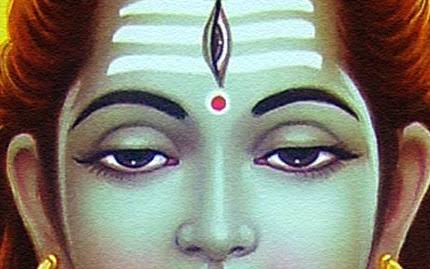
Shiva is His form as Rudra is associated with Death and described as living in Smasanam, Burning ghat.
The ashes of the corpse is smeared by Him all over His body.
The association of Burning ghat with Shiva is more prevalent in South India than North India.
Th
Thirukkadayur Temple.
ough there are Bhairava Temples in the North indicating Shiva’s association with Burning Ghats and there is the association of Varanasi, Benares with Burning Ghat, there seems to be no clear classification of such temples in Sanskrit texts as much as in Tamil texts.
Tamil literature abounds in such references.
And specific temples are grouped as Smasanam Temples.
There are four such temples in Tamil Nadu.
1.Thiruvattanam,Thirukkadavur,near Mayuram Tamil Nadu.
This town is famous for the temple of Abhirami and அமிர்தகடேஸ்வரர். Amirthakadeswarar.
The smasanam is located slighly away from the temple and many miss it.
And one prays for longevity and has Sashtiapthapoorthy performed at Thirukarukavur.
2.Kachi Mayanam. Mayanam in Tamil is burning ghat.
One finds Siva associated with Burning ghat here too.
3.Srivanchiyam..
4.Navalur Mayanam.
5.Sirkazhi.
Shall be writing in detail on each of these.
In some of these places streets have sprung between burning ghat and the temples
Hindus , majority of them, Cremate the Dead, especially The Brahmins as it is the only procedure laid down in disposing of the Dead.
Elaborate rituals are performed before lighting the Funeral Pyre.
The Sastras define five different types of Fire and ordains the Use of one type of Fire, which is generated by a specific method.
The body should be disposed of after one and a Half hour of Death and not before.
The Body should be shorn of every thing a nd one has to Meet the Maker as He came into this World.
I will be posting a post on this.
In the meanwhile the West is adapting to Cremation , purely on practical grounds.
1.Cost.
2.Space.
3.Environment.
All these and the Health of the living are taken care of in Hindu system of Cremation.
Story:
Traditional Hindu Cremation.
Today, roughly four of every 10 deaths in America involve cremation, which represents a significant increase in the past few decades. There are many reasons contributing to why a growing number of people choose cremation versus the more traditional casketed ground burial, including greater religious acceptance, less adherence to family traditions, and an increasingly mobile society.
Modern Cremation
Lower Cost
Cremation is generally less expensive than a “traditional funeral” — i.e., the casketed interment below ground of a deceased human following a visitation/wake and/or a religious or secular ceremony. According to the National Funeral Directors Association, the national average cost of a funeral is $6,560, which includes a metal casket but not the cemetery plot, grave marker (headstone), or miscellaneous other costs, such as for flowers or obituaries. According to the Cremation Association of North America, the national average cost of cremation is $1,650, which includes “limited memorialization services and a basic urn.”
When considering the costs, it is important to understand that cremation is neither an alternative to nor a rejection of a traditional funeral. Instead,cremation is merely one form of bodily disposition from which you can choose. In other words, if you select cremation for yourself or someone you love, you can still hold a wake/visitation and/or a religious or secular ceremony beforehand if you wish. This means that the amount of money you spend can be greater or less than the above averages depending upon the goods and services you select. For example, a “direct cremation” — in which a body is cremated without any type of funeral service or loved ones present — generally costs less than $1,000. Conversely, it is possible to spend four or five times that amount just to purchase a unique urn handcrafted by an artist.
Flexible Service Options
Because the human body begins a process immediately after death that eventually results in its decomposition unless it is professionally embalmed (which temporarily slows decay), a funeral or memorial service with the body present, as well as burial, occur relatively soon after death. Since the immediate family usually needs to arrange the funeral and committal services, and to provide out-of-town loved ones and friends time to travel, services generally occur within four to 10 days after the death. (Religious tradition, the family’s wishes, and many other factors can impact the timing, however.)
On the other hand, after a body is cremated, there is no urgency to do anything permanent with the cremated remains (“ashes”). It is common for the immediate family, for example, to hold a private viewing of the deceased and/or to witness the start of the cremation processitself and then conduct a larger memorial or scattering service weeks, months or even years later. This enables loved ones to focus on the immediacy of their grief without dealing with the myriad details needed to rapidly create a funeral and committal service.
Better for the Environment
Determining how “green” something is these days rests in the eye of the beholder. After all, a household that merely recycles aluminum cans might still consider itself green versus another household that uses solar power. While not considered as eco-friendly as green burial or natural burial, or evenalkaline hydrolysis, cremation has long been considered better for the environment since a traditional funeral usually involves the use of a formaldehyde-based embalming fluid, as well as the obvious need for land use when burying a casket or coffin.
According to the Greensprings Natural Cemetery Preserve in Newfield, New York, traditional ground interment in a United States cemetery results in the burial of 827,060 gallons of embalming fluid every year. Unless you choose to hold a funeral or memorial service before cremating the deceased, you might not need the services of a professional embalmer. (And even if you do, refrigeration is a viable alternative.)
And many options concerning the cremated remains do not require any land use at all, such as keeping them in an urn in your home or scattering them in a meaningful location. Even if you decide to bury the urn or place it in a columbarium, the amount of land required is still less than that needed to bury a casket or coffin.
The practice of Hindus of cremating with dry wood and dissolving ashes in the sea seems to be a better one.
Story:
Worried you haven’t been green enough in life? Don’t let death come in the way of a more eco-friendly death .
From coffins made of recycled cardboard to saying no to embalming chemicals that seep into the soil, people are increasingly searching for ways to make their final resting place a more environmentally-friendly one.
Now cremation, the choice today of a third of Americans and more than half of Canadians, is getting a green make-over. A standard cremation spews into the air about 400 kilograms of carbon dioxide — a greenhouse gas blamed for global warming — along with other pollutants like dioxins and mercury vapor if the deceased had silver tooth fillings.
Enter alkaline hydrolysis, a chemical body-disposal process its proponents call “bio-cremation” and say uses one-tenth the natural gas of fire-based cremation and one-third the electricity.
C0² emissions are cut by almost 90% and no mercury escapes as fillings and other metal objects, such as hip or knee replacements, can be recovered intact and recycled.
Matthews International Corp, the Pittsburgh, Pennsylvania-based company that makes caskets and other funeral products is planning the world’s first commercial launch of human alkaline hydrolysis in January at a funeral home in St Petersburg, Florida.
You must be logged in to post a comment.