Tag: Bali

  • Shiva Quadrangle Temple Colorado Patala Loka Hinduism

    Shiva Quadrangle Temple Colorado Patala Loka Hinduism

     I have posted an article that the Americas are the Patala Loka , as described in Hinduism.
    Hinduism describes Fourteen worlds.

    Bhuu,


    Bhuvas,


    Svar,


    Mahas,


    Jana,


    Tapa and


    Satya .


    And The Seven Paatalas (lower worlds) are:


    Atala,


    Vitala,


    Sutala,


    Rasaataala,


    Talatala,


    Mahaatala and


    Paatala.

    ( for more on this please read my post, Link provided towards the close of this Post)

    The curious fact is that they denote the spiritual Planes,other levels of Existence and Planes of Existence as explained by Quantum Physics.
    And they also have corresponding present Geographical Locations.
    The Seven Lokas are,
    India ans Patala Loka, Demo in Picture.jpg
    India ans Patala Loka, Demo in Picture.
    Now there is something more.
    The Puranic texts also give the notion of the Pathala Loka as being beyond the seas.The words like location and locomotion are etymologically similar to the word, “Loka”.

    There are other technical texts that mention the location of Asura and their adversaries, the Sura.


    “Surasuranam anyonyam diva – ratra viparyayaha”
    For Sura and Asura, days and nights are interchangeable-Surya Siddhantha

    According to this sloka, Sura and Asura would have lived on opposite sides of the earth as only then can their days and nights be interchangeable.

    The region of the earth diametrically opposite to the Indian subcontinent is the central parts of South America which was the Pathala Loka of the Asura.

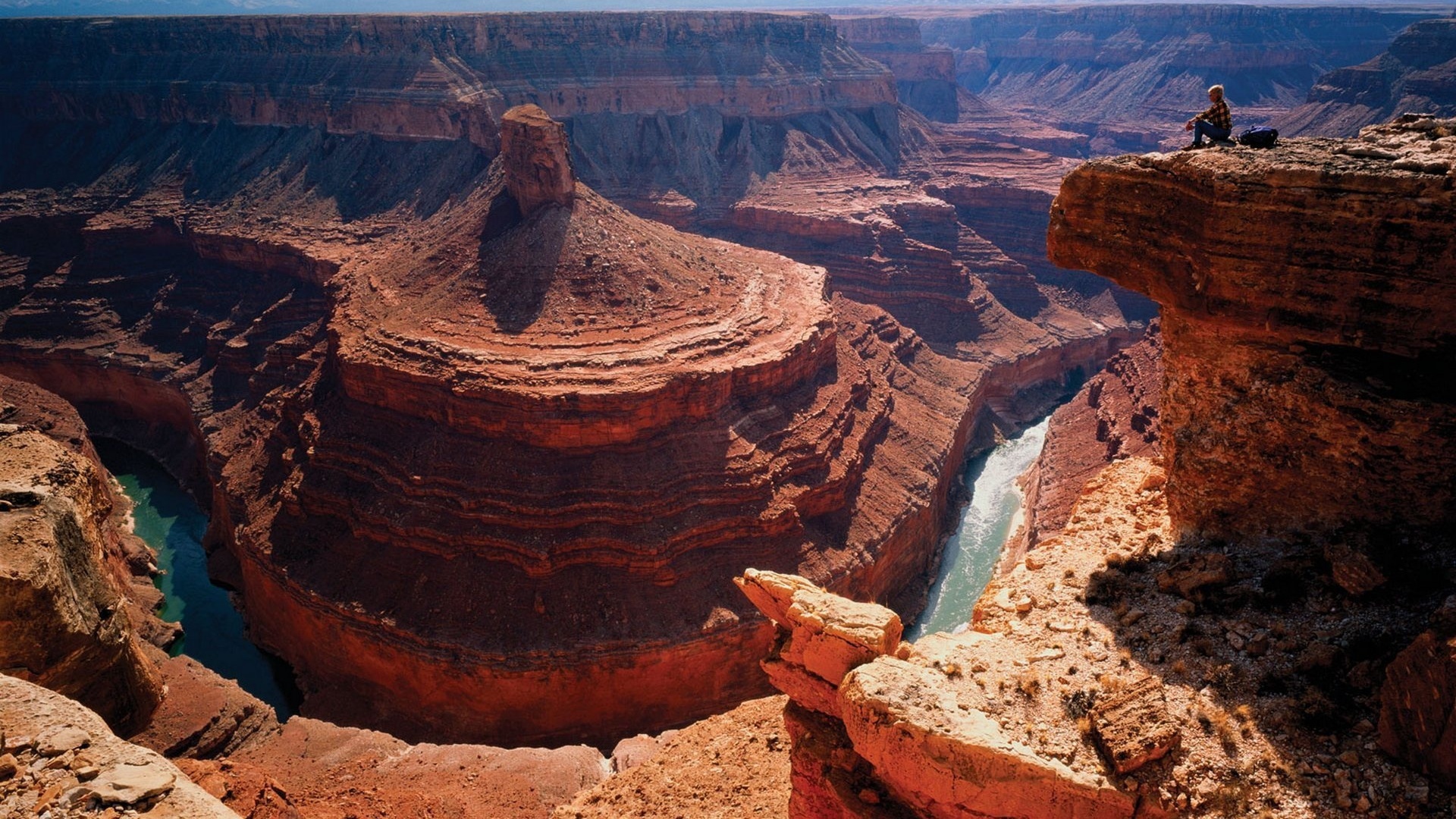
    Shiva Temple ,Grand Canyon.jpg
    Shiva Temple In Colorado

    If we want a modern analogy, we have the British calling Australia as Down Under.

    Shiva Temple Grand Canyon Quadrangle
    Shiva Temple USGS quadrangle [ segment E – F ],Image from http://www.kaibab.org/kaibab.org/usgs/gc_st_ef.htm.Not for commercial Use
    That does not mean that Australia is in the underground areas of England. What the English really mean by the phrase “Down Under”, is that, for England, high in the northern hemisphere, Australia is on the other side of the earth, down in the south.Similarly, there is another popular term in the US, called the China Syndrome.People often joke that, in case there were to be a nuclear mishap in America, then the nuclear explosion would burrow a hole beneath America, continue to burrow through the earth and come out on the other side of the earth, in China.

    These phrases, Australia Down Under and China Syndrome are examples of usage by people on one side of the globe to bring out the concept that, there is another side, opposite to them on the earth, which is also inhabited by people.

    It is in this similar vein of expression that the ancient Indians had used the term Pathala Loka, as the area on the other side of the spherical earth. It is not to be erroneously understood as an underground cavern or kingdom.


    Shiva Temple In Colorado,Grand Canyon.

    “Another section of the in the so-called ‘haunted canyon’ there are names such as Cheops pyramid, The Buddha cloister, Buddha Temple, Manu Temple and shiva Temple. What is so very strange is that the entire areas with these place names are completely off limits…..a total forbidden zone…..even to park personnel. G.E. Kinkaid’s report follows. He was a hunter and explorer his whole life apparently working for 30 years for the Smithsonian. Below are journal excerpts from his alleged discovery and subsequent adventures in the ‘Cave City’…

    This cliff face is purported to be the location of the cave entrance to the mysterious underground citadel.

    The entrance is 1,486 feet down the sheer canyon wall. Above a shelf which hid it from view from the river, was the mouth of the cave. There are steps leading from this entrance some thirty yards to what was at the time the level of the river.

    Underground Caves in Grand Canyon.jpg
    Underground Caves in Grand Canyon.


    I gathered a number of relics, which I carried down the Colorado to Yuma, whence I shipped them to Washington with details of the discovery. Following this, other explorations were undertaken. So interested have the scientists become, that preparations are being made to equip our camp for extensive studies, the number of archaeologists increasing to from 30 to 40.

    From the long main passage, another mammoth chamber has been discovered from which radiates scores of passageways, like the spokes of a wheel…


    Several hundred rooms have been discovered, reached by passageways running from the main passage, one of them having been explored for 854 feet and another 634 feet. The recent finds include articles which have never been known as native to this country, and doubtless they had their origin in the orient. War weapons, copper instruments, sharp-edged and hard as steel, indicate the high state of civilization reached by these people.

    The main passageway is about 12 feet wide, narrowing to nine feet toward the farther end. About 57 feet from the entrance, the first side-passages branch off to the right and left, along which, on both sides, are a number of rooms about the size of ordinary living rooms of today, though some are 30 by 40 feet square. These are entered by oval-shaped doors and are ventilated by round air spaces through the walls into the passages. The walls are about three feet six inches in thickness.

    The passages are chiseled or hewn as straight as could be laid out by an engineer. The ceilings of many of the rooms converge to a center. The side-passages near the entrance run at a sharp angle from the main hall, but toward the rear they gradually reach a right angle in direction.

    Over a hundred feet from the entrance is the cross-hall, several hundred feet long, in which are found the idol, or image, of the people’s god, sitting cross-legged, with a lotus flower or lily in each hand. The cast of the face is oriental. The idol almost resembles Buddha, though the scientists are not certain as to what religious worship it represents. Taking into consideration everything found thus far, it is possible that this worship most resembles the ancient people of Tibet.

    Surrounding this idol are smaller images, some very beautiful in form, others crooked-necked and distorted shapes, symbolical, probably, of good and evil. There are two large cactus with protruding arms, one on each side of the dais on which the god squats. All this is carved out of hard rock resembling marble.

    In the opposite corner of this cross-hall were found tools of all descriptions, made of copper. These people undoubtedly knew the lost art of hardening this metal, which has been sought by chemicals for centuries without result.

    On a bench running around the workroom was some charcoal and other material probably used in the process. There is also slag and stuff similar to matte, showing that these ancients smelted ores, but so far no trace of where or how this was done has been discovered, nor the origin of the ore.

    Among the other findings are vases or urns and cups of copper and gold, very artistic in design. The pottery work includes enameled ware and glazed vessels.

    Another passageway leads to granaries such as are found in the oriental temples. They contain seeds of various kinds. One very large storehouse has not yet been entered, as it is twelve feet high and can be reached only from above.

    Two copper hooks extend on the edge, which indicates that some sort of ladder was attached. These granaries are rounded, as the materials of which they are constructed, I think, is a very hard cement. A gray metal is also found in this cavern, which puzzles the scientists, for its identity has not been established. It resembles platinum. Strewn promiscuously over the floor everywhere are what people call “cats eyes’, a yellow stone of no great value. Each one is engraved with the head of the Malay type.

    Carved on all the urns, over doorways, and tablets of stone, are mysterious hieroglyphics, the key to which the Smithsonian Institute hopes to discover. The engravings on the tablets probably has something to do with the religion of the people. Similar hieroglyphics have been found in southern Arizona.

    Among the pictorial writings, only two animals are found – one of them looking prehistoric.

    The tomb or crypt in which the mummies were found is one of the largest of the chambers, the walls slanting back at an angle of about 35 degrees. On these are tiers of mummies, each one occupying a separate hewn shelf. At the head of each is a small bench, on which is found copper cups and pieces of broken swords. Some of the mummies are covered with clay and all are wrapped in a bark fabric.

    The urns or cups on the lower tiers are crude, while as the higher shelves are reached, the urns are finer in design, showing a later stage of civilization. It is worthy of note that all the mummies examined so far have proved to be male, no children or females being buried here. This leads to the belief that this exterior section was the warriors’ barracks.

    Among the discoveries no bones of animals have been found, no skins, no clothing, no bedding. Many of the rooms are bare but for water vessels.

    One room, about 40 by 700 feet, was probably the main dining hall, for cooking utensils are found here. What these people lived on is a problem, though it is presumed that they came south in the winter and farmed in the valleys, going back north in the summer.

    Upwards of 50,000 people could have lived in the caverns comfortably. One theory is that the present Indian tribes found in Arizona are descendants of the serfs or slaves of the people who inhabited the cave.

    Undoubtedly a good many thousands of years before the Christian era, a people lived here which reached a high stage of civilization. The chronology of human history is full of gaps.

    One thing I have not spoken of, may be of interest. There is one chamber of the passageway which is not ventilated, and when we approached it a deadly, snaky smell struck us. Our light would not penetrate the room, and until stronger ones are available we will not know what the chamber contains. Some say snakes but others think it m

    Citation.

    The Secret of Nagas. Written by Amish Tripathi.

    https://ramanisblog.in/2014/02/28/americas-the-patala-of-hinduism-mayas-hindus/

  • Preta Bootha Paisacha Narayana Bali Hinduism

    Bali means ‘oblation’ ‘sacrificial offering’ to Gods.


    This Bali , generic terms, is Vegetarian.


    There have been practices of animal sacrifice in Hinduism earlier.


    One of the main causes for the rise of Buddhism is the animal sacrifice indulged in indiscriminately.


    Shankaracharya set this process right by quoting relevant Vedic texts and did away with this practice.


    Bali to Gods is generally to appease Him/Her.


    Bali is different from Naivedya where the food is offered to God by way of Thanksgiving and to remove the impurities in Food.

     

    Bali is offered to Gods in Temples at the Balipeeta, near the Dwajasthamba, Flagpole in the temple to the Devatas that are in the temple and the Bali is not meant for the principal Deity, Vishnu, Shiva, Ganesha, Subrahmanya and Devi.


    Village deities are offered the Bali, not the principal deities of Hinduism.


    Apart from this there are,


    Preta Bali,


    Bootha Bali,


    Paisacha Bali and Narayana Bali.


    Preta Bali is offered after one’s death to the dead body as a token of thanks for accommodating the Soul temporarily to enjoy its fruits of action.


    Bootha Bali is offered to the  Five Elements, Earth, Water,Fire, Air and Ether for combining themselves into forming a Human Body as a gesture of gratitude.


    Till the basic Karmas for the dead are completed the dead are believed to  be in Paisacha Loka as Paisachas,roughly translated Ghosts, en route to Pitru Loka.


    On the eleventh/twelfth day of the death, the Paisacha Bali is offered to Paisachas.


    One more important Bali is The Narayana Bali.


    This is performed for those who die of unnatural causes,like accidents, suicide.


    No formal Rites are to be performed for these deaths.


    The Narayana Bali rites is performed in all cases of abnormal death which is defined as follows: death by fasting, one who is killed by animals, death by arson, death by a curse, death by cholera or any disease or great ailment, who commit suicide, fall from a mountain, tree or any height, who hang themselves to death, who are drowned in a tank, river or ocean, death by muggers or robbers, by snake bite, struck by lightning, murder and persons who are great sinners – for such persons O Garuda, the rite of Narayana Bali should be performed.” (Garuda Purana Preta kanda chapter 40 verses 4-12)

    All these deaths are known as bad deaths where no rite of Aurdhvadehika (funerals rites) or pinda-daan is performed. The deceased sons should perform the Narayana Bali Puja, O bird. By that the relatives of the deceased are purified. This is stated by Yama. There are no other means. Except for the Narayana Bali, there is no rite for their purification.
    (Garuda Purana Preta kanda chapter 4 verses 110- 116)

    If the Narayana Bali is to be performed for the atonement of bad death, it should be done on the eleventh day. (Garuda Purana Preta kanda chapter 5 verse 39)

    “Then the Rites for the release of the ghost should be performed with Vishnu in view. The Preta (the deceased) is then mystically discharged. (Garuda Purana Preta kanda chapter 40 verses 63-64). So what Lord Vishnu is saying here is once the prayers are completed the deceased who was a ghost (spirit/preta) is now released…

    Lord Vishnu further states this in the Garuda Purana to Shree Garuda: – “Until the funeral rites are properly performed the dead man, ever hungry, roams about day and night in the form of airy matter. “ (Garuda Purana Preta Kanda Chapter 13 verse 23)

    Having incurred sins they seek redemption in their progeny. Being bodiless as well as suffering from hunger and thirst they roam about here and there. They bolt doors on their ancestors, put obstacles in the way of the forefathers. Like thieves, they snatch the manes food in their way before it reaches them. They return home stay on the roof, and watch the activities of their kins. They cause disease and grief to their relatives. Having assumed the body of tertian {fever}, they cause disease due to cold or wind like headaches or cholera. The ghosts torment his family people through the enemy. (Garuda Purana – Preta Kanda, Chapter 20 Verse 5-37).


    Ref.https://www.facebook.com/wwwastrowww/posts/423650444380283


  • Vedas In Bali Islands Catur Veda Sira

    Efforts to wipe out Hinduism and the Hindu Scriptures have been made.


    And it has been successful in a limited way, thanks to the oral traditions of the Vedas  and the unstinting followers of the Vedas, The Brahmins.


    I have posted how the Great African Religion was literally wiped out to the extent that even the natives of Africa still believe that they have been tribal

    and mostly uncivilized.


    Similar attempts have been made and ae being made about Indonesia and especially Bali Islands


    You can get the information from the web that Hinduism  entered Bali some time around  First Century BC, this too is given out in a condescending

    manner.


    Hinduism came to Indonesia from India in the fifth century CE. It was gradually replaced by Buddhism, which was the main religion of Sumatra and Javauntil it in turn was displaced by the coming of Islam from the 14th century CE. However, due to “cultural barriers”, Bali became the only part of Indonesia to remain Hindu.[1][2]


    Hindu influences reached the Indonesian Archipelago as early as first century. There are several theories as to how Hinduism reached Indonesia. The Vaishya idea is that intermarriage occurred between Indian traders/merchants and Indonesian natives. Another theory (Kshatriya) believes that defeated soldiers from India found solace in Indonesia. Third, the Brahmana take a more traditional point of view that missionaries spread Hinduism to the islands. Lastly, the nationalist (Bhumiputra) theory is that Indonesians chose the culture themselves after having traveled to India.’


    The position is,


    Hinduism in its Vedic form has been the Religion of Indonesian islands.


    The Ramayana and the Mahabharata are still being told there with vaiations.


    Tamils History state that  these areas were conquered by the Tamil Kings of the Sangam Era, about 200o years ago.


    Vedas were being chanted and a version of the Vedas , called ‘Catur Veda Sirah, The Head of Four Vedas’


    Gatothgaja Statue In Bali
    Gatothgaja In Bali


    The emphasis seems to be more on Vishnu Worship.


     “The Indonesian, particularly Balinese Hindus today didn’t have the complete Samhita of Catur Veda.


    This slideshow requires JavaScript.


    But some palm-leaf manuscripts we called Catur Veda Sirah, The Head of Four Vedas, were available under some hereditary Brahmin’s custody and government library.


    The Rik, Yajus, and Sama’s “heads” full of clearly Vaishnavite meaning and established Lord Sriman Narayana’s supremacy above other deities.


    The Atharva Sirah invokes other divine names such as Siva, Brahma, or even Skanda, Kumara, and Ganapati.


    But from careful analysis, we also can conclude them finally as glorifying hymns for Lord Sriman Narayana.


    The different names actually do  not refer to various deities but The Supreme Lord Narayana. These are the texts of Balinese Caturveda Sirah. …..


    Balinese Version of The Veda.


    Sang Hyang Rigveda Sirah

    atha puruso ha vai narayano kaumayata prajaha srijeyeti| narayanat prano jayate manaha sarvendriyani ca kham vayur jyotir apah pruthvi visvasya dharani| narayanad brahma jayate| narayanad rudra jayate|narayanad indro jayate| narayanat prajapatih prajayate|narayanad dvadasa-aditya rudra vasavah sarvani chandansi| narayanadeva samutpadyante| narayanat pravartante|narayane praliyante| etad rigveda sirodhite||

    Then The Supreme Person Narayana fastened the wish: May I create! From Narayana the life force is created. Narayana created mind, all senses, and also the sky, air, light (or fire), water, earth, and Narayana is the sustainer of everything (or the whole universe). From Narayana Brahma is born. Narayana created Rudra, Indra, and Prajapati. From Narayana the twelve Adityas, eleven Rudras, eight Vasus, and all Vedic metres are born. They originate from Narayana, they act by Narayana’s energy, and they finally dissolve in Narayana. Thus the head meaning of Rigveda has been studied.

    In this Sirah, we try to comprehend Sriman Narayana by His unlimited opulence. At beginning the Sirah considered many material forces, then their great presiding deities (the abhimani-Devatas). Finally, the supremacy of Lord Narayana was established, by identifying Him as the original cause of everything. Remind us with the aphorismjanmadhyasya yatah of Brahmasutra.

    Sang Hyang Yajurveda Sirah

    atha nityo narayanah| brahma narayanah| sivas ca narayanah| sakras ca narayanah| kalas ca narayanah| disas ca narayanah| vidisas ca narayanah| urdhvam ca narayanah| adhas ca narayanah| antar bahis ca narayanah| narayana evedam sarvam| yad bhutam yas ca bhavyam| niskalanko niranjano nirvikalpah nirakhyatah| suddho deva eko narayanah| na dvitiyo’sti kascit| ya evam veda visnureva bhavati| ya etad yajurveda sirodhite||

    The eternal Sriman Narayana is Brahma (The Primary), Narayana is Siva (The Auspicious), Narayana is Sakra (The Master), Narayana is the immortal time, Narayana is the four points of compass and the points between. Narayana is zenith and nadir, the interior and exterior. Narayana is this all; what has come into existence and all that will come into existence. The inconceivable One, the unstainable One, the unimpaired One, pure One Supreme Godhead, One without second, The Supreme Lord Narayana. He, who has come to realized this, will come to Vishnu. Thus the head meaning of Yajurveda has been studied.

    Here we find mentioned many Devatas’ name. But we have to remember, this Sirah acts as a Vedic conclusion. By conclusive word of deva ekah or na dvitiyah, we know these different names only referred to One Personality. In other word the Sirah was saying, “That Brahma, you called as the supreme, is Narayana. That Siva actually Narayana. That Sakra actually Narayana. etc.” The Rigveda Sirah considered different personalities, but one of them, that Sriman Narayana, was the Supreme Origin of all. The Yajurveda Sirah only talked about One Single Personality, by addressing Him with various name. Here we also can use the methods of Sri Madhvacharya to solve something seem like ambiguity or contradictive statements of the Vedas. We can understand the words as Niravakasha (have only one meaning) and Savakasha (may interpreted by some meanings base on context). Brahma, Siva, Sakra, etc. could be interpreted in several meanings. viz. the name of demigods; the descriptions of Narayana’s quality; or as various names of Narayana. The second and third meaning was fit in this context by considering the phrase deva ekah narayana na dvitiyah. We called Narayana Brahma, because He is The First Person. We called Him Siva because He is all auspicious, etc. But it doesn’t mean asvatantra (dependent) gods, named Brahma or Siva, etc. was equal or same as Narayana, the Paramasvatantra (The Supremely Independent). In conclusive word, this Sirah meditates on Lord Narayana’s kalyana-guna

    Sang Hyang Samaveda Sirah

    Om ityagre vyavaharet| nama iti pascat| narayanayetyuparistat| om ityekaksaram| nama iti dvi aksare| narayanayeti pancaksarani| etad vai narayanasya-astaksaram padam| yo ha vai narayanasya-astaksaram padam abhyeti| anapabhruvah sarvamayureti| vindate prajapatyam rayasposam gopatyam tato’mrta tvam asnute| etat samaveda sirodhite.

    First pronounce Om, then Namo, and finally Narayanaya. Om is the one syllable form, Namo is the two syllables form, and Narayanaya is the five syllables form. This is indeed the eight syllables mantra of Lord Narayana. Whoever goes to this eight syllables mantra of Lord Narayana, will be free from any curse during the whole course of his life. He will reach the status of Prajapati (Lord over beings), accumulating abundant of wealth, ownership over cattle and finally reaches immortality. Thus the head meaning of Samaveda has been studied.

    This Sirah presenting Astaksara-mantra or Thirumantram as the conclusion of Samaveda. The mantra was actually the sound representation of the deity. There is no different between Astaksara-mantra and The Supreme Personality of Godhead Narayana Himself. One who attained realization on Astaksara-mantra, directly experience the Divine Being of Sriman Narayana Himself. He totally immersed in The Lord’s nama-rupa-guna-lila, His Holy Name, Divine Form, Qualities, and Pastimes. Indeed, this Sirah is the part of Vedic Narayana-suktam.

    Sang Hyang Atharvaveda Sirah

    Om suryatidam nirmalam satatam| candramrtvat sakalam| sa sadasiva sa suryam idapyam jagatvam| brahma surya surya prabhavam| mahesvaram mahadevam sambhu sankaras ca sivam sadasivam paramasivam| tava suksmam paramgataya tava sa surya| padmanabha narayana indram suryaprakasam| catur-bhumim asamam asisam krstam sukham sajanam| sthavarajangamam lata vrksa sapraroham mrga prajadhipati| om sivam sarva sakala maranam| nada vindvam bhaskaram omkaram ekaksaram| kalagnika-suryam tryaksara angam panca brahmanam dvyaksaram| narayanaskanda ganapati kumarastri siva surya sa etad atharvaveda sirodhite.

    Om this is the eternal illuminating pure sun, the soothing ray emanating moon. The Sun of Sadasiva, the cosmic Brahma sun, the all shining sun, The Great Master (Mahesvara), The Great Lord (Mahadeva), The Self born One (Sambhu), The Attractive One (Sankara), The Auspicious (Siva), The Ever Auspicious (Sadasiva), The Most Auspicious (Paramasiva), The Subtlest One (Suksma), The Sun of highest ultimate goal (Paramgata). The Sun of the Lord with lotus-like navel (Padmanabha), sustainer of the whole universe (Narayana), and the King of all kings (Indra). Without parallel in the fourteen worlds, the blissful Lord of saintly persons, humans, animals, trees, vines, and other creatures. The highest Lord of all beings (Prajadhipati). The most auspicious Om, the end of everything, the lustrousnada and bindu of the Single Sacred Syllable Om. The fire of the Sun of the time. Embodiment of three syllables, five Brahmas, and two syllables. The Supreme Narayana, Skanda, Ganapati, Kumara, Devi, Siva, and Surya. Thus the head meaning of Atharvaveda has been studied.”

    The Mahabharata narratives as found in present Wayang consist of folk-narratives developed by Wayang puppet-masters and bards over the ages, as also the narratives of Old Javanese Literature, which perhaps itself owes much to Folk-narratives. Kakawin Bhāratayuddha is an Old Javanese poetical rendering of some Parvas of the Mahabharata by Mpu Sedah and his brother Mpu Panuluh in Indian meters (kāvya or Kakawin). The commencement of this work was exactly November 6, 1157. It is by far the oldest extant Javanese work. Some important Kakawins relevant to our present discussion are – Kakawin Arjunawiwaha, by Mpu Kanwa, – 1030, Kakawin Krsnayana, Kakawin Bharatayuddha, by Mpu Sedah and Mpu Panuluh, 1157, Kakawin Hariwangsa Kakawin Gatotkacaśraya, Kakawin Arjunawijaya, by Mpu Tantular, and Kakawin Parthayajña.

    With reference to Old Javanese literature and particularly Wayang puppet show, let us now see what major variations we find in the Indonesian narrative from its Indian origin. Let us also see the similarities of some Indian variations with the Indonesian narrative.

    Shantanu-Satyavati-Prashara-Vyasa

    In the wayang kulit/leather-puppet performance Prabu Matsyapati or Durgandana, is the King of Wiroto(Virata). He is the son of Basukiswara, a just and powerful king of Cedhiwiyasa. Virataraja Matsya is Satyabati’s brother. Satyabati or Durgandini makes love to Bambang Palasara (Rishi Parashara) in a boat and produces five children.

    History.

    The earliest recorded history was about the famous Mulavarman of Kutai in Kalimantan. He donated thousands of cows to agnihotri Brahmins and performed the biggest Yagna throughout the history of Nusantara. The Ramayana and also some Sanskrit works, called the present day Kalimantan as Barhina-dvipa, which later became Borneo. At the time of Mulavarman, the Indian supposed to include Nusantara as a part of Greater Kalinga. So by Mulavarman’s virtuous performance of grand sacrificial ceremony, his kingdom could be designated as Kalingottamam, the word perhaps changed to present day Kalimantan. According to some historian, the word Vaprakeshwara found in Mulavarman inscriptions has some connection with Lord Siva, and then they concluded that Mulavarman and his subjects were Saivas. But the form of his Yagna performance was Vedic. It didn’t seem involve the Agamic or Tantric elements of any sort. The lack of archaeological remains of temple worship from the time of Mulavarman supposed to prove this probability.

    Their worship differs from Hindu worship in minor details, essence remains the same.

    Festivals in Bali.

    Nyepi –  31 March 2014
    This holiday is the Balinese New Year, called Icaka New Year – a day of total silence throughout the island. No activity, no traffic is allowed on the roads; no fire may be lit for 24 hours. Great purification and sacrificial rites are held on the day before, so as to banish evil spirits from every place on the Island – Ogoh Ogoh figures are built, then burned.

    Saraswati – 8 March and 4 October 2014
    This day is devoted to Dewi Saraswati, the Goddess of  Science & Knowledge. Books of knowledge, manuscripts and the Wedas are blessed and special offerings are made for them.

    As with other religious days in Bali, there are also ritual activities before and after the day of Saraswati itself. The day before the Saraswati is called Pengeradanaan, a day to prepare for Saraswati both spiritually and physically. Books are cleaned and properly arranged.

    On Saraswati Day, the Balinese make offerings to their books. Students celebrate at school, usually in the morning. The Saraswati Day is not a day off work, so all offices are open.

    The day after Saraswati is called Banyu Pinaruh. “Banyu” means water and “Pinaruh” means wisdom. Taken together, the words mean that man must have wisdom which always flows like water, and is useful for mankind. Early in the morning of Banyu Pinaruh Day, people will go the beaches, rivers and springs to purify themselves and pray for wisdom.

    Pagerwesi – 12 March and 8 October 2014
    Pagerwesi commemorates the day upon which an ancient battle between good and evil was fought. The word “Pagerwesi” means “iron fence”, and reflects the purpose of this important event: it is the day to strengthen one’s fortifications against evil. The correlation between Pagerwesi and the Saraswati is that knowledge is so powerful that it must be protected from bad influences. Pagerwesi Day reminds people to be wise and more aware of the function and power of knowledge.

    The Balinese celebrate the Pagerwesi ceremony every six months according to the Balinese calendar. The celebration is usually three days after the Saraswati day.

    During Pagerwesi, people make special offerings for the dead who have not yet been cremated. Observances are usually held at every house compound, and at temples.


    The Galungan Ceremony –  21 May   and  17 December 2014
    One of Bali’s major festivals celebrates the return of Balinese gods and ancestors to Bali. For ten days, Balinese families will entertain and welcome with prayers and offerings, along with ceremonies to cleanse and balance the inner and outer energy of the island. Galungan features, among other things, barong dancing from temple to temple in the village. The festival symbolizes the victory of good over evil. The origin of Galungan is a mystery, but essentially it is believed to be the beginning of the week in which the gods and ancestors descend to earth, and good triumphs over evil.

    The holiday is celebrated by the fitting of ‘penjor’, tall bamboo poles beautifully decorated with woven coconut palm leaves, fruit, cakes and flowers, on the right side of every house entrance. People are attired in their finest clothes and jewels on this day.


    (http://www.mydestination.com)Veda

    Citations.

    Balinese Hinduism

    Catur Veda Sira

    Indonesian Mahabhata


    Enhanced by Zemanta
  • Call of Fiancée Awakens From Coma

    How deep affection and Love is demonstrated when a patient in Coma was awakened after ten months!

    Lovers Mathew Taylor and Anda Nurul .
    Love Awakens .

    “For ten months, he had been lying in a hospital bed, unconscious and unresponsive.

    The injuries Mathew Taylor had suffered in a motorbike crash were so severe that his devastated family were warned he may never wake up.

    But then came the phone call that would change everything. From her home in Bali 7,000 miles away, Mr Taylor’s fiancee  Handayani Nurul chatted to him – and at the sound of her voice, tears began trickling down his cheek.

    It was the first time the 31-year-old had shown any sign of recovery since fracturing his skull in the horrific accident on the Indonesian island.

    Now, every time the phone rings, Mr Taylor reaches out his hand.

    Describing the moment Mr Taylor first responded to his fiancee’s voice, his stepfather Simon Moore said: ‘He had tears in his eyes as we held the phone to his ear. She asked him something and he said a silent yes.

    Then tears were coming down his face. It  was brilliant.’

    Now, Mr Taylor’s mother Heather calls Miss Nurul, known as Anda, and passes the phone towards her son.

    Mr Moore said: ‘As soon as he hears her  voice he lifts his hand for the phone. He listens to her and you can see this change in him.’

    Mr Taylor, from Overseal, Derbyshire, met Miss Nurul, 27, after he moved to Indonesia in 2009 to teach English.

    The couple planned to get married, but Mr Taylor was knocked down while riding a motorcycle in Bali on July 9 last year.

    As well as a fractured skull, he had to have his eye socket reconstructed, using bone taken from his thigh.

    Following surgery, he slipped into a coma and has remained in a vegetative state ever since.

    Mr Taylor had no medical insurance, so  his family were forced to raise £100,000 for  him to be treated in Bali. His father, Darrell Taylor, contributed £50,000 of his savings, while Mr Moore remortgaged his home to find the remaining £50,000.