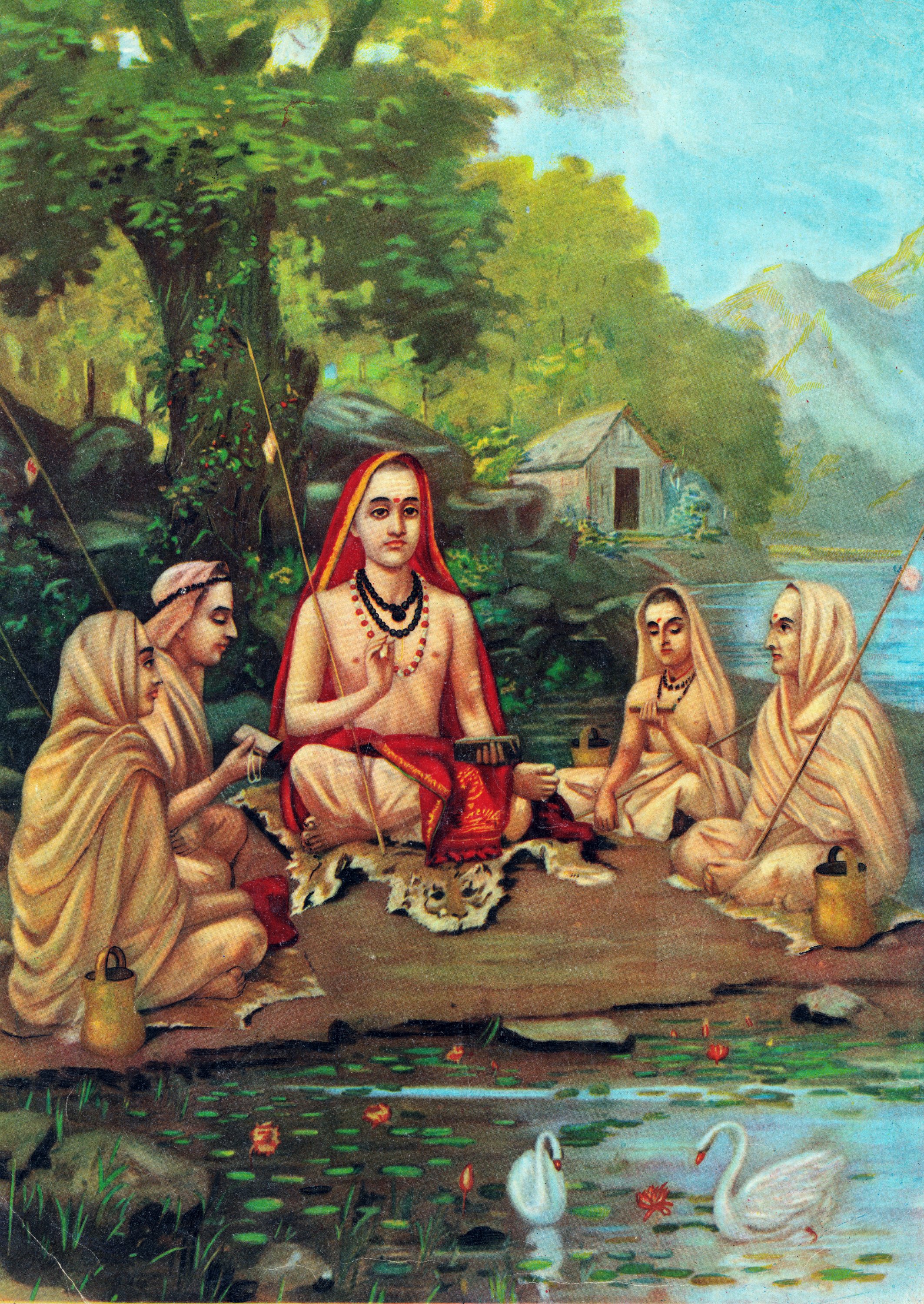
Tag: Advaita Vedanta

  • Shankaracharya Misinterpret Vedas Misled, Shiva In Padma Purana?

    Shankaracharya Misinterpret Vedas Misled, Shiva In Padma Purana?

    Not for nothing Dr. Radhakrishnan, former President of India and a Philosopher said that ,

    ‘Indian Philosophy is not a view of Life, but a Way of Life’.

    It is one thing to read,study the Vedas and other Hindu Texts but it is another proposition to understand its soul and ethos.

    Mere Intellectual or Bhakthi approach would not help one to understand the spirit of Hinduism.

    Hinduism should be lived and practiced for years  to understand it in its multifarious aspects.

    Mere abstraction would remain just that, an intellectual Narcissism..

    Mere Bhakthi, or total surrender to God , though highly recommended, is likely to lead one into disappointment as this path is, though seems easy to say, is the toughest to practice.

    One must understand that Hinduism is a personal Religion in the sense that one can practice it the way it suits him, so long it is in conformity with the Vedas.

    As individuals are numerous, so are their mental attitudes.

    Hence Hinduism provides four paths to follow so that people of different mindsets can follow Spirituality.

    They are,

    Karma Yoga, Path of Action,

    Gnana Yoga, Path of Knowledge,

    Raja Yoga, Path of Mental and Physical Discipline and

    Bhakthi Yoga, the Path of total surrender.

    The fact that one is emphasized in the Vedas and other Hindu texts, when they speak of a particular path, does not mean that the other Paths are inferior.

    They are spoken this way so as to instill in the mind the conviction to follow the path that appeals to them and such sayings reinforces the attitude.

    The same logic applies to Nirguna Brahman,Reality without Attributes and Saguna Brahman,Reality with Attributes.

    (for details  please read my article God with names and forms Yes and No)

    This one can understand from the Vedas, Puranas, Ithihasas and the Slokas /Mantras.

    One would, in the same breath, the Vedas talk about Nirguna Brahman and Saguna Brahman.

    One would find the Reality being described as a principle, Nirguna, in the Mahavakyas thus,

    1. prajñānam brahma – “Prajña is Brahman” or “Brahman is Prajña”(Aitareya Upanishad 3.3 of the Rig Veda)
    2. ayam ātmā brahma – “This Self (Atman) is Brahman” (Mandukya Upanishad 1.2 of the Atharva Veda)
    3. tat tvam asi – “Thou art That” (Chandogya Upanishad 6.8.7 of the Sama Veda)
    4. aham brahmāsmi – “I am Brahman”, or “I am Divine” (Brhadaranyaka Upanishad 1.4.10 of the Yajur Veda)

    Then you find in the Narayana Suktha.

    Narayanam mahagyem Viswaathmaanam Parayanam,

    Vishnu Suktha,

    Vishnornukam veeryani pravosam..

    or the Sri Rudram,

    nama sivaya cha, Sivadharaaya Cha,

    where the Individual deities are  praised.

    or look a the Lalitha Sahasranama, where a portion is allotted for worshiping the Devi as Nirguna, the chapter being Nirguna Upasna and another Saguna Upasna where personal deity is worshiped.

    So both options are provided.

    Reading one and discarding the other is not compatible with the Vedas.

    Quoting Vedas in isolation lands one into situations and interpretations that run counter to Vedas themselves, as it has happened in the case of the Mimamsa.

    The Karma Kanda, the portion of the Vedas that deal with duties and performance of Yagas and Yagnyas, was carried to such an extreme that only the Karmas in the form of Yagnyas were followed and the Gnana and Bhakthi were totally omitted..

    And the performance of only Yagnas and sacrifices caused a revulsion among people and this one of the reasons for the raise of Buddhism.

    And many Gods were worshiped in the Yagnyas.

    It took all the Life of Shankaracharya to set matters right and establish the authority of the Vedas, by systematizing  worship into Shanmaha, Six systems of worship.

    And he reestablished the concept of Nirguna Upasna and also provided room for Saguna Upasna.

    Iswara concept found in Patanjali’s yoga Sutra was reinforced by him.

    Such being the case I was shocked to find an observation by Stephen Knapp who has done yeoman service to Hinduism by propagating Sanatana Dharma concept that Shankaracharya misinterpreted the Vedas!

    and

    he quotes Padma Purana and Siva Purana.

    We must point out that some spiritual authorities say that Shankaracharya was an incarnation of Lord Shiva who had been ordered by the Supreme Lord to cheat the atheists. The Shiva Purana quotes the Supreme Lord as ordering Shiva: “In Kali-yuga mislead the people in general by propounding imaginary meanings from the Vedas [Vedic literature] to bewilder them”:

    dvaparadau yuge bhutva

    kalaya manushadishu

    svagamaih kalpitais tvam ca

    janan mad-vimukhan kuru 1

    The Padma Purana also says that Lord Shiva would descend as a brahmana sannyasi and teach Mayavada philosophy in the verse:

    mayavada ashat shastram prachchanna

    boudhyam uchyate moya ebe godidam

    devi kalou brahmana murtina

    To do this, Shankara gave up the direct method of Vedic knowledge and presented an indirect meaning which actually covered the real goal of Vedanta. This is confirmed in the Padma Purana where Lord Shiva addresses his wife, Parvati:

    shrinu devi pravaksyami

    tamasani yathakramam

    yesham shravana-matrena

    patityam jnaninam api

    apartham shruti-vakyanam

    darshayal loka-garhitam

    karma-svarupa-tyajyatvam

    atra ca pratipadyate

    sarva-karma-paribhramsan

    naiskarmyam tatra cocyate

    paratma-jivayor aikyam

    mayatra pratipadyate

    “My dear wife, hear my explanations of how I have spread ignorance through Mayavada philosophy. Simply by hearing it even an advanced scholar will fall down. In this philosophy which is certainly very inauspicious for people in general, I have misrepresented the real meaning of the Vedas and recommended that one give up all activities in order to achieve freedom from karma. In this Mayavada philosophy I have described the jivatma and Paramatma to be one and the same.” 2

    The Padma Purana, in the quote that follows, describes how Lord Shiva tells his wife, Parvati, that he would appear in Kali-yuga to teach the impersonalistic philosophy, which is impious and merely a covered form of Buddhism. Yet, as explained next, there was a purpose for it.

    mayavadam asac-chastram

    pracchannam bauddham ucyate

    mayaiva kalpitam devi

    kalau brahmana rupini

    brahmanas caparam rupam

    nirgunam vaksyate maya

    sarvasvam jagato’py asya

    mohanartham kalau yuge

    vedante tu maha-shastre

    mayavadam avaidikam

    mayaiva vaksyate devi

    jagatam nasha-karanat

    “The Mayavada philosophy is impious. It is covered Buddhism. My dear Parvati, in the form of a brahmana in Kali-yuga I teach this imagined Mayavada philosophy. In order to cheat the atheists I mislead them by describing the Supreme Lord to be without any personal form or qualities.”

    Herein, Lord Shiva himself points out that to believe God has no form is not accurate and is equal to atheism. Even though this Mayavada philosophy was not good for pious people to hear because it would sway them toward an impersonalistic viewpoint, we should note that Shankara’s philosophy was just right for the time and circumstance. The Buddhists, who had spread throughout India and neglected the Vedas, believed in neither a soul nor a God and that, ultimately, the essence of everything is the nothingness or void wherein lies nirvana, freedom from all suffering. So considering how the Buddhists had followed a philosophy of what would generally be considered atheism for hundreds of years and would never have accepted a viewpoint which advocated a supreme personal God, Shankara’s was the only philosophy they would have considered. It was like a compromise between atheism and theism, but Shankara used portions of Vedic knowledge as the basis of his arguments. In this way, as Shankara traveled throughout India his arguments prevailed. Thus, Buddhism bowed and Vedic culture was brought back to prominence. Therefore, his purpose was accomplished, so much so that his Sariraka-bhasya is considered the definitive rendition of Vedanta even to the present day.’

    Totally wrong interpretation.

    If Bhaja Govindam is quoted to buttress the view that Shankaracharya was really only after

    Bhakthi to Vishnu, what about his nirvana Shatgam ,Manisha Panchakam, Soundarya Lahari,Kanakadhara Sthavam,Subrahmanya Bhujanga,Ganesha Pancharatnam?

    Shankaracharya should be studie in full an no in bits.

    And if proof is needed that there are interpolations in the Puranas, Padma Purana and Shiva Purana, this is it.

    This accusation against Shankaracharya is not new.

    He was also called a Pseudo-Buddhist for His Advaita!

    If Shankaracharya was misquoting the Vedas, then how come the Mahavakyas I have quoted above speak of Nirguna Brahmana and not Saguna Brahman, Reality without Attributes?

    ‘AUM
    That supreme Brahman is infinite, and this conditioned Brahman is infinite.
    The infinite proceeds from infinite.
    Then through knowledge, realizing the infinitude of the infinite, it remains as infinite alone-

    Mundaka Upanishad.

    Great indeed are the devas who have sprung out of Brahman.-Atarva Veda.

    ‘satyam jnanam anantam brahman
    “Brahman is of the nature of truth, knowledge and infinity” -Taittriya Upanishad.

    Reference and citation.

    http://www.stephen-knapp.com/complete_review_of_vedic_literature.htm

    Images credit.

    https://ribhuv.wordpress.com/tag/shankaracharya/

  • Why Many Gods In Hinduism

    I often encounter questions on Sanatana Dharma, called Hinduism, as to why there are many Gods in it and one is confused by this.

    Also  while the other Religions talk of Only One God, why is it that Hinduism talks of many Gods?

    I have been receiving a lot of queries on this and I am quoting one.

    Vishnu as kaala Purusha.jpg
    Lord Vishnu as Kaala Purusha

    “Usually, we all say God is one but in Hindu Dharma we have Brahma, Vishnu and Shiva for Creation, Preservation and Destroy. Why it is so? Why other religion is praying and naming one God. Can you please explain”

    As to other Religions , Christianity, Islam, they talk of God in an Impersonal way.

    Christianity talks of God as The Father and there are no descriptions or attributes except the generalities like All merciful and one who would condone your sins if you repent your sins through His Agent, Jesus Christ.

    Hinduism does not believe in Agents nor does it absolve you from the results of your actions, simply because you repent.

    One has to face the consequences of his actions, this includes the Avatars of Gods as well.

    Godhood is a Principle, Impersonal and Laws doe not distinguish between people.

    In Islam the same generalities.

    God is One who lays down the Rules,he punishes you if you do not follow Islam!.

    Hinduism is different.

    It knows Religion is an experience and it can not be dictated by Logic alone, even if the Logic is impeccable.

    The Truth, according to Hinduism, is One.

    It is called Brahman, The Reality.( This is different from Brahma , the Creator).

    This Brahman is without Attributes, it is a Principle , just as Gravity is.

    But it is difficult to know it through the Mind.

    Just as we can not know Gravity, we think we know Gravity, but what we really know is because of the feeling of Gravity.

    The scientific explanation is only an expression born out  of the feelings of Gravity.

    Imagine that we do not feel Gravity.

    Would we have tried to form  a Theory on Gravity?

    So even if the Reality is an abstract principle,it has to be made understandable to be of use to us.

    Hence even though the Reality Brahman is the Truth,Hinduism devised ways to reach/realize it.

    The Truth, The Brahman, the Reality is Knowable, to Be Known.

    That is the Truth.

    This knowledge about Brahman is called ‘Apara Vidya'( beyond this world of names and forms)

    The knowledge about Brahman and its attributes are called Apara Vidya.

    The general descriptions of Brahman  are Sat, the State of Being, Chit(Consciousness) and Ananda(Bliss)

    Apart from this, the Upanishads,a part of The Vedas, the scriptures of Hindus, try to explain the qualities of Brahman by excluding the attributes normally known to us stating that the Brahman is Beyond all this and also this.

    For example the Upanishads,describe Brahman as,

    ‘Neither Tall nor Short, nor of medium height,

    Neither Male, Female,nor transgender ,

    Neither the Knower nor the Known,

    Yet It is All of These’

    You would find this is difficult to comprehend even at the intellectual level.

    Knowledge, if it can not be understood or used is useless.

    Therefore Hinduism devised a way.

    If we have to Know, it must be easy for us to follow.

    The instrument to know is the Mind.

    The instrument to feel is the Heart.

    For those who want to have a glimpse , Hinduism provides  Gnana Yoga and Raja Yoga.

    Raja Yoga is the path of Yoga being practiced by many.

    Here one prepares the mind to understand Reality.

    Gnana Yoga prepares one to discern the Reality by developing Vairaagya, the discerning capacity to distinguish between practical knowledge,Para Vidya and the Apara Vidya.

    There are two more methods.

    Bhakti yoga, the path of Loving God.

    The other one is karma Yoga, the Path of Action.

    For loving God, one needs an object to concentrate for the Mind , to enable the Heart to feel it.

    So Gods have been named In Hinduism.

    It is difficult for the Humans to empathize with qualities which are not known to them.

    The emotional connect is strong in the case relationships.

    Father, Mother, Children, Wife, Children and relatives.

    And if one attributes Reality/God with the qualities of Humans , it is easy for the Humans to understand.

    So the Gods of Hinduism are attributed with Human qualities.

    Then why many Gods?

    Some love Mother, some Father, some Lover, some friends, some a master.

    God, in Hinduism, is portrayed with all these qualities.

    This makes it easy for Humans to relate to God than being asked to relate to an Impersonal God.

    Once people start this step, over a period time, they will be able to feel the Impersonal God and the concept of god with Attributes withers away.

    This first step is like LKG, while understanding, feeling Reality is like Phd..

    After reaching Phd, the LKG would seem to be of no use.

    But without that one could not have reached Phd.

    At another level, there are principles that represent the Physical world.

    Thus we have Brahma who represents the Potential energy, Vishnu, the Kinetic energy, and Shiva, the Potentio-Kinetic Energy.

    Similarly all the Gods present the Principles of Nature as well.

    Yet the fact that the Gods Rama ,Krishna, Shiva , Subrahmanya existed, as proved by Historical and astronomical Data, there is an unexplored area.

    In short, Hinduism talks of not only Monotheism but Monism as The Truth but devised a way to understand them by Gods with attributes..

    Kindly read my post Gods Hinduism, with name and form, Yes and No.

    Another point is that even thought Gods with Names and Forms are only a tool to understand Brahman, these Gods, when prayed deliver results, as Lord Krishna explains in the Bhagavad Gita.

    ‘What ever Form you worship, I deliver you the results in the form you worship”

    ( This is not a literal translation)

  • Vedas on Consciousness

    Recently a friend of mine, who is a leading Neuro-physician. with whom I was conversing, the topic of Consciousness came up.

    Medically speaking Coma is a State where one loses the Cognitive ability, as observed by the others.

    Essential bodily functions take place.

    Being Consciousness and Bliss.Image.jpg
    Sat Chit Anandam

    ‘A coma is a prolonged state of unconsciousness. During a coma, a person is unresponsive to his or her environment. The person is alive and looks like he or she is sleeping. However, unlike in a deep sleep, the person cannot be awakened by any stimulation, including pain.'(webmd)

    Herein lies the issue.

    One notices consciousness, like air  only when it is absent.

    Some questions.

    Is Life Consciousness?

    If so, medically speaking when one is in Coma,when one’s consciousness is absent, he is said be alive;then what is Life?

    One is not aware of consciousness while in deep sleep, or even during the Dreaming State.

    Where does it go then?

    We recollect, some times, what we have dreamed.

    It is said be, because of Consciousness.

    How does this happen?

    In Psychology, there is a term which normally does not make sense.

    The term is ‘Unconscious’

    How does one say he has unconscious state in his make up, when the very term indicates you are not Conscious of it.

    It is said so because it is inferred and accounts for psychological activities of the Human being.

    Then what is Mind?

    What is Brain?

    The activity of the Brain is Mind,(Science)

    Activity of the Mind is Intellect, activity of the Intellect is Chitta(Indian Philosophy).

    Yoga soeaks of this in the first Sutra,

    Yoga;chitta Vruthi Nirodhithaha’

    The Cessation of the modification of the Chitta is Yoga.

    Mind is like a CPU , it receives sensations /Data.

    No factual or judgemental pronunciations are made.

    The Judgemental portion or the factual certification is made by Buddhi(Intellect).

    How does Buddhi pass judgements or values to an even or sensations.

    It is by the directions of the Chitta, Consciousness.

    Consciousness in an attribute of Reality.

    It is the Subject in the process of Cognition.

    It is not an object of Cognition.

    It can not be known or perceived by any thing other than by itself, Consciousness.

    It is a Sate of Being.(Sat)

    The state of Being has as its attributes Consciousness, which has Bliss or Ananda as its attribute.

    Sat Chit and Ananda.

    • sat सत् (present participle); [Sanskrit root as , “to be“]: “Truth”, “Absolute Being”, “a palpable force of virtue and truth”. Sat describes an essence that is pure and timeless, that never changes.
    • cit चित् (noun): “consciousness”, “true consciousness”, “to be consciousness of”, “to understand”, “to comprehend”.
    • ānanda आनन्द (noun): “bliss”,”true bliss”,”happiness” “joy”, “delight”, “pleasure”

    “Sat-Chit-Ananda” or “Saccidānanda” is the Sanskrit compound form of the word, which can be translated in various ways:

    • “Eternal Consciousness Bliss”
    • “Absolute Consciousness Bliss”
    • “Consisting of existence and thought and joy

    These attributes ae inseparable from each other.

    These three together constitute the Attribute of Brahman.

    Brahman is the Ultimate Reality.

    It is inferred and is never an object of perception.

    It is the Perceiver, the process of Perception and the Perceived.

    Perception is removal of Nescience or removal of Ignorance, Avidya.

    This Avidya is at the individual level.

    At the Universal level it is called Maya.

    The state of Being, Consciousness and Bliss are expressed as Sat Chit and Ananda in the Upanishads.

    This is the interpretation of Advaita by Shankaracharya.


    Prajgnam Brahma (Upanishad)


    Brahman ,Reality is Consciousness.

    The one wants to know what Mind or cognition is.

    Cognition happens when consciousness illuminates.

    Consciousness itself is Knowledge.

    “Nirajanam Nishkriam Shantam Nirvadyam Niranjanam”(Shvetashwara Upanishad, 6/19)

    It is not awareness per se.

    Awareness is a part of Consciousness and awareness is not Consciousness.

    Knowledge is awareness as made available by Consciousness.

    How and why consciousness is selective in revealing Knowledge?

    I shall be writing on this in a separate post.

    The Upanishads on conciousness and Brahman.


    That thou art.
    (“You are Brahman”)
    (Tat Tvam Asi)

    The Self (the Soul) is Brahman.”
    Sanskrit:
    ayam atma brahma. (Brihadaranyaka Upanishad 4.4.5)

    I am Brahman.”
    Sanskrit: aham brahmasmi. (Brihadaranyaka Upanishad 1.4.10)

    Brahman is Consciousness.
    Sanskrit: prajnanam brahma. (Aitareya Upanishad 3.1.3)

    All this is Brahman.
    Sanskrit: Sarvam khalvidam brahma. (Chandogya Upanishad 3.14.1)

    All this is, indeed, Brahman. This Atman is Brahman.

    This same Atman has four quarters. (Mandukya Upanishad 1.2) [The first three quarters correspond to the letters of AUM: 1 = A, 2 = U, 3 = M. The fourth quarter is silence.]


    SAT (Existence)

    In the beginning, my dear, this [universe] was Being (Sat) alone, one only without a second.”
    (Chandogya Upanishad 6.2.1 also Aitareya Upanishad 1.1.1)

    All this that we see in the world is Brahman.”
    Sanskrit:
    sarvam khalv idam brahma. (Chandogya Upanishad 3.14.1)

    Brahman is Reality, Knowledge, and Infinity.
    (Taittiriya Upanishad 2.1.3)

    CHIT (Consciousness)

    Brahman is Consciousness.
    Sanskrit: prajnanam brahma. (Aitareya Upanishad 3.1.3)

    ANANADA (Bliss)

    Brahman is bliss (ananda).
    (Taittiriya Upanishad 3.6.1)


    “Brahman that is immediate and direct—the Self that is within all.”

    “You cannot see That which is the Seer of seeing;
    you cannot hear That which is the Hearer of hearing;
    you cannot think of That which is the Thinker of thought;
    you cannot know That which is the Knower of knowledge.
    This is your Self, that is within all;
    everything else but This is perishable.” (Br. Up. 3.4.2).

    I will be posting more on this and the view of the other systems of indian Philosophy on consciousness.

  • Adi Shankaracharya Did Not Establish Shankar Mutts

    All of us follow the information that Ai Shankaracharya established  four Maths, one each for direction.


    They are.

    Shankaracharya with His disciples
    Shankaracharya with His disciples


    East-Padmapara-Govardhana Peetha-Rig Veda-Pragaynam Brahma is the Mahavakya-Bhogavala Sampradaya.


    South-Suresvara-Sringeri Sarada Peetham-Yajur Veda-Aham Brahmasmi-Bhurivala Sampradaya.


    West-Hasthamalakacharya-Dwaraka Peetham-Sama Veda-Thattvamasi-Kitavala Sampradaya.


    North-Totakacharya-Jyothir Matha-Atharvan Veda-Ayamatama Brahma-Nanada Vala Sampradaya.


    Adi Sankaracharyas’ date varies from BC to 3, 8 Century AD.


    While the BC date is nor proven by records, I am speaking of Indian records for the western records might post date him or might even deny his existence

    However,.the AD dates seem to be reasonable.


    Thirugnana Sambhandar , a Tamil Saint, is quoted by Adi Shankaracharya in his Soundarya Lahari, as Dravida Sisu’


    So Shankaracharya should have been before the close of the 15 Century AD.


    The earliest recorded visit to Madurai Adheenam , established by Gnana Sambhandar was by Robert De Nobili in 1605.


    “F. Robert was pleased and visited the temple as well as our Aadheenam during the rule of our 230th Guru Maha Sannidhanam Srila Sri Jnana Bhotaha Sri Jnana Sambanda Desika Paramacharya Swamigal and had discussions on common interests. Fr. Robert D. Nobily was in love with Tamil and learned it well.”


    The Commander Masikapoor of the Emperor Aurangzeb visited our 237th Guru Maha Sannidhanam Srila Sri Mithiyeshwara Sri Jnana Sambanda Desika Paramacharya Swamigaland they had a long sitting of sharing many avenues of their interests.

    Commander had presented an “Ivory Paduka” to our 237th Guru Maha Sannidhanam. Together with big silver places for Naivedyam (sacred food offered to divine), full set of Sodasa Upachara Pooja/Deeparadhandi, silver glasses, jugs etc and two Rajasthan horses for Rishi and palaquin for relaxing after long travels.”


    So if we take one Adheenam was place for 30 years at the minimum, then the first mutt by Sambhandar should have been 6900-1600.


    So this places Sambandar 4300 BC!


    Then Shankaracharya dates back to between 4300-4000 BC!


    But the Bhakti Literature mentions Gnana Sambhanda around 7 Century AD when Tirunavukkasar is mentioned as a contemporary of Sambanda.


    This is supported by  other evidence of the same period in Tamil.


    So Shankaracharya’s date may be  around 7 Century AD.


    Now to the view that Shankaracharya did not establish the four Mutts.


    Shankaracharya,according to the Legends, engaged in Arguments with the Heads of established systems at Mutts and won them over.


    This means that he did not etablish these these Mutts in the strictest sense , inherited them and molded them .


    Then he inherited these Mutts.


    “According to Pandey, these Mathas were not established by Shankara himself, but were originally ashrams established by Vibhāņdaka and his son Ŗșyaśŗnga.[38] Shankara inherited the ashrams at Dvārakā and Sringeri, and shifted the ashram at Śŗngaverapura to Badarikāśrama, and the ashram at Angadeśa to Jagannātha Purī”


    * I shall be posting on Kanchi Mutt from the Historical perspective


    Citation.


    http://ma.nithyananda.org/dfoienr20938l4kfdifd/history/visits-by-great-honorary-personalities-to-madurai-aadheenam/


    http://en.wikipedia.org/wiki/Adi_Shankara#Mathas


  • Advaita Guru Parampara Of Hinduism List Of Preceptors

    This is the List of the Preceptors of Hinduism.


    One is Lord Krishna who is eloquent and another is Dakshinamurthy, who remains silent.


    Hindu Scriptures.Table.image,gif
    Hindu Scriptures.Table


    Interesting that Advaita(Nondualism) Guru starts with Sriman Narayana, whose followers Vaishnavas believe in Visishtadavaita,qualified non -dualism)


    And Dakshinamurthy does not find a place!


    nArAyaNam. padmabhuvam. vasishTham. Saktim. ca tatputra parASaram. ca
    vyAsam. Sukam. gauDapadam. mahAntam. govindayogIndram athAsya Sishyam. |
    SrI Sam.karAcAryam athAsya padmapAdam. ca hastAmalakam. ca Sishyam.
    tam. toTakam. vArttikakAramanyAn asmad gurUn santatamAnatosmi ||
    sadASiva samArambhAm. SankarAcArya madhyamAm.
    asmadAcArya paryantAm. vande guru paramparAm. ||

    Narayna
     Padmabhuva (Brahma)
     Vasishta
     Sakti
     ParASara
     Vyasa
     Suka
     Gaudapada
     Govinda Bhagavatpada
     Sankaracharrya
     Padmapda, HastAmalaka, Totaaka, SureSvara (VArttikakara), 


    and others.


    Citation.

    http://www.advaita-vedanta.org/avhp/advaita-parampara.html


    Image.

    http://www.vallabhkankroli.org/pushtimarg_a-vedic-sampraday.htm