In Hinduism Seven Generations are being spoken of in all most all functions and ceremonies so much so to indicate some thing old and to insist on a practice being followed in the families the term seven generations are used and in some cases 14 generations are used.
What is a generation in Hindu reckoning?
A generation is normally taken as 60 years.
Seven generations make it 420 years and Fourteen makes it 840 years.
It is expected of a Hindu to member seven generations at least.
Ideally Tharpana, Oblations offered to Ancestors should cover these seven generations.
But we often offer only for three.
Names identifying the Seven Generations, Genealogy.
Many do not even remember the three generations!
In Hindu ceremonies dealing with death, those dead are believed to move over to Pitru Loka, the domain of the dead ancestors.
In a ceremony being performed immediately after one’s demise during the next 13 days after death,food in the form of a Rice ball is offered, Pinda Pradhaana.
During this ceremony the one who is dead for whom the ceremony is being performed, the Pinda is moved over/joined to the earlier pindas offered to the earlier one, thus moving the earliest one to a higher Loka and no more Tharpana will be offered to him.
What is the explanation of these seven generations?
Ourselves,
Father,
Grand father,
Great Grandfather,
Great Grand father’s Father.
Great grandfather’s Grand Father,
His Father .
The generation list includes their spouses.
Tamil and Sanskrit have specific names assigned them.
I have reproduced the image dealing the Names. in Tamil.
With my limited knowledge of Sanskrit, I can identify,
Ourselves,
Pitha,
Pithamaha
Prapithamaha.
Prapitha Maha Pitru,
Prapithamaha Pithamaha,
Prapithamaha Pithamaha.
At Haridwar, the Brahmin priest maintain a Genealogy list , which covers the ancestors spanning over more than ten generations, in some cases going back further.
These are kept to offer Oblations for those who want to perform Sraddha and Tharpana.
As Haridwar has traditionally been a site, for death rites and also Shraaddha, amongst Hindus, it soon also became customary for the family pandits (priest) to record each visit of the family, along with their gotra, family tree, marriages and members present etc., grouped according to family and home town. And over the centuries, these registers became an important genealogical source for many families, part of splintered Hindu families, in tracing their family tree and family history as well, especially after the Partition of India in 1947, and later amongst the Indian diaspora,
This custom is similar to Panjis or Panji Prabandh, the extensive genealogical records maintained among Maithil Brahmins in Bihar.
It is customary in India especespeciin Tamil Nadu to point out fingers at Brahmins for everything.
This has been the favorite pastime over the last 50 to 60 years.
Prior to this Brahmins were respected for their contribution to the society.
The advent of Moguls saw a shift in the approach of other communities in India towards the Brahmins.
The first act of forcing a Brahmin into circumcision was committed by Mir Qasim, the Invader and he sowed the seeds of mistrust among the other communities about Brahmins
This was followed by all the subsequent rulers and the mistrust reached its zenith during the British regime in India.
The Britishers knew ,as well as the Portugese that so long as Brahmins were respected their religion,Christianity could not grow its roots in India.
The objective was clear to them,
Sow the mistrust and reap the rewards.
This has been paying dividends to such an extent that Brahmins are driven to their back foot, most of them migrating to other states in India where there is relatively less persecution.
Before I proceed further let me narrate two incidents.
About ten years back( I was 55 then), my family went to out maternal grandfathergr s Naive village, Anaippatti aka Akkaraippatti, Madurai District en route from Madurai to Palani,Tamil Nadu.
My grandfather who is no morem was a zamindar of sorts in those daysd
When I walked down the fields( we own nothing there in the village now), an elderly man of about 75 years, he was not a Brahmin, looked at me keenly and asked me thus.
Sir, Are you related to Ramaiya Sami ( Ramaih is my grandfather’s known name and Sami is a term of repspect in Tamil),
‘Yes,I am his grandson.
Immediately he unwound the turban he had on his head and kept it in his armpit.
I asked him why he should do this.
He replied that it is a form of respect.
I asked him why should he do this and was it because he was scared of my grandfather when he was alive.
He was greatly agitated and stated that that my grandfather was like the head of his Family and he would always look up to him for help and advice
And the he was what he was because of my grandfather .
and all the families in the village felt the same way.
I again asked him that may be he was right but where was the necessity for him to do the honor to me.
He replied if he did not do that even God would not forgive him for his ingratitude!
This noble man , in modern society is classified as a Dalit
Another instance.
I was on a pilgrimage tour to Kumbakonam and surrounding places.
I stayed in a small village nearby in the Home of elderly man of about 75 years.
When we went in , the elderly man( he is no more now), he was deeply engrossed in conversation with a man whom I came know later to be the Chief of the Village.
He was sitting on the floor while the elderly gentleman was reclining in an Easy chair.
When Lunch neared he asked all of us, including the Viilage Chief, to eat.
The man politely refused and stayed on while we ate.
He left after talking with the elderly man.
When we left for the temple,we saw him near the end of the street.
I wished him and casually asked him as to why he did not eat along with us and whether it has any thing to do with us being Brahmins and being not one.
He replied that is out of respect for the elderly man’s Family and he felt that eating along with them, despite their invitations, would be a form or disrespect.
I asked him whether he was saying this as I was a guest of the house , he said that he was not bothered about my status and would do what he felt!
This is the amity among the Brahmins and the other communities including Dalits.
Yet people vilify Brahmins of practicing Untouchability.
Despite my vigorous checking, I am yet to find a Brahmin being accused of practicing Untouchability and charged under the Law!
Other Communities have been named.
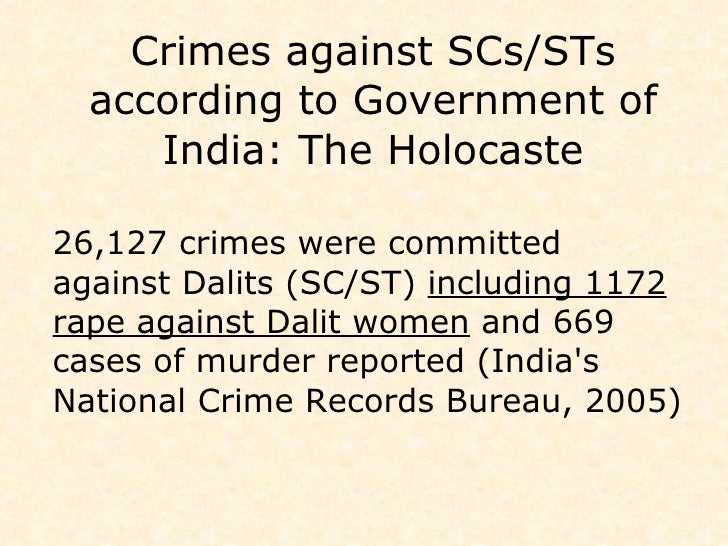
“Tamil Nadu figures among the top five States where a high number of cases of atrocities against Dalits have been reported in recent years, according to National Commission for Scheduled Castes (NCSC) Chairman P L Punia.
Statistics show that since 2011, as many as 213 people belonging to Scheduled Castes have been murdered in Tamil Nadu. This year, 16 Dalits have been killed in the State so far. Punia alleged that in many cases of atrocities, the police registered FIRs only after protests or directions from courts.
“In Tamil Nadu, the highest number of sexual assaults against Dalits was recorded in 2011 when 41 rape cases were registered. It came down to 22 in the next year and 23 in 2013. In 2014, the number of rape cases was 18 and in 2015 till now, 14 sexual assault cases against Dalit women had been recorded,” Punia said.
In the last five years, 6,074 cases were filed under Prevention of Atrocities against SC/ST Act. In 2011, it was as high as 1,170, while it was 1,372 in the year 2012 and 1,497 in 2013. In 2014, the number of cases registered under the Act was 1,464 and so far this year, 571 cases had been registered under the Act.
A State level vigilance committee and district level vigilance committees had been set up to review the atrocities against Dalits twice in every year. But the panels have not met after June 2013, Punia alleged.
“Nearly 60 to 70 per cent cases were closed without action and the conviction rate in Tamil Nadu is lower than the national average of 30 per cent,” he added.
On the Dalit engineering graduate Gokulraj’s murder case in Namakkal, Punia said the State DGP had told him that all the accused except one had been arrested and assured that he will be nabbed quickly. The Commission could not interfere in the investigation and it could do so only if it found the enquiry to be unsatisfactory
‘Even as Haryana reels from the gruesome murders of two dalit children who were burned alive on Tuesday, allegedly by upper caste men, new statistics show that crimes against dalits, or Scheduled Castes (SCs), rose 19 percent last year, on top of a 17 per cent increase in 2013.
In addition, as many as 744 dalits were murdered last year, up from 676 in 2013. In Haryana alone, 21 dalits were murdered in 2014.( http://timesofindia.indiatimes.com/india/Crimes-against-Dalits-rose-19-in-2014-murders-rose-to-744/articleshow/49488994.cms)
Then why Brahmins are being accused of practicing Untouchability?
Then the stock answer, is that Brahmins consider as Theettu, and wash themselves or the place where they( Sc/ST) sat.
This is a matter of.personal habit, though some smritis suggest this and they are not being followed by every one.
Even here he does not ask to to wash yourself.
Nor does he ask you to go away.
Whom one should have interaction with is one’s personal choice.
Smritis do not have the authority over the Vedas and the Vedas speak of Equality.
How many people can honestly say hat this is being practiced to day?
As I said it is a matter of personal choice.
If some one does not like you, do not go to him.
You can not force some one to love or respect you.
Even by Law.
This may sound harsh, but some one has to say it, as the misinformation is such to warrantswa retort.
And who resorts to Honor Killing?
Brahmins?
Brahmins created Vedas to control other communities.
Vedas were not created, let alone by Brahmins.
The greatest mantra of the Hindus is the Gayatri Mantra was given by Sage Viswamitra, a Kshatriya.
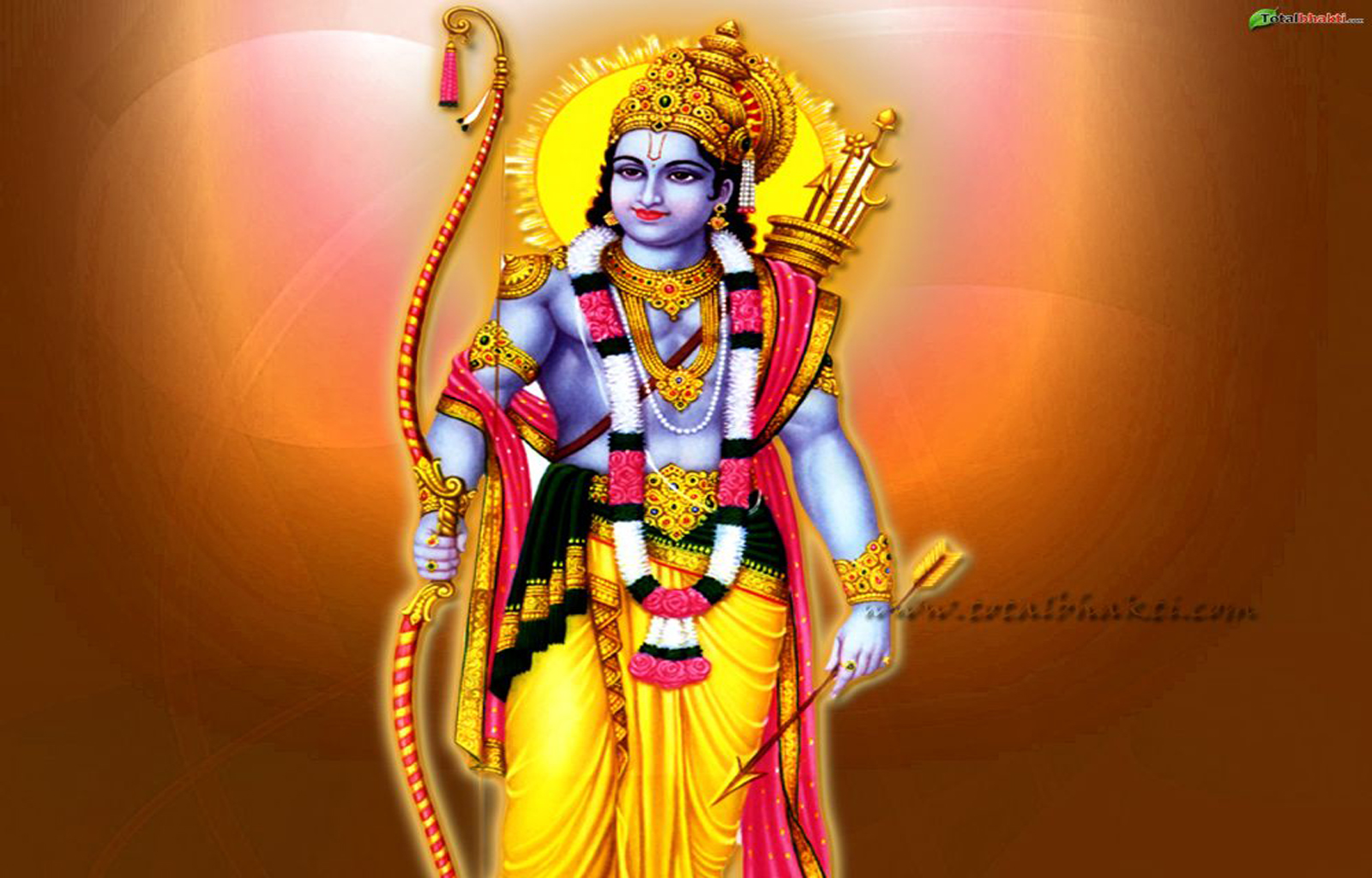
The Gods whom we worship and are popular(?) are Krishna and Rama.
Rama was Kshatriya and Krishna a Cowherd!
In what way have Brahmins controlled the others?
Brahmins have been advisors to Kings, even to day they are, but they were requested by the Kings to be so.
If Brahmins were the people who devised the Vedas with the intention of controlling others, would a King, in his normal senses would have a Brahmin as an Advisor?
Another is Manu smriti.
This was a code of ethics mainly meant for Kings and written by a Kshatriya.
Manu was a Kshatriya.
Having been advisors to Kings right from Rama’s Days, what did the Brahmin Gurus get in return?
A Kingdom?
A dakshina, however small it might be, was accepted by a Brahmin.
If Brahmins are dangerous why do people seek their advice from them even today be it Karunanidhi and the other Brahmin Baiting gang?
One needs a Brahmin Doctor, Brahmin Lawyer, Auditor but public you will denigrate Brahmins?
It takes audacity of the best/worst kind to deny a fact outright.
The intention to denigrate Hinduism and its culture started from Islamic period and it was carried on in a more subtle and systematic manner by the British firstly by publishing ‘First History of India’ by James Stuart Mill from England who without even visiting during the 12 years it took him to write the ‘History’ where he begins by asserting that the world did not begin before 4000 years ago and Indians were barbarians and steeped in superstitions.
Our Secular Indians of post Independent India did not even flinch.
Many of them carried and are carrying on in the path..
Wendy Doniger , author of Alternate History which ridicules Hindus and insults Krishna, faced flak from India, of course, excepting from the Sickularists.
Having been shown the Book where it deserved to be, in the Dustbin, it looks as though she has taken recourse to denigrate Indians in the web.
Check the site and you will know what I am talking about.
The vichaar site does not seem to work.!
The article titled Battle over Indian History quoted by a site extolling Pakistan is, to say the least, is disgusting and speaks of intellectual dishonesty and moral depravity.
When one attempts to write a History one is expected to be careful and that too when you write about a country about which you are unfamiliar with its culture and its History.
You should know the language and study and if you lazy or an illiterate you should get some one who can read and study.
There is no evidence of Rama Temple and it is a story.
There are authentic sites about the Temple of Rama in Ayodhya which give out proof about Ram Mandir , Ayodhya.
Please check them.
What is painful is the similar attitude shown by some Indians and of course The Hindu, Indian Newspaper which has published them,
Though I have been writing on dating the Ramayana, Mahabharata and other Indian texts, I have not written on Ayodhya Temple’s date.
The Sri Rama Navami, the Birth date of Lord Rama falls on 15 April 2016.
Rama Navami Puja Muhurta = 11:05 to 13:33
Duration = 2 Hours 27 Mins
Rama Navami Madhyahna Moment = 12:19
I will be writing in detail a series of Articles on Ayodhya Ram Mandir and this shall be my offering to Lord Rama for His Birth Day this year
‘
“It’s not a logical judgement with so many parts going 2-1. One does not accept the logicality of the judgement,” said Irfan Habib, a noted historian and a former Chairman of the Indian Council of Historical Research who earlier taught at the Aligarh Muslim University.
He noted that the verdict seemed to legitimise the events of 1949, when an idol was placed inside the mosque, by constant references. On the other hand, by minimising any mentions of the demolition of the Babri Masjid in 1992, the court seemed to be disregarding it, he said.
He also expressed surprise that two judges questioned the date of construction of the Babri Masjid, as well as the involvement of emperor Babar or his commander Mir Baqi, since there had been clear inscriptions to this effect before the demolition. “Things that are totally clear historically, the court has tried to muddy,” he said.
“The historical evidence has not been taken into account,” said D.N. Jha, history professor at the Delhi University. Noting the judgement’s mention of the “faith and belief of Hindus” in reference to the history of the disputed structure, Dr. Jha asked why the court had requested an excavation of the site.
“If it is a case of ‘belief,’ then it becomes an issue of theology, not archaeology. Should the judiciary be deciding cases on the basis of theology is a question that needs to be asked,” he said.
Professional archaeologists also noted that the judges did not seem to rely heavily on the Archaeological Survey of India’s court-directed excavation of the site in 2003, at least in the summaries of their verdict available on Thursday evening.
“Somewhere, there is doubt about the credibility of that report,” said Supriya Verma of the Jawaharlal Nehru University, who acted as an observer during the ASI excavation.
She noted that neither Justice Sudhir Agarwal nor Justice Dharam Veer Sharma even referenced the ASI report to support his conclusion on the existence of a temple on the site before the mosque was built.
“It is almost as though they themselves were not convinced by the evidence. They are clearly conceding that there was no archaeological evidence of a temple or of its demolition…It is a judgement of theology,” she said.
Another observer of the ASI excavation, Jaya Menon of the Aligarh Muslim University, noted that the ASI report itself did not provide any evidence of a demolition, and only asserted the existence of a temple in its conclusion. “So I don’t know on what basis they made their judgements,” she said. The ASI report had been criticised by many archaeologists for ignoring evidence such as animal bones, which would not have been found in a temple for Ram, and the existence of glazed pottery and graves which indicated Muslim residents.’
For years, some Hindus have argued that the 16th century mosque called the Babri Masjid (after the Mughal emperor Babur) was built over a temple commemorating the birthplace of Rama (an avatar of the god Vishnu) in Ayodhya (the city where, according to the ancient poem called the Ramayana, Rama was born), though there is no evidence whatsoever that there has been ever a temple on that spot or that Rama was born there.
On December 6, 1992, as the police stood by and watched, leaders of the right-wing Hindu party called the BJP whipped a crowd of 200,000 into frenzy. Shouting “Death to the Muslims!” the mob attacked Babur’s mosque with sledgehammers. In the riots that followed, over a thousand people lost their lives, and many more died in reactive riots that broke out elsewhere in India. On the site today, nothing but vandalized ruins remains, and, in a dark corner of the large, empty space, a small shrine with a couple of oleograph pictures of Rama, where a Hindu priest performs a perfunctory ritual. Whether or not there ever was a Hindu temple there before, there is a temple, however makeshift, there now.
People are being killed in India today because of misreadings of the history of the Hindus. In all religions, myths that pass for history–not just casual misinformation, the stock in trade of the internet, but politically-driven, aggressive distortions of the past–can be deadly, and in India they incite violence not only against Muslims but against women, Christians, and the lower castes.
Myth has been called “the smoke of history,” and there is a desperate need for a history of the Hindus that distinguishes between the fire, the documented evidence, and the smoke; for mythic narratives become fires when they drive historical events rather than respond to them. Ideas are facts too; the belief, whether true or false, that the British were greasing cartridges with animal fat, sparked a revolution in India in 1857. We are what we imagine, as much as what we do.
Hindus in America, too, care how their history is taught to their children in American schools, and the voices of Hindu action groups ring out on the internet. Some of these groups, justifiably incensed by the disproportionate emphasis on the horrors of the caste system in American textbooks, and by the grotesque misrepresentation of Hindu deities in American commercialism, ricochet to the other extreme and demand that all references to the caste system be expunged from all American textbooks.
And so I tried to tell a more balanced story, in “The Hindus: An Alternative History,” to set the narrative of religion within the narrative of history, as a statue of a Hindu god is set in its base, to show how Hindu images, stories, and philosophies were inspired or configured by the events of the times, and how they changed as the times changed. There is no one Hindu view of karma, or of women, or of Muslims; there are so many different opinions (one reason why it’s a rather big book) that anyone who begins a sentence with the phrase, “The Hindus believe. . . ,” is talking nonsense.
My narrative is alternative both to the histories promulgated by some contemporary Hindus on the political right in India and to those presented in most surveys in English–imperialist histories, all about the kings, ignoring ordinary people. But the texts tell us not just who was the ruler but who got enough to eat and who did not. And so my narrative is alternative in its inclusion of alternative people. How does one include the marginal as well as the mainstream Hindus in the story? The ancient texts, usually dismissed as the work of Brahmin males, in fact reveal a great deal about the lower castes, often very sympathetic to them and sometimes coded as narratives about dogs, standing for the people now generally called Dalits, formerly called Untouchables. The argument, for instance, that Dalits should be allowed to enter temples, an argument still violently disputed in parts of India today, can already be found, masked, in ancient stories about faithful dogs who should be allowed to enter heaven. So too, though Feminists often argue that Hindu women were entirely silenced, women’s voices–their ideas and attitudes and, above all, their stories–were often heard and recorded by the men who wrote down the texts.
Foreigners, too, made contributions to Hinduism from the very beginning. Once upon a time–about 50 million years ago –a triangular plate of land, moving fast (for a continent), broke off from Madagascar (a large island lying off the southeastern coast of Africa), and sailed across the Indian Ocean and smashed into the belly of Central Asia with such force that it squeezed the earth five miles up into the skies to form the Himalayan range and fused with Central Asia to become the Indian subcontinent. Or so the people who study plate tectonics nowadays tell us, and who am I to challenge them? Not just land but people came to India from Africa, much later; the winds that bring the monsoon rains to India each year also brought the first humans to peninsular India by sea from East Africa in around 50,000 BCE. And so from the very start India was a place made up of land and people from somewhere else. India itself is an import, or if you prefer, Africa outsourced India (and just about everyone else).
The magnificent civilization of the Indus Valley (in present-day Pakistan) traded with Sumer, Crete, and Mesopotamian, before it came to a mysterious end in about 2000 BCE. At just about the same time, in the nearby Punjab, a very different culture entered India from the Northwest and created the great corpus of texts called the Vedas, the oldest texts of Hinduism. Other invaders– Greeks, Turks, Arabs, and British–made valuable contributions to the complex fabric of Hinduism.
We can trace certain important ideas throughout the centuries of this unbroken tradition. For example: A profound psychological understanding of addiction to material objects is evident throughout the history of Hinduism. Addiction was the concern not merely of kings or scholars but of ordinary people, like the proto-hippy and the gambler who are depicted in the Vedas (see excerpt). One reaction to this perceived danger was to control addiction through asceticism or renunciation. And so began an ongoing battle between a great tradition that always celebrated sensuality (think: elephants encrusted with rubies, temples that make rococo look like Danish modern, the Kama-sutra) and another that feared the excesses of the flesh and practiced meditation (think: Gandhi).
Some of the British, especially in the early colonial period, admired and celebrated the sensuality of Hinduism. Others, particularly but not only the later Protestant missionaries, despised what they regarded as Hindu excesses. Unfortunately, many educated Hindus took their cues from the second sort of Brit and became ashamed of the sensuous aspects of their own religion, aping the Victorians (who were, after all, very Victorian), becoming more Protestant than thou. It is not fair to blame the British for the Puritanical strain in Hinduism; it began much earlier. But they certainly made it a lot worse. And cultural influences of this sort, as much as the grand ideas, are part of what makes the history of the Hindus so fascinating.
Maps in front pages: Maps titled Indias Geographical Features and India from 600 CE to 1600 CE
COMMENT: In the first map, the Waziristan Hills area is marked erroneously as Kirthar Range. The Kirthar Range is at least 200 miles further south. In the third map, Janakpur, Nagarkot, Mandu and Haldighati are marked several hundred miles from their correct geographical location.
Pg. 67 – It is claimed that the entire Harappan culture had a population of 40,000!
COMMENT: This is estimated as the population of Mohenjo-Daro alone. The population of the entire culture is estimated around 500,000.
Pg 130 – The author claims that there are no Gods in the Vedas who are Shudras.
COMMENT: It is anachronistic to assign castes to Rigvedic deities, but nevertheless, Pushan, Vesmapati and others have been considered Shudra deities in later times.
Pg 450- It is claimed that Emperor Ala-ud-Din Khalji did not sack temples in Devagiri.
COMMENT: His contemporary Amir Khusro clearly mentions that the Emperor sacked numerous temples and raised mosques instead.
Pg 552 – The book claims that the Ramcharitmanas was written at Varanasi.
COMMENT: Both modern scholarship as well as tradition accept that the work (or at least most of it) was written in Ayodhya.
Pg 128 – The book likens the Vedic devotee worshipping different Vedic deities to a lying and a philandering boyfriend cheating on his girlfriend(s).
COMMENT: This is offensive and ignores that fact that in the Rigveda, the gods are said to be all united, born of one another, and from the same source.(India Today)
5.Why is it that writing on Islam, even a hint of Prophet’s Image.would hurt Religious sentiments ?
Satanic Verses by Rushdie was banned for much less and a booty was announced to kill the author.
6.The Da Vinci Code was initially banned for portraying History as found in Christianity.
7.Are these secularists prepared to publish a Book on Muhammad marrying a Widow with a child,
Or marrying a nine-year old,
or The practice of Thighing in Islam where children are raped as a practice?
Or Mary of Magdalene was the wife , to put it politely,of Jesus?
8.I have a good collection of Posts on the History of Islam, Christianity, American wiping out the Indians,Debauchery of the British Monarchy.
Any body there to publish them in the interest of Truth and History?
People are aware that Lord Krishna was born in a prison where his parents Devaki and Vasudeva were imprisoned by Krishna’s ,maternal Uncle(brother of Devaki) Kamsa.
The whole Nation is talking about Rama Janma Bhoomi Ayodhya , the Birth Place of Lord Rama.
Krishna as a child
What people are not aware is about the Mosque adjacent to Kasi Viswanatha Temple, the original Shiv Linga is in the Well abutting the wall of a Mosque;the Shiv Linga thrown by the Muslim Invaders.
What we see to day Kasi Viswanatha Temple is not the original Shiv Linga.
How many of us are aware of the Mosque in Krishna Janma Bhoomi!
The Birth place of Krishna.
Krishnajanma Bhoomi, The prison Cell where Lord Krishna was born, Mathura,India
‘Mathura, the birth city of Krishna is situated on the banks of river Yamuna and is approximately 145 km from the capital city Delhi. The town is renowned for being host to the most revered temple of Shri Krishna-the famous Krishna Janma Bhoomi Mandir. The temple is the place where lord is said to have been born thousands of years ago. Along with neighboring towns Govardhan, Nandgaon and Vrindavan, the area is a major pilgrimage site for Hindus.The temple is located in the middle of the city mathura.(wiki Sri Krishna Janmabhoomi)
‘Garbh Griha ( Sanctum sanctorum or Prison Cell ) : The divine ambience of the sanctum sactorum thrills the hearts of the devotees as soon as they enter the auspicious place, and a sense of conviction surges in their minds that this indeed is the place where Lord Krishna manifested Himself. It is true that Mathura is the holiest, and it is the only place in the universe where Brahma and Shakti have been manifested at the same place. It is in Mathura that Leelapurushottam Shri Krishna and Ashthabhuja Ma Yogmaya manifested. A spacious verandah and an artistic marble pavilion, Shikhar Mandap, were constructed exactly on the upper part of theMedhi. A miracle observed here is that innumerable forms of Shri Radha-Krishna have appeared on the Makrana marble slabs of the wall of the Shikhar Mandap. The devotees are overwhelmed by the palpable feeling of His divine grace at this place.’
The area surrounding the prison cell, hat is the Krishna Janma Bhoomi had a magnificent Temple which was called Katara Keshav Dev Temple.
Krishna Janma Bhoomi Temple.
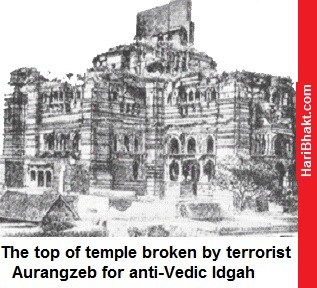
This was demolished by, who else,the Muslims and a Mosque, Shah Mosque, and Idgah, burial ground was built.
The facts.
Archaeological and historical evidences show that birth place of Krishna is given different names by the bhakts of Shri Krishna and devotees. In due course of time, surrounding area of birth place of Krishna is also known as “Katara Keshavdev”. Mr. F.S. Grauja, Archaeologist and the then collector of Mathura opined that Katara Keshavdev and surrounding area is known as Mathura alone. From historical literature, the historian Kaniham, informed that there was a Jungle king named Madhu. The place is named after him as “Madhupur” which is known as “Maholi” today. After the defeat of King Madhu, surrounding area of prison presently called as “Bhuteshwar” was called as Mathura and the same was Katara Keshavdev. The historian Kaniham called this as Keshavpur….
From the analysis of Archaeological research and thousands of archaeological fragments of Katara Keshavdev and the different writings of foreign tourists, it is evident that huge temples were built from time to time at this place. The evidence show that Brajanabh the great grand son of Krishna, has built first temple at the prison of Kans where the Bhagwan Krishna was divinely born….
From the stones script written in Brahmi script “Mahakshatrap Shodash” (B.D. 80-57) it is evident that a person named Vasu has built a Festonn and yagna kund (यज्ञकुन्ड) at the birth place of Krishna. During the regime of Chandragupta, Vikramaditya, the temple was rebuilt.
During this period this temple was not only the place of Vaidik ritual but also the place of faith for Buddhists, Jains. In A.D.1017 this gracious temple was looted by Mohammed of Ghaznavi. In the book, Tarike Yamini written by Mir Munshi Al-Utabi, it is stated that in the very middle of the city there was an elegant temple, it was so beautiful, it appeared to have been built by the angels. It is very difficult to describe the elegance of the surrounding temples too in words and in pictures. Sultan Mohammed has also stated that if anybody tries to built such a gracious temple, the expenses would be 10 crores of Dinar and it will take not less than 200 years. However, Being a follower of koran, Mohammed destroyed this temple in the heat of anger. The history shows that the very sincere devotion towards Krishna and lively Hinduism inspired a person named Jajja to built another Krishna Janma Bhoomi and during the regime of Maharana Vijaypal Dev of Mathura in 1150, the temple was rebuilt.
The evidence from stones script written in Sanskrit at Katara Keshavdev shows that the temple has become the target of destruction in the evil eyes of Muslim rulers. During the regime of Sikander Lodi, Krishna Janma Bhoomi was once again was destroyed. After about 125 years during the rule of Jahangir King, Vir Sinha Judev Bundela constructed a very huge temple of 250 feet tall at the cost of Rs.33 lakhs. In order to protect the temple from evil eye of Muslim rulers, a tall and strong wall was built around the temple….
The tourist Taivaniyar from France, Manuchi from Italy described the temple as beautiful master piece. The apex of temple was covered with Gold and it was so tall that one can see from distance of 36 miles away from the Agra. All these praise worthy writings regarding the temple made Aurangzeb angry and he destroyed the temple in 1669. He was so irritated about the elegance of Hindu temples that bricks and other material recovered from the destruction of temple was used by him to make a big chair. The height of destructive islamic mind of Aurangzeb is nothing but the construction of anti-Vedic evil structure of Idgah at the very birth place of Krishna. Brahmins and Sages had forewarned Aurangzeb of dire consequences for his evil act of destructing Hindu temples and now Shri Krishna Janm Bhoomi temple….
The East India Company later auctioned the place to generate revenue on the emotions of the Hindus. Marathas declared the whole area of Katara Keshavdev including Idgah as unowned property and nobody has taken care of this property. This was grave mistake on the part of erstwhile Marathas, they should have owned the property and constructed a huge Shri Krishna temple over it. Due to fragmentation of strength among Hindu rulers, in 1802 Lord Lake acquired victory over Marathas and Mathura and Agra became territory of East India Company. [The loss of places by Maratha rulers is a lesson for modern Hindus, to remain united and fight aggressively against invaders and mlecchas(anti-Hindus)]. East India Company was managed by cruel, wicked and cunning Britishers, they needed money to take other parts of India in the grip. So they devised several ways to generate income from Hindus which included charging extra money from Hindu pilgrims in their holy places – this evil concept was followed by the precedence set by terrorist mughal rulers. In 1815 East India Company declared auction of Katara Keshavdev area admeasuring 13.37 sq.acres. This area was sold to King Patnimal of Kashi. However, though King wanted to built a gracious temple in the memory of Bhagwan Krishna, to fulfill the demands of millions of Hindus, the Muslims took wrong objection that the auction was only for Katara Keshavdev and not for anti-Vedic structure, Idgah. The dispute was initiated by muslims which instigated further rift among peaceful Hindus and trouble maker muslims. The unfair and illegal demand of muslims took the course of disputes to legal battle.
In the year 1878, for the first time, Muslims registered the case. They stated that Katara Keshavdev is property of Idgah and Idgah was built by Aurangzeb. In this case evidence was demanded from Mathura jurisdiction. The then collector secretary Mr. Tailor stated that this area was unowned in the regime of Maratha. However, the East India Company has also considered the area as unclaimed. Subsequently, in the year 1815 King Patnimal purchased the area in the auction. He further added that according to the verdict, King Patnimal was the owner of the area including other constructions and Idgah, since he paid for the entire area admeasuring 13.37 sq.acres. So any construction happening within the premise is fully owned by King Patnimal. Muslims became peechless, because they cribbed without any substantial evidence of legal ownership. And since the original temple of Shri Krishna Janam Bhoomi belonged to Hindus and later to Hindu King Patnimal, their false claim was overturned….
Second time the case was registered as Ahmed Shah V/s. Gopi under section 447/352 I.P.C. Mathura in the court of second class Magistrate, Anthony. In this case, Ahmed Shah alleged that the watchman of Idgah, Gopi, was constructing a road in the western side of Katara Keshavdev. However, that road is the property of Idgah and hence, Ahmed Shah stopped Gopi from improving the road. In this case, the learned judge gave decision that the road was the property of family Patnimal and allegation made by Ahmed Shah was completely untrue. The cunning ploy to establish somehow ownership of Idgah again fell flat.
The Third case was made by the district judge of Agra in the civil court. Appeal No.236 of 1921 and 276 of 1920. This appeal was made in opposition to the decision given by Judge Hoper of Mathura. In the verdict of this case, it is stated that East India Company had auctioned entire area and sold to King Patnimal at Rs.1140/- and tax was collected by the King. In the court verdict, decision is given as the disputable area is not of Idgah as Idgah is property of King Patnimal. So King and his heirs had every right to collect tax on their own land.
Declaration of the Hindu Rights on Entire Area of Shri Krishna Janm Bhoomi
Muslims by any which means wanted illegal ownership of anti-Vedic strucure, Idgah. In the year 1928, Muslims installed a mill for maintenance and renovation of Idgah. Again the case was registered in the Court of Law and learned Pandit Bishan Narayan Tankha gave the verdict that Katara Keshavdev is the property of descendants of Raja Patnimal and hence neither renovation of Idgah nor installation of mill is allowed. On 7.2.1944 Pandit Madan Mohan Malviya expressed his desire to build Shri Krishna Temple at that place. From the inspiration of M.M.Malviya, Jugal Kishore Birla purchased the entire area at Rs.13,400/- and a trust was formed by Madan Mohan Malviya, Hanuman Prasad Potdar & Bhikamal Atriya.
That is Time does not flow in one direction as in a straight line.
It is curved and cyclical.
Time recoils on itself.
Please check my article on Time Cyclic, Non Linear.
The present Age we live in is called Kaliyuga.
The earlierr Age was called Dwapara Yuga.
During the closing Years of Dwapara Yuga the Mahabharata Battle was fought.
Lord Krishna died towards the close of this period and the present Kali Yuga stated shortly thereafter.
‘
The Dvapara Yuga is the third out of four yugas, or ages, described in the scriptures of Hinduism. This yuga comes between Treta Yuga and Kali Yuga.
According to thePuranas, this yuga ended at the moment when Krishnareturned to his eternal abode of Vaikuntha. According to theBhagavata Purana, the Dvapara Yuga lasts 864,000 years.
Kali Yuga,
‘
According to the astronomer and mathematician Aryabhattathe Kali Yuga started in 3102 BC. He finished his book “Aryabhattiya” in 499 AD in which he gives the exact year of the beginning of Kali Yuga. He writes that he wrote the book in the “year 3600 of the Kali Age” at the age of 23. As it was the 3600th year of the Kali Age when he was 23 years old, and given that Aryabhatta was born in 476 AD, the beginning of the Kali Yuga would come to (3600 – (476 + 23) + 1 (As only one year elapses between 1 B.C and 1 C.E) = ) 3102 BC.’
This means The Demise of Krishna was around 3100 BC, that is 5000 years ago.
However published works date even The RIG veda which ,according to Hindu Texts was composed much before,that is before Satya Yuga.
Satya Yuga ,
‘
The duration of the Satya millennium equals 4,800 years of the demigods; the duration of the Dvāpara millennium equals 2,400 years; and that of the Kali millennium is 1,200 years of the demigods […] As aforementioned, one year of the demigods is equal to 360 years of the human beings. The duration of the Satya-yuga is therefore 4,800 x 360, or 1,728,000 years. The duration of the Tretā-yuga is 3,600 x 360, or 1,296,000 years. The duration of the Dvāpara-yuga is 2,400 x 360, or 864,000 years. And the last, the Kali-yuga, is 1,200 x 360, or 432,000 years in total.’
Mind boggling numbers!
Archeology seems to be catching up with huge numbers.
The sunken monumens are found in Lebanon, Syria, India and other places.
‘
Submarine megalithic structures off the coasts of Malta, Egypt, Lebanon, India, China, and Japan in waters up to 70 meters deep, were evidently submerged when the Ice Age ended and sea-level rose about 100 meters because of runoff from the melting of the Ice Age ice-packs.’
The Megalithic structure found in India was the sunken city of Dwaraka.
Now these Megalithic structures are dated to be around 10000 years ago when Ice Age Melting took place.
This resulted in the rising of sea levels which,in the form of Tsunami submerged the landmass.
This is referred to in Sanskrit texts and Tamil Classics belonging to Sangam Era.
This dating implies that people living around 3000 BC were using 12000 year old Building technics!
The ancient Tamil city Madurai also speaks of the Tsunami referred here.
Madurai Meenakshi Amman Temple.
Therefore it is logical to state that Dwaraka of Krishna and Madurai were at least 12000 years old.
In my opinion even this date is too late.
These cities can be dated back much earlier.
I await further findings.
Thiruvannamalai, India Dated around 3.94 Billion years,
Thirupathi , 2100 million Years,
Jwalapuram, Telengana , 74000 years,
Poompuhar, Tamil Nadu, 25000 years,
Archelogical site in Chennai belonging to advanced Tamil Civilization,one million years,
Evidence is piling up that The Classics of India and Puranas are not figments of imagination.
*I am aware I have ascribed different dates, mostly pre dating the dates mentioned here for these cities.
Reason is I publish as I come across credible evidence.
Once when I publish a Book I shall corela them and provide the best date/s.
One thing is sure,
Indian History and Puranas are definitely much much older than what possible dates are being assigned to them now by the ‘Scholars’
‘
Many of these megaliths wereastronomical measuring devices, which indicates that their Ice Age constructors had map-making capabilities and sailed the seas, as demonstrated by a commonality of the architectural motifs of the megaliths worldwide, and as demonstrated by Turkish navigational maps which were sourced from ancient Phoenician maps and show coastlines of the Ice Age world with accuracies of latitude and longitude to not be matched until modern times.
Mainstream earth-chronologists insist that the Ice Age ended around 10000 B.C., at which point the sea-level rose to submerge these megaliths. However, thesubmerged megaliths are of designs and uses characteristic of around 2000 B.C. Are we therefore to believe that advanced civilizations actually began before 10000 B.C., and not around 3000 B.C. (as is commonly published)?
Mainstream archaeologists have said that the advanced civilizations of the Old and New Worlds appeared suddenly around 3000 B.C. without evidence of cultural and technological evolution to that pyramid-building level of mathematical and engineering sophistication. Therefore, how can it be that the megaliths were submerged 12,000 years ago?
Are we to believe that Krishna died around 10,000 B.C, and therefore that Hinduism is over 12,000 years old?
The megaliths of ancient Dwarka are in fact found submerged just offshore frommodern Dwarka, and the huge stone walls built of megalithic blocks which had been interlocked with chiseled L-shaped dovetails are characteristic of the Indus Civilization that popularly is advertised to have had flourished near 2,000 B.C., not 10,000 B.C
The Gulfs of Cambay and Kutch, just south of Dwarka, also hold submerged megalithic Indus Civilization structures that were covered by the ocean at the melting of the Ice Age. Computer-generated maps of the world as it was during the Ice Age reveal that ancient Dwarka was about 100 km inland during the Ice Age.
Also inland were the now submerged Indus Civilization megaliths on the floor of the Gulfs of Kutch and Cambay, as were the megaliths of Tamil pyramidal construction off the coast of southern India at Cape Cormorin and Madurai.’





You must be logged in to post a comment.