India has contributed to the world,
Spirituality,
Philosophy,
Logic,
Astronomy,
Astronomy,
Physics,
Mathematics,
Chemistry,
Cosmology,
Advanced Physics and Astronomy,
Botany,
Zoology,
Taxidermy,
Atomic theory,
Music,
Dance,
Yoga,
Medical equipment,
Medicine,
Surgery,
Cosmetology,
Dentistry,
I can go on adding.
I have written on each of these and more.
Please search term+ ramanan50.
The field of medicine was given priority.
And it is ordained that no fees is to be collected for treating patients and for medicine.
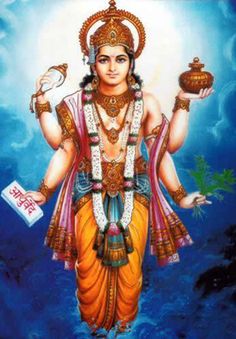
Danvantri is the God of Medicine along with Aswini Devatas.
Featued image is of Lord Danvantri .
Hindus believe both in Mantra ,Mundane cure and Sastra,Surgery.
Early Hindus had home remedies.
Even today,in every Hindu Kitchen one box with Five compartments may be found.
It is called Anjaraipetti in Tamil, meaning ‘ box with Five compartments’
This has,
Pepper,
Mustard,
Turmeric,
Fenugreek, and
Cumin seeds.
By a combination of these most of the common illnesses were cured.
Every king had a Royal physician.
Every village had a medical facility.
In this article let us see how Tamil King Rajaraja Chola organised hospitals.
History records that,
‘
The earliest documented institutions aiming to provide cures were ancient Egyptiantemples. In ancient Greece, temples dedicated to the healer-god Asclepius, known as Asclepieia (Ancient Greek: Ἀσκληπιεῖα, sing. Asclepieion, Ἀσκληπιεῖον), functioned as centres of medical advice, prognosis, and healing.At these shrines, patients would enter a dream-like state of induced sleep known as enkoimesis (ἐγκοίμησις) not unlike anesthesia, in which they either received guidance from the deity in a dream or were cured by surgery. Asclepeia provided carefully controlled spaces conducive to healing and fulfilled several of the requirements of institutions created for healing. In the Asclepieion of Epidaurus, three large marble boards dated to 350 BC preserve the names, case histories, complaints, and cures of about 70 patients who came to the temple with a problem and shed it there. Some of the surgical cures listed, such as the opening of an abdominal abscess or the removal of traumatic foreign material, are realistic enough to have taken place, but with the patient in a state of enkoimesis induced with the help of soporific substances such as opium.The worship of Asclepius was adopted by the Romans. Under his Roman name Æsculapius, he was provided with a temple (291 BC) on an island in the Tiber in Rome, where similar rites were performed.
Institutions created specifically to care for the ill also appeared early in India. Fa Xian, a Chinese Buddhist monk who travelled across India ca. 400 AD, recorded in his travelogue thatThe heads of the Vaishya [merchant] families in them [all the kingdoms of north India] establish in the cities houses for dispensing charity and medicine. All the poor and destitute in the country, orphans, widowers, and childless men, maimed people and cripples, and all who are diseased, go to those houses, and are provided with every kind of help, and doctors examine their diseases. They get the food and medicines which their cases require, and are made to feel at ease; and when they are better, they go away of themselves.
The earliest surviving encyclopaedia of medicine in Sanskrit is the Carakasamhita (Compendium of Caraka). This text, which describes the building of a hospital is dated by the medical historian Dominik Wujastykto the period between 100 BCE and 150 CE.The description by Fa Xian is one of the earliest accounts of a civic hospital system anywhere in the world and this evidence, coupled with Caraka’s description of how a clinic should be built and equipped, suggests that India may have been the first part of the world to have evolved an organized cosmopolitan system of institutionally-based medical provision.King Ashoka is wrongly said by many secondary sources to have founded at hospitals in ca. 230 BCEAccording to the Mahavamsa, the ancient chronicle of Sinhalese royalty, written in the sixth century CE, King Pandukabhaya of Sri Lanka (reigned 437 BCE to 367 BCE) had lying-in-homes and hospitals (Sivikasotthi-Sala) built in various parts of the country. This is the earliest documentary evidence we have of institutions specifically dedicated to the care of the sick anywhere in the world.Mihintale Hospital is the oldest in the world.
The worship of Asclepius was adopted by the Romans. Under his Roman name Æsculapius, he was provided with a temple (291 BC) on an island in the Tiber in Rome, where similar rites were performed.
Institutions created specifically to care for the ill also appeared early in India. Fa Xian, a Chinese Buddhist monk who travelled across India ca. 400 AD, recorded in his travelogue thatThe heads of the Vaishya [merchant] families in them [all the kingdoms of north India] establish in the cities houses for dispensing charity and medicine. All the poor and destitute in the country, orphans, widowers, and childless men, maimed people and cripples, and all who are diseased, go to those houses, and are provided with every kind of help, and doctors examine their diseases. They get the food and medicines which their cases require, and are made to feel at ease; and when they are better, they go away of themselves.
The earliest surviving encyclopaedia of medicine in Sanskrit is the Carakasamhita (Compendium of Caraka). This text, which describes the building of a hospital is dated by the medical historian Dominik Wujastykto the period between 100 BCE and 150 CE.The description by Fa Xian is one of the earliest accounts of a civic hospital system anywhere in the world and this evidence, coupled with Caraka’s description of how a clinic should be built and equipped, suggests that India may have been the first part of the world to have evolved an organized cosmopolitan system of institutionally-based medical provision.King Ashoka is wrongly said by many secondary sources to have founded at hospitals in ca. 230 BCEAccording to the Mahavamsa, the ancient chronicle of Sinhalese royalty, written in the sixth century CE, King Pandukabhaya of Sri Lanka (reigned 437 BCE to 367 BCE) had lying-in-homes and hospitals (Sivikasotthi-Sala) built in various parts of the country. This is the earliest documentary evidence we have of institutions specifically dedicated to the care of the sick anywhere in the world.Mihintale Hospital is the oldest in the world.
The treatment of mentally ill persons in asylums was started by the Arabs in the ancient city of Baghdad in 705 AD and then at Cairo in 800 AD. Later the famous European asylums such as Bedlam, Salpetriere and the Madrid asylum were established. The Bethlem asylum which was commonly known as Bedlam was started in London in 1247 AD. Its location was changed many times in its long and chequered career. The Paris hospital for the treatment of mentally ill women, Salpetriere was founded by Louis XIV (1643-1715). It was originally the royal gunpowder factory, which, because of frequent accidental explosions was converted into an asylum. Pinel had liberated mentally ill patients from chains for the first time in the hospitals of Bicetre and Salpetriere.
…
There is no mention of specific care for the mentally ill in the Tamil land prior to the Thirumukkudal epigraph (see below). Many of the afflicted, both mental and physical, took “asylum” in the areas adjoining the temples devoted to saivite and vaishnavite Vedic religions and the Jain and Buddhist monasteries (quite prevalent in those days). Some such temples in Tamil Nadu which are frequented to, by people with mental illnesses, even to this day are situated in Gunasilam, Tiruvidaimaruthur, and Sholingur.
The most important and relevant epigraph pertaining to the treatment of the afflicted in a hospital set up (Aadhular Salai) is found in Thirumukkudal temple of Lord Venkateswara (situated on the road between Chengalpattu and Kanchipuram). This temple is situated at the confluence of three sacred rivers Vegavati, Cheyyar and Palar (hence the name Thirumukkudal).
..
This temple was built by Veera Rajendra Deva (1063-1069 AD). He is the son of the famous Chola emperor Rajendra (1014-1044 AD) who led a successful expedition to the Ganges valley and established a maritime empire comprising of Kadaram (modern Kedah of Malaysia and adjoining areas) and Srivijaya (modern Sumatra). Rajendra also established diplomatic relations with Cambodia and China. His son, Veera Rajendra successfully subdued the Western Chalukyas, the combined forces of the Cheras and Pandyas, and also established his supremacy over the Eelam territory (modern Sri Lanka). He was also very religious like his father and grandfather, and built a number of temples including the one at Thirumukkudal.
The inscription, found in this temple, is probably the first of its kind to give the composition of a small hospital of 15 beds and its staff. The hospital functioned in the Jananatha Mandapam in this temple. The hospital was named Veera Cholesvara Hospital and was provided with 15 beds. The hospital staff comprised of:
Provision was made for burning a lamp for the whole night. Drugs were prepared in the hospital in the form of medicated ghee (ghritham), medicated oil (thailam) and medicated water (made by mixing cardamom and lemon). The oil was applied to the body or only to the head and was thought to reduce the heat (anal) in one’s body. The external application of medicines was known as tuvalai. The other routes of administration of medicines were fumigation (vatu pitita), oral route (ullukku kottudal), nasal application (nasiyam), and ocular application (kallikam).The various drugs used were:
..It could be surmised that this early Chola Hospital antedating Bethlem Hospital was treating the mentally ill along with the others.

Source.
*
https://www.ncbi.nlm.nih.gov/pmc/articles/PMC4040075/https:///


You must be logged in to post a comment.