Day: February 2, 2015

  • Sex Education Hindu Pyramid Temple Sukuh Java

    That Hinduism spread far is one fact, another fact is that Hinduism considers Sex as neither a Sin nor something to be abhorred.

    It advises Moderation, more specifically controlled enjoyment of pleasures.

    An ancient Temple , intended for ancestor worship primarily has Sex education as it theme in the Reliefs in the Temple,.

    This Temple is in Sukuh,Java,Indonesia.

    As is normal it was vandalised by Islam in the fourteenth century.
    http://commons.wikimedia.org/wiki/File%3AKeris_Relief_at_Sukuh_Temple.jpg
    English: The scene in bas relief of Sukuh Temple in Central Java dated from 15th century Majapahit era shows the workshop of a Javanese keris blacksmith. The scene depicted Bhima as the blacksmith in the left forging the metal, Ganesha in the center, and Arjuna in the right operating the tube blower to pump air into the furnace. The wall behind the blacksmith displays various items manufactured in the forge, including keris. These representations of the keris in Candi Sukuh established the fact that by the year 1437 the keris had already gained an important place within Javanese culture.http://upload.wikimedia.org/wikipedia/commons/8/8f/Keris_Relief_at_Sukuh_Temple.jpg.By Gunawan Kartapranata (Own work) [CC BY-SA 3.0 (http://creativecommons.org/licenses/by-sa/3.0) or GFDL (http://www.gnu.org/copyleft/fdl.html)], via Wikimedia Commons

    Sukuh (Indonesian: Candi Sukuh Indonesian pronunciation: [ˈtʃandi ˈsukʊh]) is a 15th-century Javanese-Hindu temple (candi) that is located on the western slope of Mount Lawu (elevation 910 metres (2,990 ft)) on the border between Central and East Java provinces.

    Sukuh temple has a distinctive thematic reliefs from other candi where life before birth and sexual education are its main theme. Its main monument is a simple pyramid structure with reliefs and statues in front of it, including three tortoises with flattened shells and a male figure grasping his penis. A giant 1.82 m (6 ft) high of lingga (phallus) with four balls, representingpenile incisions, was one of the statues that has been relocated to the National Museum of Indonesia.

    Candi Sukuh in eastern Central Java.jpg
    Sukuh Temple.Candi Sukuh in eastern Central Java.By Merbabu (Own work) [CC BY-SA 3.0 (http://creativecommons.org/licenses/by-sa/3.0) or GFDL (http://www.gnu.org/copyleft/fdl.html)], via Wikimedia Commons

    Sukuh is one of several temples built on the northwest slopes of Mount Lawu in the 15th century. By this time, Javanese religion and art had diverged from Indian precepts that had been so influential on temples styles during the 8th–10th centuries. This was the last significant area of temple building in Java before the island’s courts were converted to Islam in the 16th century. It is difficult for historians to interpret the significance of these antiquities due to the temple’s distinctiveness and the lack of records of Javanese ceremonies and beliefs of the era.


    The founder of Candi Sukuh thought that the slope of Mount Lawu was a sacred place for worshiping the ancestors and nature spirits and for observance of the fertility cults.[3]The monument was built around 1437, as written as a chronogram date on the western gate, meaning that the area was under the rule of the Majapahit Kingdom during its end (1293–1500). Some archaeologists believe the founder had cast the fall of Majapahit, based on the reliefs that displaying the feud between two aristocratic houses, symbolizing two internal conflicts in the kingdom.

    In 1815, Sir Thomas Raffles, the ruler of Java during 1811–1816, visited the temple and found it in bad condition.In his account, many statues had been thrown down on the ground and most of the figures had been decapitated. Raffles also found the giant lingga statue broken into two pieces, which was then glued together. This vandalism of traditional culture (especially where sexuality is not suppressed, as in the statues) is likely to be an effect of the Islamic invasion of Java during the 16th century, based upon the identical patterns found in all other Islamic and monotheistic invasions generally.

    The central pyramid of the complex sits at the rear of the highest of three terraces. Originally, worshippers would have accessed the complex through a gateway at the western or lowest terrace. To the left of the gate is a carving of a monster eating a man, birds in a tree, and a dog, which is thought to be a chronogram representing 1437 CE, the likely date of the temple’s consecration. There is an obvious depiction of sexual intercourse in a relief on the floor at the entrance where it shows a paired lingam which is represented physiologically by the (phallus) and yoni, which is represented bodily by the (vagina). Genitalia are portrayed on several statues from the site, which is unique among Javanese classical monuments.

    The wall of the main monument has a relief portraying two men forging a weapon in a smithy with a dancing figure of Ganesha, the most important Tantric deity, having a human body and the head of an elephant. In Hindu-Java mythology, the smith is thought to possess not only the skill to alter metals, but also the key to spiritual transcendence.Smiths drew their powers to forge a kris from the god of fire; and a smithy is considered as a shrine. Hindu-Javanese kingship was sometimes legitimated and empowered by the possession of a kris

    The elephant head figure with a crown in the smithy relief depicts Ganesha, the god who removes obstacles in Hinduism. The Ganesha figure, however, differs in some small respects with other usual depictions. Instead of sitting, the Ganesha figure in Candi Sukuh’s relief is shown dancing and it has distinctive features including the exposed genitalia, the demonic physiognomy, the strangely awkward dancing posture, the rosary bones on its neck and holding a small animal, probably a dog. The Ganesha relief in Candi Sukuh has a similarity with the Tantric ritual found in the history of Buddhism in Tibet written by Taranatha.[5] The Tantric ritual is associated with several figures, one of whom is described as the “King of Dogs” (Sanskrit: Kukuraja), who taught his disciples by day, and by night performed Ganacakra in a burial ground or charnel ground.

    Other statues in Candi Sukuh include a life-sized male figure with his hand grasping his own penis and three flattened shells of tortoises. Two large tortoise statues guard the pyramid entrance and the third one lies at some distance in front of the monument. All of their heads point to the west and their flattened shells may provide altars for purification rituals and ancestor worship.In Hindu mythology, the tortoise symbolizes the base or support of the World and is an avatar of Vishnu, i.e. Kurma refer: Ocean of Milk.

    Citation.

    http://en.wikipedia.org/wiki/Sukuh

  • Shiva Quadrangle Temple Colorado Patala Loka Hinduism

    Shiva Quadrangle Temple Colorado Patala Loka Hinduism

     I have posted an article that the Americas are the Patala Loka , as described in Hinduism.
    Hinduism describes Fourteen worlds.

    Bhuu,


    Bhuvas,


    Svar,


    Mahas,


    Jana,


    Tapa and


    Satya .


    And The Seven Paatalas (lower worlds) are:


    Atala,


    Vitala,


    Sutala,


    Rasaataala,


    Talatala,


    Mahaatala and


    Paatala.

    ( for more on this please read my post, Link provided towards the close of this Post)

    The curious fact is that they denote the spiritual Planes,other levels of Existence and Planes of Existence as explained by Quantum Physics.
    And they also have corresponding present Geographical Locations.
    The Seven Lokas are,
    India ans Patala Loka, Demo in Picture.jpg
    India ans Patala Loka, Demo in Picture.
    Now there is something more.
    The Puranic texts also give the notion of the Pathala Loka as being beyond the seas.The words like location and locomotion are etymologically similar to the word, “Loka”.

    There are other technical texts that mention the location of Asura and their adversaries, the Sura.


    “Surasuranam anyonyam diva – ratra viparyayaha”
    For Sura and Asura, days and nights are interchangeable-Surya Siddhantha

    According to this sloka, Sura and Asura would have lived on opposite sides of the earth as only then can their days and nights be interchangeable.

    The region of the earth diametrically opposite to the Indian subcontinent is the central parts of South America which was the Pathala Loka of the Asura.

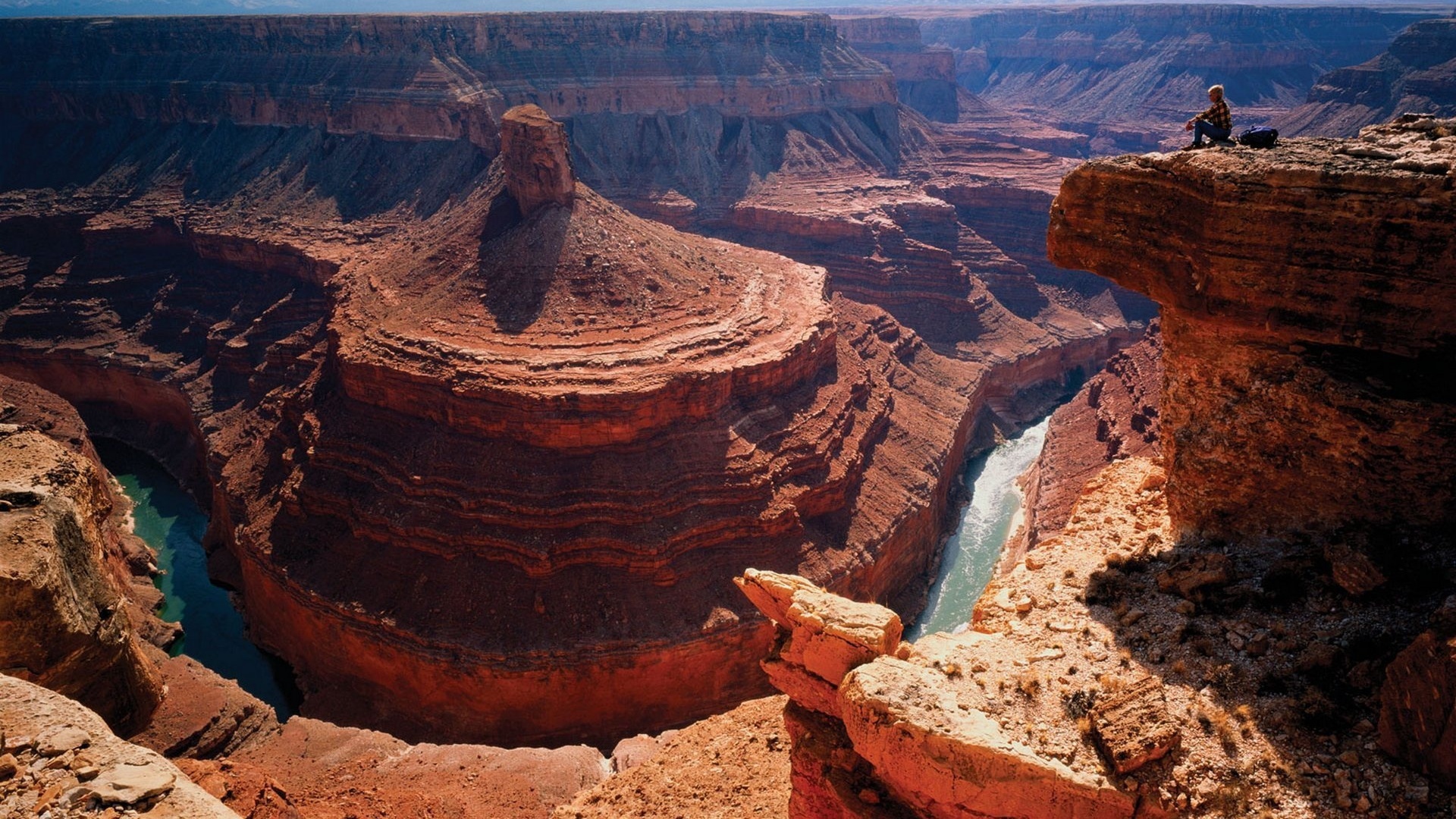
    Shiva Temple ,Grand Canyon.jpg
    Shiva Temple In Colorado

    If we want a modern analogy, we have the British calling Australia as Down Under.

    Shiva Temple Grand Canyon Quadrangle
    Shiva Temple USGS quadrangle [ segment E – F ],Image from http://www.kaibab.org/kaibab.org/usgs/gc_st_ef.htm.Not for commercial Use
    That does not mean that Australia is in the underground areas of England. What the English really mean by the phrase “Down Under”, is that, for England, high in the northern hemisphere, Australia is on the other side of the earth, down in the south.Similarly, there is another popular term in the US, called the China Syndrome.People often joke that, in case there were to be a nuclear mishap in America, then the nuclear explosion would burrow a hole beneath America, continue to burrow through the earth and come out on the other side of the earth, in China.

    These phrases, Australia Down Under and China Syndrome are examples of usage by people on one side of the globe to bring out the concept that, there is another side, opposite to them on the earth, which is also inhabited by people.

    It is in this similar vein of expression that the ancient Indians had used the term Pathala Loka, as the area on the other side of the spherical earth. It is not to be erroneously understood as an underground cavern or kingdom.


    Shiva Temple In Colorado,Grand Canyon.

    “Another section of the in the so-called ‘haunted canyon’ there are names such as Cheops pyramid, The Buddha cloister, Buddha Temple, Manu Temple and shiva Temple. What is so very strange is that the entire areas with these place names are completely off limits…..a total forbidden zone…..even to park personnel. G.E. Kinkaid’s report follows. He was a hunter and explorer his whole life apparently working for 30 years for the Smithsonian. Below are journal excerpts from his alleged discovery and subsequent adventures in the ‘Cave City’…

    This cliff face is purported to be the location of the cave entrance to the mysterious underground citadel.

    The entrance is 1,486 feet down the sheer canyon wall. Above a shelf which hid it from view from the river, was the mouth of the cave. There are steps leading from this entrance some thirty yards to what was at the time the level of the river.

    Underground Caves in Grand Canyon.jpg
    Underground Caves in Grand Canyon.


    I gathered a number of relics, which I carried down the Colorado to Yuma, whence I shipped them to Washington with details of the discovery. Following this, other explorations were undertaken. So interested have the scientists become, that preparations are being made to equip our camp for extensive studies, the number of archaeologists increasing to from 30 to 40.

    From the long main passage, another mammoth chamber has been discovered from which radiates scores of passageways, like the spokes of a wheel…


    Several hundred rooms have been discovered, reached by passageways running from the main passage, one of them having been explored for 854 feet and another 634 feet. The recent finds include articles which have never been known as native to this country, and doubtless they had their origin in the orient. War weapons, copper instruments, sharp-edged and hard as steel, indicate the high state of civilization reached by these people.

    The main passageway is about 12 feet wide, narrowing to nine feet toward the farther end. About 57 feet from the entrance, the first side-passages branch off to the right and left, along which, on both sides, are a number of rooms about the size of ordinary living rooms of today, though some are 30 by 40 feet square. These are entered by oval-shaped doors and are ventilated by round air spaces through the walls into the passages. The walls are about three feet six inches in thickness.

    The passages are chiseled or hewn as straight as could be laid out by an engineer. The ceilings of many of the rooms converge to a center. The side-passages near the entrance run at a sharp angle from the main hall, but toward the rear they gradually reach a right angle in direction.

    Over a hundred feet from the entrance is the cross-hall, several hundred feet long, in which are found the idol, or image, of the people’s god, sitting cross-legged, with a lotus flower or lily in each hand. The cast of the face is oriental. The idol almost resembles Buddha, though the scientists are not certain as to what religious worship it represents. Taking into consideration everything found thus far, it is possible that this worship most resembles the ancient people of Tibet.

    Surrounding this idol are smaller images, some very beautiful in form, others crooked-necked and distorted shapes, symbolical, probably, of good and evil. There are two large cactus with protruding arms, one on each side of the dais on which the god squats. All this is carved out of hard rock resembling marble.

    In the opposite corner of this cross-hall were found tools of all descriptions, made of copper. These people undoubtedly knew the lost art of hardening this metal, which has been sought by chemicals for centuries without result.

    On a bench running around the workroom was some charcoal and other material probably used in the process. There is also slag and stuff similar to matte, showing that these ancients smelted ores, but so far no trace of where or how this was done has been discovered, nor the origin of the ore.

    Among the other findings are vases or urns and cups of copper and gold, very artistic in design. The pottery work includes enameled ware and glazed vessels.

    Another passageway leads to granaries such as are found in the oriental temples. They contain seeds of various kinds. One very large storehouse has not yet been entered, as it is twelve feet high and can be reached only from above.

    Two copper hooks extend on the edge, which indicates that some sort of ladder was attached. These granaries are rounded, as the materials of which they are constructed, I think, is a very hard cement. A gray metal is also found in this cavern, which puzzles the scientists, for its identity has not been established. It resembles platinum. Strewn promiscuously over the floor everywhere are what people call “cats eyes’, a yellow stone of no great value. Each one is engraved with the head of the Malay type.

    Carved on all the urns, over doorways, and tablets of stone, are mysterious hieroglyphics, the key to which the Smithsonian Institute hopes to discover. The engravings on the tablets probably has something to do with the religion of the people. Similar hieroglyphics have been found in southern Arizona.

    Among the pictorial writings, only two animals are found – one of them looking prehistoric.

    The tomb or crypt in which the mummies were found is one of the largest of the chambers, the walls slanting back at an angle of about 35 degrees. On these are tiers of mummies, each one occupying a separate hewn shelf. At the head of each is a small bench, on which is found copper cups and pieces of broken swords. Some of the mummies are covered with clay and all are wrapped in a bark fabric.

    The urns or cups on the lower tiers are crude, while as the higher shelves are reached, the urns are finer in design, showing a later stage of civilization. It is worthy of note that all the mummies examined so far have proved to be male, no children or females being buried here. This leads to the belief that this exterior section was the warriors’ barracks.

    Among the discoveries no bones of animals have been found, no skins, no clothing, no bedding. Many of the rooms are bare but for water vessels.

    One room, about 40 by 700 feet, was probably the main dining hall, for cooking utensils are found here. What these people lived on is a problem, though it is presumed that they came south in the winter and farmed in the valleys, going back north in the summer.

    Upwards of 50,000 people could have lived in the caverns comfortably. One theory is that the present Indian tribes found in Arizona are descendants of the serfs or slaves of the people who inhabited the cave.

    Undoubtedly a good many thousands of years before the Christian era, a people lived here which reached a high stage of civilization. The chronology of human history is full of gaps.

    One thing I have not spoken of, may be of interest. There is one chamber of the passageway which is not ventilated, and when we approached it a deadly, snaky smell struck us. Our light would not penetrate the room, and until stronger ones are available we will not know what the chamber contains. Some say snakes but others think it m

    Citation.

    The Secret of Nagas. Written by Amish Tripathi.

    https://ramanisblog.in/2014/02/28/americas-the-patala-of-hinduism-mayas-hindus/