I chanced upon an article where it is mentioned about the Temple of Lord Vishnu with the Third Eye.
I have visited Thiruvahindrapuram a couple of times and this is news to me.
Devanathar Hemambhujavalli, Vishnu with the Third Eye.
“Generally Lord Shiva is the only god to have the third eye (netrikkan) on his forehead, This is the only place where Vishnu is giving darshan having have the third eye (netrikkan) on his forehead, here Devanatha Perumal represents Lord Brahma having the lotus flower in his hand and representing Lord Shivan having the eye in his fore – head and representing Sri Vishnu along with Sangu and Chakkaram.
This temple also has huge image of Lord Hayagreeva, Vishnu with a horse face, he is the supreme lord of knowledge & was supposed to be the Guru for Saraswati. This temple is one of the 108 Divya Desam temples of Vishnu.
Tiruvahindrapuram is about 12kms from Cuddalore, 40kms from Pondicherry, 30kms from Chidambaram.
I am unable to authenticate now.
Will some one confirm?
I have received inputs from friends in Facebook on this, stating that there are some more temples where Lord Vishnu has the Third Eye..
It is incorporated after the close of this main post
“Thiruvaheendirapuram the Sacred Abode of Lord Devanatha, is one of the ancient-vadakalai. Vaishnavite temples and also one of the 108 Vaishnavite shrines sanctified by the visit of the great Alwars and Acharyas, held in great reverence by the devotees. Thiruvaheendirapuram is the 72 shrine out of 108 Vaishnavite shrines. The Alwars who has sung about this celestial place is Sri Thirumangai Mannan, otherwise known as Sri parakala. This place is one of the two Nadunattu Thirupathis.
”
The Moolavar of this sthalam is Deyva Nayagan Perumal. Moolavar in standing position facing his thirumugham towards East direction.
Prathyaksham for Chandran and Garudan.
Thayaar
Hemambujavalli Thaayar (Hemambuja Nayaki)
Vaikunda Naayagi for Utsavar.
Every year on Chitthirai month, Bramha Utsavam is done for Devanayaka perumal.
In Purattasi, Malai utsavam for Vedantha Desikar and Theertha Vaari Utsavam is done.
In Maargayi, Thirumozhi – Thiruvaai mozhi days (Pagal pathu and Raa pathu) utsavam for 21 days is done.
Maasi Magha Utsavam is also done.
Sri Vedantha Desikar has sung songs and paasurams on Deva Nayaga Perumal and is called as “Devanayaka Panjasath” and Achyutha Sathakam in Sanskrit. Also written Mummanikkovi, Pandhu, Suzhal, Ammanai, Oosal, Eysal, Navamani Maalai are the short poems written by him.
The main deity is seen here as Ugra (fierce) murthy, holding Paanchajanya (conch) and Sudharsana Chakra, showing Abhaya Hastha in one of His hands. Sri Narasimha Swamy here has 3 eyes and the third eye is shown by the priest while performing Haarathi”.
The original Kamakshi Devi Temple is what is presently known as Adi Peeteswari or the Adi Peeta Parameswari. This temple is just adjacent to the Kumarakottam, and is near to the presently famous Kamakshi Devi temple.
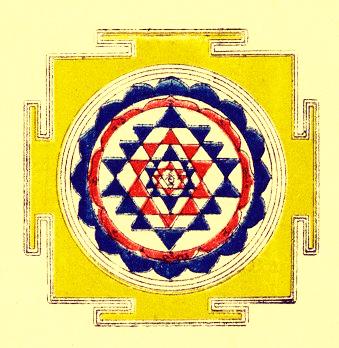
Adi Shankaracharya, the famous 8th-century CE scholar and saint, established the Sri Chakra at this original Kamakshi Devi temple in the trough-like structure in that shrine, This Sri Chakra soon became the All India famous Kamakoti Peeta. The Acharya’s Lalitha Trishati Bhashya comments Kamakoti Peetam as Sri Chakra.
The Acharya changed the fierce form of worship into a sowmya form. The Devi in this original Kamakshi temple is called by various names like Kirtimati, Devagarbha in extant Tantric works like Tantrachudamani. She has four hands containing in each of them respectively, Ankusa, PAsa, Abhaya and a Kapala. This description corresponds to those extant old tantric works. Further, Girvanendra Saraswathi describes precisely this swaroopa as Kameswari.
Sundaramurthi Nayanar, the Saiva saint of the 12th century is aware of the Kamakottam. He in fact mentions that the Kamakottam has come in existence just at that time”
Sri ChakraKanchi Periyavar on Kamakshi Amman:
[ Discourse on Sri Vidya was delivered by His Holiness Paramacharya Chandrasekara Saraswati Swami of Kanchi Kamakoti Peetham at Vuyyuru, Andhra Pradesh on January 25, 1968, at 8 P.M in the temple of Siva on the invitation of members of Sri Vidyanilayam, Vuyyuru. His Holiness Telugu speech was translated by me.]
I was invited to this village by Sri Vidyanilayam. For this Vidyanilayam, the name “Sri Vidyanilayam” is very appropriate. Generally, every human being wants happiness and thinks happiness comes through money. So, he struggles to earn money. All peoples in this world are surviving and living by learning one Vidya (learning one subject). There is no real happiness in this way of living. Life is very sorrow due to obstacles and insults that we face in our daily life. Professions for earning food is called arts (kalaas). What we do for happiness is called vidya. We get happiness if we do work with our own interest without expecting results. Even arts (kalaas) will become vidyas if we do not expect the result. “ardha kareecha vidya”. In this sanskrit word “cha” means very important. Aim of vidya is for happiness (ananda). Ultimate aim of vidya is for peace and equality. Then only, vidya will become immortal (amruta). All other works are like dead things.
We may sing well, write good poetry, draw picture. Even after retirement, some people learn music through veena, flute, etc; read sastras (holy scriptures). All this we do are not for food. They are for happiness. If we use music, poetry, drawing etc. arts (kalaas) for earning food, they are going to die. They cannot give happiness. Plays on the stage, cinema, etc. unholy things are considered as arts (kalaas). It is not true. Many woman lost their character with the attraction of movies. Their attraction is only confined to the screen of cinema. They do not know how to behave outside of their acting.
We cannot get real happiness through some vidya if we learn it only to know some extent. Real happiness and taste come only if we learn to our complete satisfaction and able to teach others. Therefore, all should learn one Sri Vidya which gives peace, equality, happiness along with other vidyas for earning food. After learning sri vidya, we should give to others and others to next generations. It is called sri vidya because we ourself have taken it as vidya. The main goal of sri vidyanilayam is to teach such a sri vidya.
We are human beings or men or women. ‘Man’ means the descendants of ‘Manu’. We have natural tendency to think or utter (mananam) a mantra repetitively. So, the English word ‘man’ is also indicates the same. Therefore, for human beings the mental happiness (manasika) is only important. Other than that is for animals. Animals only know body pleasure and sorrow. In fact animal is better than man if man wastes his mind. Animal does not acquire money. It does not have debt. “Vidya viheenaha pashuhu”. In fact, without vidya man is inferior to animal. The world can only be perfect with educated people. We are all Purushas (men). It does not mean that we left out women. Every one will have a vidya. Every living being is purusha (man). “poornam anena iti purushaha”. We are eligible to enjoy the things if we can give a part of it to God who gave us every thing. If we do not offer to God and try to enjoy ourselves, then we may be called thieves. “yoo bhumkteesthena eeva saha”.
They are many methods to offer happiness to God that comes from Vidya. A poet ‘Pushpadanta’ described in Sivamahima Stotra in the following sloka.
     Trayee saamKhyam yogaha pasupati matam Vaishnava miti
     Prabhinne prastaaNe paramidaha madhaha padhyaMiti cha
     Ruchinam vai chitryat rujukutila nanapadha jusham
     Nrunaameeko gamyastvaMasi payasa marnava eva
Trayee means three vedas. We have to study three vedas and perform karmas (duties) mentioned in the vedas.
Saamkhyam: our body is inertial. It will die. It does not have intelligence. We are knowing this through our experiences. I am fatty, I am block, I am suffering from illness, etc; in all the sentences ” I ” indicates consciousness with body. But consciousness is different from body. This knowledge i.e “consciousness is different from body” is called ‘saamkhyam’. This is also known as “prakruti purusha vivekam”.
Yogam: Our mind is always thinking either good or bad. We are suffering from unable to follow the mind. Even we try to control, it will not be stable. If we keep it stable, we get immense happiness (ananda). Through yama, niyama, aasana and pranayaama, mind can be controlled. This process is generally called Yoga. “yoga chitta vrutti nirodhaha”.
Pasupati matam Vaishnavam: We can not create a single grain of rice. We enjoy with whatever is there in the world. God alone can create such a world with his power. His power is greater than that of us. If we follow his power, we will feel happy. With faith in God, whatever we do should be offered to God. Religion (saivism, vaishnavam, etc.) teaches the process of offering to God. If we say Siva is God, then it is Saivism or alternatively if Vishnu is God, it is Vaishnavam.
When people go to new village, some may go directly to the place where they have work. Some may go around the village and come to their place of work. Similarly some may get happiness directly and some may get after seeing the world. Ultimately all reach the same place.
Some people travel towards the east, some people towards the west, some other to south and some other to northern direction. How can all reach the same place? When we go towards the east, we reach the ocean within a few miles. In the West about 800 miles away near Dwaraka we see the ocean. In south, around 500 miles away near Kanyakumari and in north about 5000 miles away near north pole we see the ocean. River Narmada is flowing towards the west. Ganga and Yamuna towards the east, Brahmmapurta towards the south, Shona river towards the north. All rivers finally join the Ocean. As like the ocean which surrounds the Earth, God dwells in all living beings (jeevaas). Whatever we do, it will go to the God. I mentioned earlier that when we offer some thing from our daily works to God, it will become immortal (amruta). There are 64 arts (kalaas) to earn our daily food. The 64 gaps in Sri Chakra represents these arts. The place where various professionals offer their work to God is a temple. Some people question that when the temple is filled with a lot sounds from bhajans, bells, other musical instruments, how can we meditate? Temples are the places where one has to donate some thing, but not for meditation. There are some holy places adjacent to rivers meant for meditation. Some people, for examples laborers who live with daily earningis are not able to meditate. If those laborers donate a small part of their daily earnings to God, it will become a great pooja (shoda-shoopa-chara pooja) to God. Poor people, women, children, old people may also offer to God leaves or flowers or fruits to their capacity. Rich persons can donate money for temple and it can be used to beautify the temple. Educated persons can donate their tapas with their mantras and anushttanas. By sharing their happiness in this way, great power can be created. Temples are the places to create such a great power. It is very important that the power should be properly distributed to the people. It is not wrong that we are unable to visit a temple daily. For the sake of those who are unable to visit the temple, temple bell is an indication for taking their food which has to be offered to their village temple. The habit of ringing bell in the village temple came for this purpose. This way, cooked food in the every house will become prasada of God.
When we share happiness, we develop real equality and love. Before starting speech, every one say “sisters and brothers”. How can all be sisters and brothers? Is it true that all audience should have single mother and father? Yes! it is possible to have single mother and father for all. Our father is God (Eswara) and mother is Para Shakti. “Jagataha pitarau vande”.
The concept of sister and brother is not only applicable for human beings but also to animals, trees and plants. All these are created by God only. When we realise this, no one will do harm (himsa) to others. Meat eaters will stop meat eating. Buddha said “Ahimsa paramo dharmaha”. But, many Buddhist sanyasins in China and Burma take meat as Bhiksha. In those countries, every Buddhist has to take sanyasa for some time before their marriage. What is the use of big theories when they say something and do other way?
Can we live without doing harm (himsa) to other living creatures? Every grain of rice and wheat is a living being. When we eat each grain, we are killing a living being. How to avoid the sin of killing? If we eat fruits and juice without seeds, we may not do any harm to any living beings. “Jeerna parnaa sanaha rushayaha”. Rishees (sages) lived by eating ripened leaves and fruits. We can eat lemon, orange, mango, banana etc., fruits after they are fully riped and fall down from the tree. When unripened fruit is plucked, some liquid comes from the tree. It indicates that tree suffers with pain due to plucking unripened fruit. Fully ripened fruit automatically detaches from tree. In addition, fully ripened fruit including neem and tamarind will have good taste. Every ripened fruit is tasty. Why do we take such a satvic food? “Aahaara suddhu satva suddhihi”. Those who take satvic food (fruits) will not get kama (desires). Such a people need not undergo family planning and need not kill their babies in the womb. Such people will not be affected by angry. World peace automatically comes when such a satvic people increases.
Will such a food be sufficient to world population? It may not be available. Many people are now dedicating their life for their country and also suffering. Some people commit suicide for what they believe. If satvic food is not available, people should keep on fasting and die. Youth should come forward for this. Finally the required population will remain for available food and there will not be hatred and wars in the world.
Will such a food give enough strength? One Britisher, who thought that Indians were uncivilised and their food was inferior, was getting meat every day from America and eating. He started learning Sanskrit. One day he heard “sushkai trunaih vanagajaha balino bhavanti” a Sanskrit sloka. After hearing, he changed his mind. He stopped eating meat. Which animal is powerful? Elephant. What does it eat? grass and leaves. Some of you may question that lion is powerful than elephant. It is not so. Lion can not pull heavy weights like bull. So the works of non-vegetarians like lions will be useful for destruction. For satvikaharies, entire world looks beautiful.
World looks beautiful if our hearts are good. We like our tender children even if they slap us. If others slap us, we will also try to slap them. We may otherwise report to police and go to court. If we do not have capacity to do so, we will weep and keep quite, but not happy. Enjoying the entire world i.e insults and sorrows with love and affection is called “Sri Vidya”.
Some people say that they are unable to concentrate on God. They asked me what they can do. My advise to them is to learn any one vidya for happiness but not for food. God is “Veda vidya swarupa”. Education is nothing but devotion to God. This is one type of Sri Vidya. Another type of Sri Vidya is there with mantra, chakra and upasana. This is not required for all people. But what I taught till now about Sri Vidya in this discourse is required and interested for every one.
My advise is that Sri Vidyanilayam should teach not only the arts for food but also one Vidya for happiness. It should take students with a desire to learn the above two. Then only, the name, “Sri Vidyanilayam” will be appropriate for this educational school. For this, I pray for the blessings of Goddess and God Srimantripura Sundari Chandramouleshwara.”
For more on KamkshiAmman Check the Wiki Link.
Mooka Pancha sathi is a powerful sloka by Mookha on Kamkshi Amman.
Mazar Dargah Of Hazrat Sharfuddin Shahwilayat, Amroha)
Dargah in Amroha
There are venomous scorpions in the area. But they do not sting within the premises of the durgah. You won’t believe your eyes! What’s more surprising is the fact that you can take them home and for a specified length of time they will continue to behave themselves. It’s a sort of warranty period during which they do not sting. But as the clock strikes end-of-warranty period, they inexplicably turn into their natural stinging nature.
The Tradition :: In the spiritual town Amroha, the great historical Dargah of Hazrath Shahwilayat,A famous live-miracle of scorpio is still a witness of the spiritual status of Hazrat Sharfuddin Shah Wilayat in the form of a change of nature of an insect (scorpio/snake) on his shrine. Everybody knows that stinging is the nature of a scorpion. But in the premises of the shrine of Hazrat Shah Wilayat, no scorpion stings, no matter if it was used to sting before. Even people can take it for a defined period of time and it will not bite for that duration even if it is away from the shrine This change of behaviour of insect is attributed to the spiritual status and highness of Shah Wilayat. A tradition says that when Shah Wilayat arrived Amroha, the Sufi of the nearby area, Hazrat Khwaja Geso Daraaz Rehmatullah Aleh sent him a kooza (cup) full of water, hinting the satiation of this place in spirituality due to his presence. Hazrat Shah Willayat smiled and put a rose on the water of that bowl and returned it back. In this metaphorical communication, it was meant to suggest his status as a rose in the so-called ‘spiritually saturated’ Amroha. In response, the learned Sufi Geso Daraaz exclaimed that on your shrine there will be scorpions. Shah Willayat replied ‘yes, but they won’t sting’. And on your shrine there will be donkeys.’ Which Geso Daraaz replied saying ‘yes, but they won’t desecrate the place by their refuse’.
It is often held against Hinduism in general and Lord Krishna in particular that He had 16 000 wives.
People whom I had met often had no idea about this and stated Lord Krishna had 16000 wives and he spent time with them merrily, without being aware of the Facts.
Yes,Lord Krishna had 16 000 wives.
Some Purans say 16,100.
He rescued these women from Narakasura, who was his son through Bhu Devi in His earlier Avatar as Varaha.
It is worthy of note that Lord Krishna had ‘divided Himself into 16000/100 and been with them.
This is an indication that it was not actually physical but Mystical and spiritual.
Krishna and 16000 wives
Another point is that Lord Krishna did not any Children through these Junior wives.
It is a part of ancient warfare to confiscate,the cattle before invasion and capture the women of the enemy after the war.
generally these women were returned tot he Vanquished after the War was over.
In this case, as Narakasura died, It is to convey Lord Krishna took care these women and as they were devoted to Him as God spent time with them.
Nothing more can be read into this.
”
Narakasura was the king of Pragjyotisha, identified with present-day Assam. He was the demon (asura) son of Vishnu’s boar avatar Varaha and the earth-goddess Bhumi (Prithvi). As the son of Bhumi, he was also called Bhauma or Bhaumasura (asura suffix appended). He conquered the three worlds: heaven, earth and underworld. On earth, he captured 16,000 princesses of defeated nations. In heaven, he stole the earrings of Aditi, mother of Indra – the king of gods and heaven. In the underworld, he seized the imperial umbrella of Varuna, the god of the waters.[10][1]
The captive women were imprisoned at Audaka on the top of the mountain Maniparvata in his kingdom. Various demons including the five-headed Mura and his seven sons guarded the kingdom’s gates. Narakasura’s ten sons guarded the women.[10][1]
Indra comes to Dwarka, Krishna’s capital and pleads with him to save the universe from Narakasura’s tyranny. Krishna and his second wife Satyabhama fly on their mount the eagle-man Garuda to Pragjyotisha. Krishna slays Mura, his sons, Narakasura’s army and finally the demon-king himself. Bhumi surrenders all stolen items, including the captive women to Krishna. When Krishna arrives in the palace of the captive women, each of them prays to Krishna to accept her as his wife. Krishna complies and sends them to his capital with Narakasura’s plunder and four-tusked white elephants gifted by Bhumi. After returning Aditi’s earrings to Indra in heaven, Krishna returns to Dwarka and marries the rescued women, making them his junior wives, saving them from “destitution and infamy…
The Bhagavata Purana captures the life of Krishna’s wives after their marriage. Each of the junior wives was given a home, with hundreds of maid-servants. Krishna divides himself into several forms, one for each wife and spends the night with each wife simultaneously. In the morning, all his forms unite into one body of Krishna when Krishna works as the king of Dwarka. Each wife serves Krishna personally, worshipping him, bathing him, dressing him, fanning him, presenting him with gifts and flower garlands etc.[1]
In another story narrated in the Bhagavata Purana, Narada, Vishnu’s devotee and wandering sage, was curious to find out how Krishna was managing to live with his 16,000 wives and came to Dwarka to check. Krishna welcomed Narada with all the honours due to a sage. Narada then visited every one of the houses of Krishna’s 16,000 wives and was surprised to see Krishna present in every house with his wife in an atmosphere of total domesticity, laughing and joking with his wife and taking care of his children, and helping his wife in house hold chores. Watching this phenomenon, Narada was convinced that it was divinity in the form of Krishna, a complete and manifold manifestation who had enjoyed the company of his 16,000 consorts at the same time. He also concluded that Krishna was monogamist and divine supreme being. Having satisfied himself of the divine powers of the Lord Himself, Narada embarked on his usual voyages around the world singing the praise of Krishna.[12] A variant tells that the mischief-maker sage Narada requested Krishna to gift him one of his many wives, as he was a bachelor. Krishna told him to win any wife for himself, if he was not with her. Then Narada went round to each of the houses of Krishna’s 16,008 wives but found Krishna in every house that he visited, and thus Narada had to remain a bachelor.[13]
In the Bhagavata Purana, Rohini and Krishna are described to have unspecified number of sons, out of which only Diptiman and Tamratapta are named. The sons are said to represent all the children of the junior wives.[14]
The Bhavishya Purana, the Skanda Purana and the Varaha Purana narrate that some of Krishna’s junior wives were infatuated with Samba, the handsome, trouble-maker son of Krishna and one of his senior queens, Jambavati. One wife Nandini disguised herself as Samba’s wife and embraced him. For this incest, Krishna cursed Samba to be inflicted with leprosy and his wives to be kidnapped by Abhira robbers after his death.[10][11]
The Bhagavata Purana records the wailing of Krishna’s queens and their subsequent leap in Krishna’s funeral pyre immolating themselves (see sati).[15] The Mausala Parva book of theMahabharata which describes the death of Krishna and end of his race records only four of Krishna’s wives, including Rohini, committing sati. Dwarka submerges in the ocean and the rest of its inhabitants including Krishna’s widows accompany Krishna’s friend Arjuna to his capital Hastinapur. On the way, Abhira robbers attack the entourage and plunder their wealth and kidnap some of Krishna’s widows. Some of the widows burn themselves alive. When the entourage reaches Hastinapur, all other widows retire to the forest for austerities (tapas).


You must be logged in to post a comment.